
Located just 80kms southwest of Tokyo, Hakone is famous for its abundant hot springs(Onsen), traditional ryokans and for stunning views of Mt. Fuji. That makes it almost impossible to skip Hakone on a trip to Japan. More so because the ‘Onsen capital’ of Japan, a place called Beppu, is located in the distant island of Kyushu, away from the normal tourist circuit.
Fuji Five Lakes area and Hakone are stated to be two of the top areas for viewing Mt. Fuji. What makes Mt. Fuji special is that it is one big cone, visible from top to bottom without any hindrances. Contrast this with other mountain peaks where generally only the top portion is visible. Check this link on viewing Mt. Fuji in Japan. As always, the weather has the last word!
Move to…
Getting to Hakone
Train is probably the most convenient option. Odakyu Electric Railway runs one direct Limited Express Train(Romancecar) from Shinjuku in Tokyo to Hakone-Yumoto (and Gotemba). The other option is to take the Shinkansen(or other JR/Odakyu Railway Express Trains) to Odawara and then hop onto the Hakone Tozan Line Train. Hakone-Yumoto is just 15 minutes away.
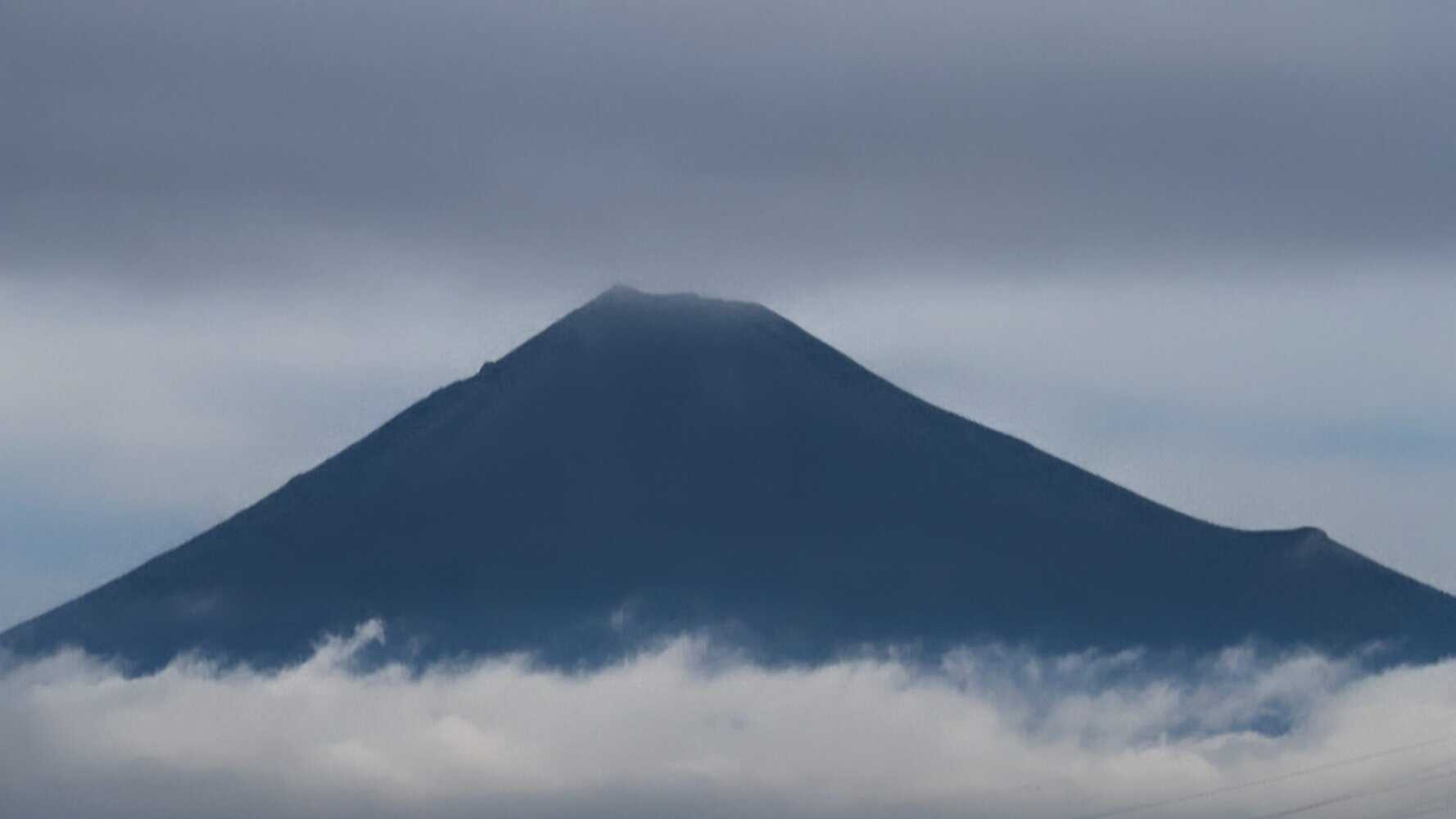
My first view of Mt. Fuji around Shin-Fuji station
I travelled by the Shinkansen from Kyoto to Odawara station. On the way, the Train halted at Shin-Fuji station from where I had my first sighting of Mt. Fuji. Slightly hazy view but it was visible from the station platform itself. It was lunch time when I reached Odawara station, and thankfully, vegetarian pizza(Margherita only) was available at Hakone Bakery outlet inside the station so I did not have to look around for lunch. After purchasing the Hakone pass, I boarded the Tozan Line Train to Hakone-Yumoto.
One can also travel by bus from Tokyo or take a package tour.
Hakone region comprises several sub-regions and Hakone-Yumoto is the main station. Luggage Transport Service is available here.
Buy the Hakone Pass
Issued by Odakyu Railway, the Hakone Pass can be purchased online or other stations covered by Odakyu Railway such as Shinjuku and Odawara. This is a must if you are in Hakone for 2 days or more. It will break even for one full day also if you are doing the full ‘Hakone Loop’ starting at Odawara. It is available for 2 and 3 days, and comes with two options – with or without train ride from Shinjuku.
Both options pay off and the savings are higher on the Pass from Shinjuku. But for the Limited Express Romancecar Train from Shinjuku direct to Hakone-Yumoto, an additional amount of ¥ 1,200 per adult one way has to be paid. Other express trains run by Odakyu Railway are little slower and requires a change at Odawara but no additional fee needs to be paid.
I purchased the 2 day Pass at Odawara station that cost ¥ 6,000 per adult. Considering my journeys in additional to the Hakone Loop, I saved ~ ¥3,500 per adult. Not bad at all.
What to do in Hakone
The main attraction is the Hakone Loop. Other attractions include Gotemba and Mishima Skywalk. The loop requires about 6-7 hours and more if visiting open-air museum near Gora, the Gora Park and Hakone Shrine near MotoHakone. But all these places can be easily covered in one day, just start by 8 am or so.
Mishima Skywalk or Gotemba will require an additional half a day. Or skip the Museum, Park and Shrine like I did and go to Mishima Skywalk. Or Gotemba.
Hakone Loop
This is a popular itinerary that covers key attractions in Hakone, involving travel by different modes of transport such as Mountain Train, Funicular, Cable Car, Ship and Bus. It is a round trip, starting and ending at Hakone-Yumoto station. The good thing is that it can be done in either direction and I took the counter clockwise direction to Gora first.
I took 5 hours to complete the loop from Hakone-Yumoto to Hakone-Machi from where I travelled by Bus to Mishima Skywalk.
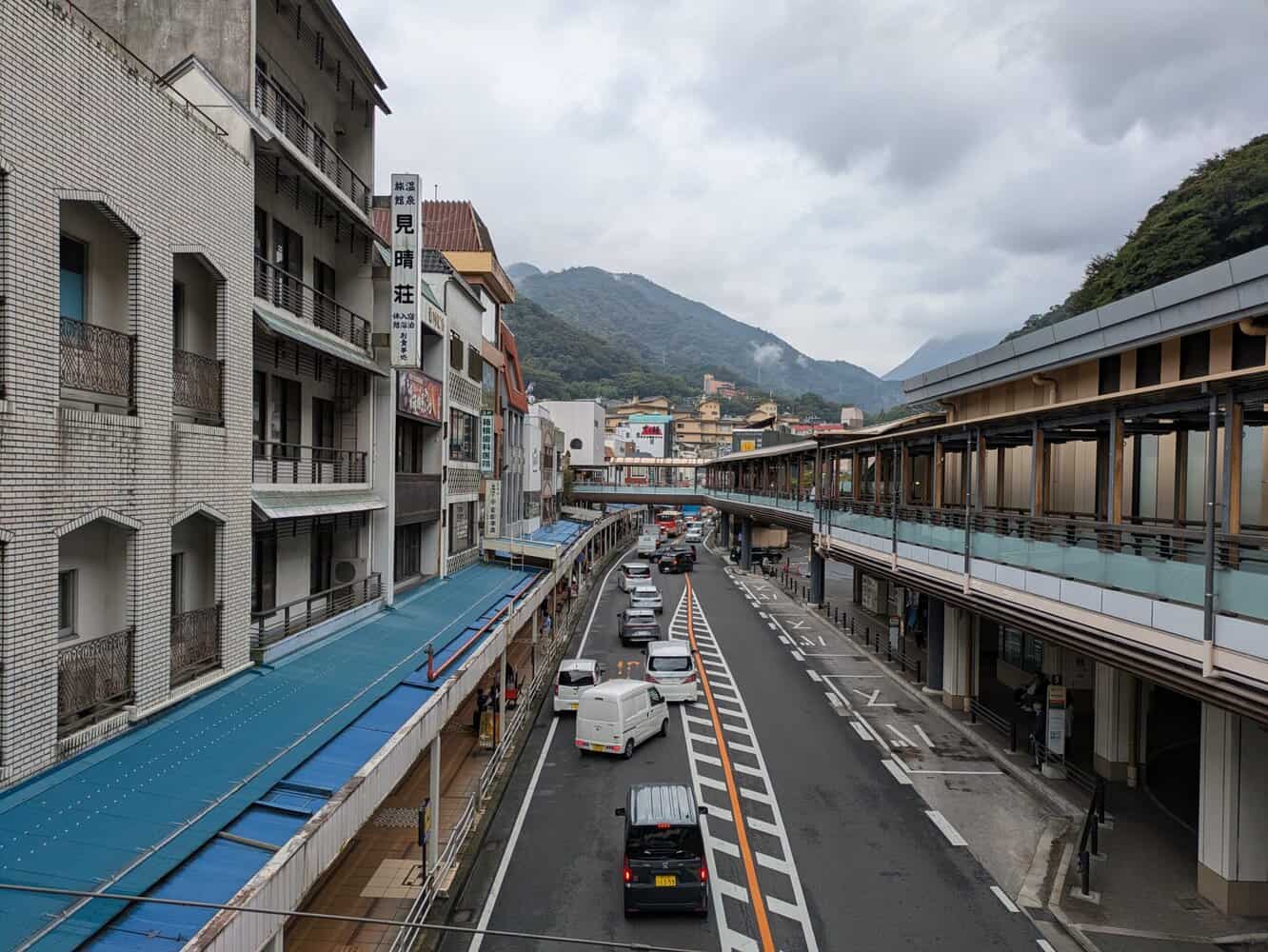
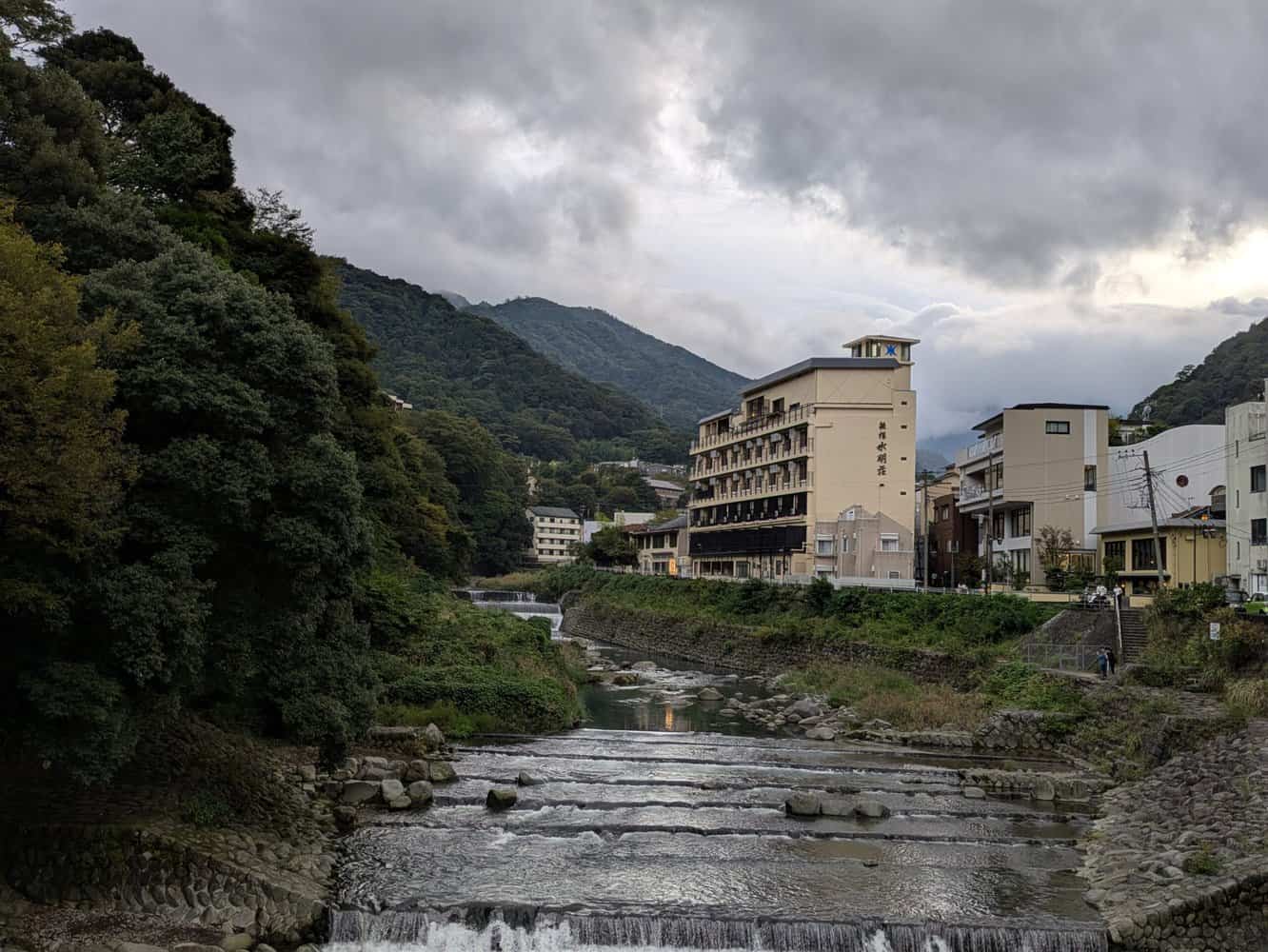
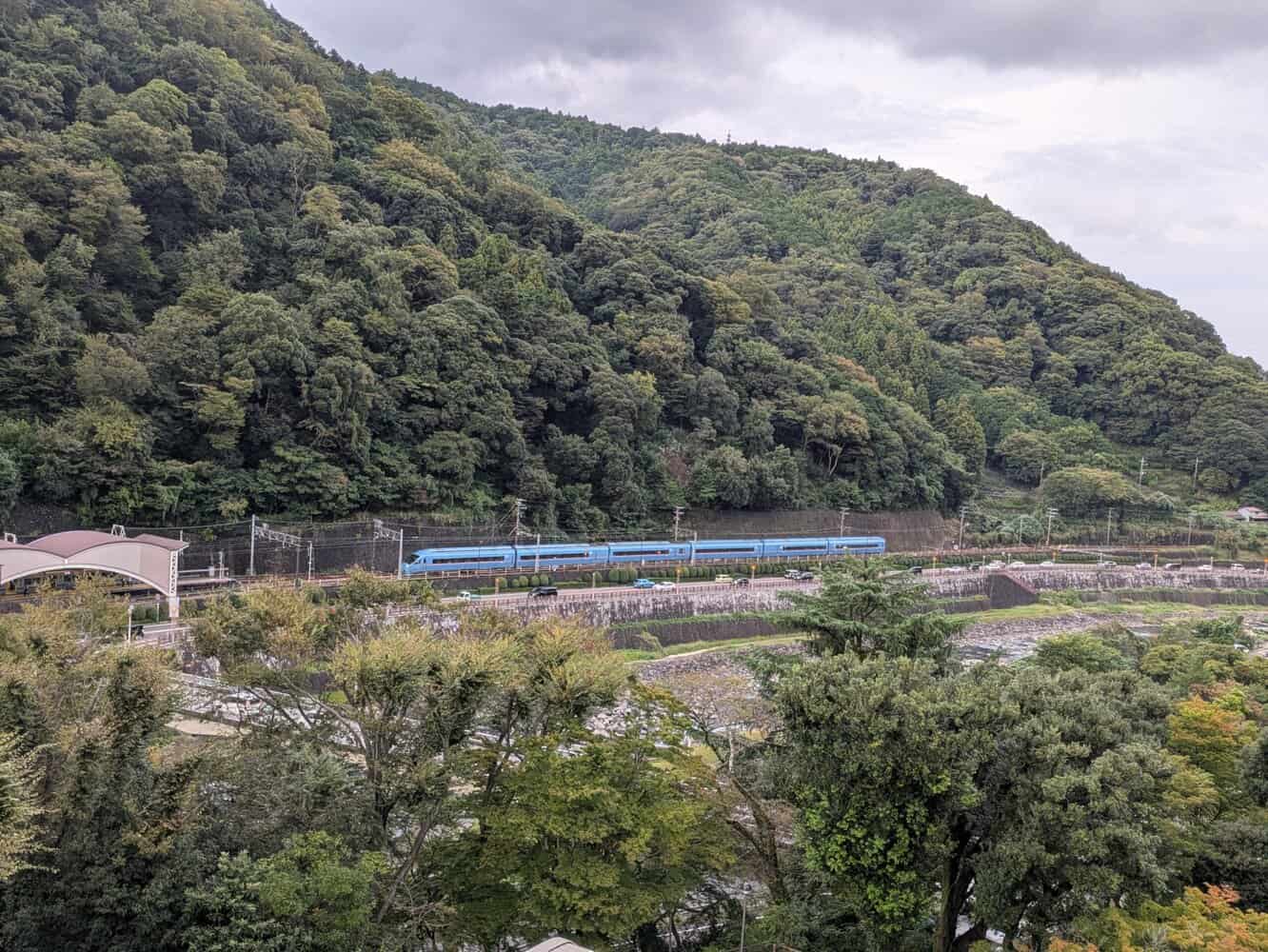
1. Tozan Line Mountain Train from Hakone-Yumoto to Gora(40 minutes).
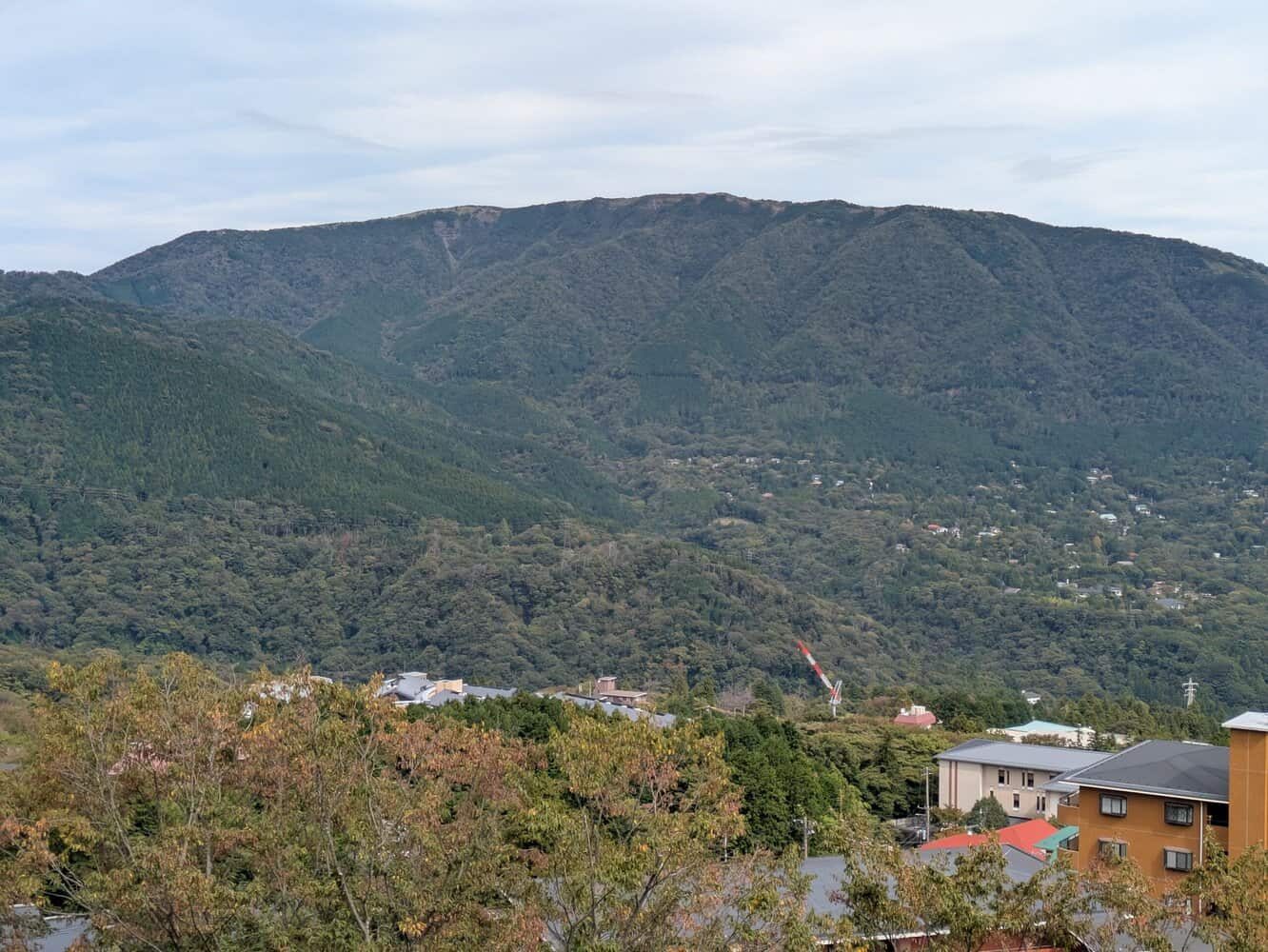
The incline is quite steep at times and stated to be among the steepest in the world. On three occasions, the train changed direction; something called Switchback with the driver and conductor switching positions. It is a fairly scenic ride, with the vegetation changing by the season. The recorded message played on the Train’s PA system was quite informative.
It was fortuitous I skipped both the Museum and Park at Gora
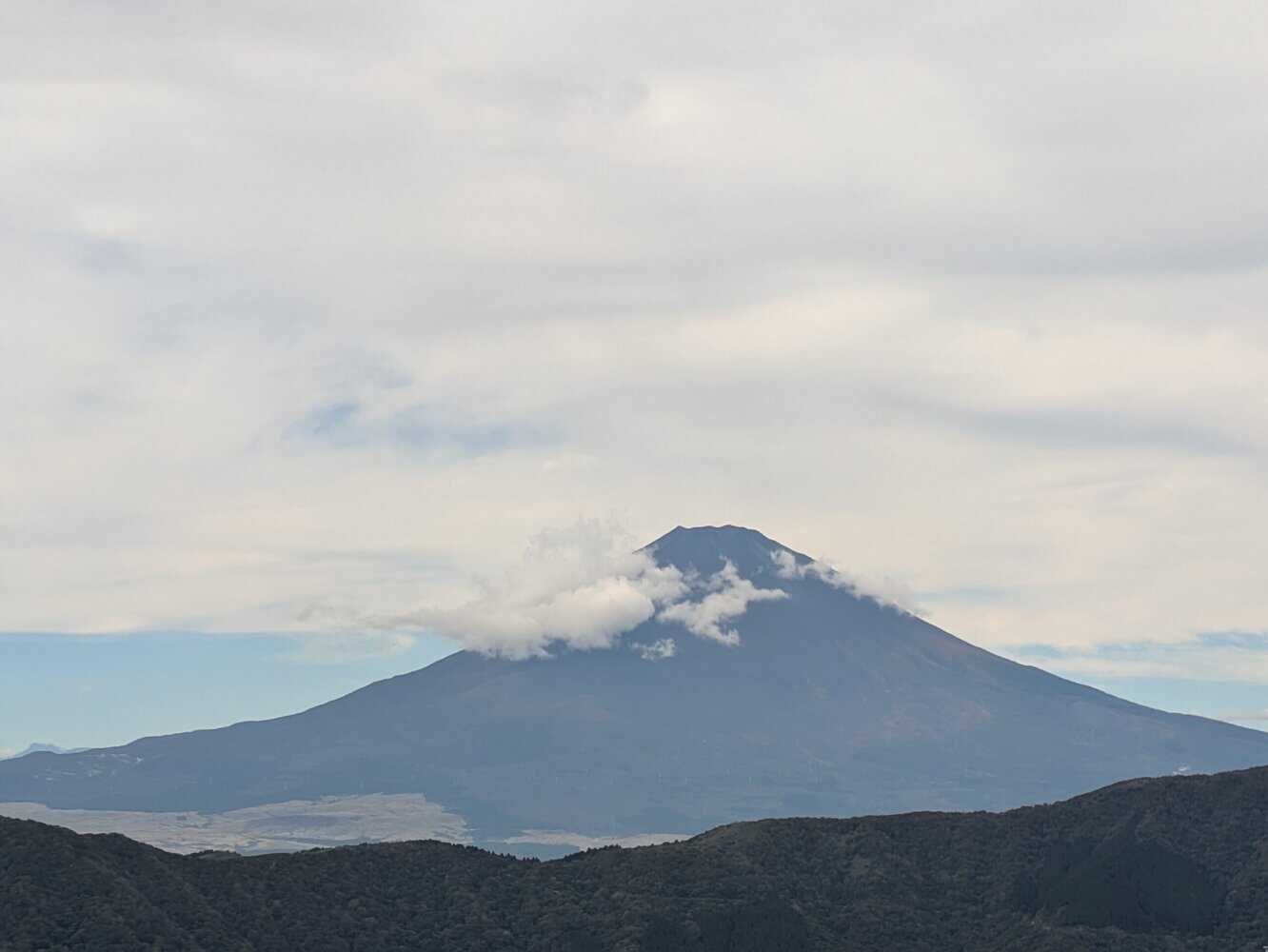
At Gora, I had initially decided to take a bus to the open-air museum. Changed my mind and then walked a few minutes up the hill towards the Park. For some reason, I then decided to skip the Park as well and walked back to continue the journey on the Loop. How fortuitous it turned out to be. When I reached Owakudani, Mt. Fuji was fully visible. But not for too long. When I was preparing to leave Owakudani, Mt. Fuji was already behind the clouds. If I had visited either the Park or the Museum, I would have certainly missed viewing Mt. Fuji that day.
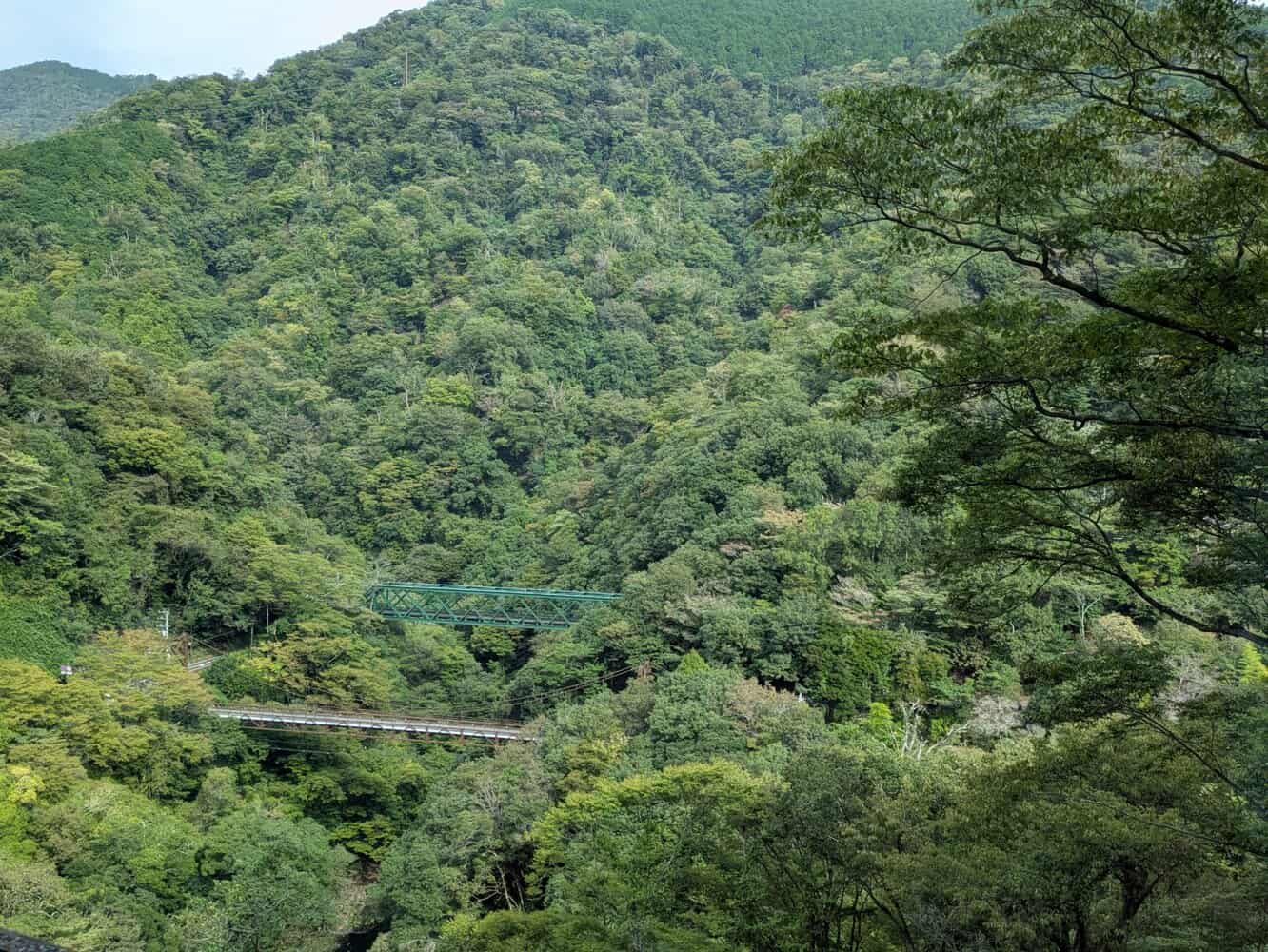
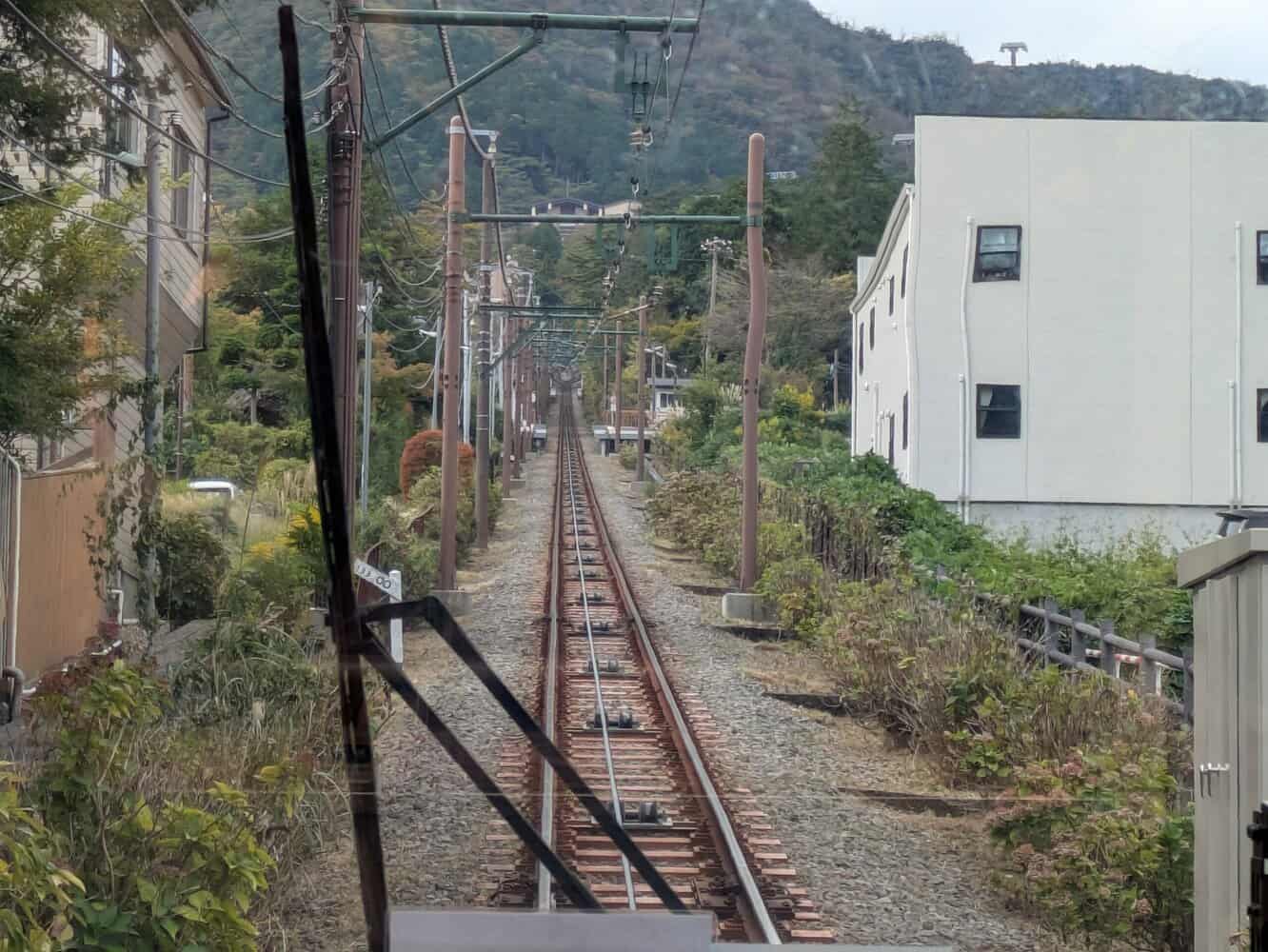
2. Hakone Tozan Funicular from Gora to Souzan(10 minutes)
This was the first time I travelled in a Funicular with 4 stops before the destination! If visiting the Gora Park, one can board the Funicular at the second stop called Koen-Shimo. At Souzan, there is a viewpoint but nothing else to do.
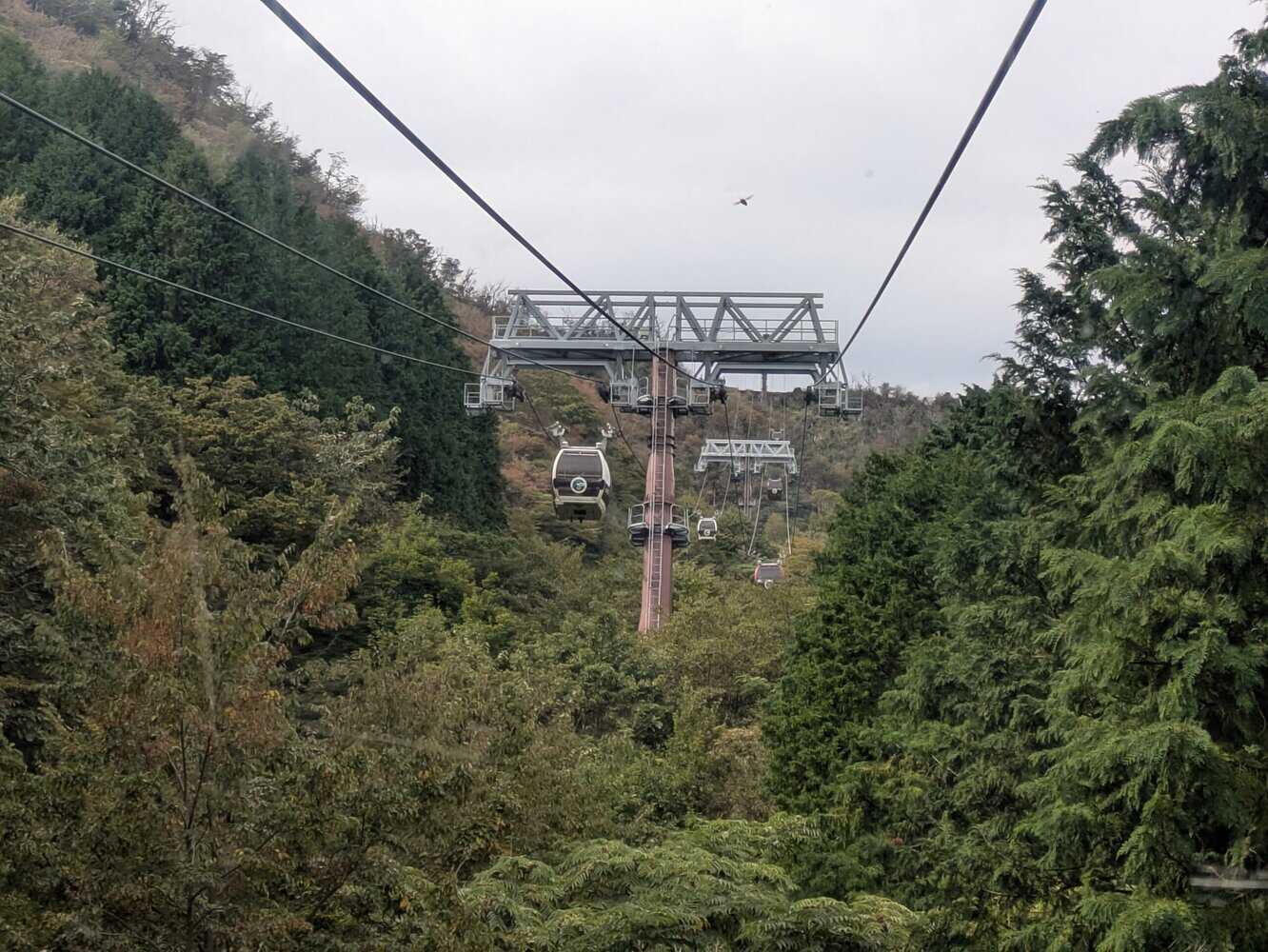
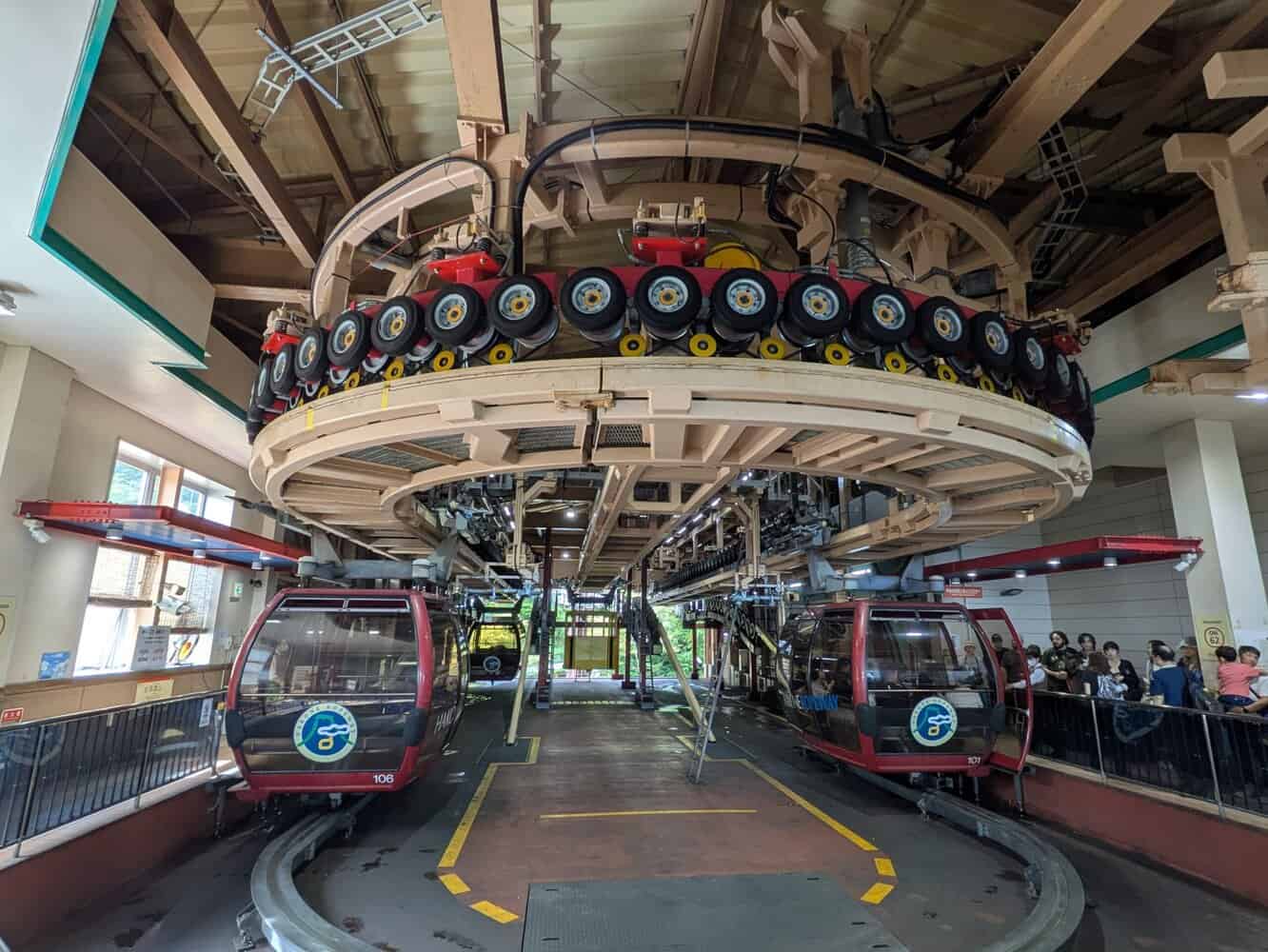
3. Hakone ropeway from Souzan to Owakudani (~10 minutes)
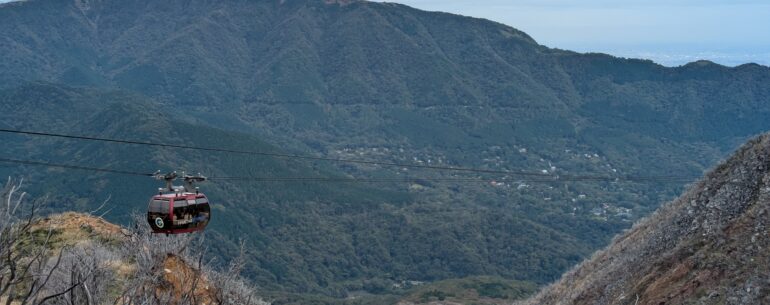
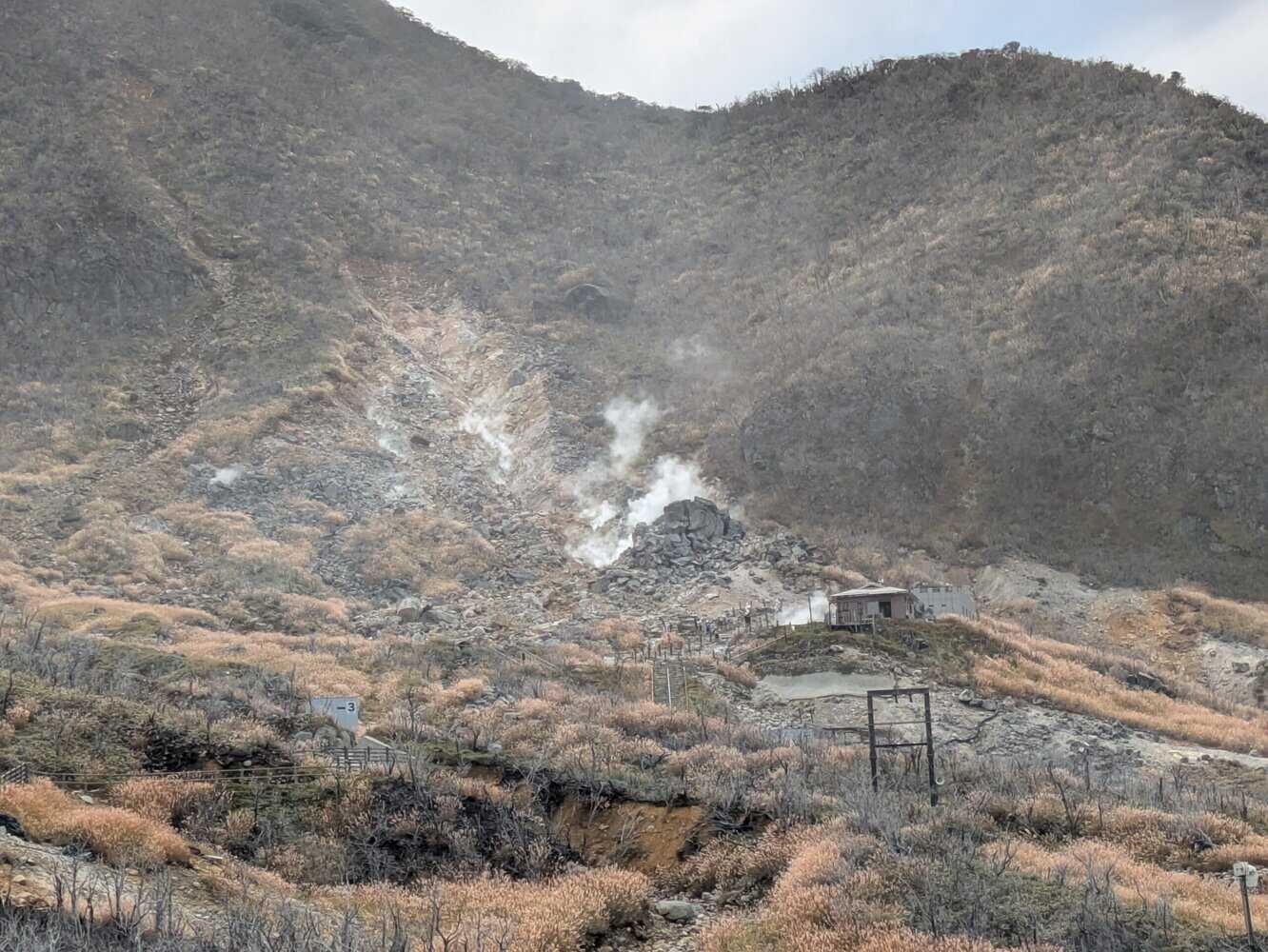
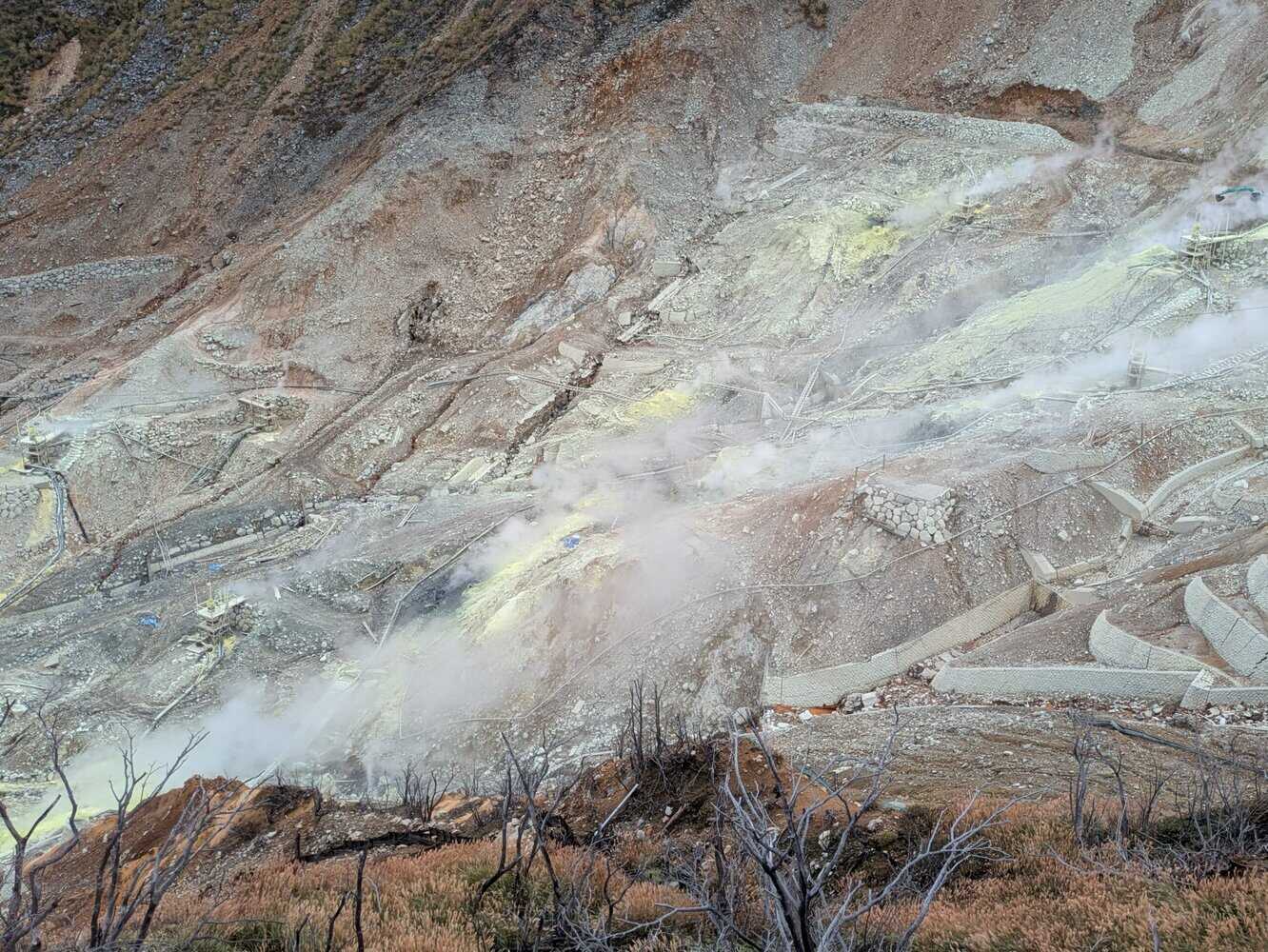
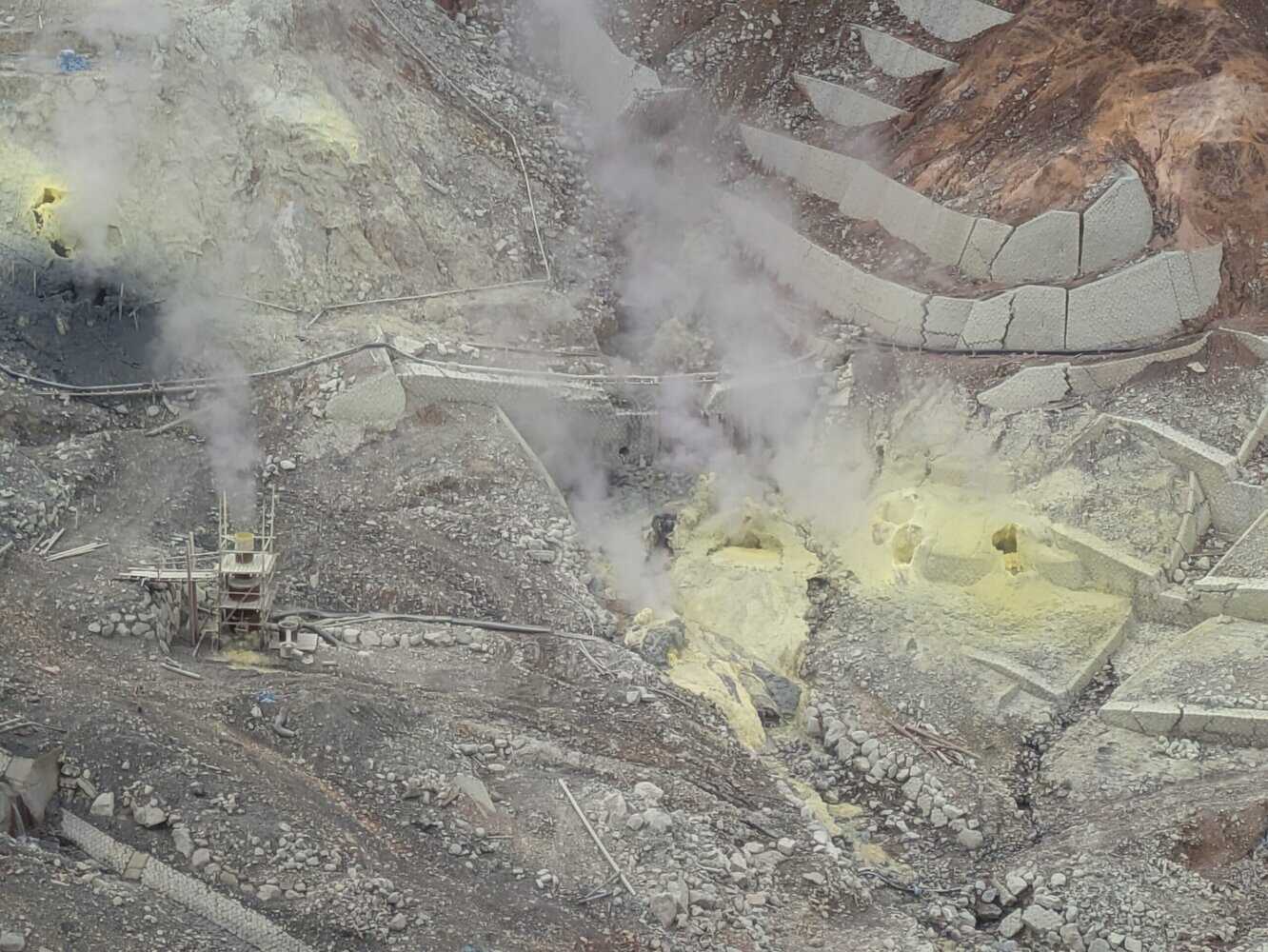
The Ropeway and Owakudani were the highlight of the Loop. The weather was good and as the Cable Car ascended, Mt Fuji suddenly came into view, minus the snow topping. It was a ‘wow’ moment for everyone inside the Cable Car, including few Japanese and their squeal of delight said it all. The Cable Car also passed over the volcanic valley with visibly steaming sulphur vents.
Owakudani is famous for black eggs that are naturally hard boiled for 60 minutes in the hot spring pond and then steamed for 15 minutes. Due to sulphur and iron content in spring water, the shell turns black. Since I no longer eat eggs, I settled for a black egg cone ice-cream which derives its black color from volcanic ash or charcoal. This must be a very popular item judging from the long length of the queue!
From the viewing platforms here and also from certain open areas, Mt. Fuji is visible, as also the volcanic valley. But when it was time to leave, I noticed that Mt. Fuji was hidden behind dense clouds. Must say my timing of visit was perfect.
One can also book a guided walk to few of the steaming vents.
4. Hakone ropeway from Owakudani to Togendai (~16 minutes)
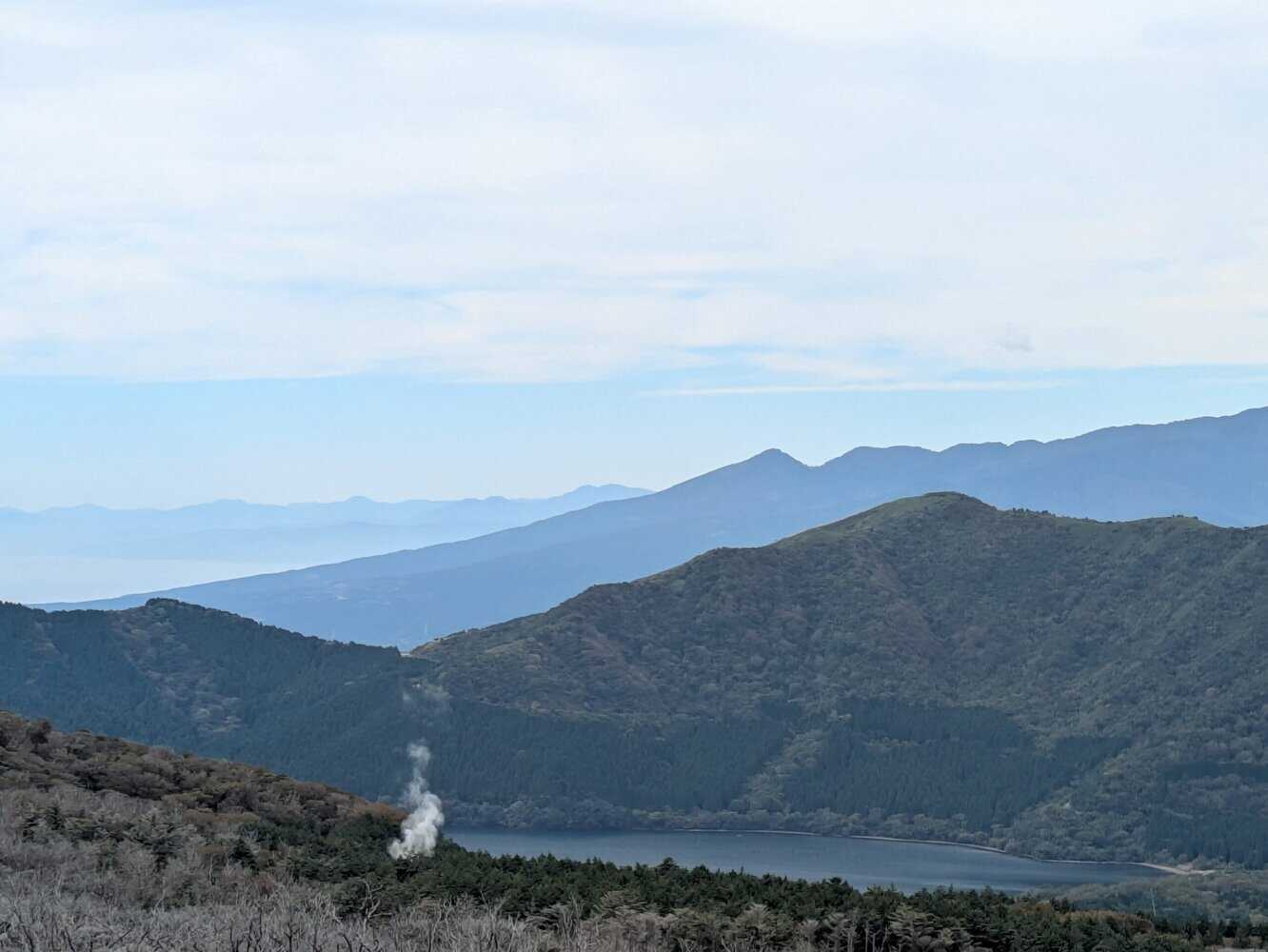
A longer but uneventful journey by Cable Car. Got excellent views of Lake Ashi as the Cable Car was descending.This stretch too has one stop in between where I alighted by mistake, following couple of other people in the car, realised my mistake and got back into a different car.
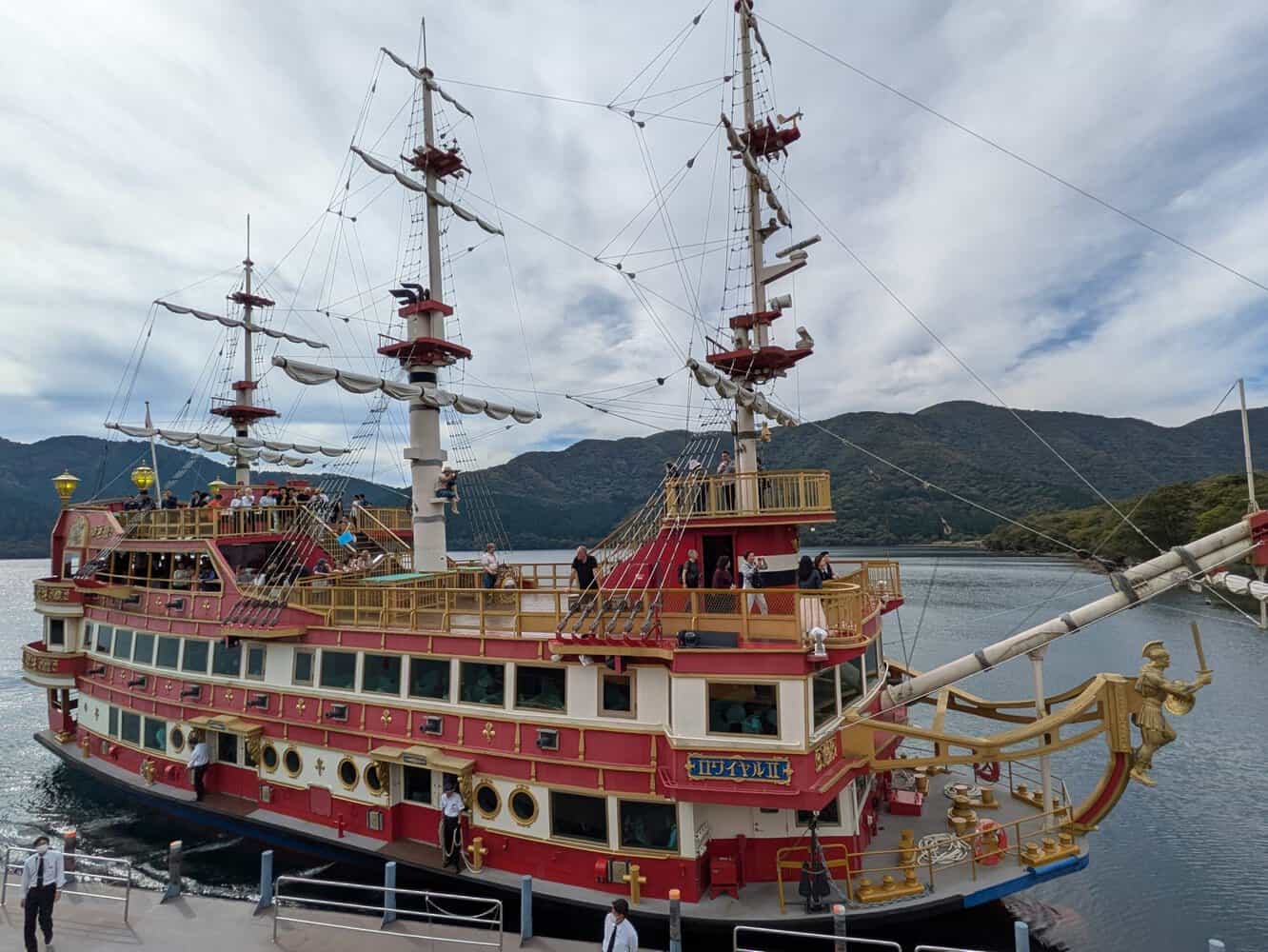
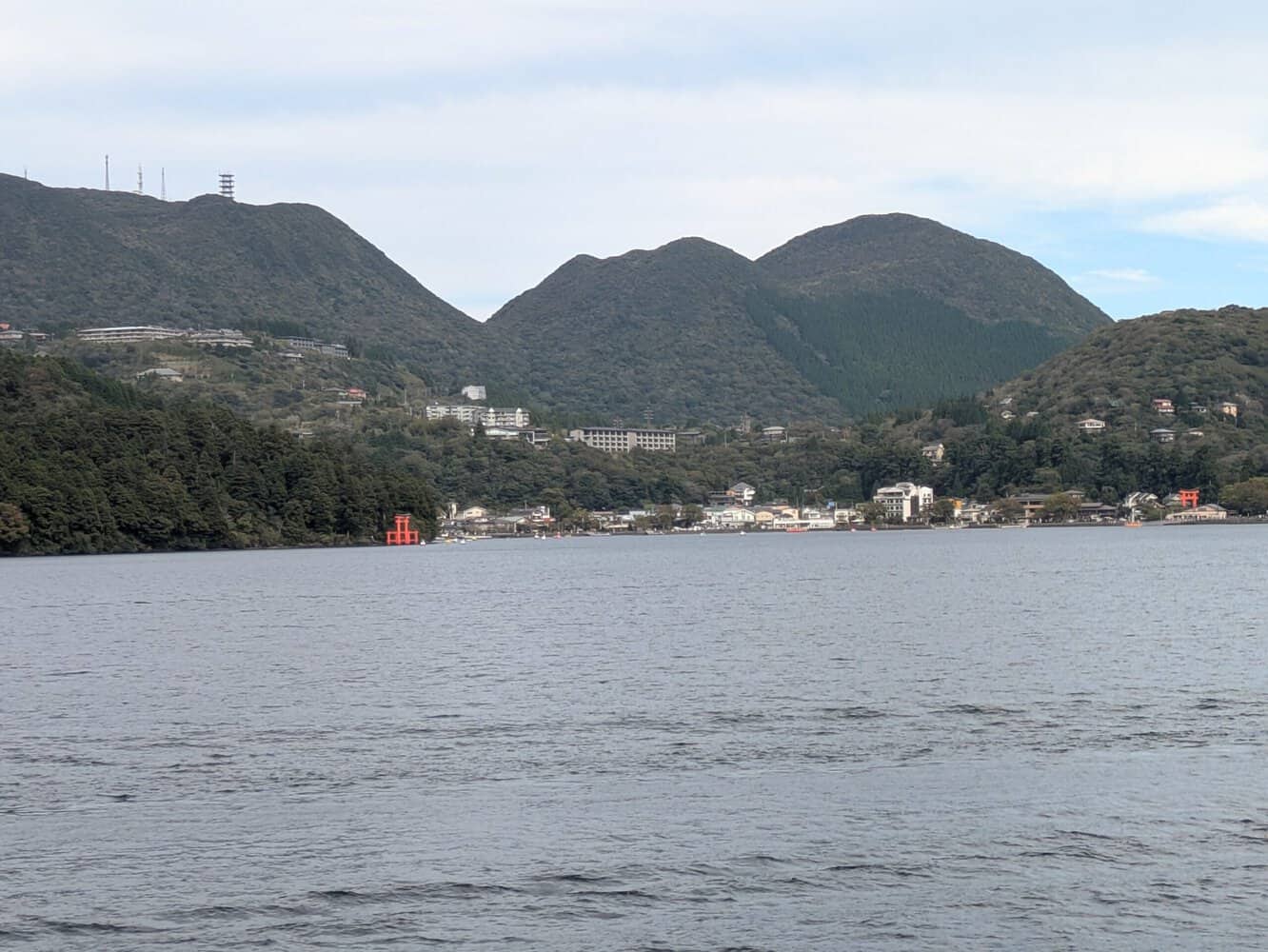
5. Pirate ship across Lake Ashi from Togendai to Hakone–Machi (~30 minutes) or MotoHakone
Seeing the long queue, I decided to pay an additional fee of ¥700 per person for the ‘Q less’ premium cabin. The pirate ship was lovely and the ride across Lake Ashi very scenic. Mt. Fuji continued to be hidden behind clouds.
The partly submerged red Tori gate of Hakone-Shrine was clearly visible as the Ship neared its destination. I believe this is a very popular spot for clicking pictures and the wait time can often be long! I did not visit the Shrine.
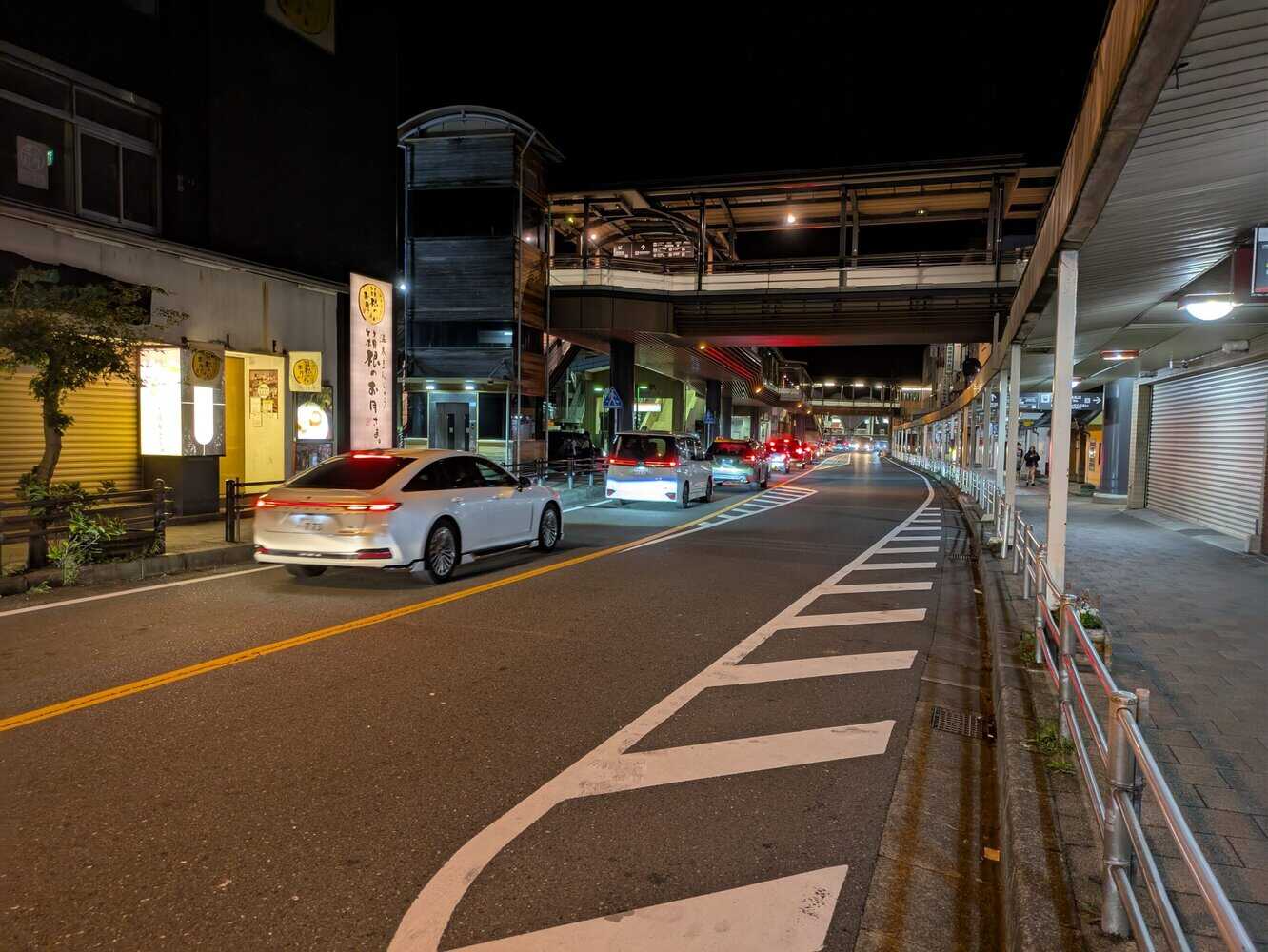
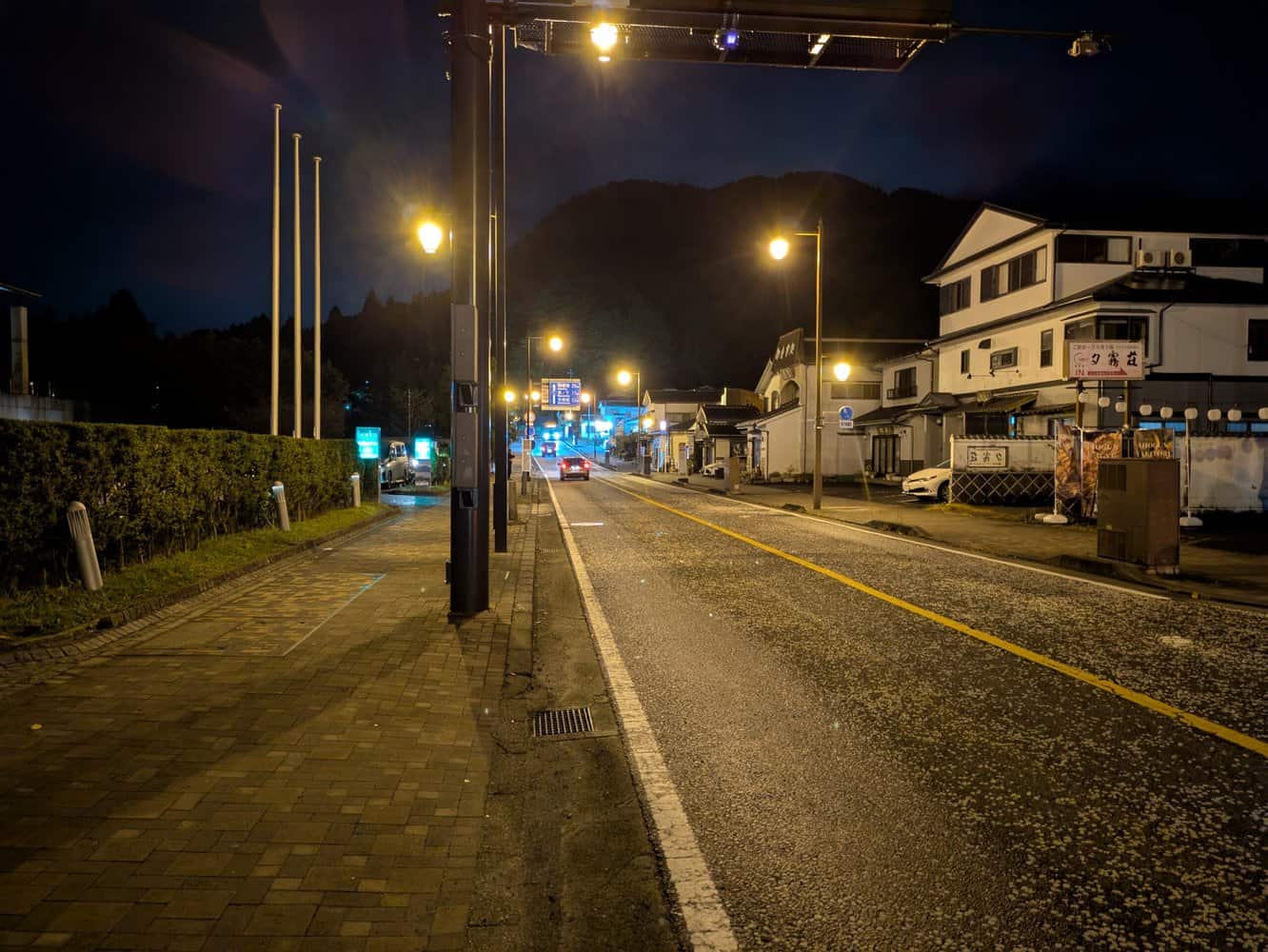
Hakone-Machi is a lovely area for a stroll. There is the historic Checkpost, the Onshi Park and the Cedar Avenue, all towards MotoHakone. Gets lonely at night though.
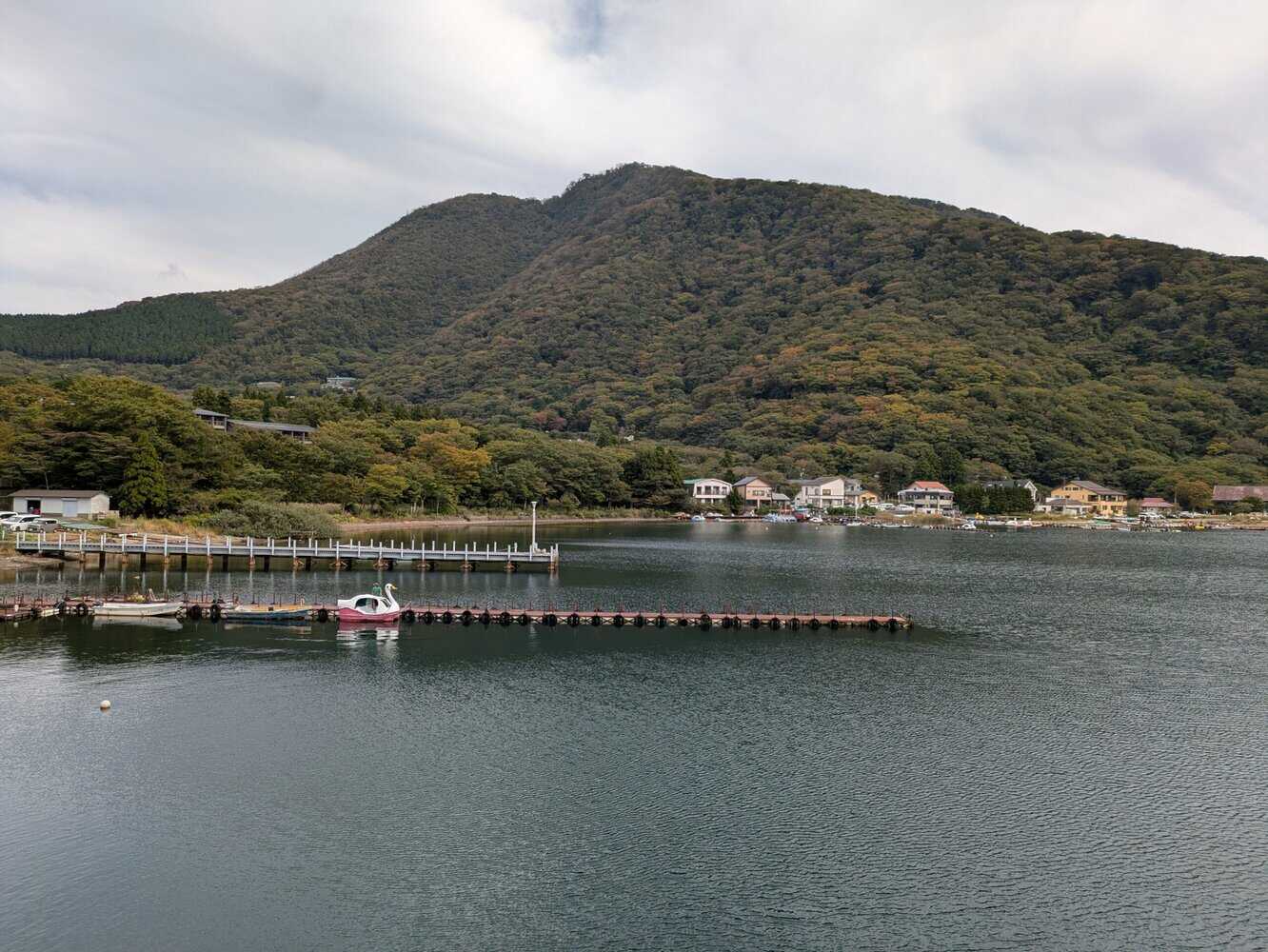
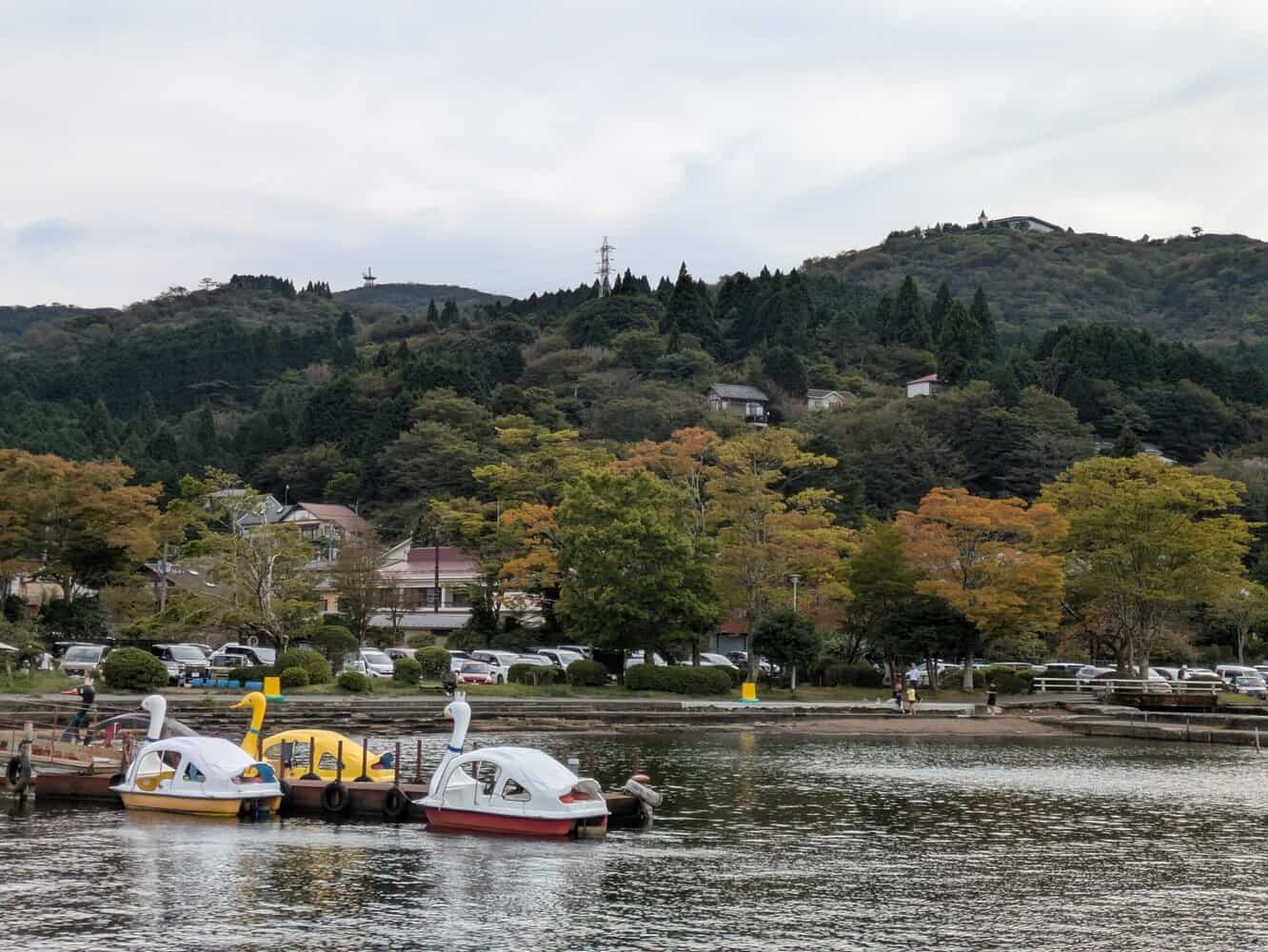
6. Tozan bus from Hakone-Machi to Hakone-Yumoto (35-45 minutes)
Bit long but Hakone being a mountainous region, roads are narrow and winding. Traffic jams are not uncommon especially during weekends and holidays. The Express Bus is much quicker.
I reached Hakone-Machi around 1.45pm. Unfortunately, the Mediterranean restaurant was fully booked for a party and the Indian one was closed! There was an outlet selling fresh juice and steamed sweet potato. That was my lunch that day! A quick one but it helped me board the 2.15pm Bus to Mishima Skywalk.
Mishima Skywalk
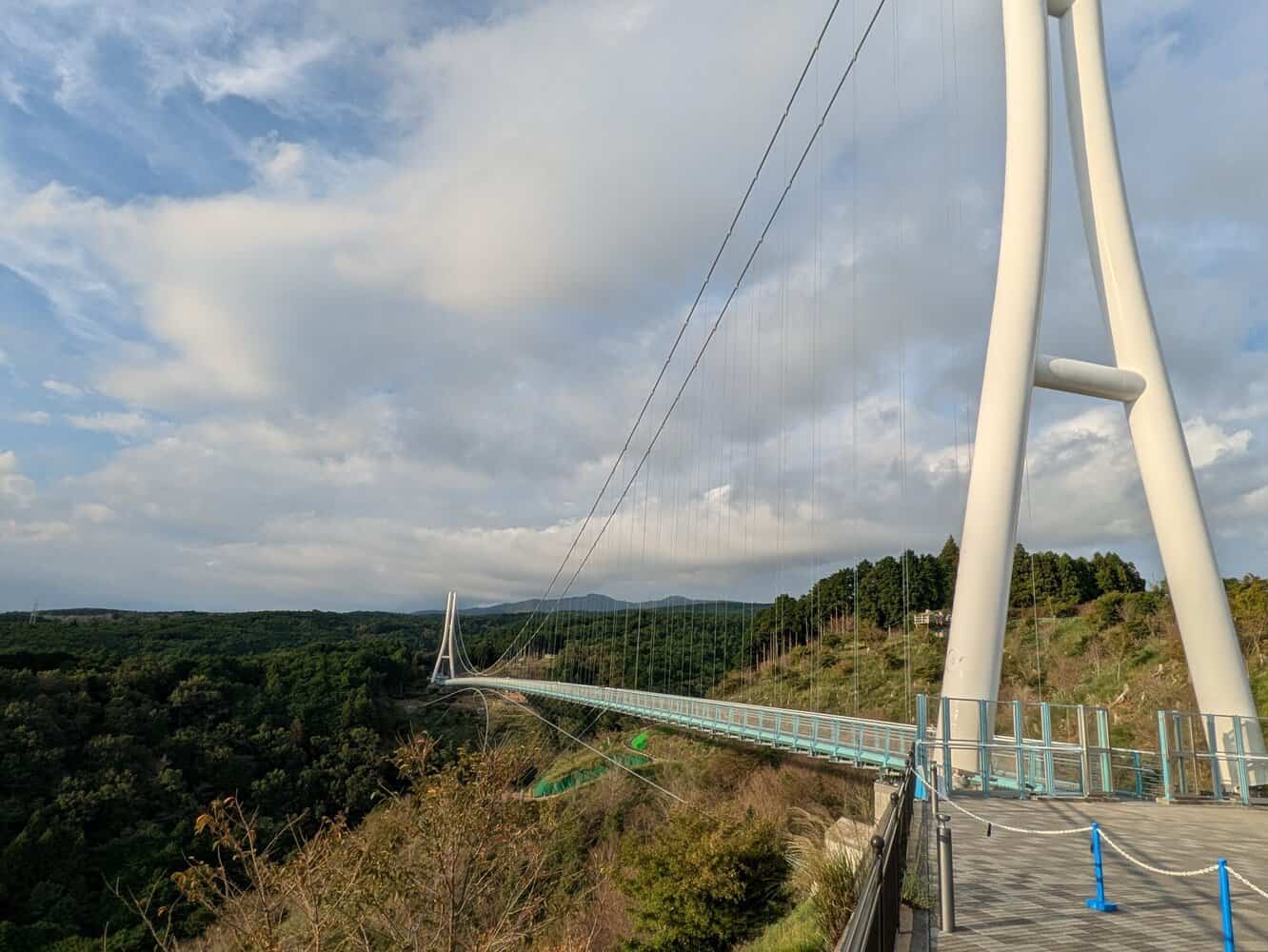
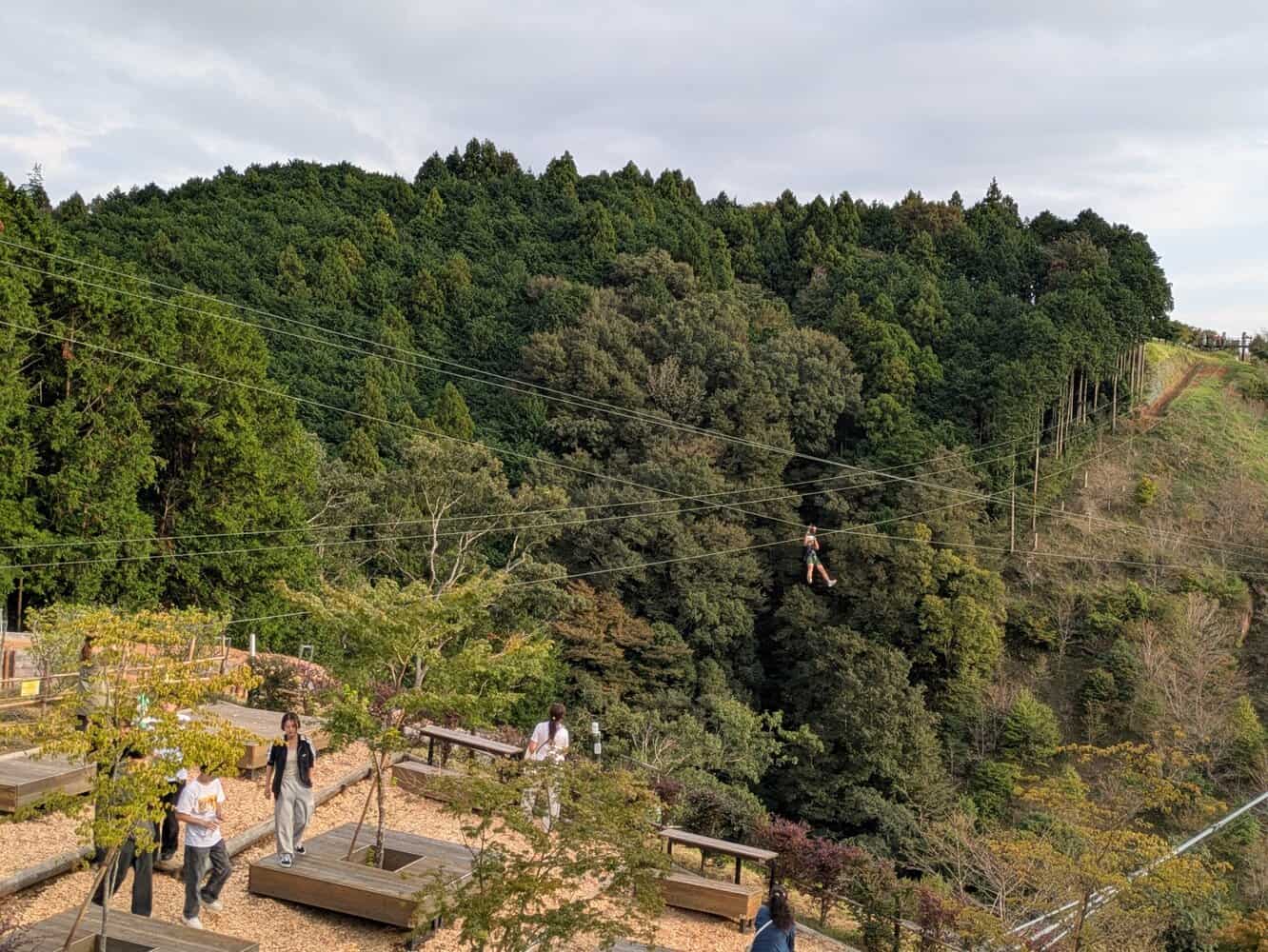
Primarily designed for a family day out, Mishima Skywalk is 400m long and can provide a good view of Mt. Fuji, whenever the weather is clear. It was not when I visited but I had my fill of Mt Fuji views and was not disappointed. There are several activities one can indulge in, mostly for kids but the zipline looked special.
The views from the skywalk, suspended over a deep valley, are quite nice. The town of Mishima is also visible. Near the bus stop, a long staircase leads to the food court that was very nicely decorated with flower chandeliers and abutted a lovely garden. The best part was availability of vegan menu but it was almost 5pm when I reached there and the outlets were winding up for the day. The cost for a bowl of vegan tomato noodles was ¥ 2,200. The regular noodles were priced lower!
Just 20 minutes by Bus from Hakone-Machi
The Tozai bus from Hakone-Machi to Mishima Skywalk takes only 20-30 minutes and normally runs every 30 minutes or so during the opening hours. I took the last bus that departed Mishima Skywalk at 5.30pm. Bus is free with Hakone Pass.
The entry fee is ¥ 1,200 per adult with the Pass. I think it is worth a visit though I would not say it is a must visit.
What else to do?
1. Gotemba
Reachable via a Bus ride directly from Hakone–Yumoto(~ 1 hour) or from Gora, Gotemba is said to provide fantastic views of Mt. Fuji and houses premium shopping outlets, the largest outlet mall in Japan. The Gotemba station is located ~15 minutes away from the shopping outlets and both are connected by free shuttle bus.
2. Hot thermal springs(Onsen)
There are plenty of them in the area but not all will welcome guest visitors. Hakone has some very scenic Onsen and one or two provide great views of Mt. Fuji. Check out this link for more information. Or simply google. Some even allow swimming trunks to be worn. A bit of research will be required to choose whatever you prefer. I chose to use the Onsen at my hotel.
3. Lake Kawaguchi
From Gotemba, one can travel by bus to Lake Kawaguchi, as also other sights near Mt. Fuji.
4. Odawara
Hotels at Odawara are much cheaper than those at Hakone. The castle and park are well known but Odawara need not really be on one’s itinerary.
Where to stay in Hakone
For the first timers, Hakone-Yumoto is the best option. There is a variety of accommodation available, from Western style hotels to Japanese style ryokans. I was keen to try the traditional ryokans but they only offered packages with Japanese meals – breakfast and dinner. So I chose a half Western, half Japanese style room at Yumoto Fujiya hotel, very close to the station. The room was quite spacious, over 500 sq. ft. with a balcony, and neatly furnished. I paid ¥106k(INR 64k) for 2 nights for a couple with breakfast. The hotel had both public Onsen (free for hotel guests) and private Onsen(¥2000 for 45 minutes).
Limited vegetarian options at breakfast
Yumoto Fujiya Hotel was great in all respects except vegetarian food. Vegetarian options in the breakfast menu were limited and for dinner, I had to look elsewhere. The labeling at breakfast buffet was a bit misleading from my perspective and I ended up tasting stuff I would not otherwise touch! But I learnt that items labelled Corn soup or Vegetable Tomato Noodles or Rice Conjee are not actually vegetarian!
Gora can be another option but you will need to choose a hotel/ryokan within walking distance from the train station or bus stop. No problem if have a car.
Vegetarian food
Yumoto Fujiya Hotel did not serve any vegan/vegetarian meal. Bulk of the restaurants near Hakone-Yumoto station serve Japanese cuisine and effectively out of bounds for vegetarians though it is possible few of them may offer vegan options. There was an Italian restaurant as well but I did not give it a try. On day 1 evening, I went to an Indian restaurant, The Bistro, at Hakone-Machi, a 40 minute ride by bus(free with Pass). Adjoining The Bistro was a Mediterranean restaurant that served vegetarian items. I notice couple of noodle shops here but not sure if they had anything vegan on their menu. On day 2 evening, I went to Odawara that had few options for vegetarian food. Just 15 minutes by train or bus, again free with the Pass.
Café Douce is also stated to serve vegetarian items. It is located near open air museum, close to Chokokunomori station, one stop before Gora.
The meal at Indian restaurant cost ¥3.5k-4k without drinks that were usually ~¥500+. A simple margherita pizza cost ¥ 1,500.
Anything else?
Transportation guide is a must
Along with the Hakone Pass, I received a transportation guide that had the area map and bus routes. This is absolutely essential. The bus timings are not mentioned on this guide but posted at every stop and can also be checked online. Before taking an onward bus, I would always check for the return bus timings. Most bus routes stop plying by 8pm or so, and even earlier from Mishima Skywalk. From Odawara, both Buses and Trains are available till 10pm or so.
If you miss the last Bus, Taxis are available on order. For the 18km distance from Hakone-Machi to Hakone-Yumoto, a taxi may cost well over ¥6k, depending on traffic condition. Bus ride is ~¥ 1k but free with the Pass.
The official website has both the map and the guide. It also provides a daily status update. I did not have to use it but may be quite helpful during inclement weather or when there is big crowd.
Cash will be needed
While I used Suica and credit card, my usage was quite limited. Carrying some cash is always useful in Japan. I read that few Onsen accept only cash. This may be true as well for roadside outlets also.
How many days in Hakone?
2 nights, 3 days is actually good. But with even 1 night and 2 days, one can experience most of what Hakone has to offer. Add a day or so if you are keen on Onsen experience.
Weather in October
I visited in mid October when temperatures were very pleasant and ranged between 15°C and 20°C. June, July, September and October receives more rain than other months but when I travelled mid October, there was no rain though there was some cloud cover. I guess the peak rainy month (September) and peak winter months (January and February) are better avoidable just in case there is a disruption due to bad weather.
When to visit Hakone?
Like the Tateyama-Kurobe Alpine Route, Hakone Loop too is designed for tourists. It may not be a very pleasant experience when there is a big crowd as that would only lead to longer waiting times in even longer queues! So avoid the weekends, public holidays, Sakura season and the peak fall season (November). This is besides the months to avoid due to potentially bad weather.
If travel during the busy season cannot be avoided, try doing the Loop in the clockwise direction, starting with the Bus from Hakone-Yumoto to Hakone-Machi. While waiting in the Train to Gora at Hakone-Yumoto, I witnessed the arrival of a Train from Odawara. Barring a minority, all the passengers who alighted got into the Gora train!
Cost of 2 nights in Hakone
I must have spent in excess of ¥140k for the two of us, with the hotel constituting a major chunk(¥ 110k with private Onsen), followed by Hakone Pass(¥ 12k). Rest was largely food and beverages, small bit of shopping and Mishima Skywalk entry fee (¥2.4k). The expenditure may have been more had I visited Gotemba for shopping!
Is Hakone worth visiting?
Absolutely. Hakone is very scenic and I enjoyed it. Moving around was quite easy but a bit of planning is required. Even then, there are few ifs and buts. Bad weather and large crowds can be a spoilsport, especially if that disrupts transportation. The sighting of Mt. Fuji will always be a chance. Timing is important so choose well and pray that weather stays good. If not, have a Plan B of enjoying the Onsen that are weather independent! Also, Hakone is relatively expensive but one of better places in Japan to enjoy ryokan stay. Do a day trip if on a budget or consider staying in Odawara.
For more information
https://www.hakonenavi.jp/international/en
https://www.japan-guide.com/e/e5200.html