
Located on the central west coast in the Hokuriku sub-region of Japan’s main island Honshu, Kanazawa is not visited by 98% of the international tourists visiting Japan. I chose Kanazawa for a few reasons – access to both Tateyama-Kurobe Alpine route and UNESCO world heritage site of Shirawaka-go/Gokayama villages, the well preserved historical Samurai and Geisha districts and lastly, easy access by Shinkansen from Tokyo and its location on the circuit from Tokyo to Kyoto via the Hokuriku region.
Kanazawa flourished during the EDO period(16th century CE to mid 19th century CE) and the main tourist attractions were built during that period. It is known as the Little Kyoto for sharing Kyoto’s EDO period history and Geisha districts as also the City of Crafts for its traditional crafts such as golden leaf production and lacquerware. The town is neat and clean, like any typical Japanese town. And quite modern except perhaps the Geisha and Samurai districts that have retained the old world charm.
Move to..
1. Getting to Kanazawa
From Tokyo or Kyoto or Osaka, train is the best option. The bus takes much more time but at a slightly lower cost.
Delightful journey by Shinkansen
I took the Shinkansen(Kagayaki) from Tokyo which covered the distance of ~470kms to Kanazawa in just 2.5 hours. This was my first ride by Shinkansen and to say the journey was delightful would be an understatement. The pick up is just fantastic, with speeds of 270km/hr being reached in just 3 minutes! The technology underpinning these trains is so amazing that even at 286kms/hr, I hardly felt any vibrations.
I travelled by ordinary car and the seats were very comfortable with very generous leg space. The train had plenty of empty seats and hence, luggage space for my 4 suitcases was not a problem. The entire journey was covered by Hokuriku Arch Pass which otherwise would have cost about ¥14k per adult. Apparently, few Japanese also find Shinkansen fares to be high! As Kagayaki is a fast train, it had only reserved seats. One is not allowed to board such train without a prior reservation. The slower Hakutaka Shinkansen on the route(same speed but more stops), takes 3 hours but has unreserved cars also.
At the platform, the position of the cars is clearly marked as also the area in front of the door to form a queue. One useful feature that I noted was that the seats can be rotated 180 degrees. A bigger group travelling together can simply rotate the seats to face each other!
Barricades often prevent clicking pictures
As Shinkansen runs on special(mostly elevated) tracks at high speeds, the tracks are barricaded, often with high fence/wall, making it difficult to click pictures. The train also passed through innumerable tunnels on this route.
2. Commuting in Kanazawa
From/to the railway station
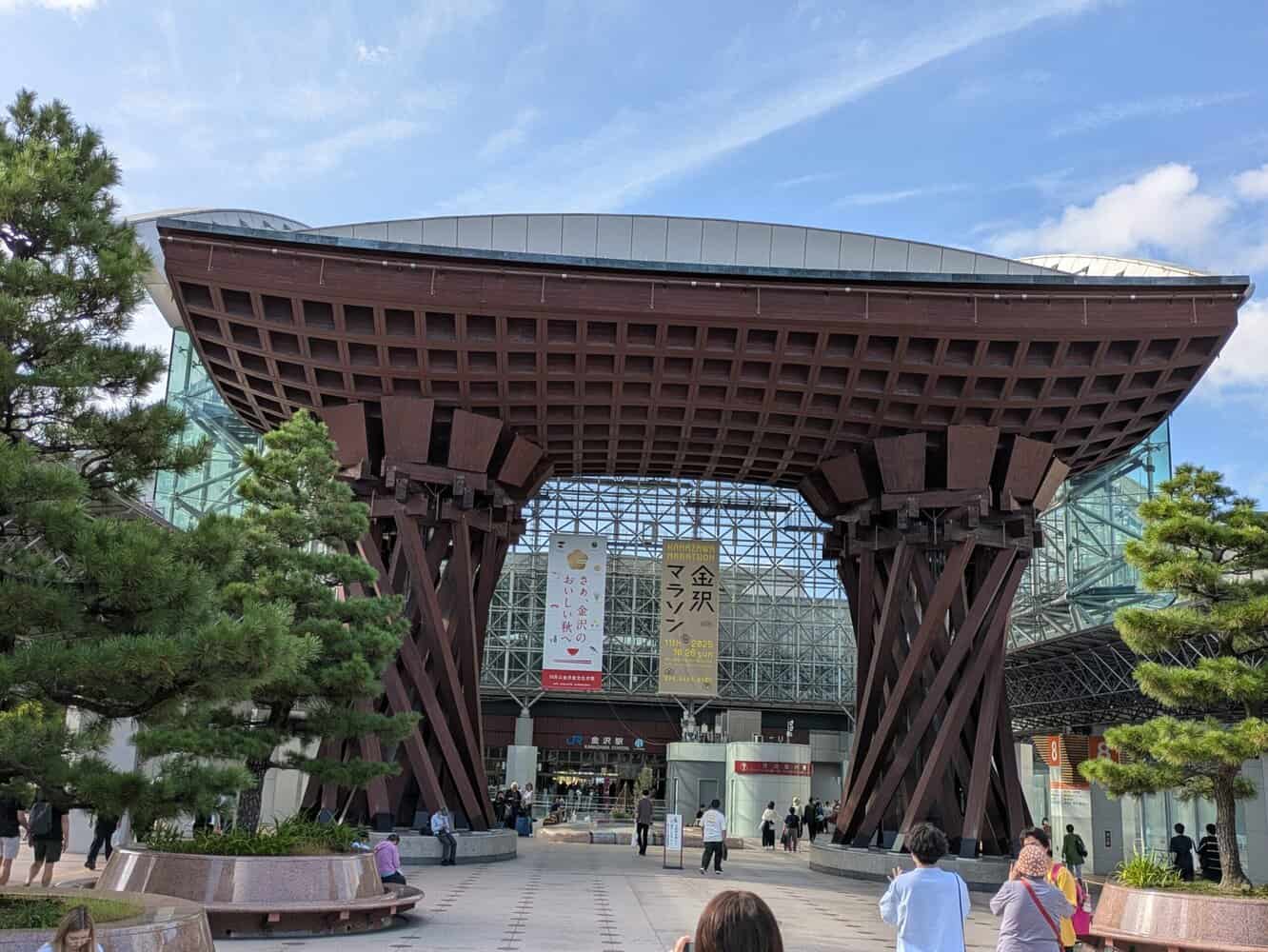
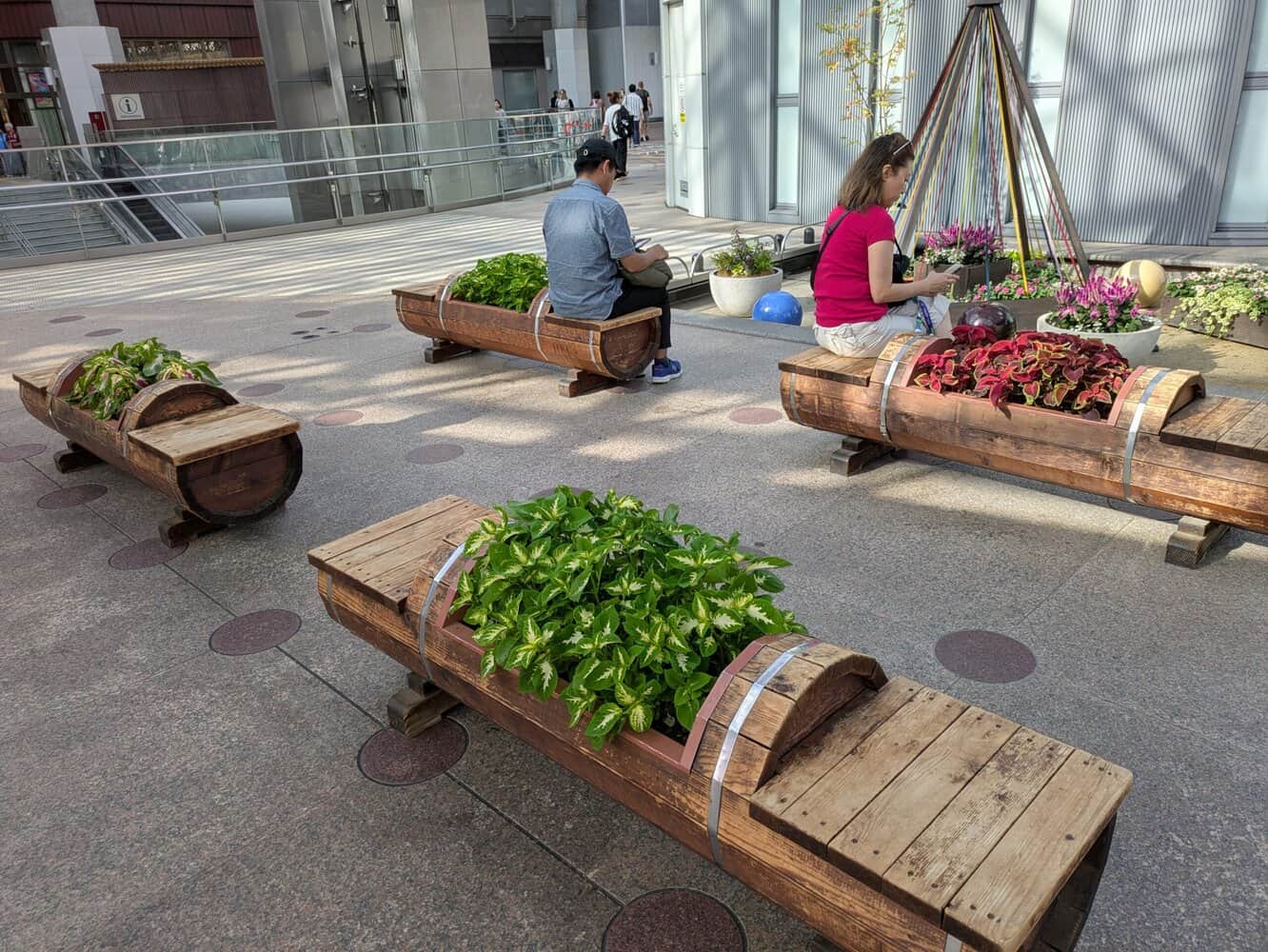
Kanazawa railway station is a beautiful structure and listed as a place of tourist attraction! There is a shopping arcade and a tourist information center here with quite a few restaurants nearby, including an Indian one. To get to the hotel, there are essentially only 3 options – a private taxi or the bus or walk. Since I had luggage and my hotel was ~2 kms away, taxi was the only option and it cost JPY 1500. Somehow I sensed the driver was not too happy. Was it the short distance?
On the return journey, I got the hotel to book a taxi. There is a local app ‘Go Taxi’ but I am not sure if there is a English version. Uber is also supposed to work but I did not try it. Rental cars are also available.
Within Kanazawa
All the attractions in Kanazawa are located in a compact area. While feasible, it would be tiring to cover them by walk in one day. Also, there is fair bit of walking in Kanazawa Castle park, Kenrokuen park and the Geisha districts. So I chose to travel by bus, buying the day pass.
Though there are good number of local buses, most tourists use the loop bus(two circular routes in opposite directions – right loop and left loop) that covers all the places of tourist attraction and is designed for visitors. Starts and ends at Kanazawa station, east gate. Each trip costs a flat ¥210 irrespective of the distance. Just make sure you have the printed map with you so as to avoid travelling in the reverse direction! The fares in local buses vary, depending on the distance. Normally, a numbered ticket needs to obtained from the machine upon boarding. I paid by Suica card when getting off at the destination.
The buses can get crowded, especially near Higashi Chaya district.
Buy the one day pass for local sightseeing
This costs ¥800 and I bought it at my hotel. The pass can be used on all the local buses. Just 4 rides and the cost is recovered. The pass has other benefits though I did not get to use any of it. My Hokuriku Arch Pass was not valid on all JR West buses and hence the day pass provided lot more flexibility as I could board any bus without the need to collect numbered tickets and making payment when alighting.
3. What to see in Kanazawa
The Loop bus covers all the attractions and it will save time if the same order is followed, instead of going back and forth.
Nagamachi Samurai district
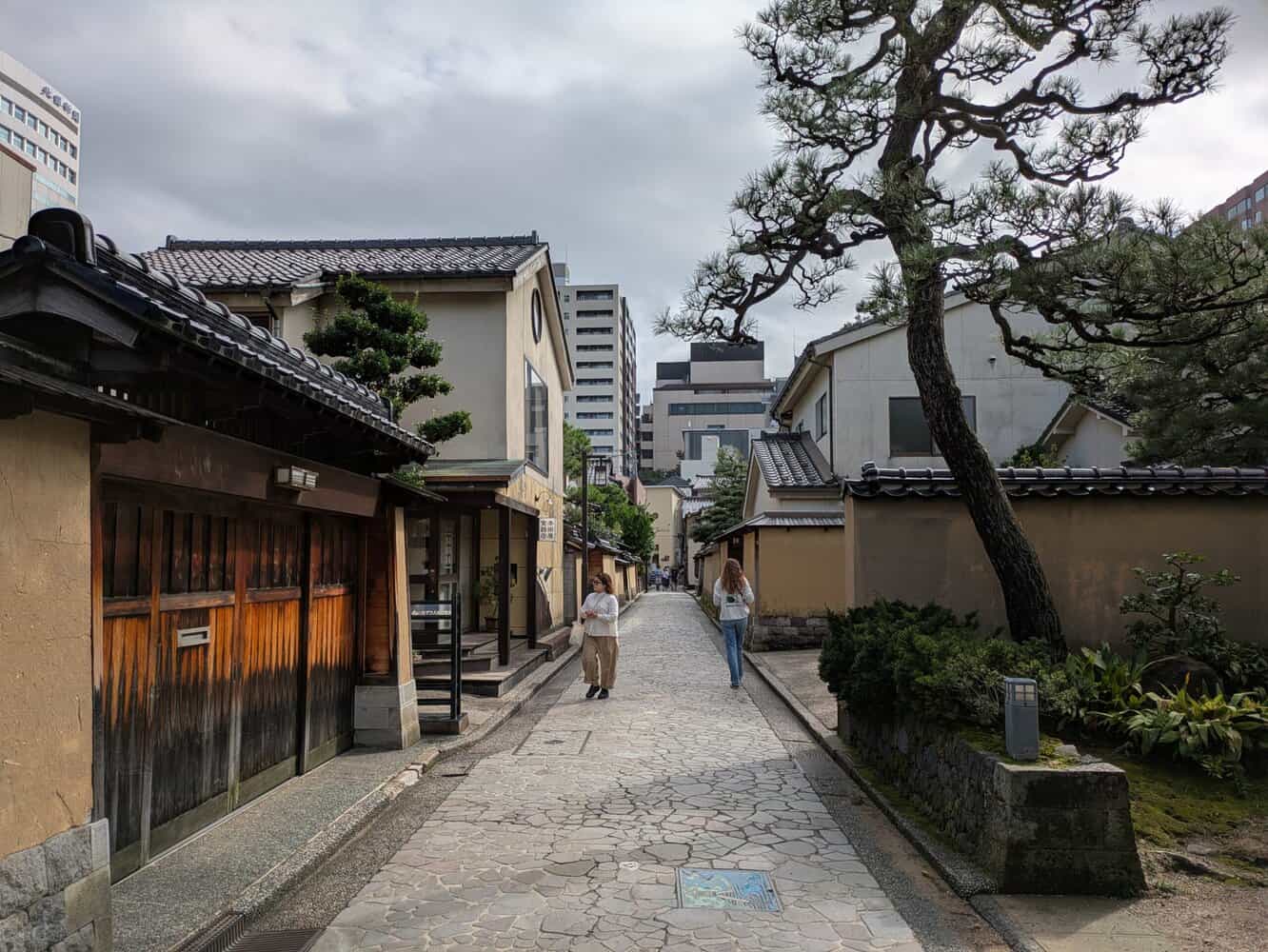
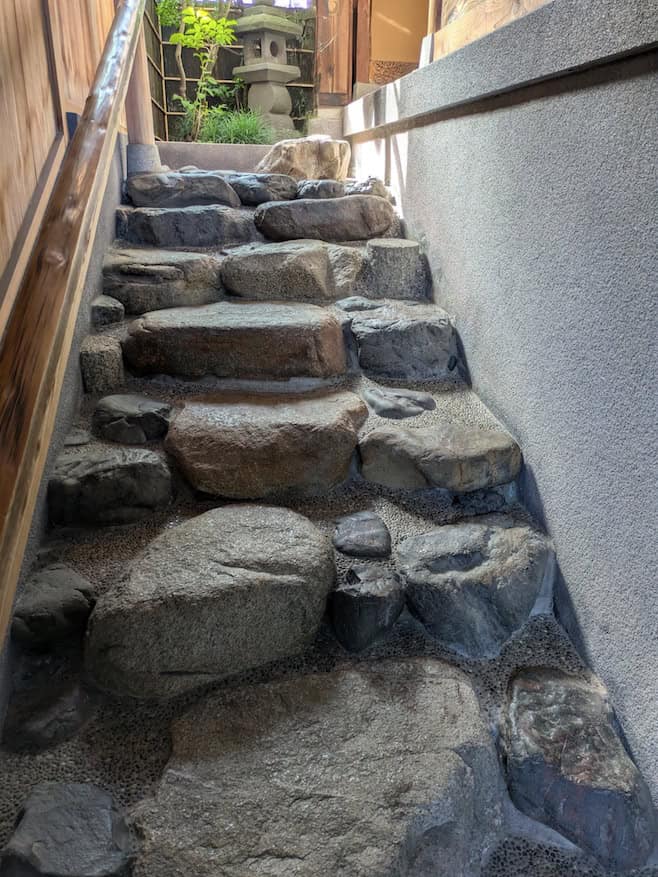
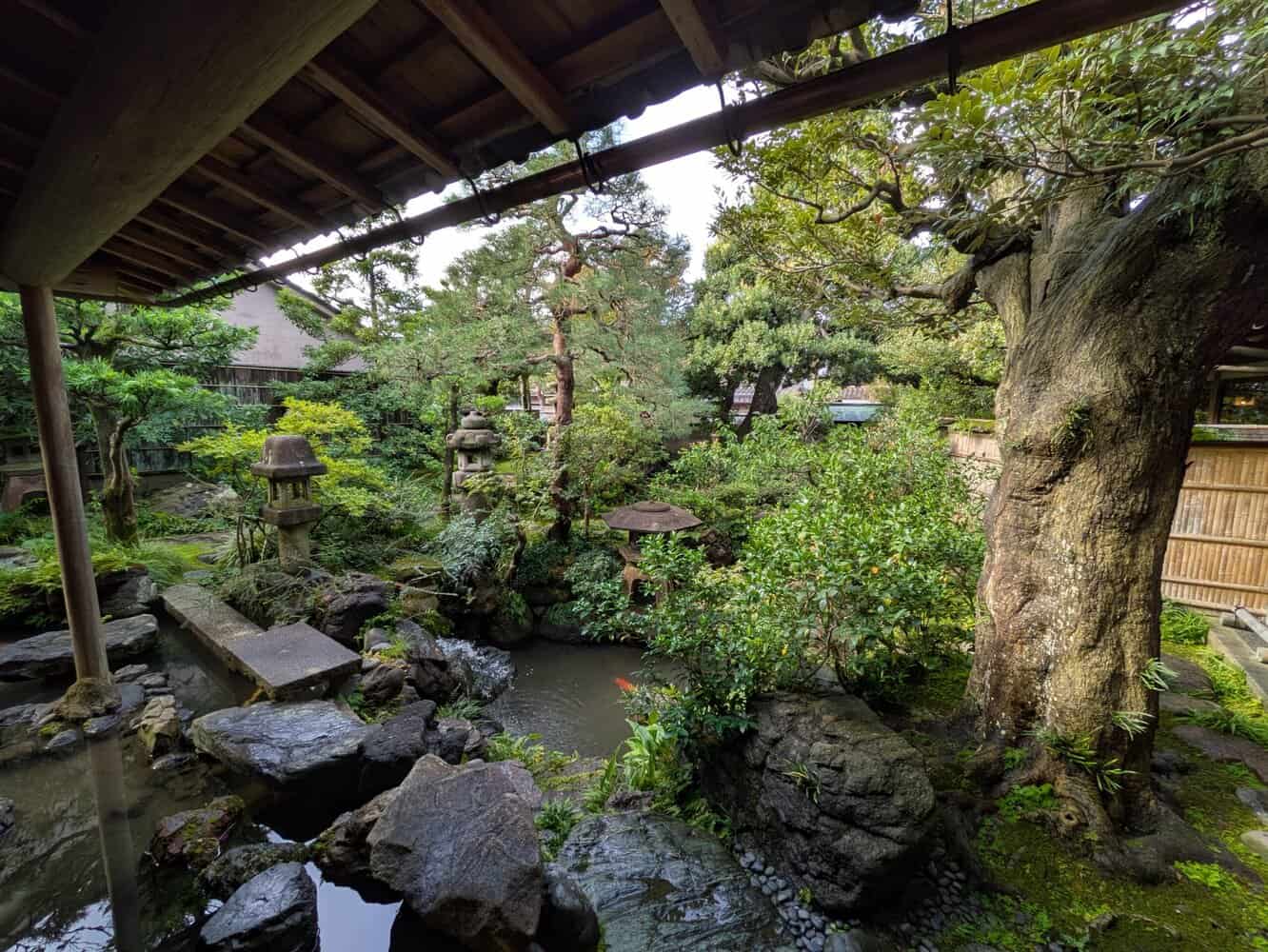
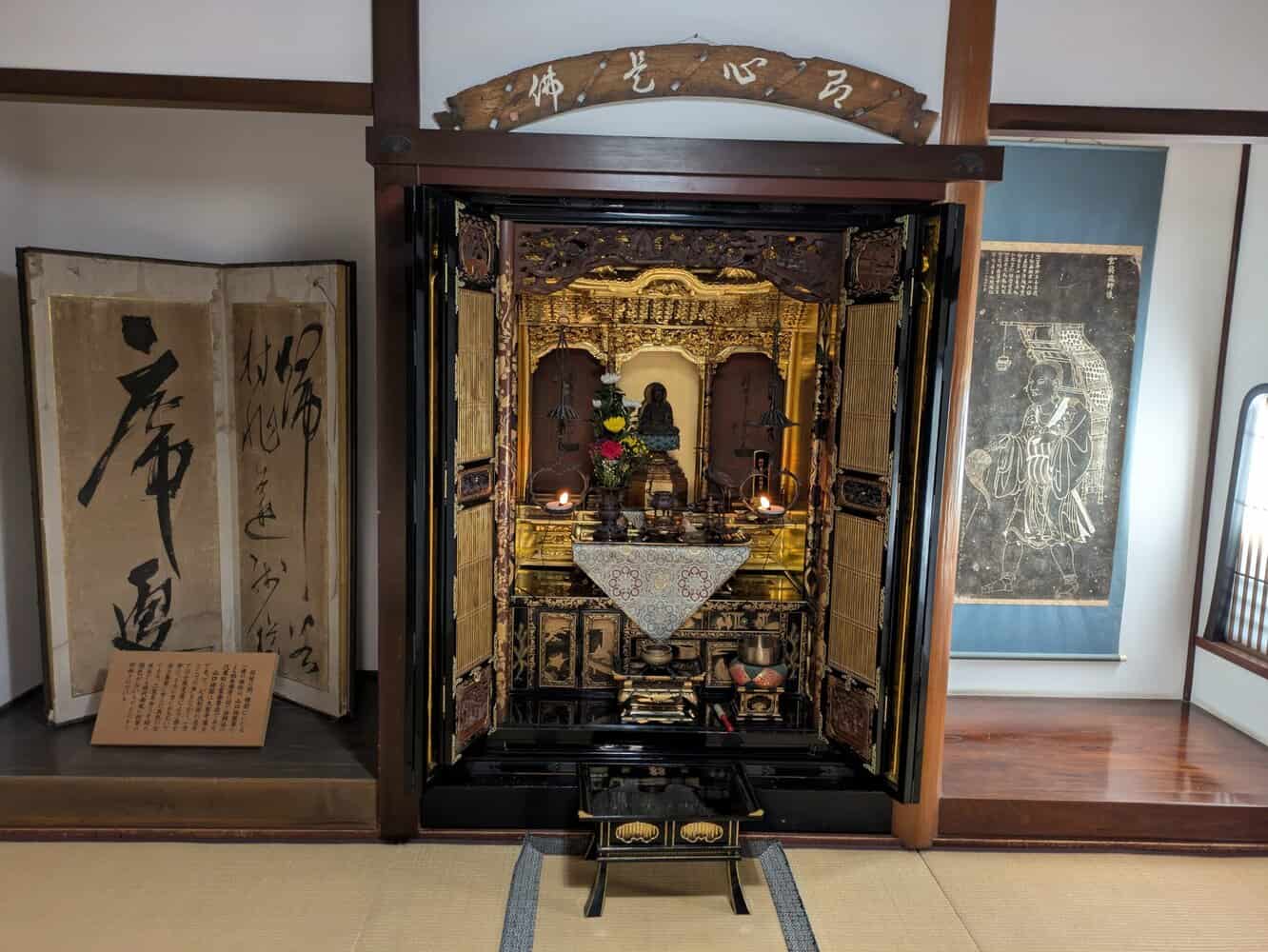
This is a village with cobblestone streets and former samurai homes with its earthen walls and entrance gates. Few of the homes have been converted to shops and restaurants and many are private residences. I visited a restored Samurai home called Nomure-ke which is open to public. Quite a lovely home with a small garden that had a water body and a cosy tearoom overlooking the garden. Entrance fee is ¥500. A shop nearby sells local crafts. There are a couple of museums but I skipped.
Geisha districts
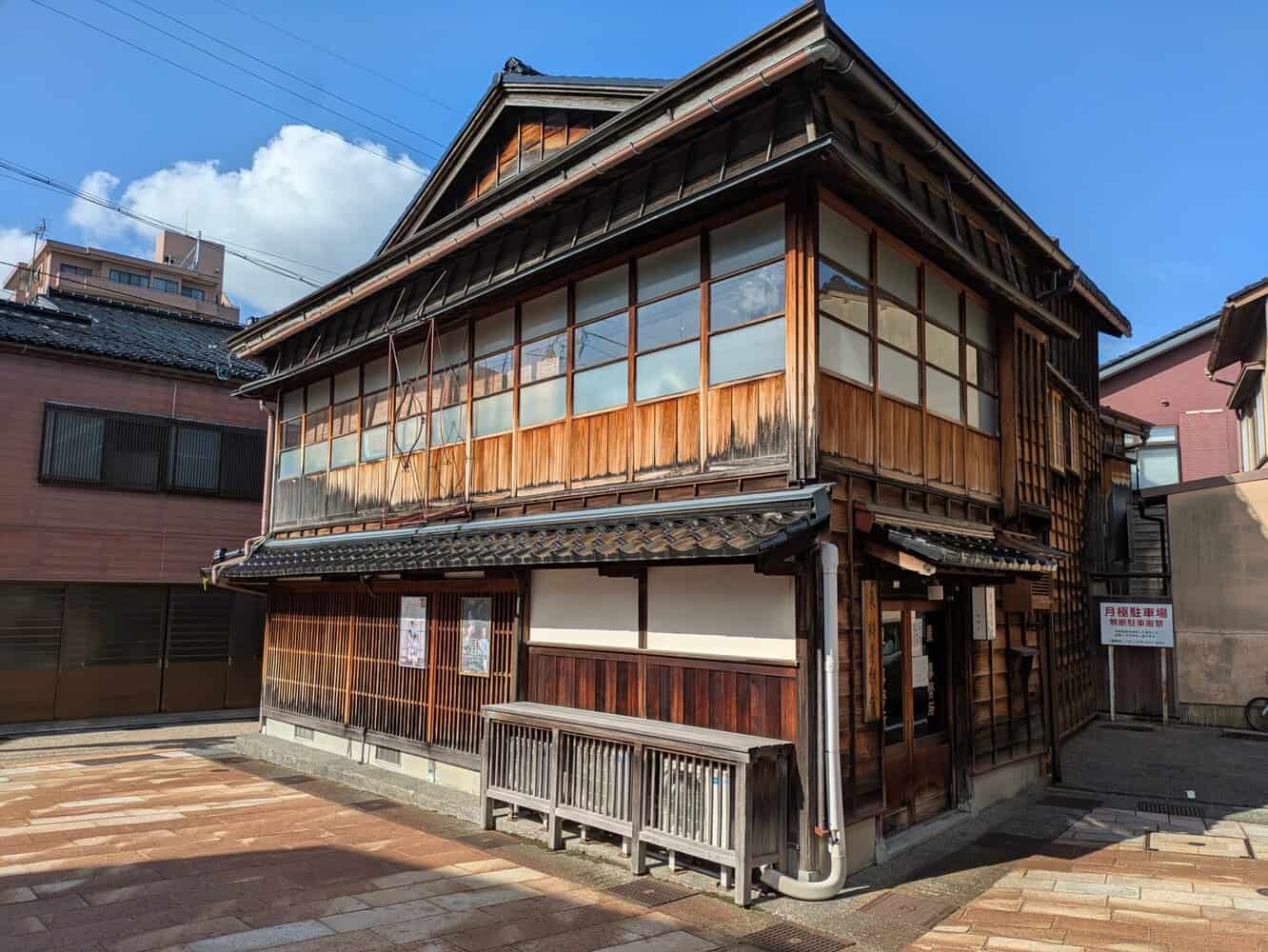
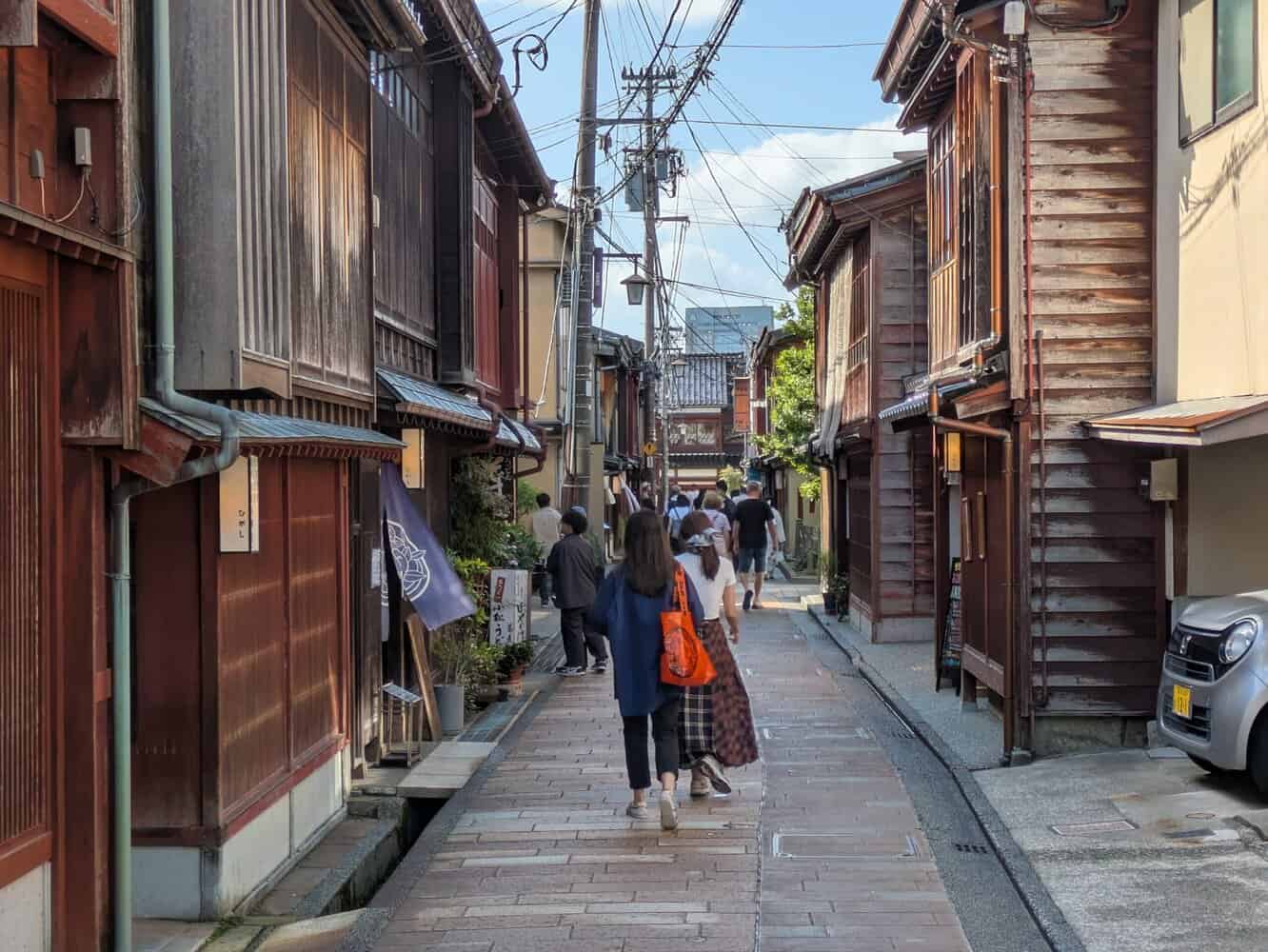
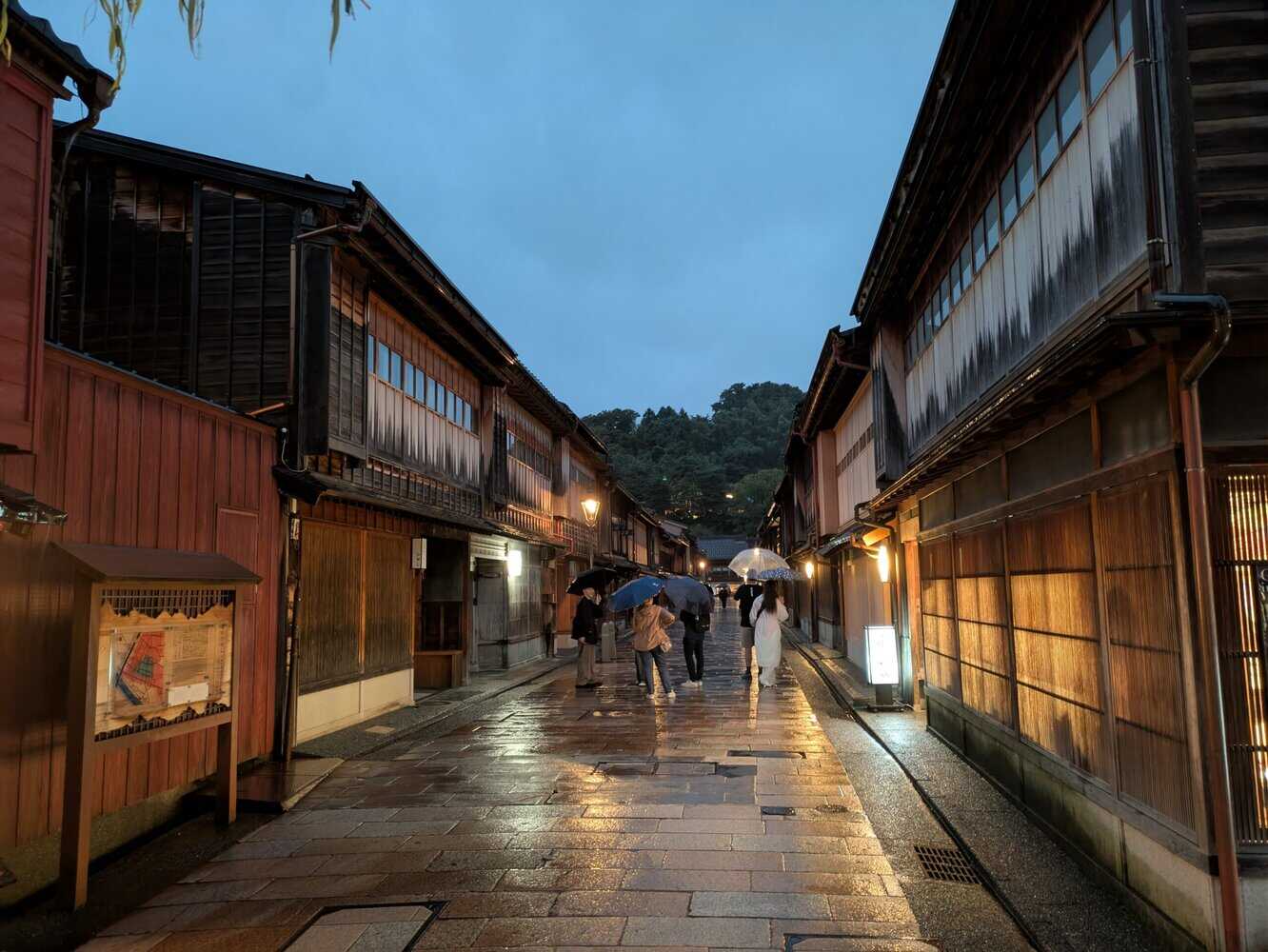
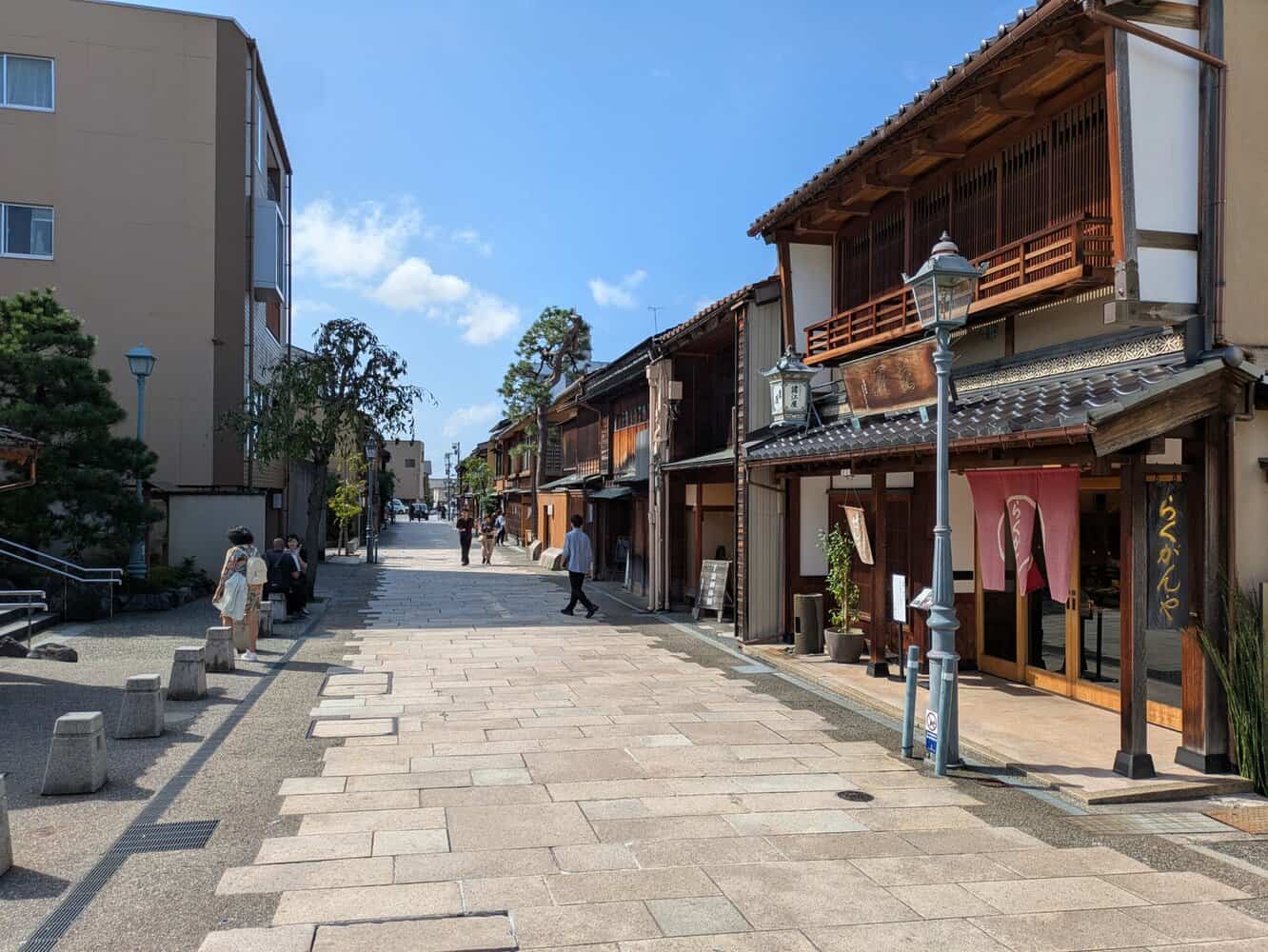
I was quite impressed with the Geisha districts. It was the first time and the novelty factor was high. There are 3 of them and I visited all three. But if short on time, visit the largest Higashi Chaya district(included as Japan’s cultural asset) or even the smaller less crowded Nishi Chaya district to get a feel.
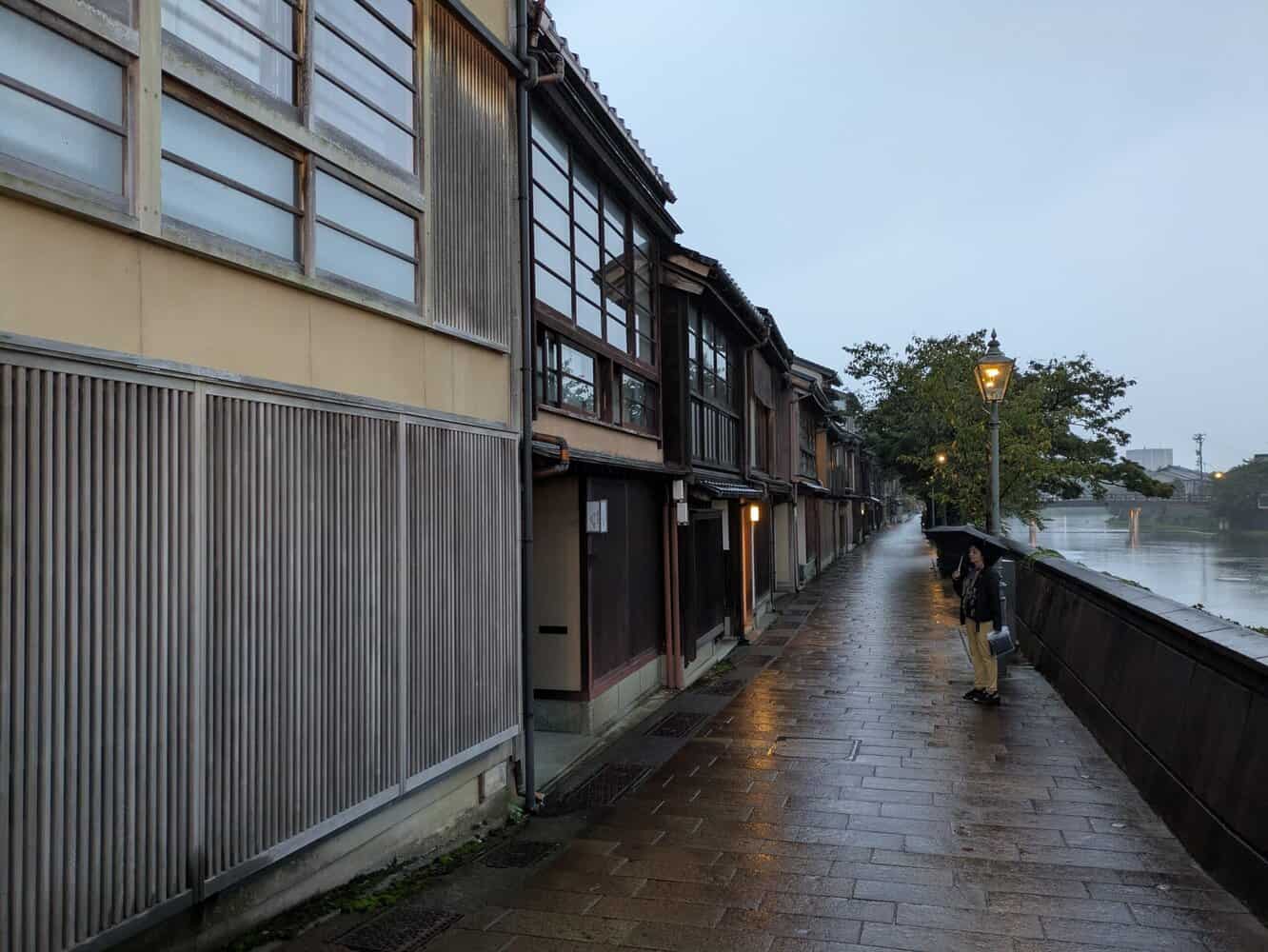
During the EDO period, only the Geisha houses could have 2 stories. These wooden buildings look quite stunning. Many of these buildings have been converted to cute looking cafes and restaurants but it is still possible to see the interiors of a geisha house. At the Nishi Chaya district, I could hear the shamisen music being played as I walked the main street. Couple of traditional teahouses(called Chaya) are still open to public in the Higashi Chaya district. Another shop here sells gold leaf products.
Kazue-machi chaya district is located close to Higashi Chaya district across the river. Similar look and feel but much smaller.
Ninja temple
The ninja temple called Myoryuji Temple is near Nishi Chaya district. Nothing special but I learnt that there are secret rooms and traps inside that are accessed only through guided tours. There is another one further up on the main road called Teramachi temple that I skipped. It was clearly visible from the loop bus on the right side.
Kenrokuen park
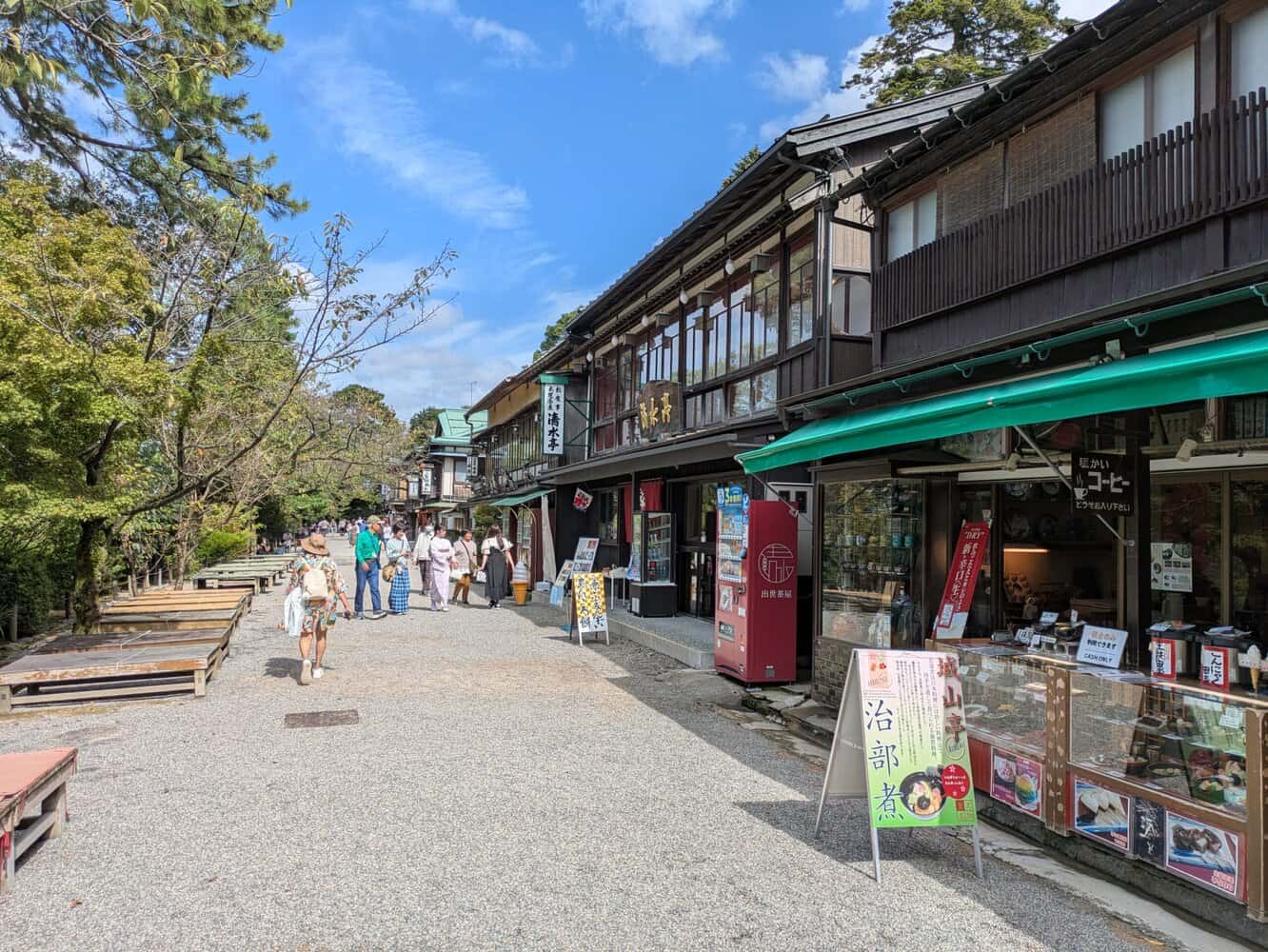
I bought a combined entry ticket that gave me access to both Kenrokuen park and Castle park(¥500 per adult). The main entry gates are located opposite to one another, with a bridge over the main road connecting the two gates. There are quite a few shops and eateries on the street outside the main entrance.
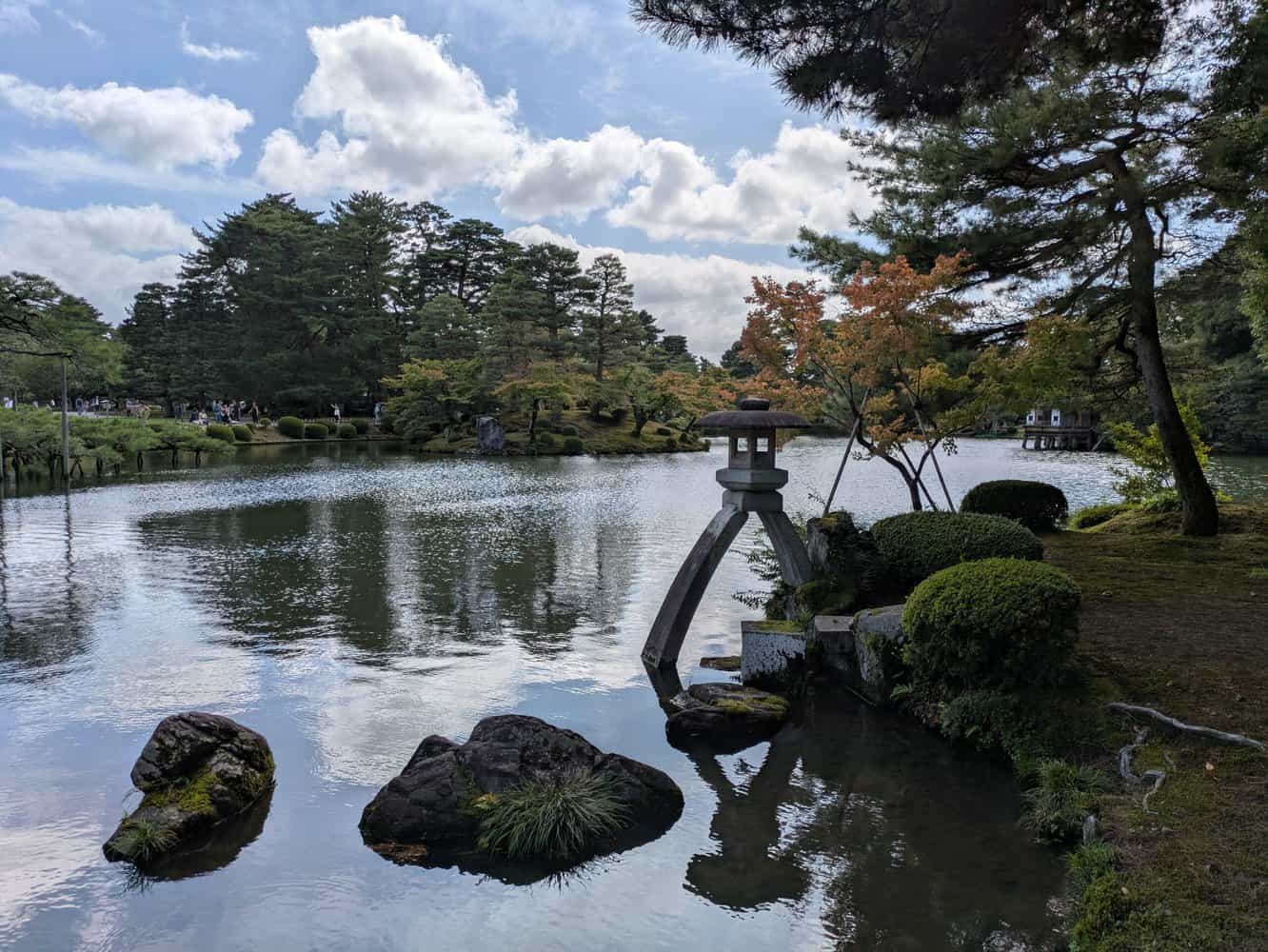
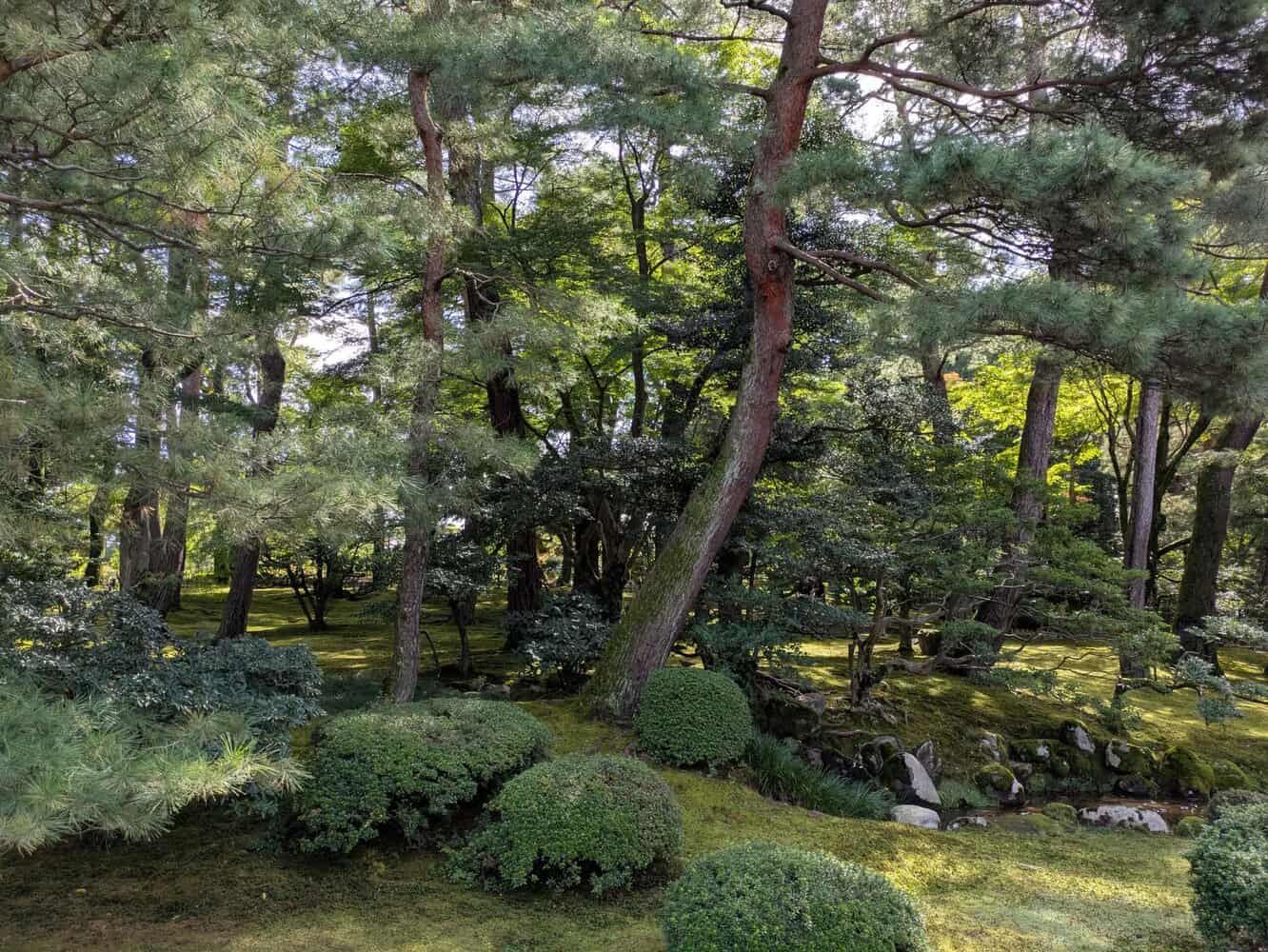
Kenrokuen park is rated among the top 3 great gardens in Japan. There are a variety of trees and artificial ponds but the fall colors were just beginning to appear when I visited in early October. There is also a teahouse that hosts tea ceremonies at specified times.
Kanazawa Castle Park
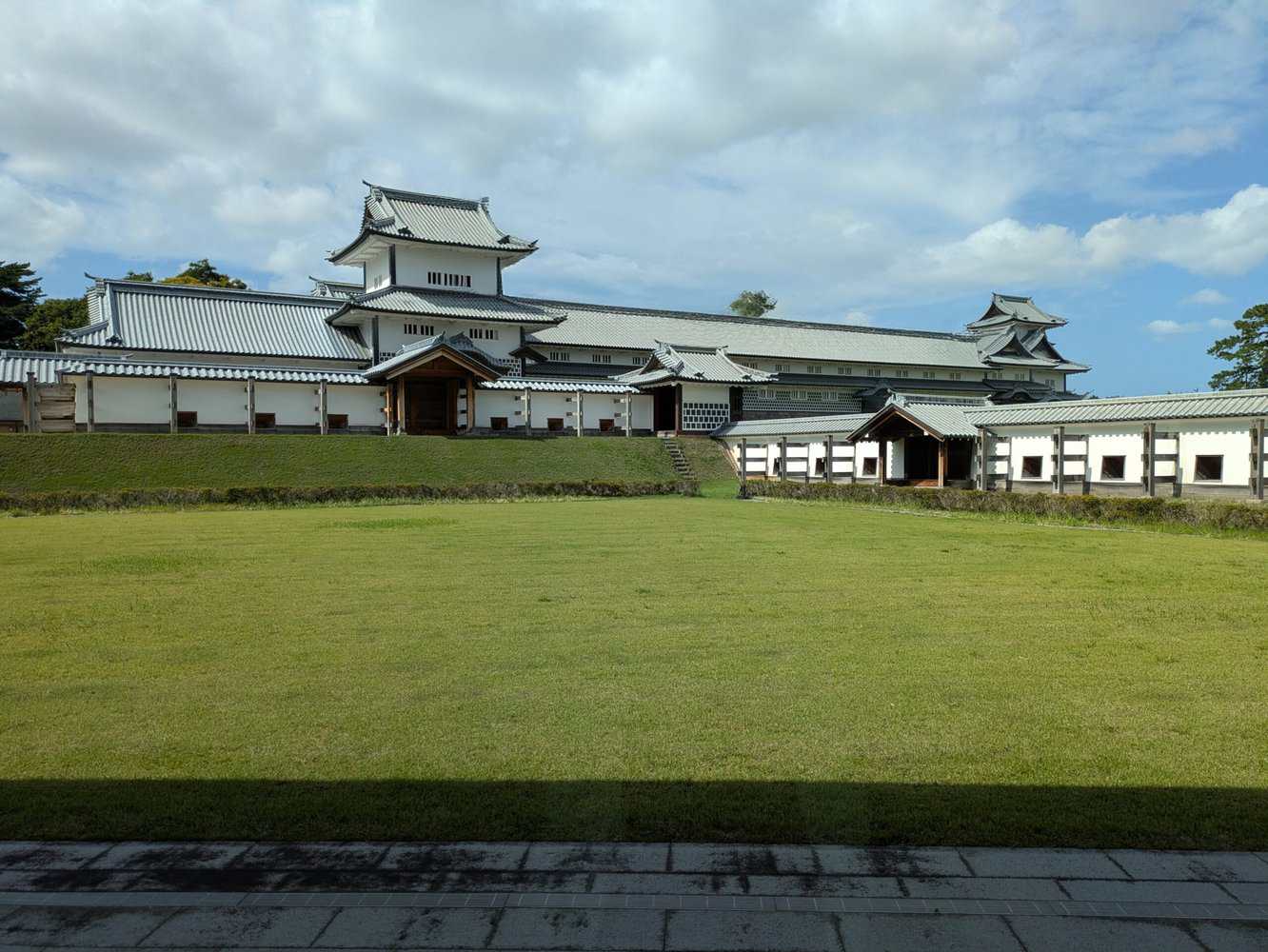
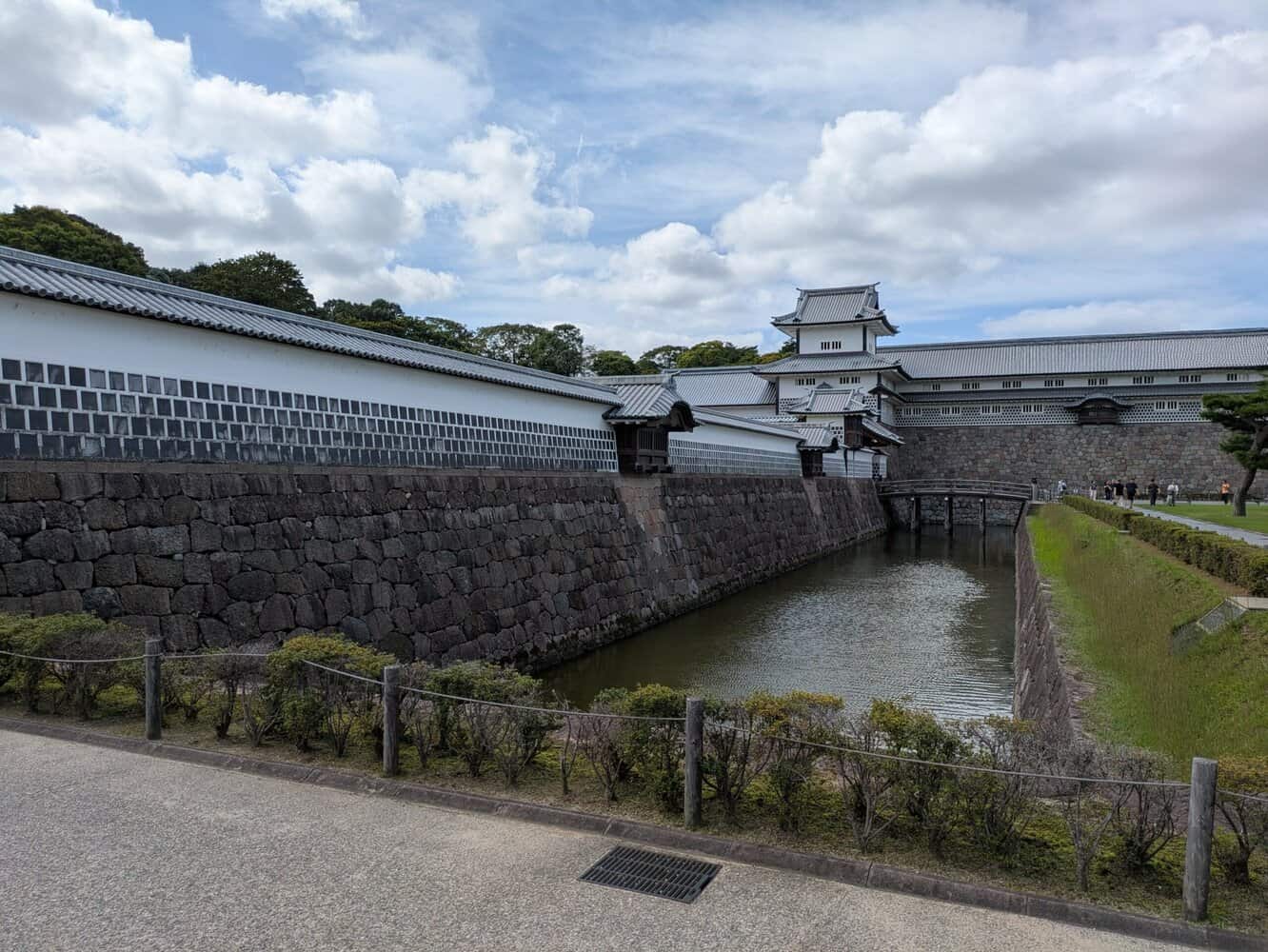
The Castle has been subject to reconstruction several times since it was originally built in the 16th century and some reconstruction was on even when I visited. While the exterior look is nice with a moat running around the walls, there is not much to see inside except the well maintained garden and couple of outer buidings. Don’t expect to be exploring a Castle hall by hall, room by room, turret by turret, which is what I did. Then I realised the header is Castle Park, not Castle.
Omicho market
The famous fresh food market built during the EDO period is normally bustling with activity in the mornings. Apart from shops, there are restaurants inside that are quite popular.
What I skipped
21st Century Museum is rated high but given my general disinclination for museums and the likely time that it entailed, I decided to skip.
Oyama Jinja shrine is a lovely looking shrine located on the main road very close to my hotel. I did not go in as I had already visited quite a few shrines in Tokyo and Nikko.
4. How much time is needed for local sightseeing?
The key attractions can easily be done in about 6-7 hours or so. 21st Century Museum will need more time. Samurai district and Higashi Chaya district are must see, followed by Kenrokuen garden. The rest of what I saw, one can safely miss. Note that most attractions close by 5 or 6 pm. But one can walk around Geisha and Samurai districts in the evenings also.
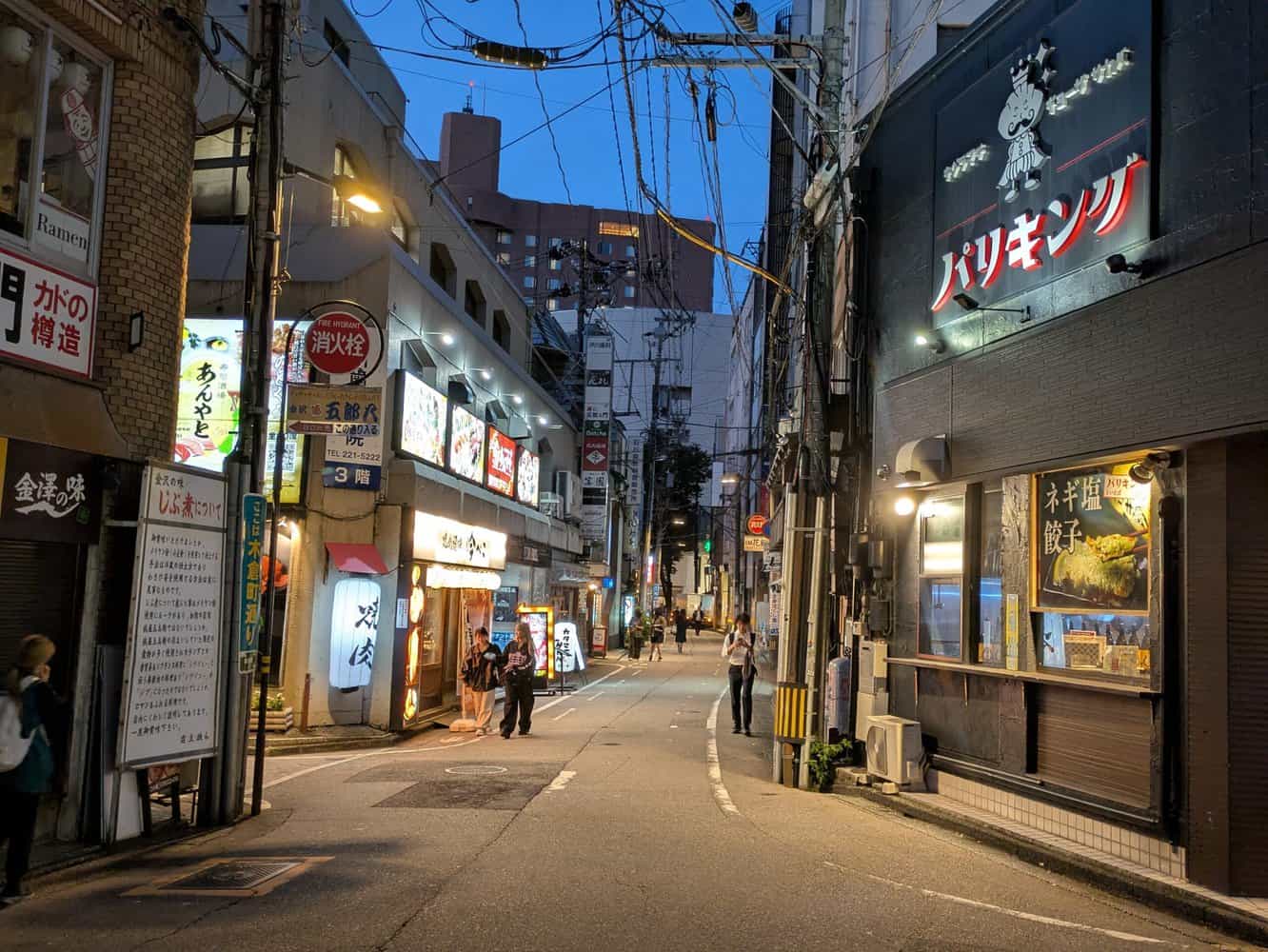
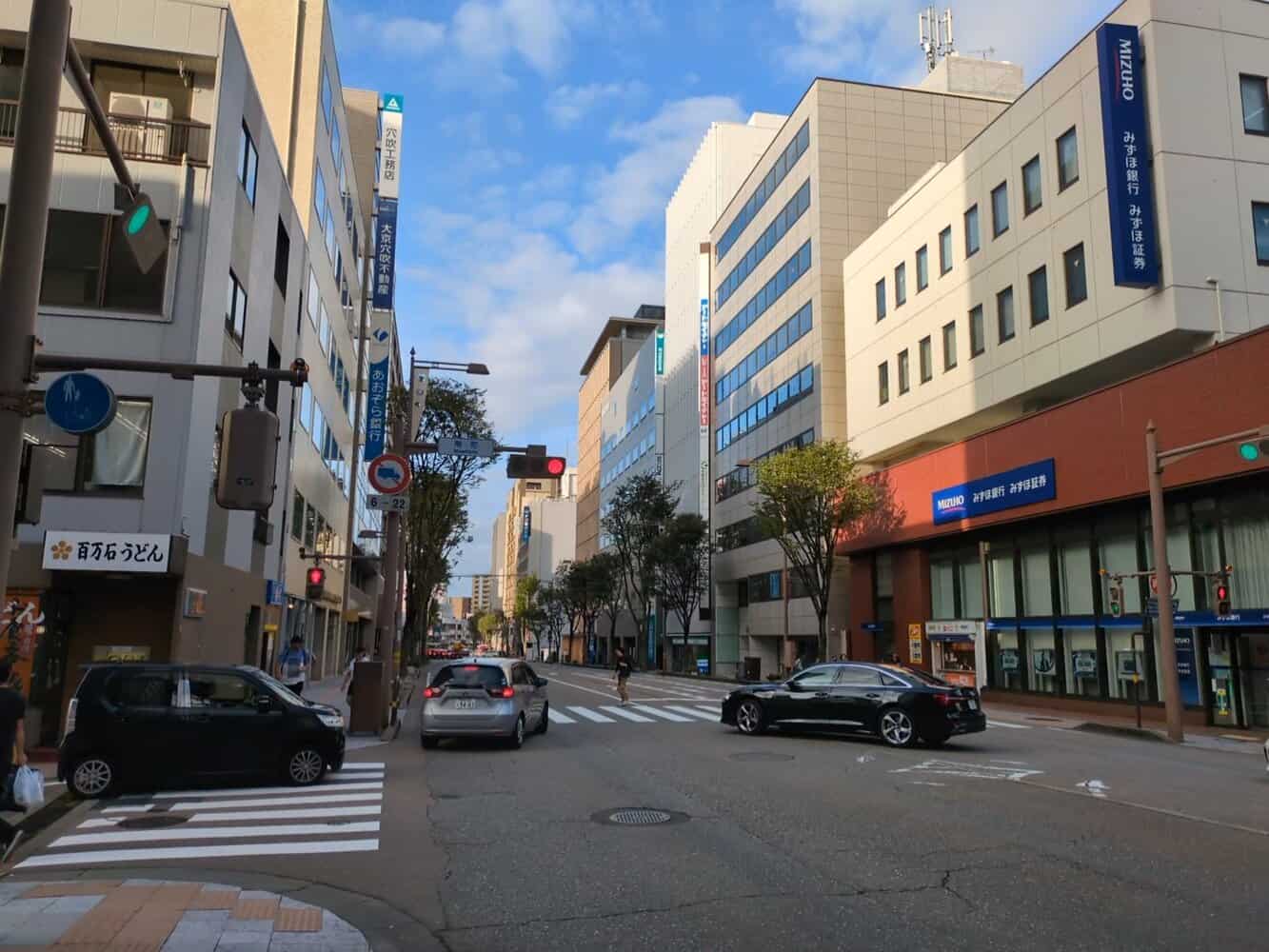
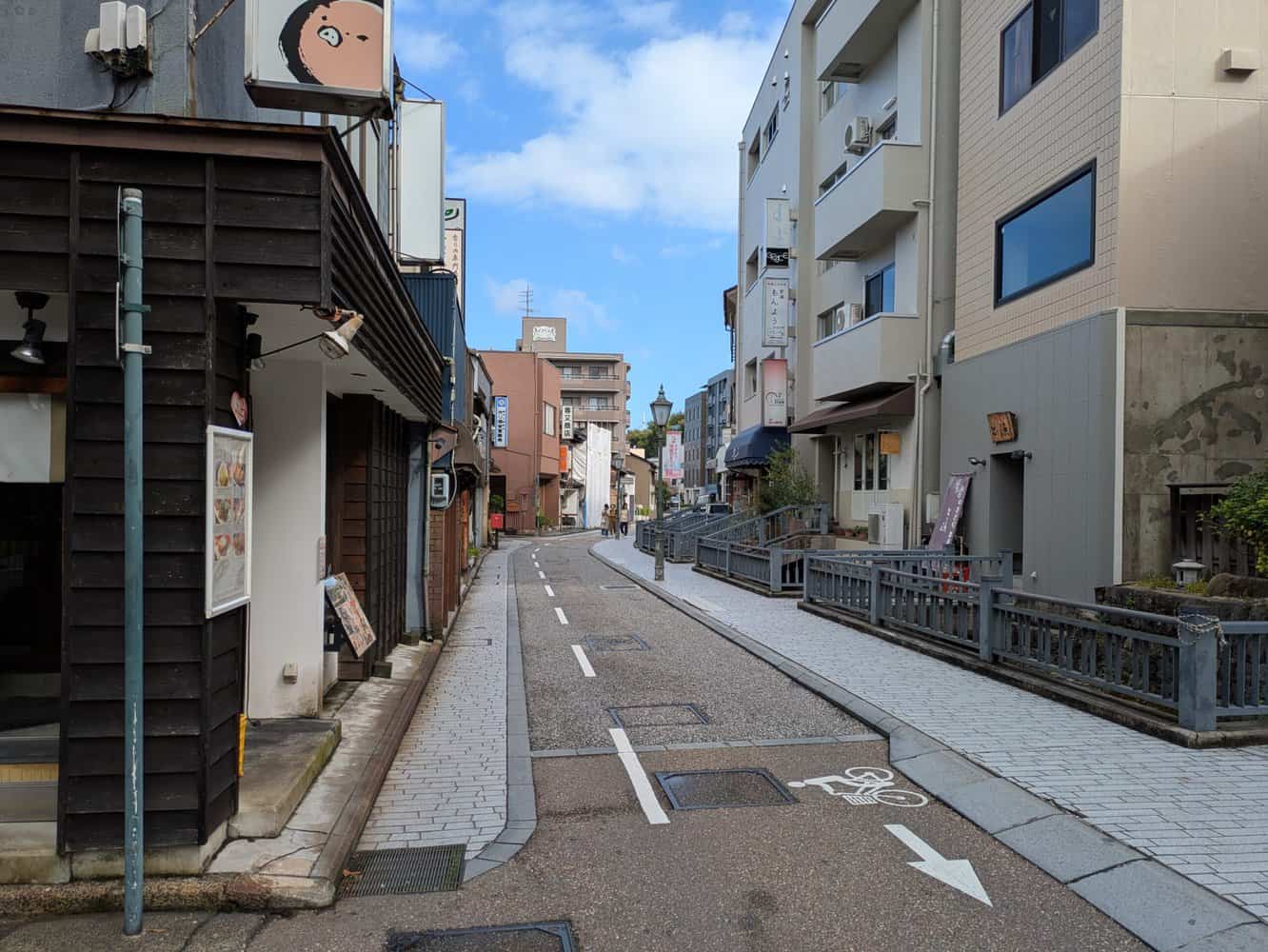
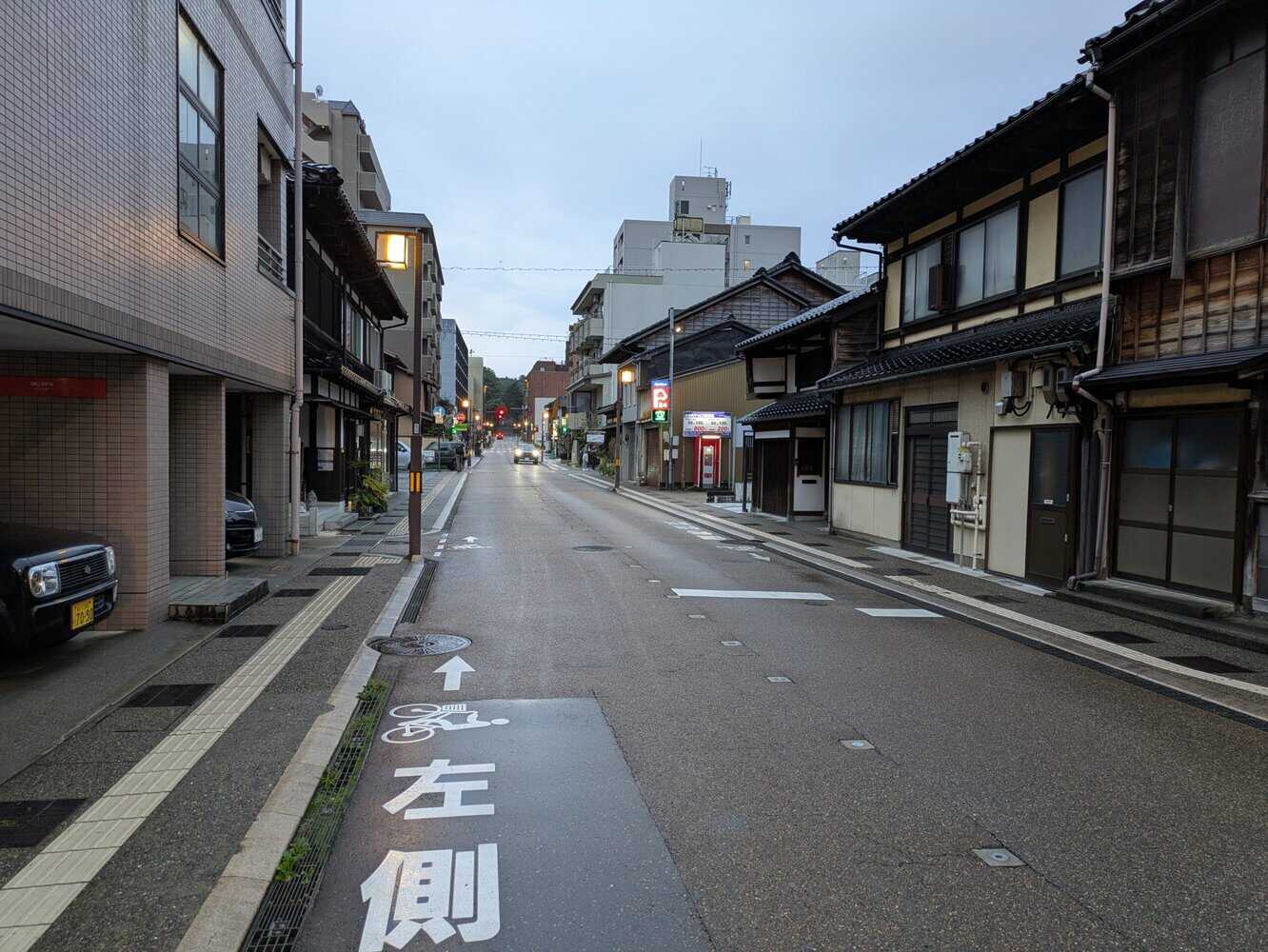
I found walking on the side, narrow streets more enjoyable than walking on the main streets. In the evening of Day 1, I walked from my hotel to Omicho market, then to Kazue-machi Chaya district and Higasho Chaya dictrict. A delightful walk as it allowed me to take in the local sights in a leisurely manner. The heavy downpour made the occasion even more memorable(only because of my rain jacket!). Similarly, Korinbo to Katamachi is another great area for a stroll.
5. Experiences and day trips to choose from
There are a variety of experiences to choose from. Gold leaf experience, Tea ceremonies, Geisha/Geiko experience, Ikebana, Samurai experience and so on. I was keen on Geisha experience but did not get tickets at short notice. At Kaikaro teahouse in Higashi Chaya district, the cost ranged from ¥23k per adult for the first row(with tea ceremony) to ¥14k per adult for the last row for the 90 minutes show. Tea ceremonies are famous but I was not too keen after reading the description. In any case, I have attended one before and honestly, it does test one’s patience! Much like me eating sticky rice with chopsticks!
For those with deeper pockets, Geisha/Geiko evenings with activities and private dinner is also an option.
Day trips
I had shortlisted 3 day trips:
Kurobe Gorge Railway
Kurobe Gorge looks lovely and no better way to explore than taking the scenic ride by rail, followed by a relaxing natural spring water bath at Unazuku Onsen. Unfortunately due to the damage caused by an earthquake in 2024, the rail journey currently covers only half the original distance. The most scenic parts are out of bounds for now. No choice but to skip.
Shirakawa-go
Shirakawa-go is a mountain settlement that is famous for its gassho style housing. It is listed as UNESCO World heritage Site(together with nearby Gokayama) and needless to add, quite popular with tourists.
Since the bus ride to Shirakawa-go takes 1.5 hours(1 hour to Gokayama), a minimum of 5 hours is required for the visit. There are full day tours available from Kanazawa or one can take the public bus. Taxi was way too expensive. Car rental was possible but I did not have IDL.
I had to skip Shirakawa-go due to paucity of time. Maybe just as well as I read about a bear attack on a tourist near the bus stop in the morning hours of October 5, the day I arrived at Kanazawa from Tokyo!
Tateyama-Kurobe Alpine route
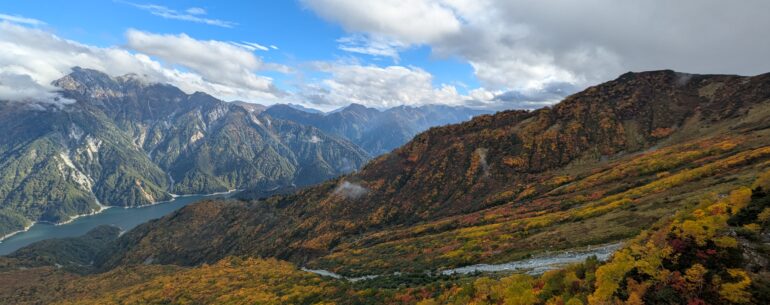
This is a full day tour and I would rank it at the top of day trips to take out of Kanazawa. Provided you love to be in the midst of nature. It was a long day(over 14 hours) but a memorable visit. Kanazawa is not actually a recommended place to stay for the alpine route but I managed quite easily. More about the trip in a separate post.
Other options looked at
These included Fukui, Noto peninsula and Takayama(could also be covered with Shirakawa-go on a full day tour), besides few Onsens in serene locations.
6. Vegetarian food
Apart from 3-4 Indian restaurants, there is Thai and Mexican, both offering vegetarian dishes. There are few other Vegan joints and cafes and hence getting vegetarian food was not a problem in Kanazawa. Typical cost is ~¥4-5k for a couple, with a drink.
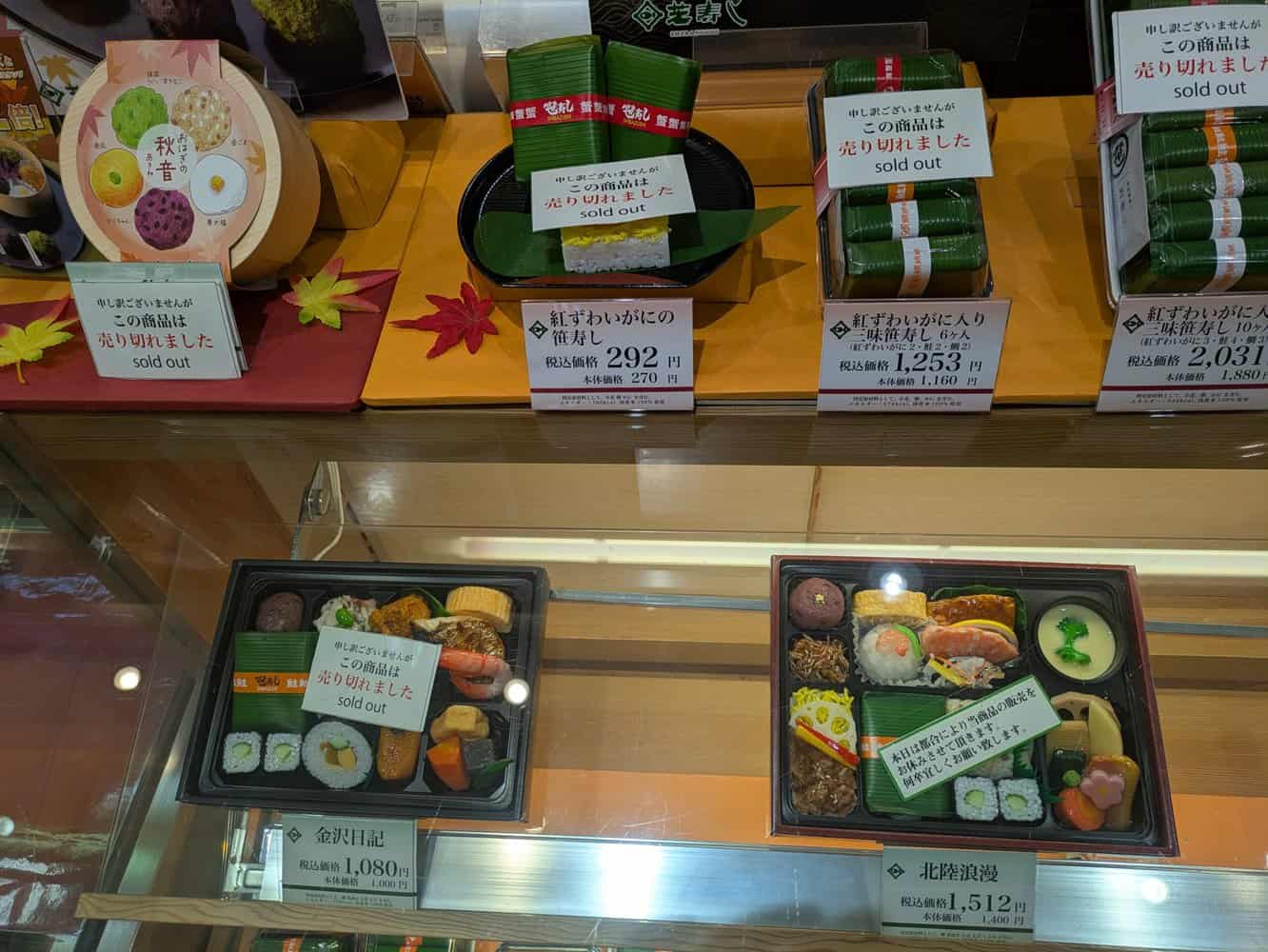
But finding vegetarian food is likely to be challenge on day trips out of Kanazawa. At the market and railway station, there are plenty of attractive options such as bento boxes but conversations with sellers were not easy and I did not find anything vegan/vegetarian that I could buy without any doubt whatsoever!
Try gold leaf ice-cream and Matcha items for novelty
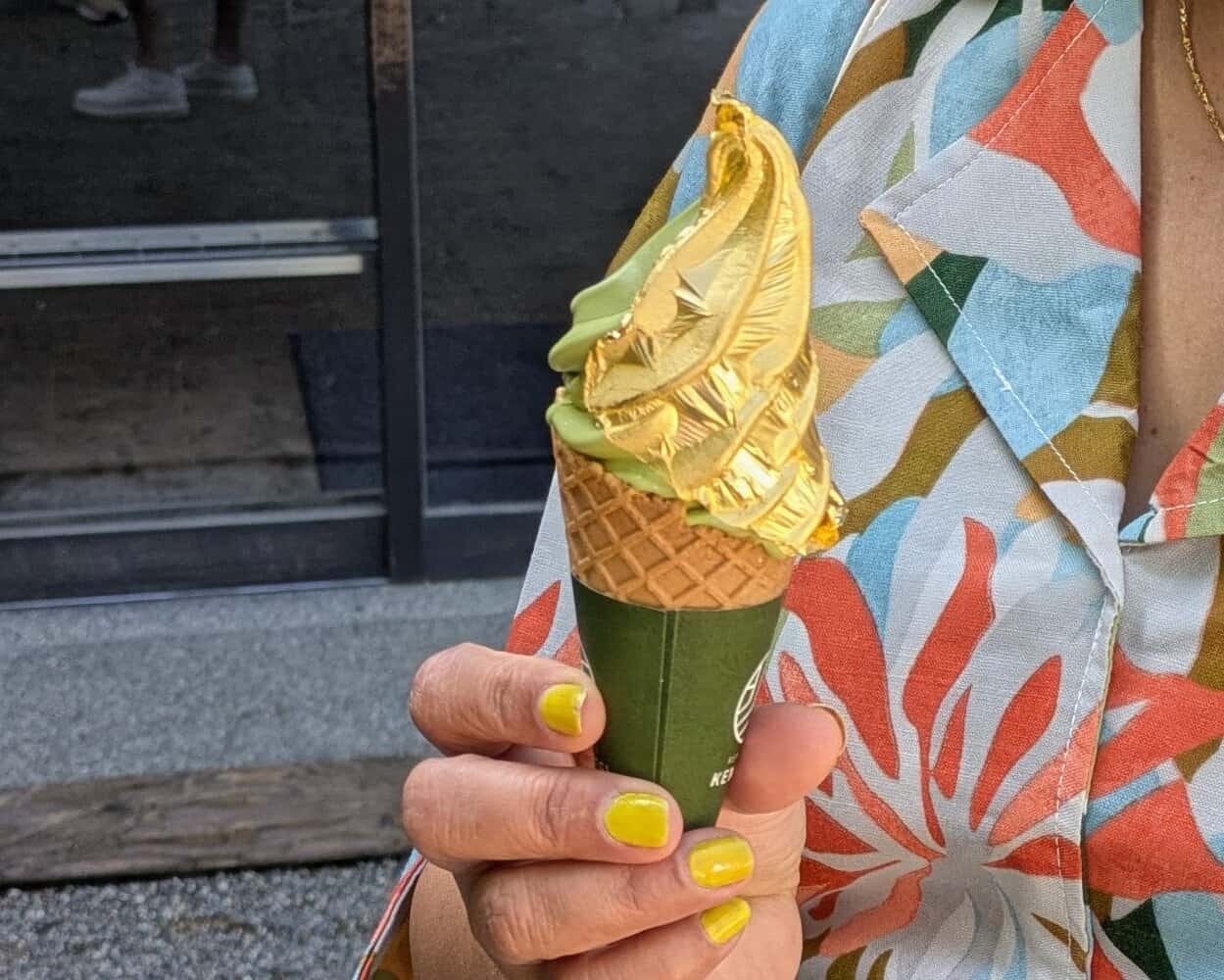
Since Kanazawa is famous for gold leaf, I tried gold leaf ice-cream outside Kenrokuen park. The lady skillfully wrapped a thin edible gold sheet over one side of matcha ice cream. Cost ¥900 or so. Not sure if it was worth it!
Matcha tea and ice-creams are also a must try in Japan. Costs ~ ¥450.
7. Where to stay in Kanazawa
The 2 key areas are downtown(stretches from Omicho market to Korinbo on Hyakumangoku Dori avenue) and railway station. The downtown area is lively with plenty of shops and restaurants and a better place to walk around in the evenings. But the bus takes less than 10 minutes to travel from downtown to the railway station. Downtown hotels are little more expensive and if you get a good deal near the railway station, take it. It will also be more convenient for day trips.
I stayed at Intergate hotel, located just about midway between Korinbo and Omichi market. I booked a slightly larger Hollywood twin room(~250 sq. ft.) and it cost ~INR 12k (¥20k) per night, with breakfast, considerably cheaper than hotels in Tokyo, Kyoto and Hakone. The hotel did not have a restaurant on site but serves breakfast(paid), free snacks and free select beverages through out the day at specified times, including alcoholic beverages in the evenings. For vegetarians, the options are limited but manageable. The hotel has a community bath free of charge for hotel guests. I also liked the Yukatas(cotton robe or Kimono) that was provided in the room.
There are options to stay close to the geisha districts including Ryokans, but it may be lonely in the evenings. Go for it only if you have opted for a Ryokan experience.
8. How many days in Kanazawa?
I had 2.5 days and in hindsight, I should have had another day at the minimum for Shirakawa-go. With 4-5 days, one can include a half day trip to nearby Onsens or take the Kurobe Gorge Rail(once it reopens fully). But just for Kanazawa sightseeing with maybe one activity/experience, one full day is good enough.
9. Weather in Kanazawa
Early October was very pleasant during the day with nights getting cooler, a temperature range between 20°c to 10°c. Rained heavily one evening only though light showers are to be expected in October.
10. Is Kanazawa worth visiting?
Absolutely. It provides an experience very different from the big cities like Tokyo and Kyoto. With limited local sightseeing, Kanazawa is essentially about exploring Japan’s beautiful countryside. Plan for 3-5 days and book the Geisha experience in advance if interested. Hotels are slightly cheaper in Kanazawa and that will bring down the overall cost of Japan visit.
But if you are more keen on nature access(e.g. Tateyama-Kurobe Alpine route or Kurobe Gorge Railway), Toyama can also be considered. Kanazawa can then be visited as a day trip. Shinkansen takes under 30 minutes to cover the distance between Kanazawa and Toyama.
For more information
https://www.japan-guide.com/e/e2167.html