
A hill station in a state that is over 60% desert is a bit unusual. That’s Mt. Abu in the desert state of Rajasthan. Mt. Abu is a popular hill station especially for the people of Rajasthan and Gujarat and that was the main reason I decided to check it out after watching the IPL finals 2025 in Ahmedabad. At an average elevation of ~4000 ft. in the Aravalli mountains, Mt. Abu is only ~1000 ft. higher than Bengaluru! The highest point is Guru Shikhar at 5,650 ft. and is easily accessible.
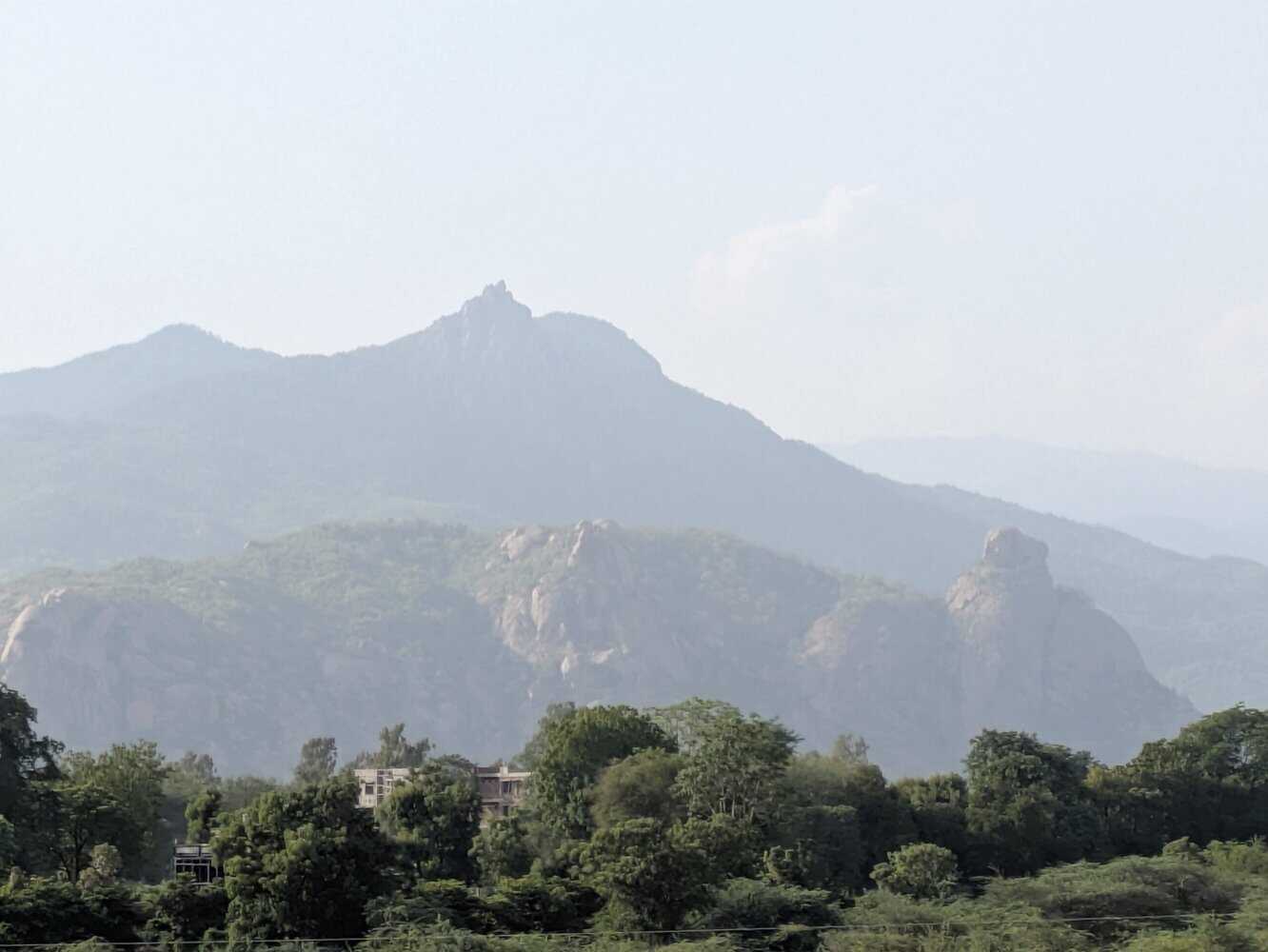
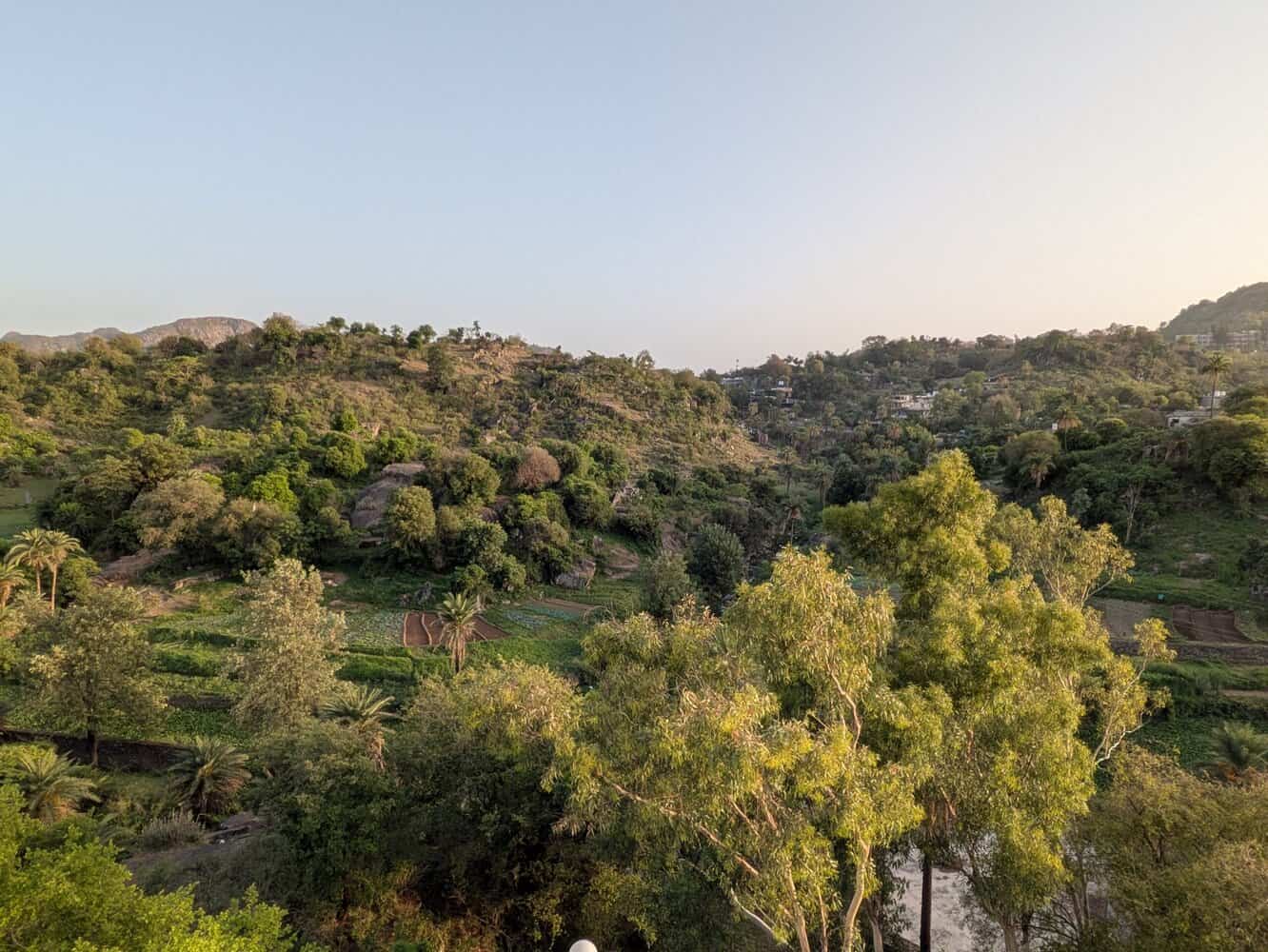
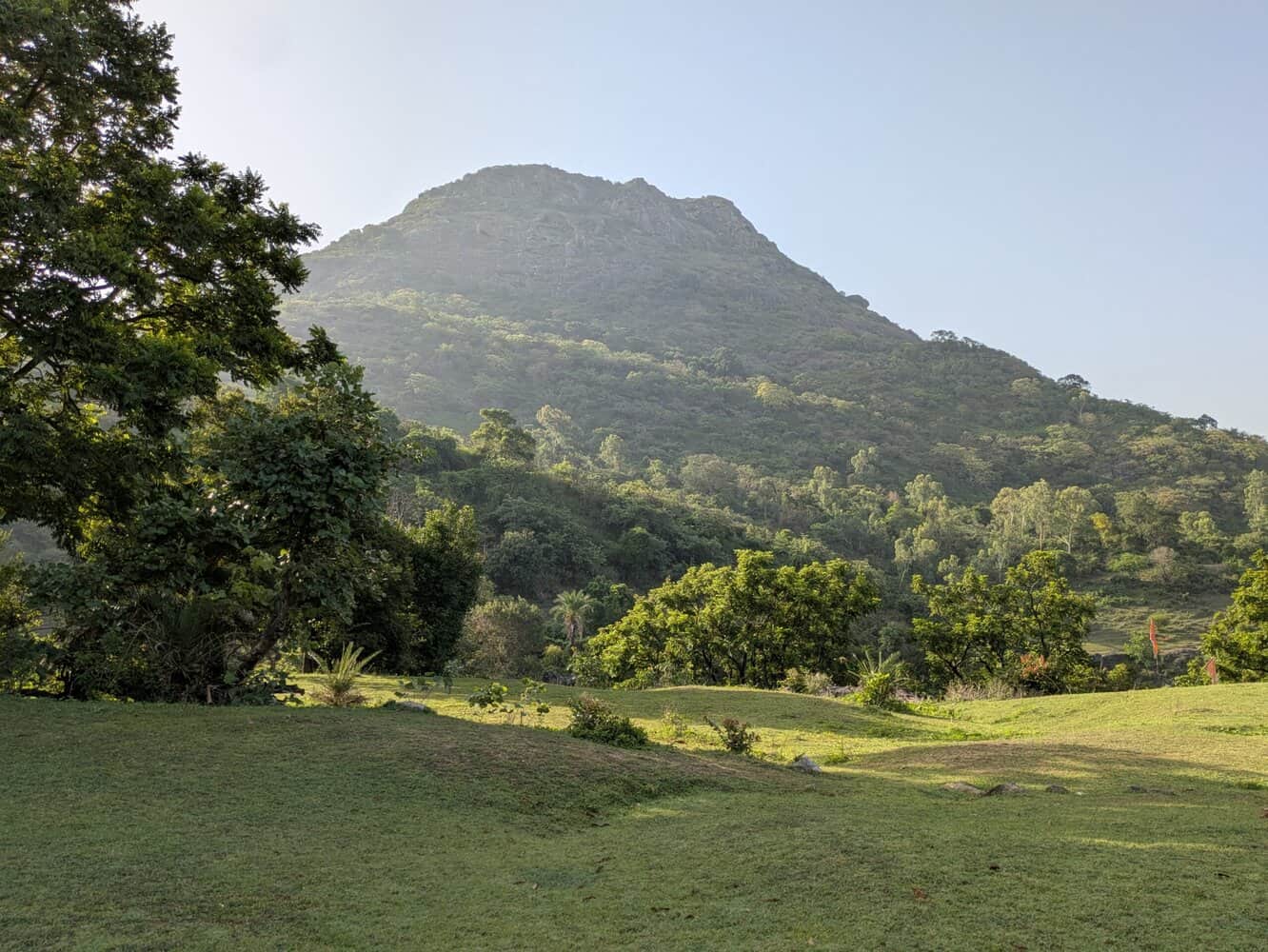
It will probably be unfair to compare Mt. Abu with hills stations in the Himalayas. At 4000 ft., Mt. Abu is technically a hill station but the Aravalli mountain range is not the Himalayas. Even then, Mt. Abu was fairly green when I visited in June, a month before the start of monsoon season. That still did not help the Air Quality Index(AQI), which has been in the poor category more often than not in the calendar year 2025 till date. Overall, I did not find Mt. Abu very appealing.
Getting to Mt. Abu
The nearest airport is Udaipur(~185kms) followed by Ahmedabad(~220 kms). The nearest train station is Abu Road, located at the base of the Aravalli mountains at a distance of ~40kms. From Abu road, the journey takes about an hour by road.
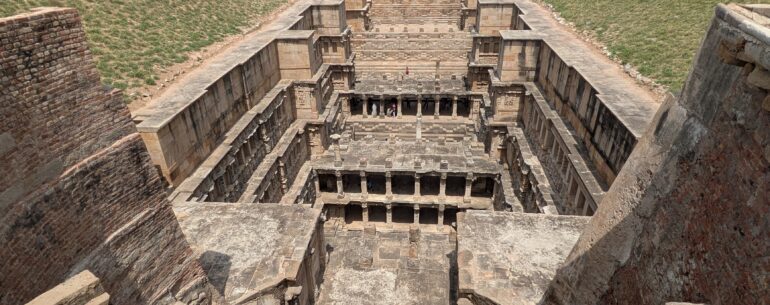
I took a cab from Ahmedabad and the usual journey time is little over 5 hours with one short break. Road is quite decent but there are not many good vegetarian restaurants on the way. I took a short deviation at Patan town in Gujarat to visit Rani Ki Vav, a beautiful stepwell built in the 11th century CE and often rated to be the grandest of all the stepwells in India. The Innova taxi cost ~INR 8k, one way.
Mt. Abu is very close to Gujarat border and hence I did not get any sense of travelling through a desert. The journey is a bit drab most of the way and got a bit scenic only during the climb to Mt. Abu. Had to pay toll in cash when crossing over to Rajasthan as I was in a taxi with Gujarat number plates.
Spending time in Mt. Abu
Sightseeing options include viewpoints(Guru Shikhar, Toad rock, sunset point), temple(Dilwara Jain, Arbuda Devi etc.), Nakki Lake and few spots associated with Brahma Kumaris, the spiritual movement led by women.
Car is essential to commute locally. Avoid self drive as much as possible as parking is difficult at some of the attractions and near Nakki Lake.
Temples
Dilwara Jain temple
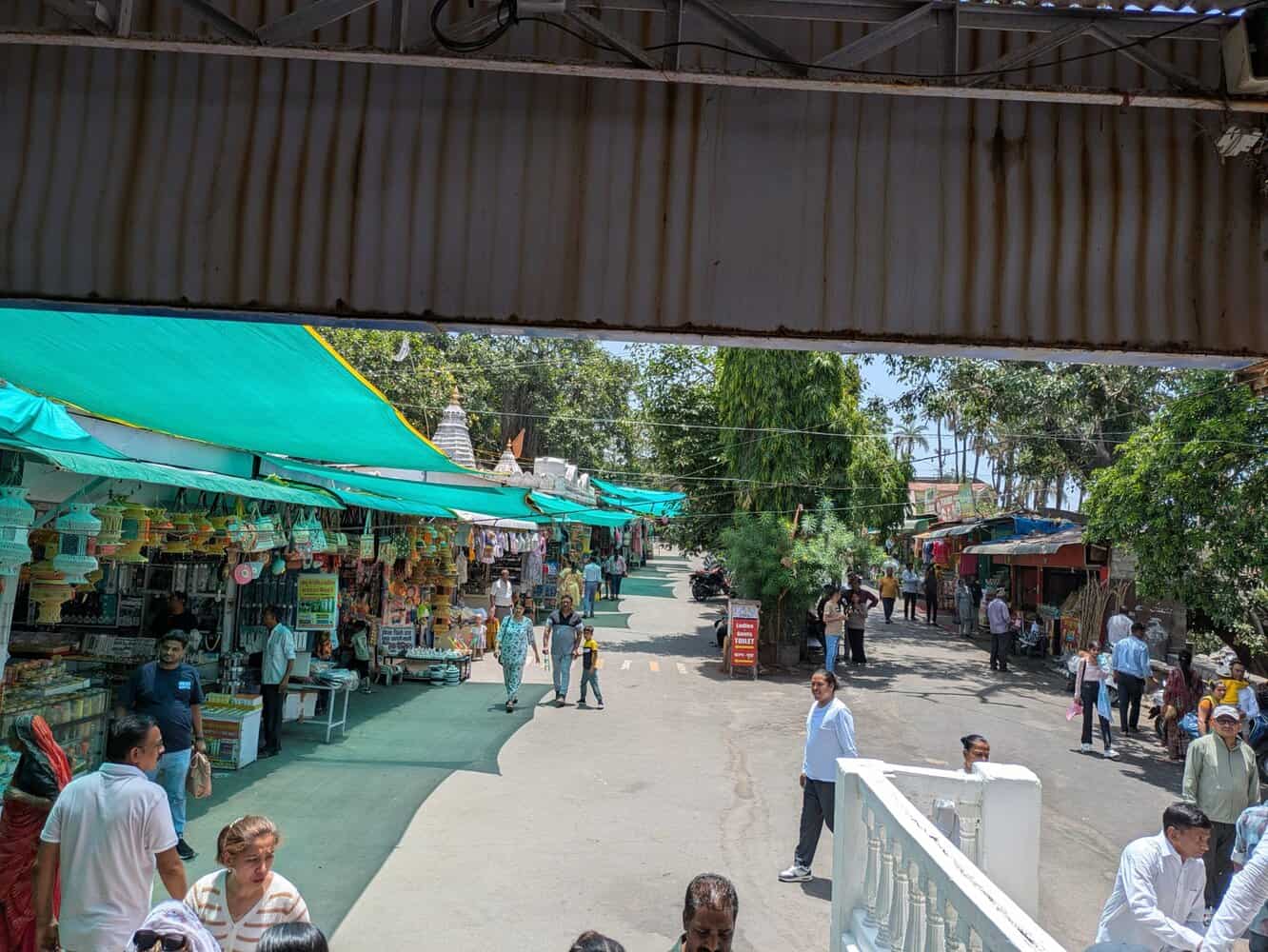
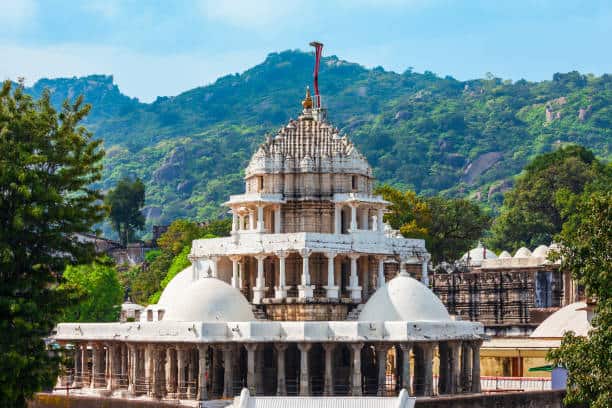
This cluster of 5 temples was built between 11th and 13th century CE and is famous for its intricate marble carvings. The marble however is no longer pristine white but fairly well maintained. It took me less than an hour to go around the complex. Mobile phones are not allowed inside and one needs to dress conservatively. Shops near the entrance sell some useful stuff, including dress material to cover oneself (available on rent as well).
Check this official website for select photos.
Arbuda Devi temple
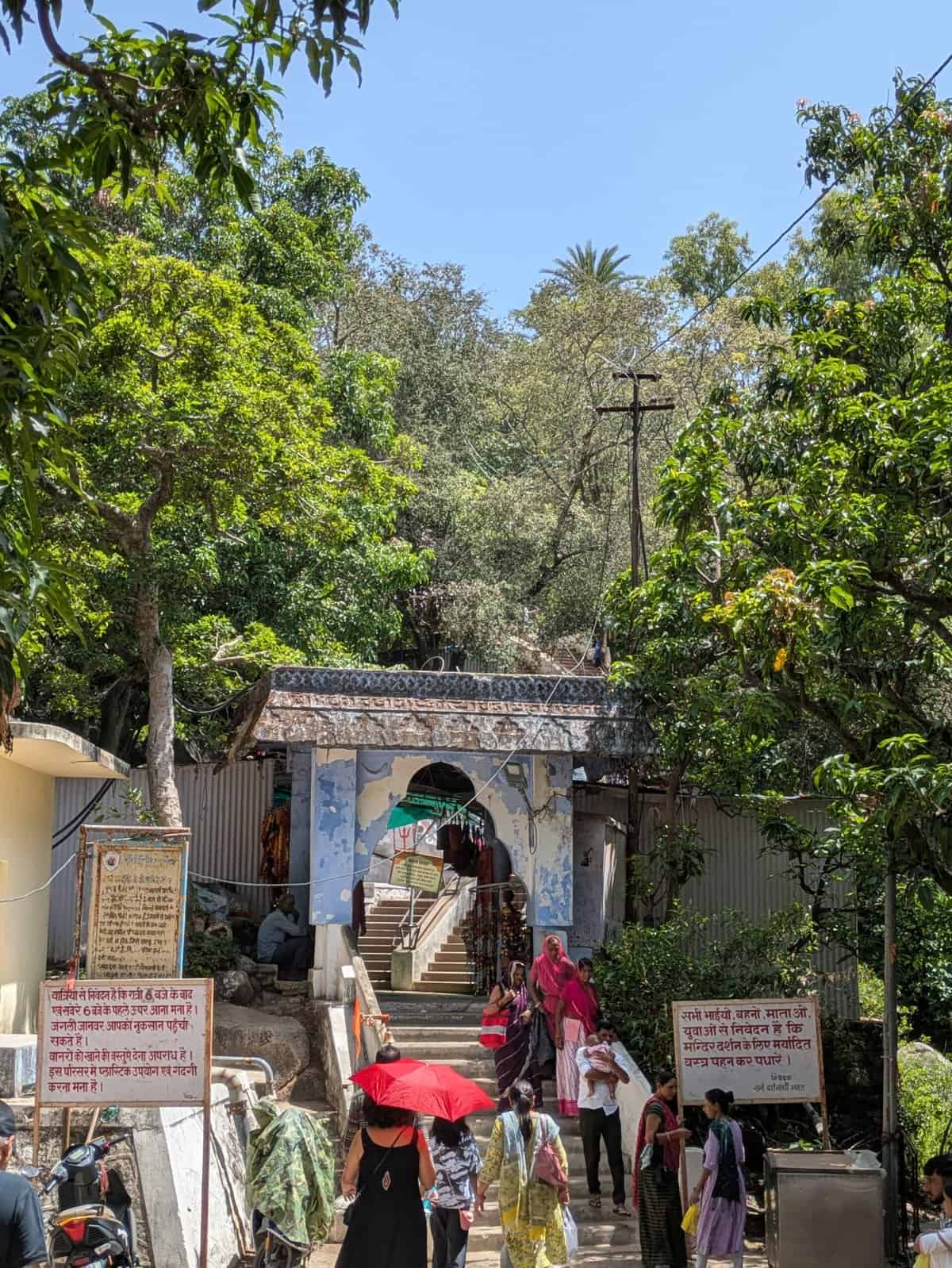
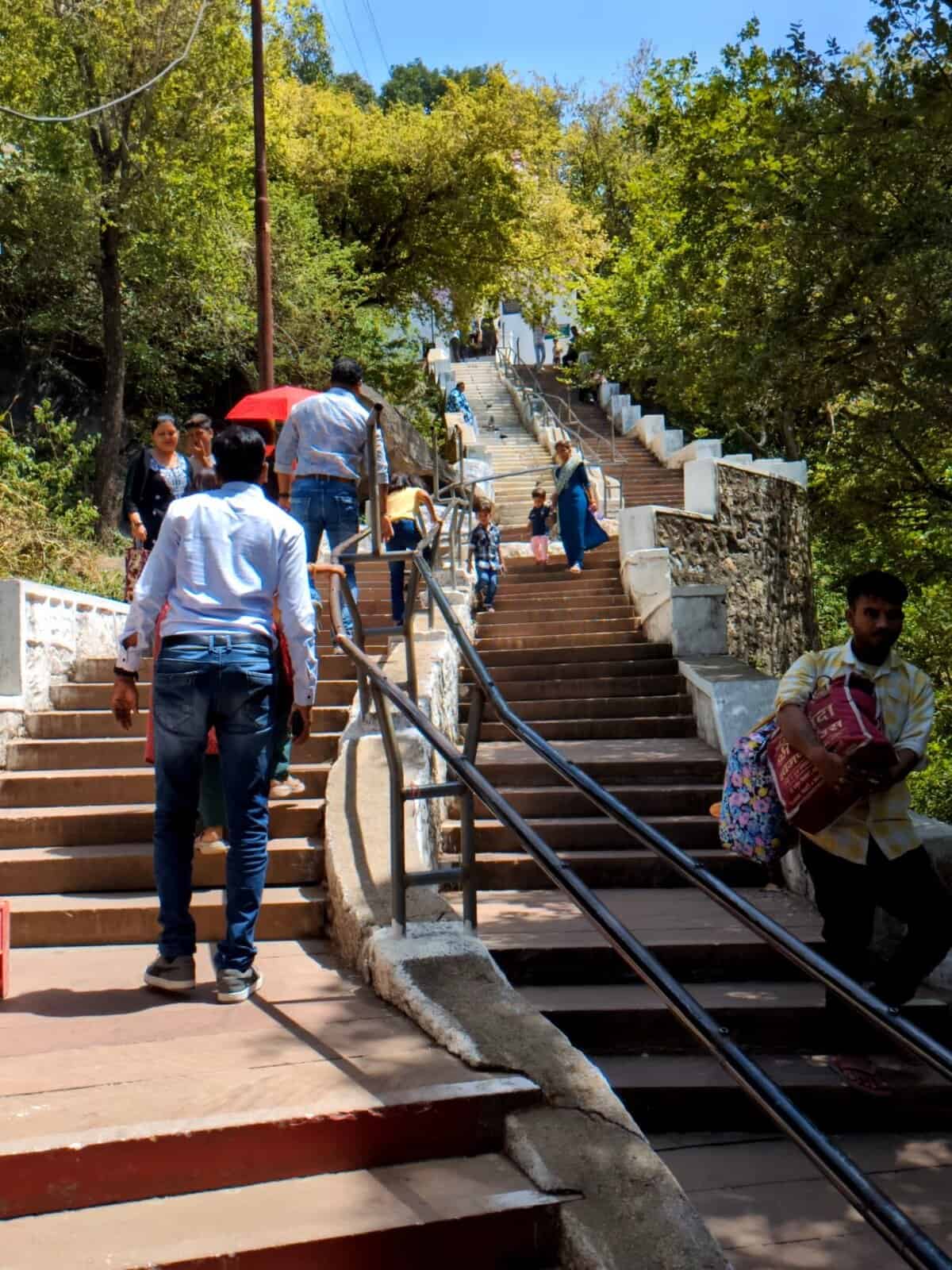
Carved out of a single rock, this rock cut Temple is a sacred pilgrimage point and the inner sanctum can be reached by crawling through a narrow cave. This is what made me climb 365 steps to get to the top. Nice but the inner sanctum is quite small. Resting areas have been thoughtfully provided on the way. There are multiple shops on the way selling all kinds of stuff as well snacks/beverages.
Mobile phones are not allowed inside the inner sanctum and have to be deposited at the designated area.
Viewpoints
Guru Shikhar
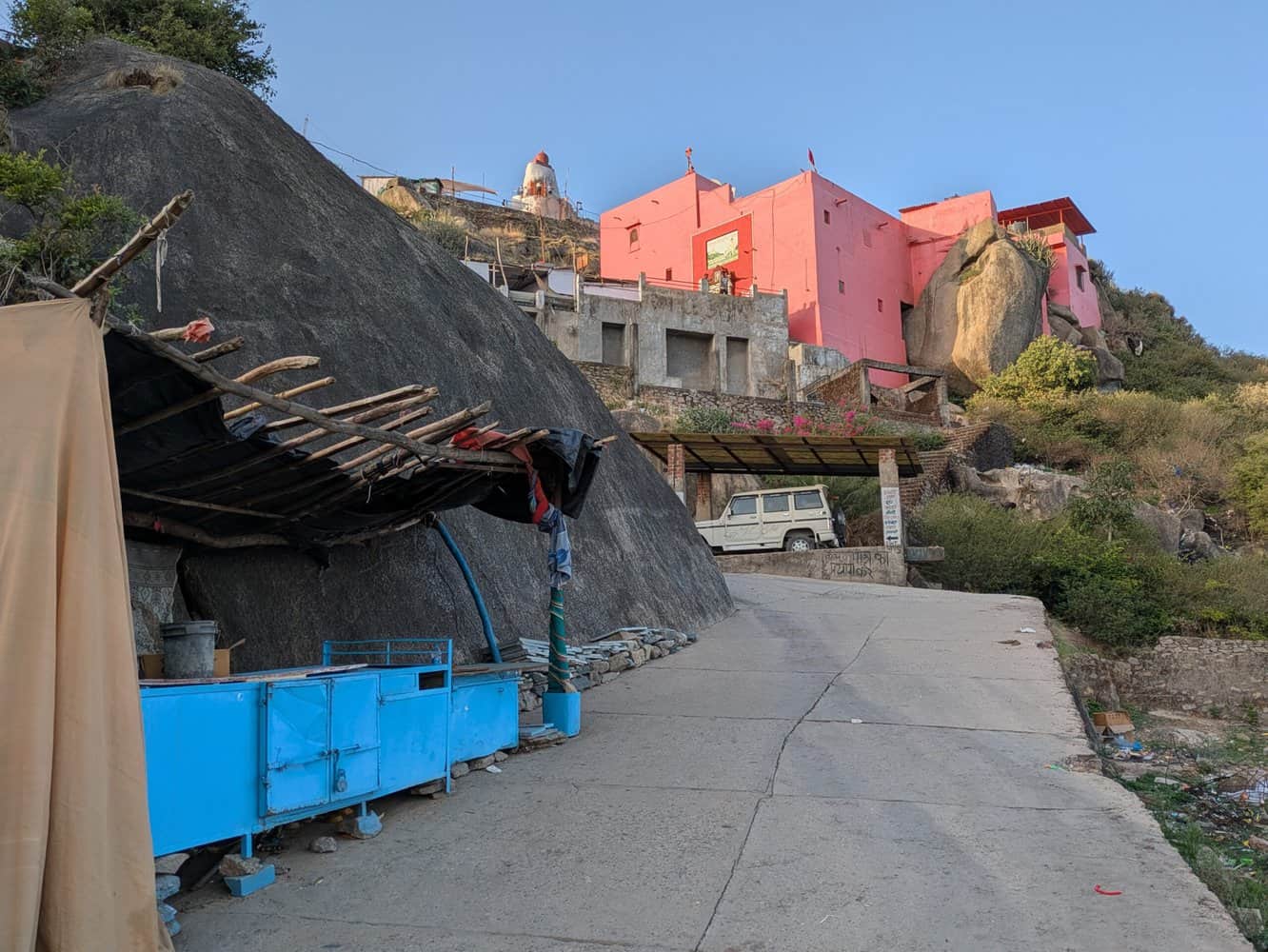
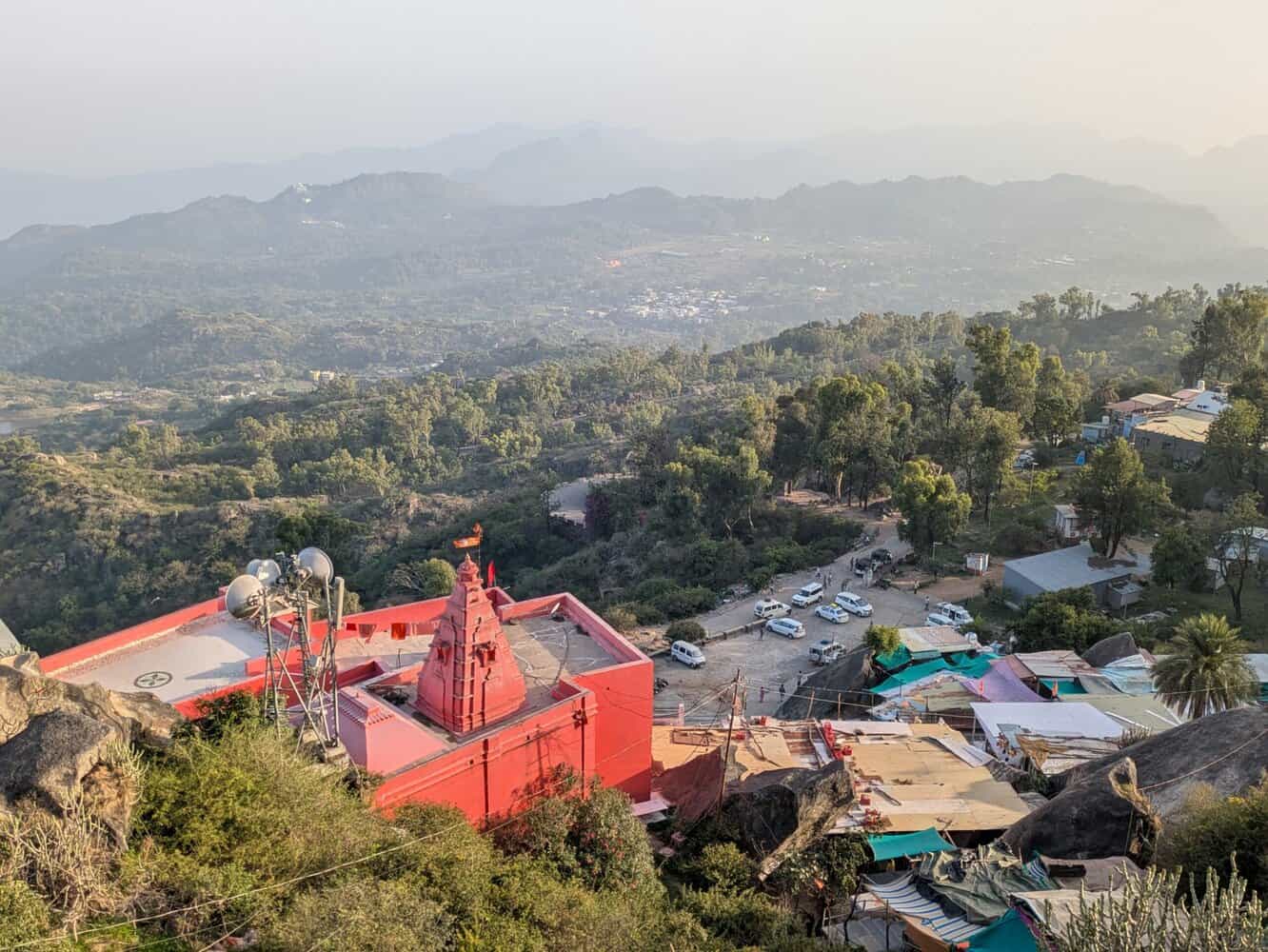
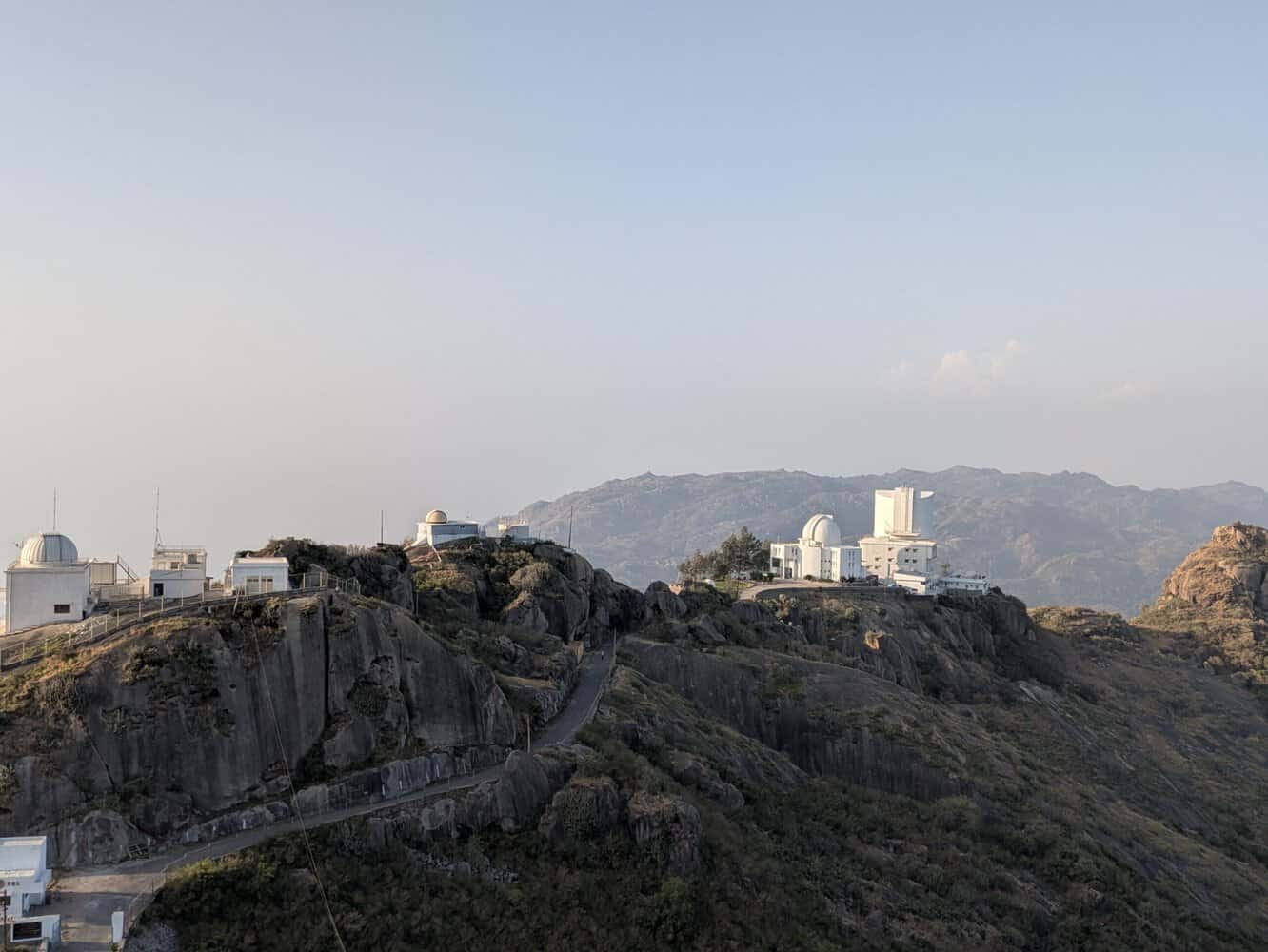
The highest peak in the Aravalli Mountains provided nice but slightly hazy views. The observatory is clearly visible. From the car park, there are steps that lead all the way to the top. Outlets selling variety of stuff clutter both sides of the path and there are temples as well. At the top, there is a bell that dates back to 15th century CE.
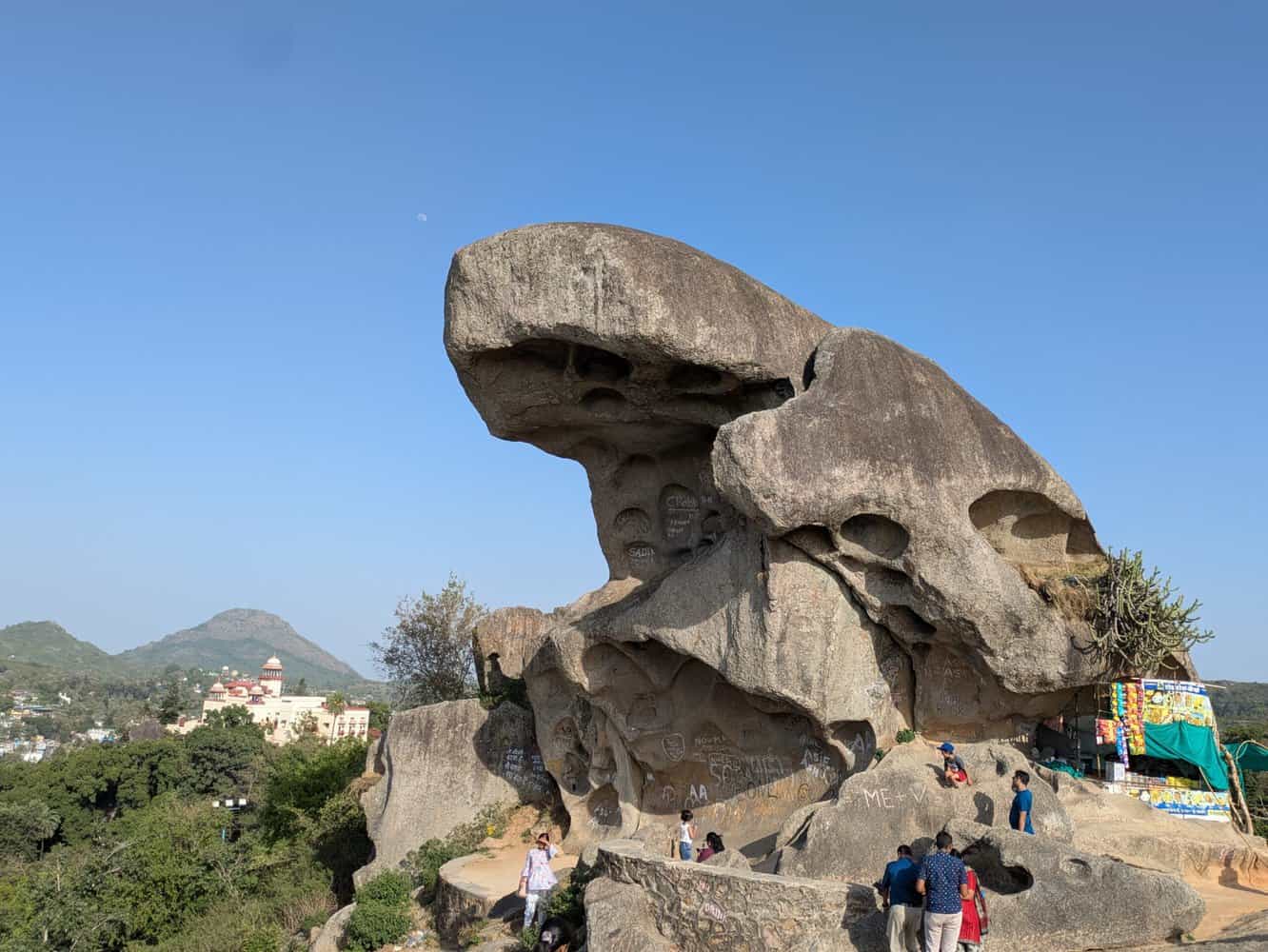
Toad rock
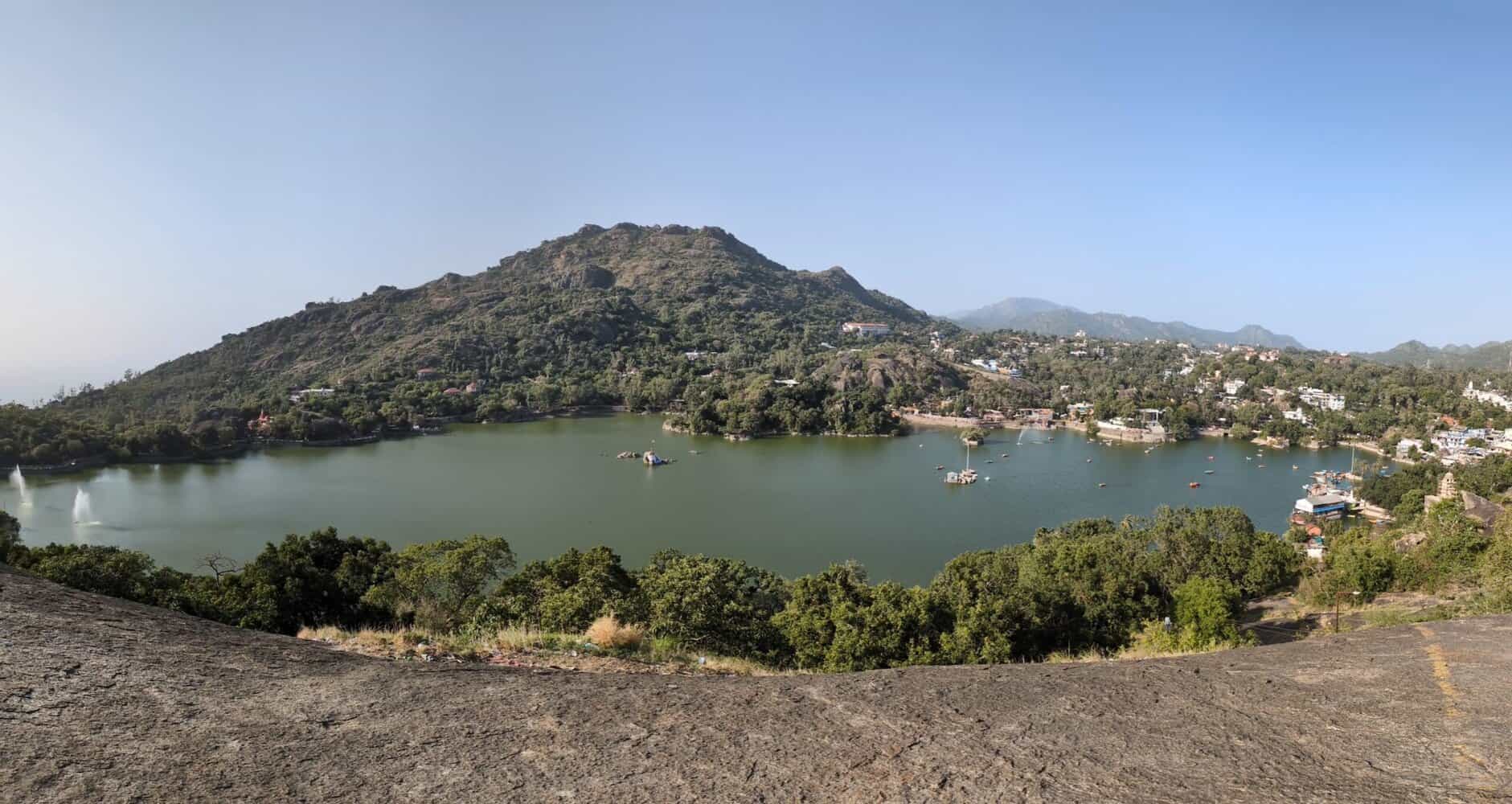
Located near the Nakki lake, Toad rock is a single piece of huge rock that is supposed to resemble a toad. It is a moderately steep ~250 uneven steps to the top and the expansive rocky surface there provides plenty to space to stretch and enjoy the 360 degree views of Nakki Lake and the surrounding areas.
On the way to the top, I came across a cave where Swami Vivekananda is stated to have meditated in 1891.
Nakki Lake
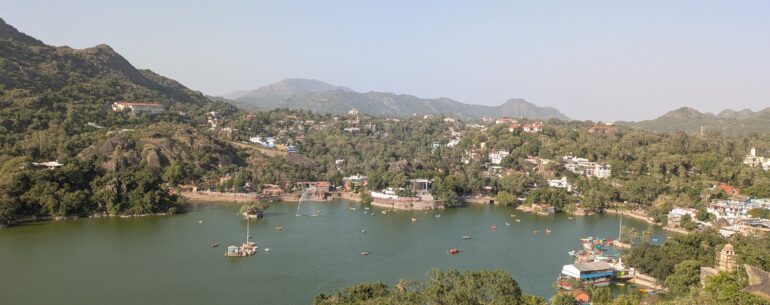
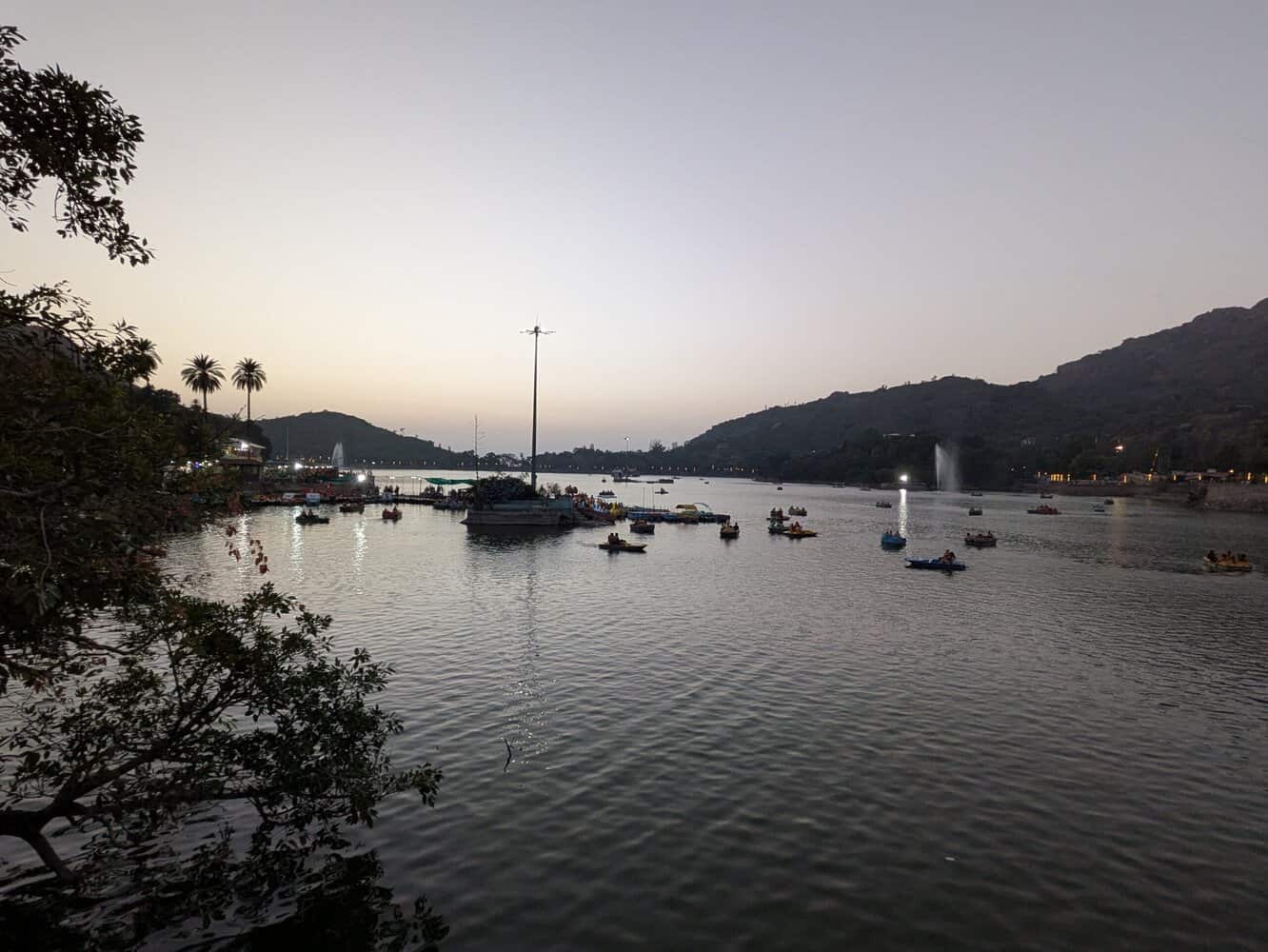
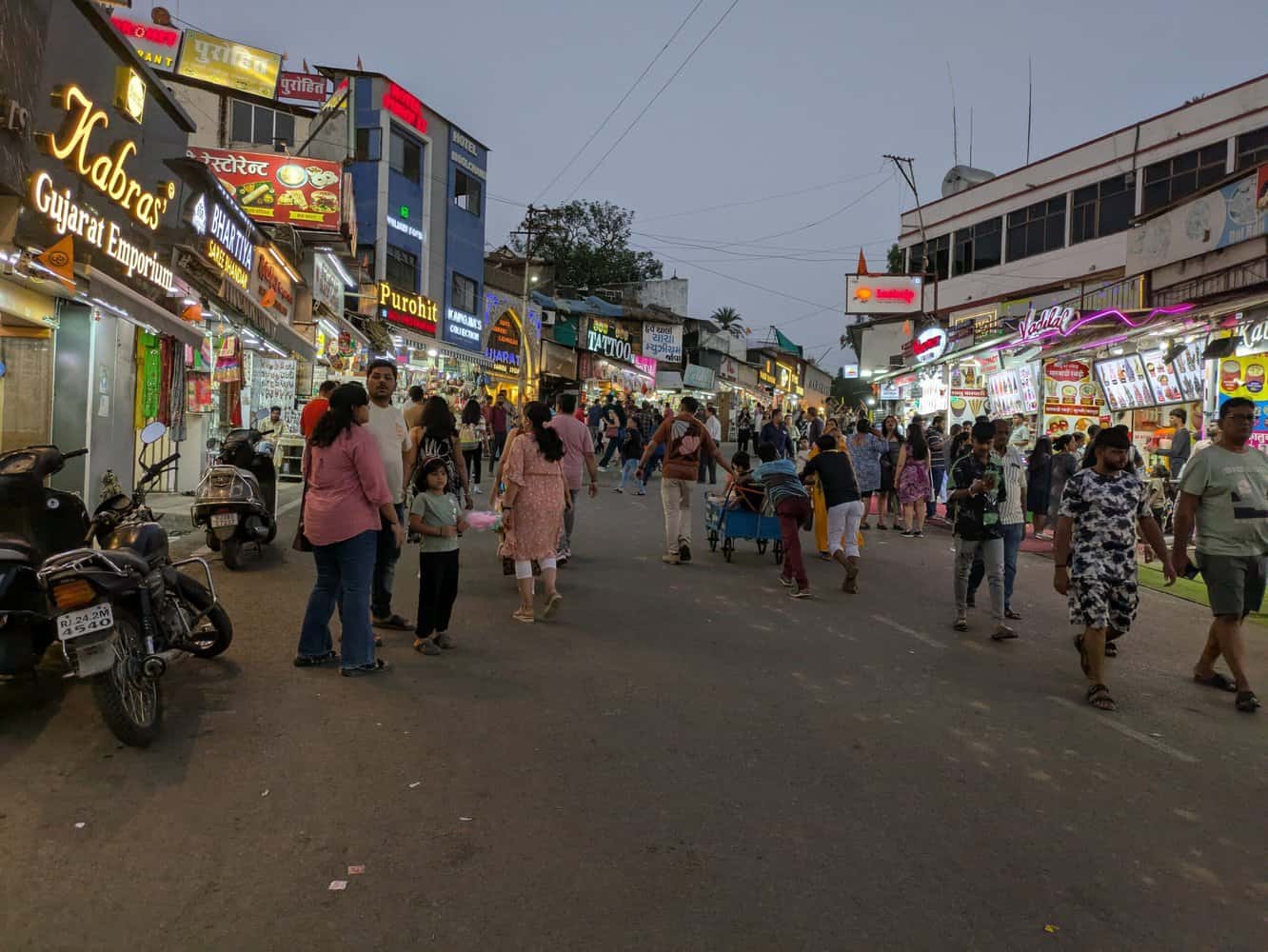
As a man made lake, it is not very impressive but most of Mt. Abu’s shops and restaurants are located near Nakki Lake. You get some very nice stuff, both edible and non-edible ones! The area is very popular and generally crowded.
There is a 3kms long walking track that goes around the lake. Cleanliness near the lake certainly requires improvement.
International headquarters of Brahma Kumaris
I visited the Universal Peace Hall(nothing to do here except listening to a short lecture on Rajyoga and buying books), the Peace Park (a 30 minute lecture on ‘who we are’ as advocated by Brahma Kumaris is mandatory but the park is really nice) and the Spiritual Museum located near Nakki Lake(displays Brahma Kumaris outlook on how human life originates and ends).
Where to stay in Mt. Abu
I stayed at Sterling resort where the rooms were spacious, and the food quite good. Pool was too small for adults. The resort offered few activities in addition to a music and dance program by local artists that was held every evening. I especially enjoyed the guided walk in the nearby forest though there were few tense moments when I learnt bears had been sighted nearby! The only issue was with the bar – due to certain licensing issues, few beverages were not available, including beer!
The resort cost around 8k per night, with breakfast. Vegetarian food was quite reasonably priced, with an average of INR 500-600+ per person when ordering in a group of 5 persons. Buffet was also available but more expensive.
There are plenty of other stay options to suit every pocket. It does not take too much time to move around but even then, Mt. Abu is not a place for day long sightseeing. Ideal would be to return to the hotel for lunch, rest and again step out early afternoon. Chacha Inn looked good from outside and there is a Radisson as well.
Predominantly vegetarian food
The food here is predominantly vegetarian and Rajasthani cuisine is one of my favourites. Bulk of the restaurants are located near Nakki lake and the polo ground. As I saw it, there are good for light snacks and beverages but not so much for lunch/dinner, except when you are desperate for a change. I preferred to eat meals at Sterling resort.
When to visit Mt. Abu
July to September is the monsoon season and that is when Mt. Abu will possibly be at its best in terms of lush greenery, abundant waterfalls and AQI. Mt. Abu receives moderate rainfall during the monsoon season. I guess few months thereafter leading to winter may also be good.
Summers can be hot, with temperatures topping 35°C during the day. Winters are quite pleasant, but not really cold.
I visited in June and it was quite dry and warm during the daytime. Evenings were cool though. But there was fair bit of greenery around.
How many days?
Couple of days is adequate for Mt. Abu.
There is variety in Shopping
Rajasthani arts and crafts, Jewellery, marble/sandstone art works, local apparel etc. are some of things one can consider buying. Many of these are ideal for gifting. I bought several items from the shops on way to Guru Shikhar and Arbuda Devi temple, outside Dilwara Jain temple and near Nakki Lake.
Payments – carry some cash
Cards and UPI normally works but some shops either wanted only cash or offered discounts for cash payment. I don’t recollect paying any entry fee anywhere.
Is Mt Abu worth visiting?
I don’t think Mt. Abu is that impressive for a tourist. Dilwara Jain temple is special but that alone does not warrant a visit. Some of the tourist attractions would be much better off with a makeover. Mt. Abu is possibly a good option only for those who live within driving distance and do not get to see much greenery. For others visiting Rajasthan, there are several unique attractions and Mt. Abu can be easily be skipped.
For more information
https://www.mountabu.com/index.html