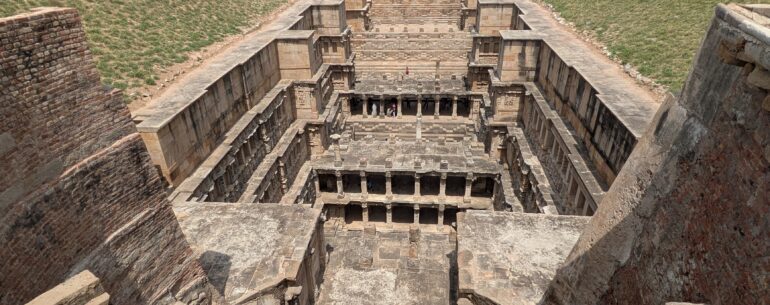

A UNESCO World Heritage Site. Intricate carvings. Sculptures inspired by the incarnations of Lord Vishnu and Apsaras, the celestial women. Constructed by a grieving Queen in memory of the King(generally the reverse is true). Almost 1000 years old. Inverted temple design with seven levels of subterranean architecture.
No one would disbelieve if I were describing a palace or a monument or a grand temple. But this is none of that. This is Rani Ki Vav, a stepwell located in the town of Patan in northern Gujarat. Stepwells were a symbol of ancient/medieval India’s water wisdom. Almost all the stepwells were located in the two relatively drier states of Gujarat and Rajasthan. Most have disappeared but the few that survived continue to inspire awe. At the top of this list is Rani Ki Vav that literally translates to Queen’s stepwell.
Check this google arts and culture link for some stunning pictures of Rani Ki Vav.
A monument of national importance
Rani Ki Vav is an architectural wonder. But why such grand structure merely to supply water? Apparently, stepwells in the earlier days were not just meant to supply water. They were temples where the entire community gathered and often celebrated. Over the years, the river Saraswati(not to be confused with the Vedic age river) buried Rani Ki Vav under layers of mud. It was excavated and restored in the 1980’s by the Archaeological Survey of India. UNESCO added it to its Heritage Site list in 2014 and it is also considered as a monument of national importance.
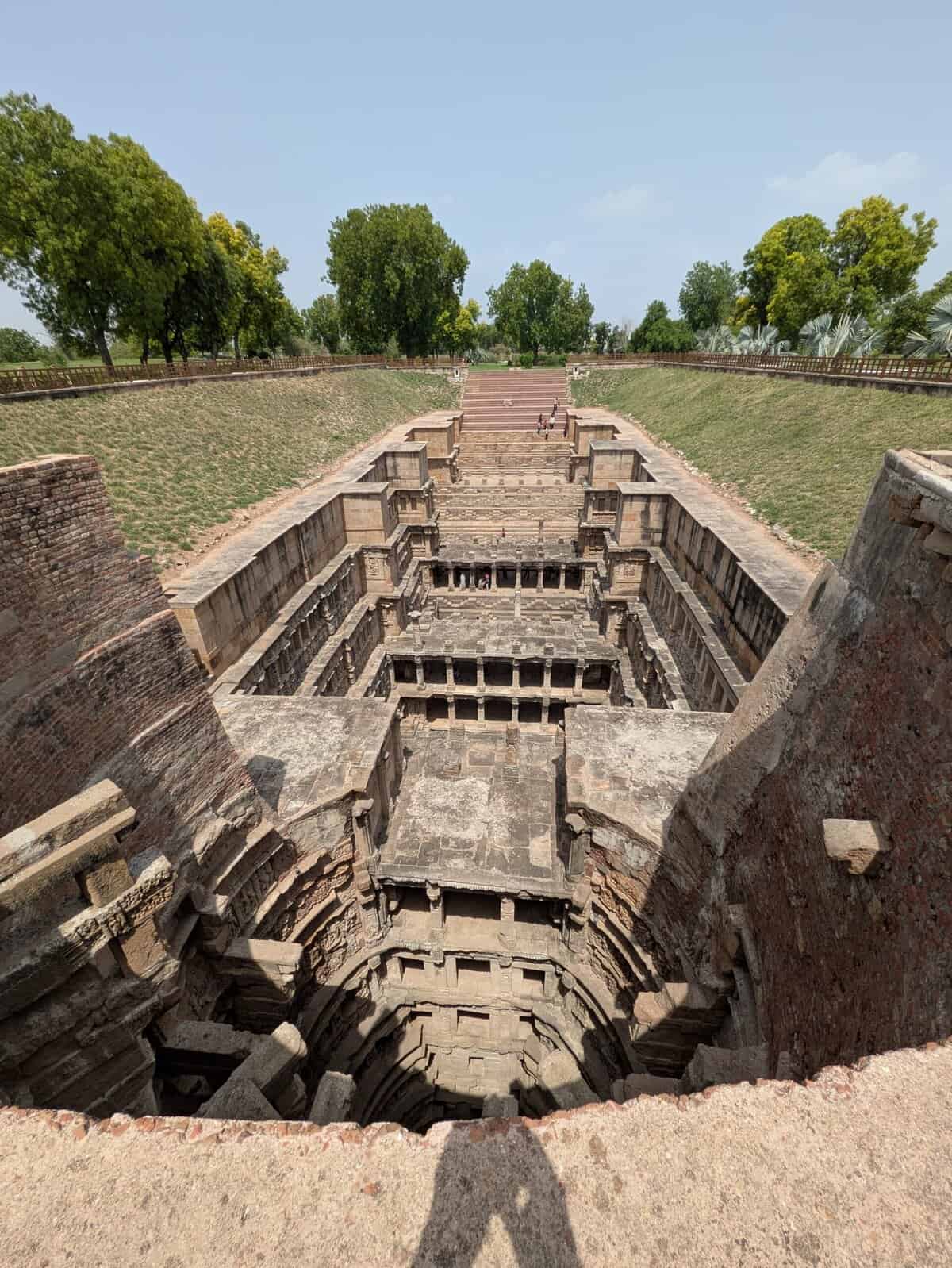
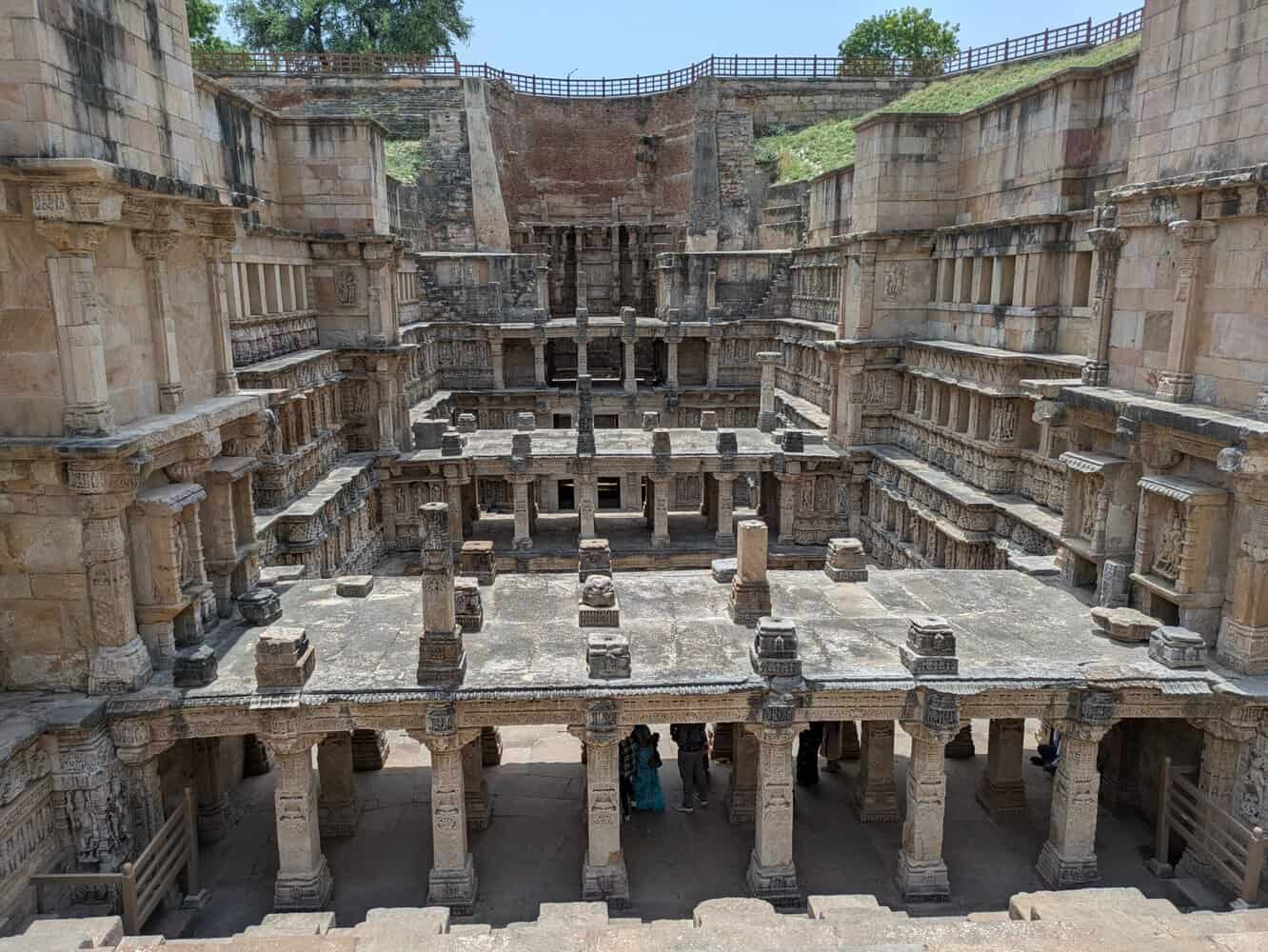
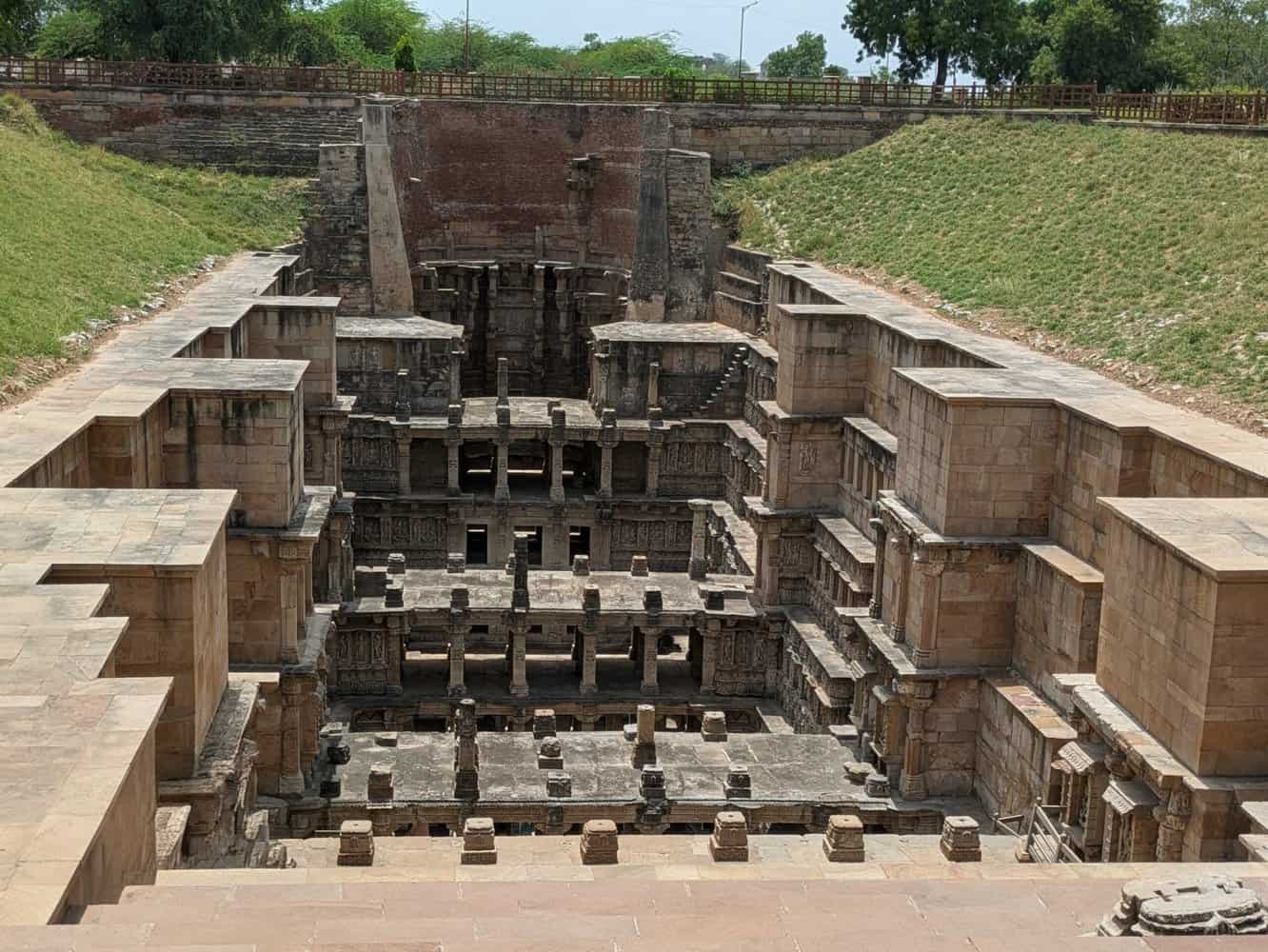
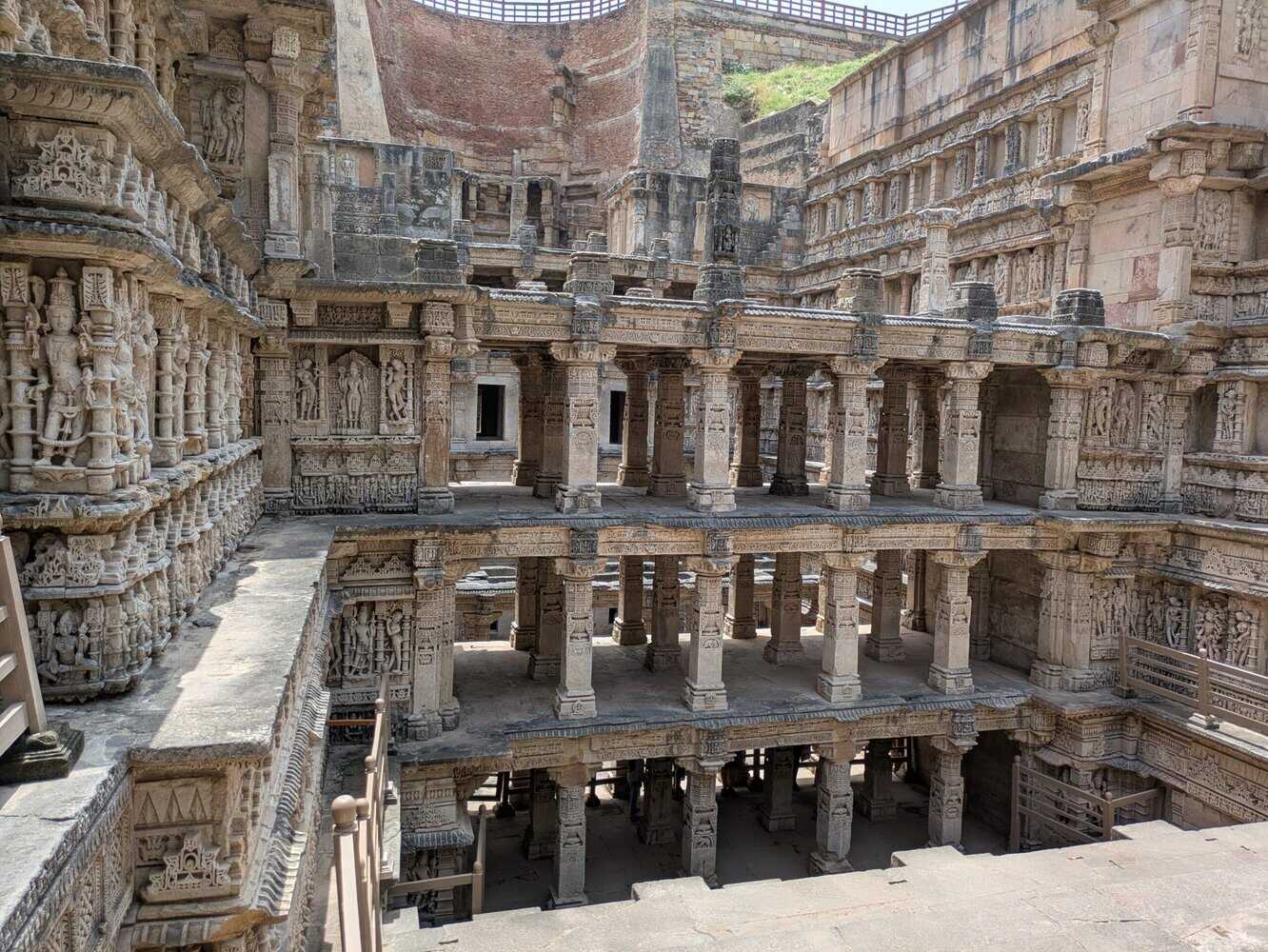
Subterranean structure with 7 levels
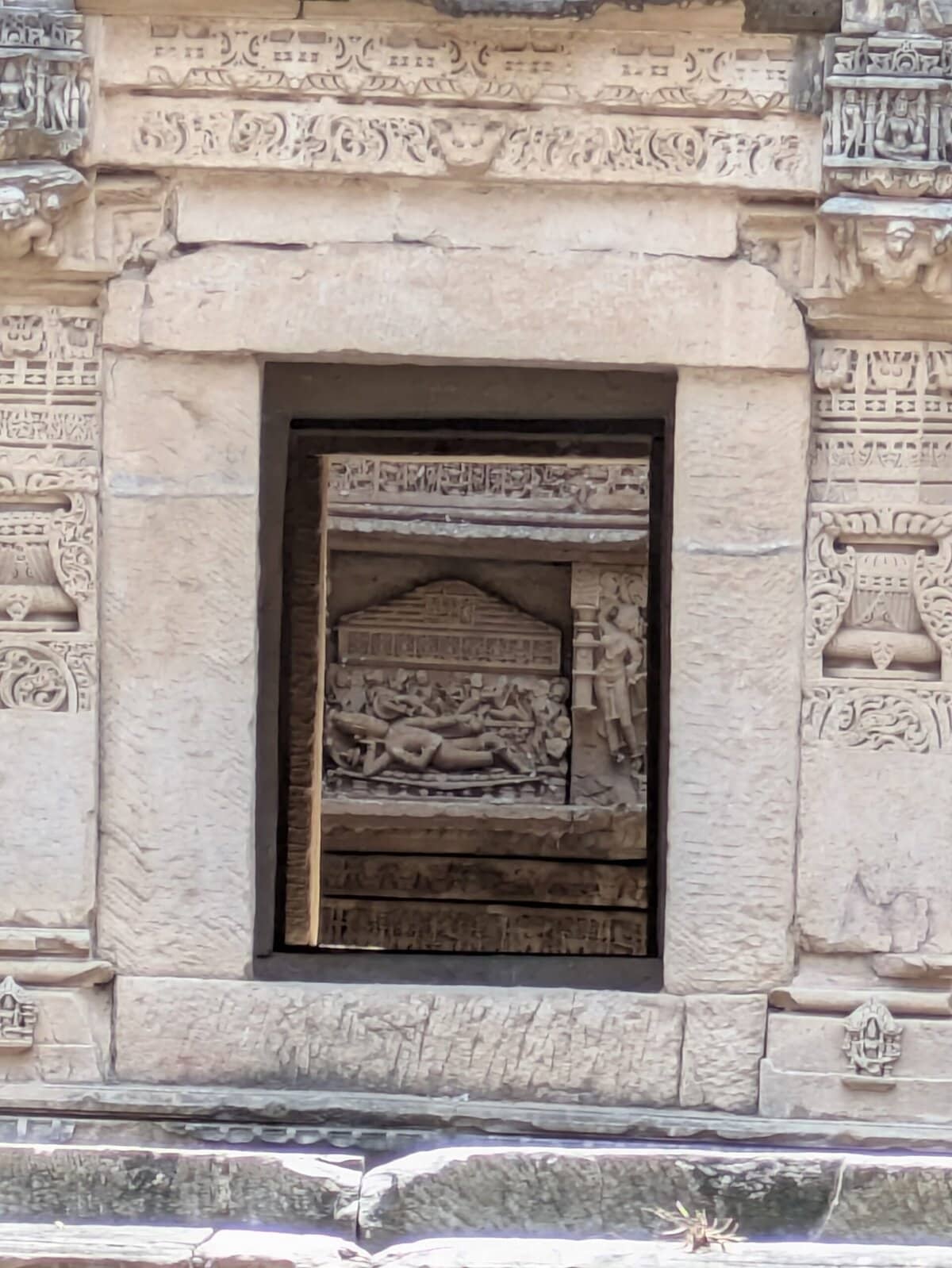
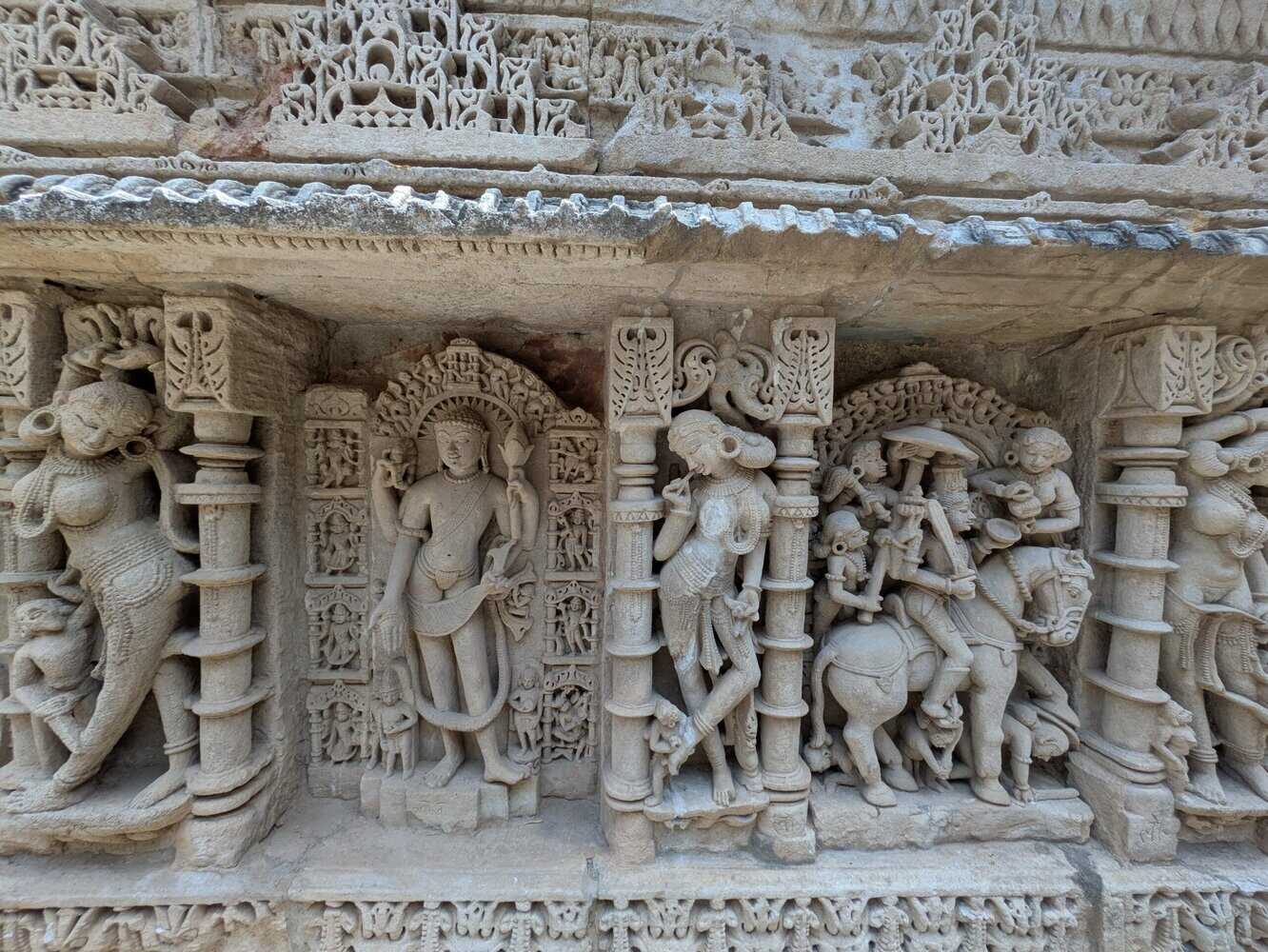
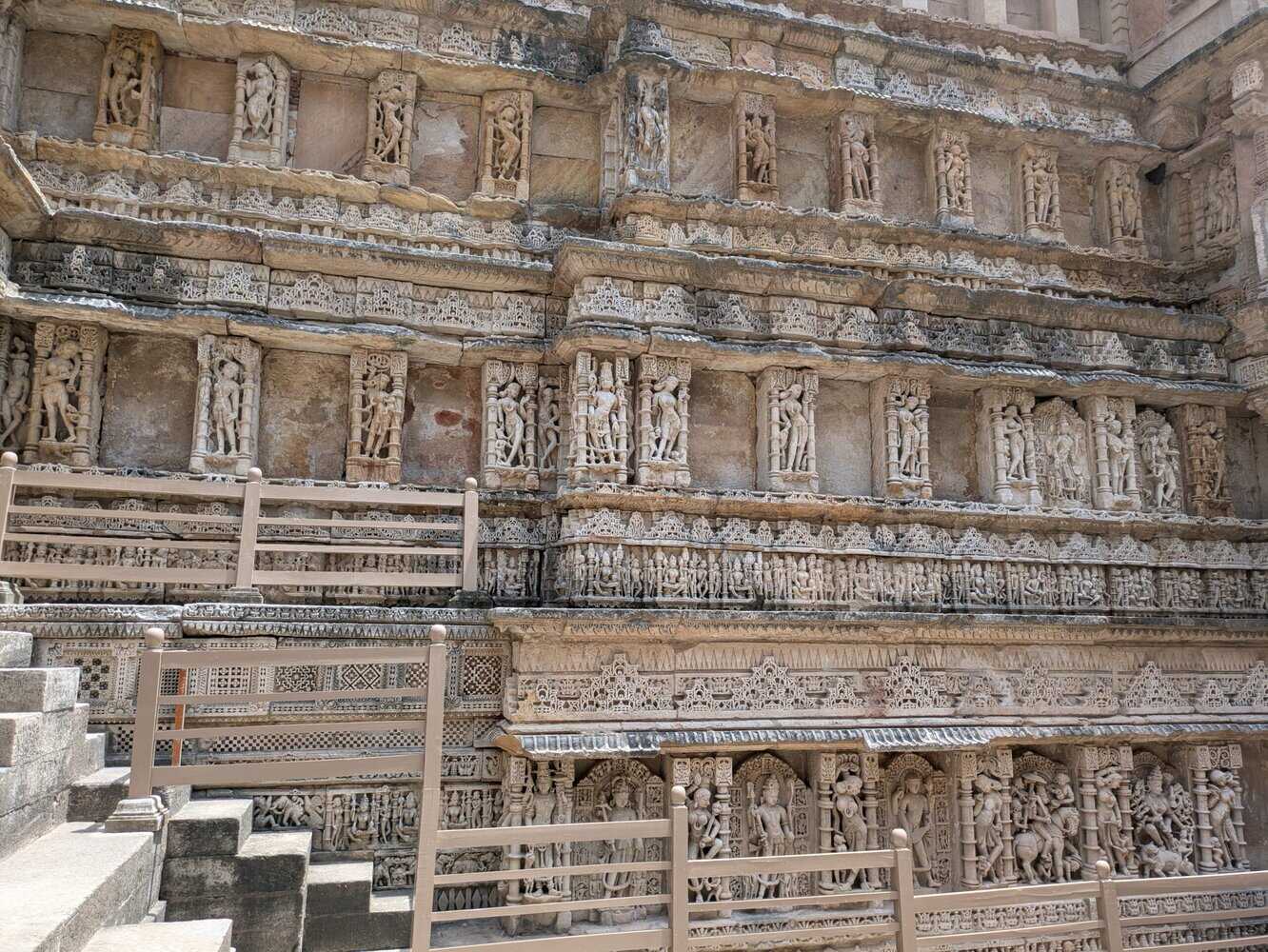
Rani Ki Vav is 64 meters long, 20 meters wide and 27 meters deep. It has seven levels believed to symbolize the seven heavens or lokas of Hinduism. Every level tells a story. These seven levels are built from ground level downwards. In all, there are ~800 sculptures, including Vishnu reclining on Sheshnag, His 10 avatars, apsaras and nagakanyas. The water tank is located at one end but it is dry now.
Rani Ki Vav is visually stunning. Age shows but still, I found myself standing before many of the sculptures and admiring the craftsmanship.
The image of Rani Ki Vav appears on the INR 100 note. I had never given it a second glance earlier, never stopped to reflect what the structure was but now, it resonates with what I saw.
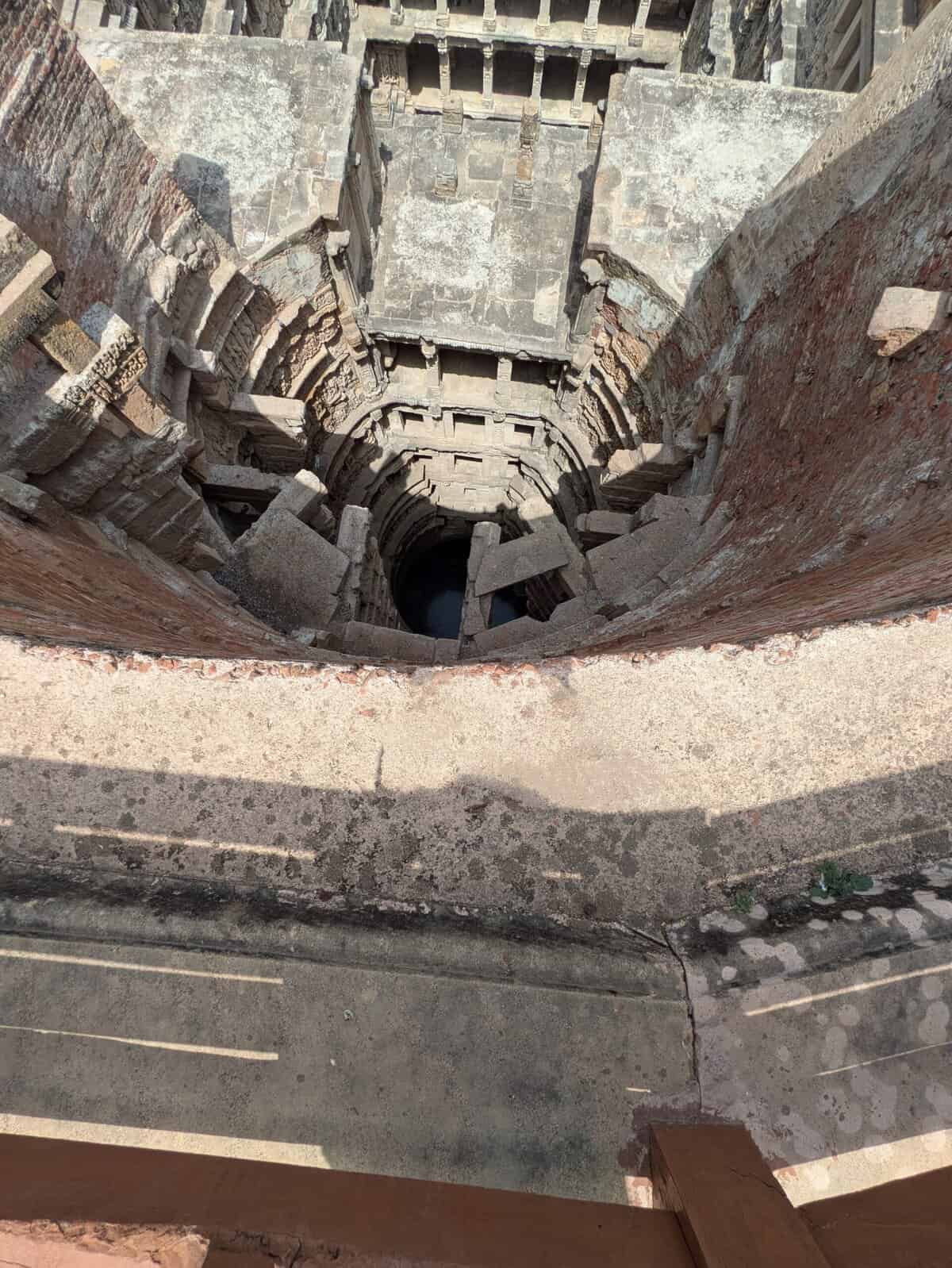
A guide is useful
I found the guide to be very informative and narrated several stories behind the creation of this beautiful structure. He also knew the spots where single/couple photo shots come out best. But best of all, he taught me how to take a panorama picture that looked like the ones below.
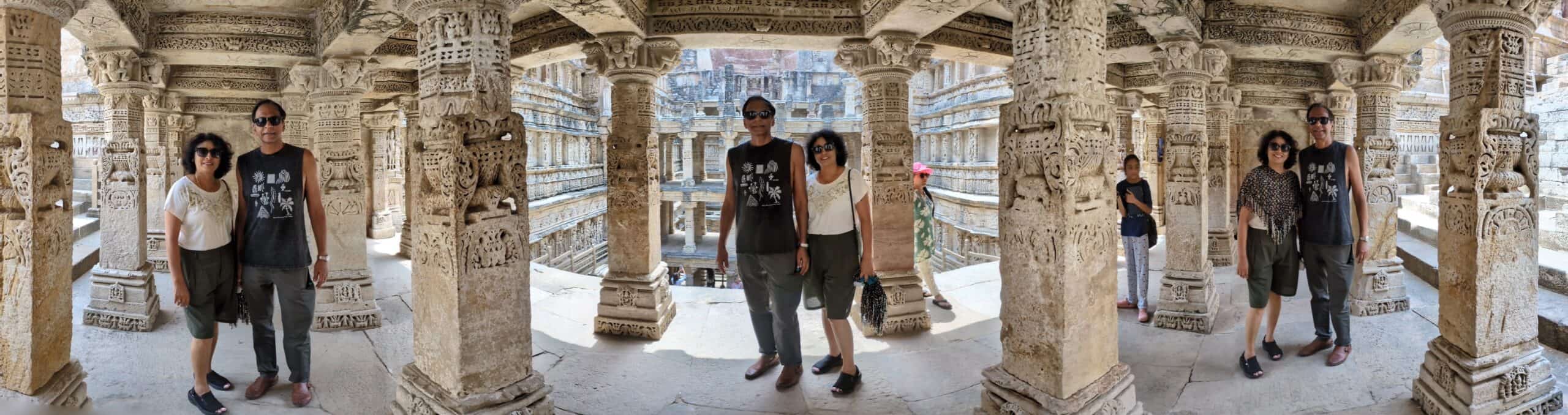
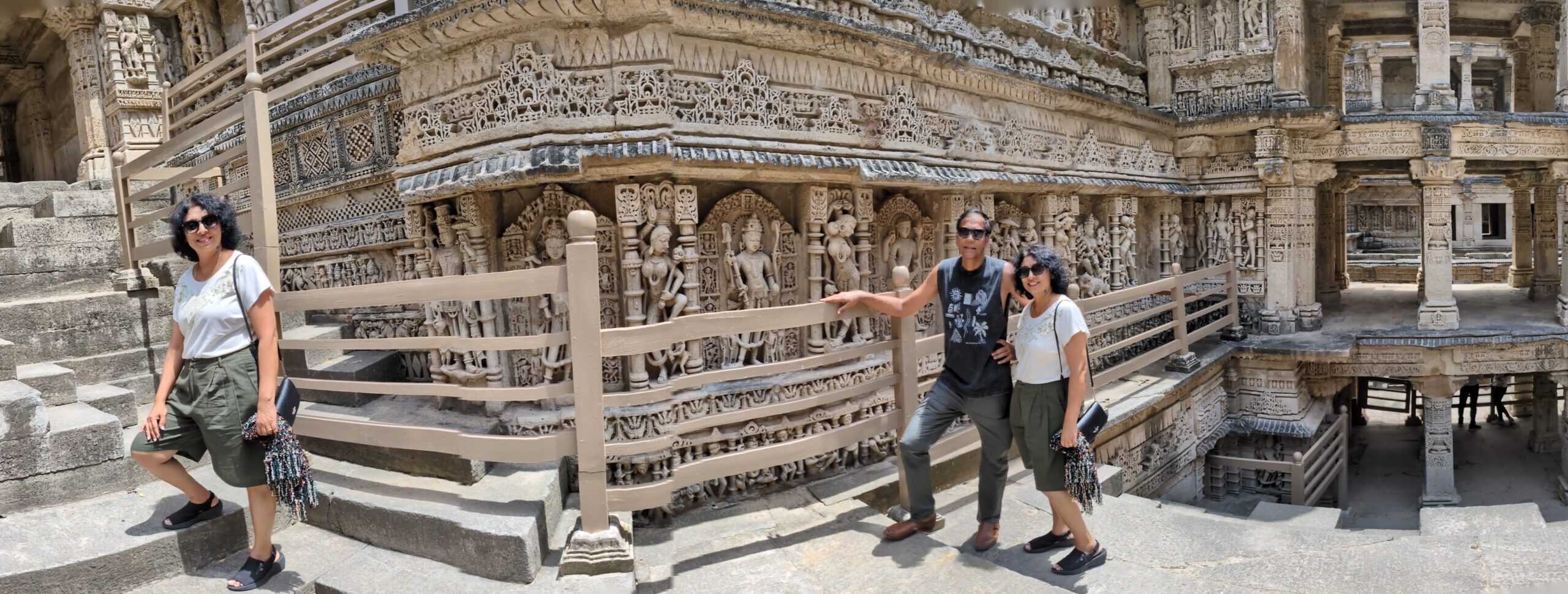
But if you just wish to admire the craftsmanship and click few pictures, a guide is not needed. But do some background reading as otherwise, it is hard to appreciate the beauty of this place. Licensed guides cost ~INR 500 for an hour or so. My guide expected a tip over this amount for sharing his ‘photo techniques’ and I obliged.
How much time?
About 1 to 1.5 hours is adequate. It was midday in the month of June when I reached Patan, not really the best of time as it was quite warm.
Location
Rani Ki Vav is located in a town called Patan in Gujarat, about 125 kms from Ahmedabad and almost midway on the drive from Ahmedabad to Mt. Abu. The driving time in a car from Ahmedabad is ~3 hours.
What else in Patan?
Patan was an important town during 10th to 13th century CE and served as the capital of Solanki dynasty. But today, Patan town by itself is not very impressive but as I drove through the town, I noticed rows of old buildings that seemed to be from another era and seemingly well preserved. If these medieval era building could be colorful painted, it would probably be a huge tourist attraction. Just like the ones in Europe(Bergen, Copenhagen, Frankfurt, Stockholm…..) but with a charm of its own.
Judging from the photos, Modhera Sun Temple(with another stepwell!) may be worth a visit if you have time. The famous Patola work originated in Patan and if you wish to learn more, head to the Patan Patola Heritage Museum. I read it can take 5 months to one year to create just one saree.
Then there is Sahastralinga Talav, a medieval age water tank. The photos did not look very appealing. Patan is also home to Panchasara Jain temple and there are couple of famous temples near Patan, including Ambaji temple but it is over 100kms away towards Rajasthan border.
Other famous stepwells in India
–Chand Baori, Rajasthan is the deepest stepwell with 3500 steps leading down to the tank. Located about 100kms from Jaipur.
–Panna Meena Ki Kund, Rajasthan is a miniature version of Chand Baori. Located on way to Amer fort near Jaipur. I have visited this site and the structure is not that impressive today.
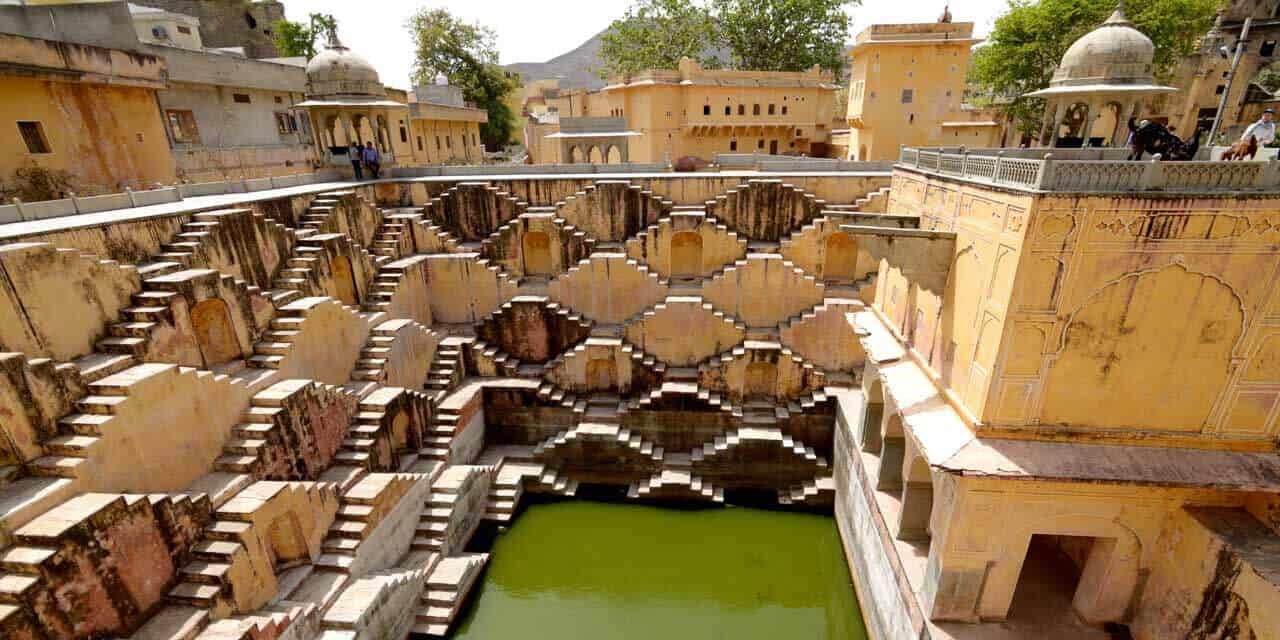
–Adalaj, Gujarat is located in Gandhinagar, near Ahmedabad. Photos indicate a stylish structure. I had taken a cab to go round Gandhinagar and I am not sure why the driver did not suggest Adalaj ni Vav. Maybe next time!
Other famous stepwells include Agrasen Ki Baoli in New Delhi(made famous by Bollywood movies), Toorji Ka Jhalra in Jodhpur, Rajasthan, the pushkarinis(or tanks) in Hampi, Karnataka and Suryakund, Modhera near Patan, Gujarat.
Is Rani Ki Vav a must visit site?
I think so. It is a very impressive medieval structure. With Ahmedabad being developed as the sports capital of India, it is likely to attract increasing number of travellers whenever major sporting events are held here. Next time you are in Ahmedabad, take a day off to visit Patan.