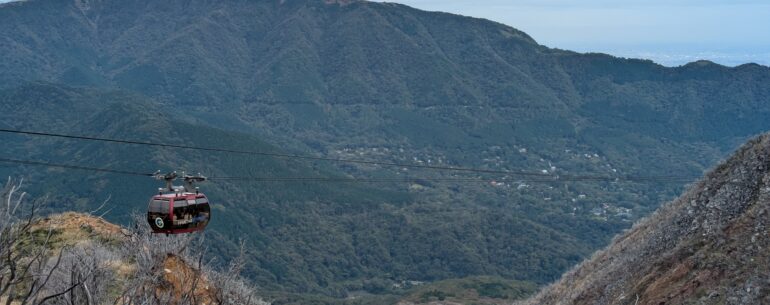

Completing the Tateyama-Kurobe Alpine route was an unforgettable highlight of my visit to Japan, with a variety of experiences packed into one busy and long day. Having visited alpine regions across the world, I knew how beautiful they could be. Even then, Tateyama-Kurobe Alpine route turned out to be unique in some ways, apart from the usual spectacular mountain scenery with gorges, snow capped peaks, lakes, and dense forests:
- Diverse transport options(regular bus/train, funicular, cable car/ropeway, trolley bus, electric bus). Add to this the Shinkansen experience from Kanazawa to Nagano and from Toyama back to Kanazawa;
- Seasonal highlights such as autumn colors, hiking to Mt. Tateyama and 20m high snow wall;
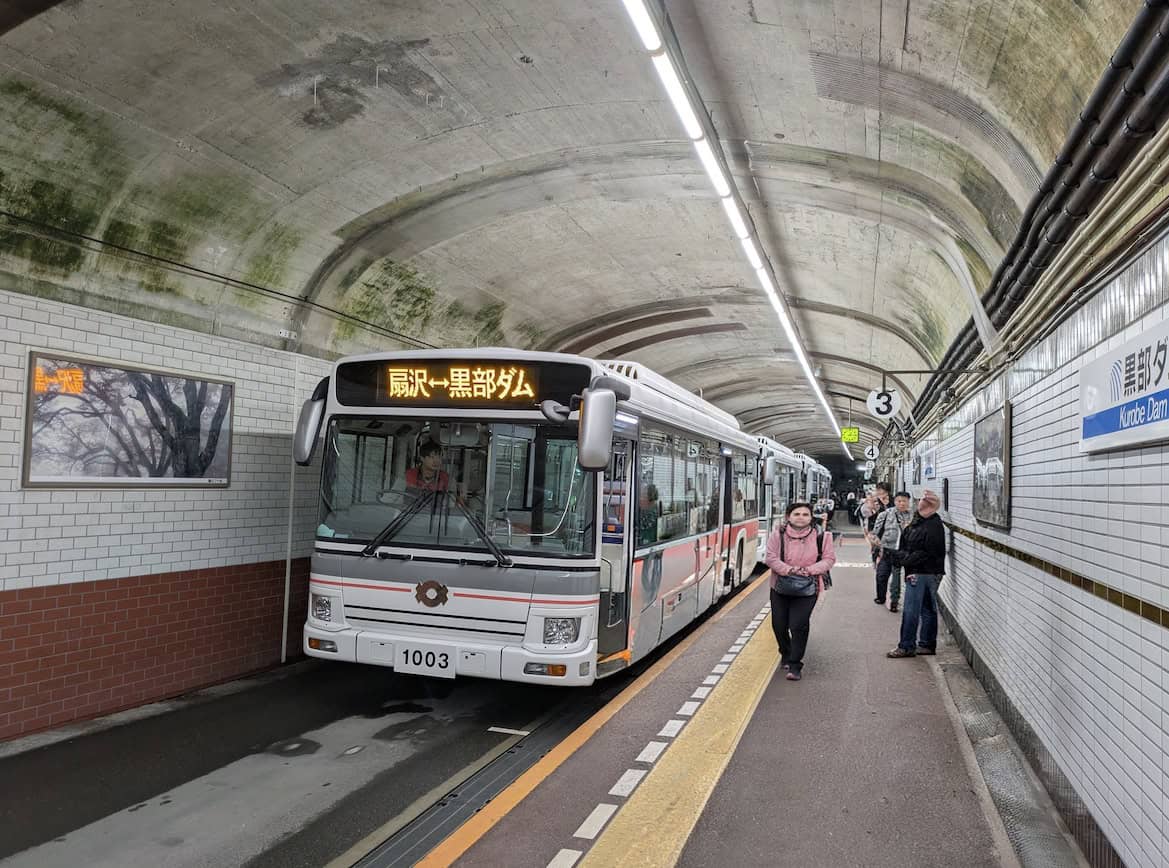
- Engineering marvels like the Kurobe dam(Japan’s tallest dam), mountain tunnels and the single span design of Tateyama ropeway(no support pylons over its 1.7kms length);
- Well coordinated end to end multiple transport arrangements.
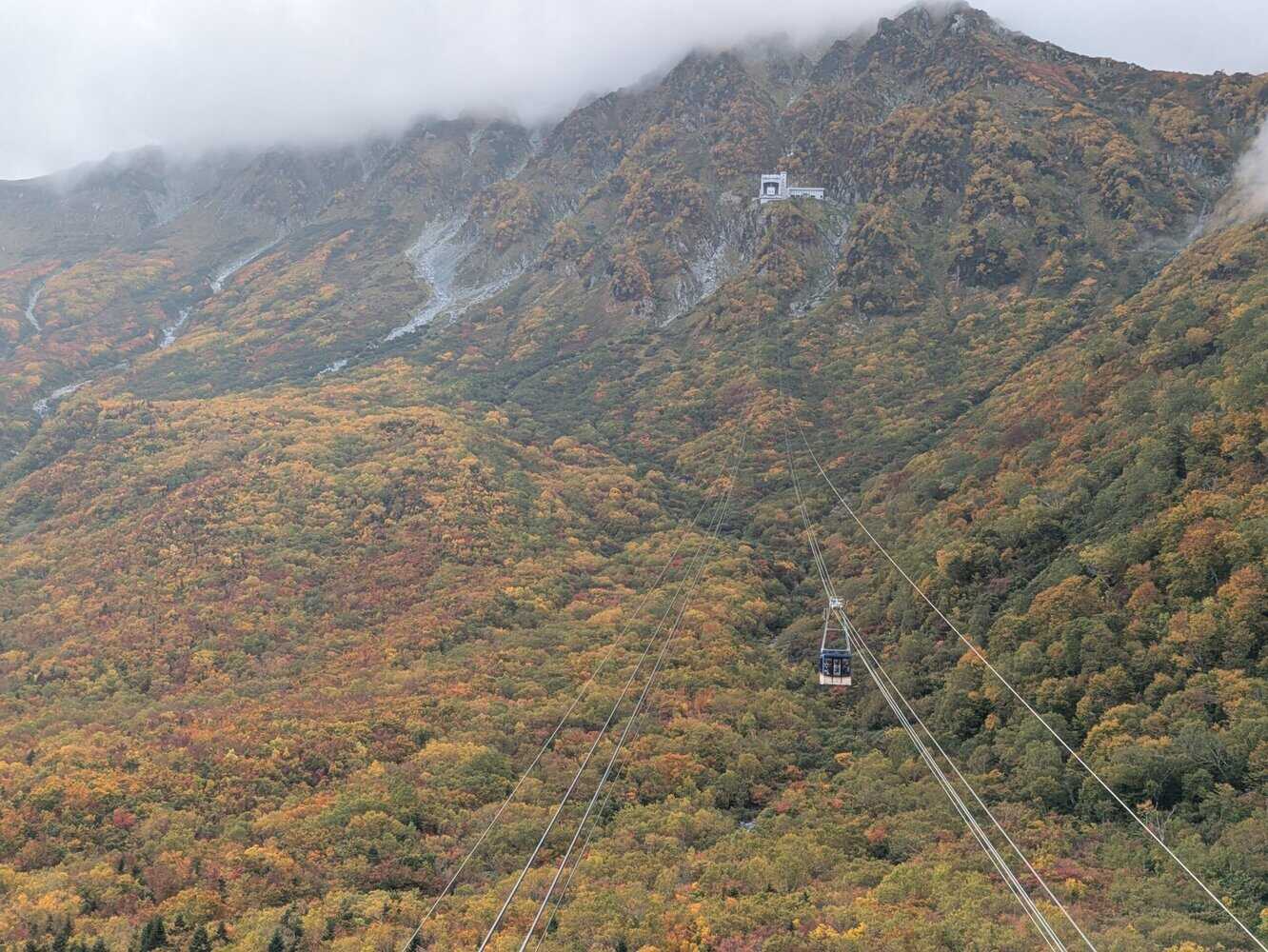
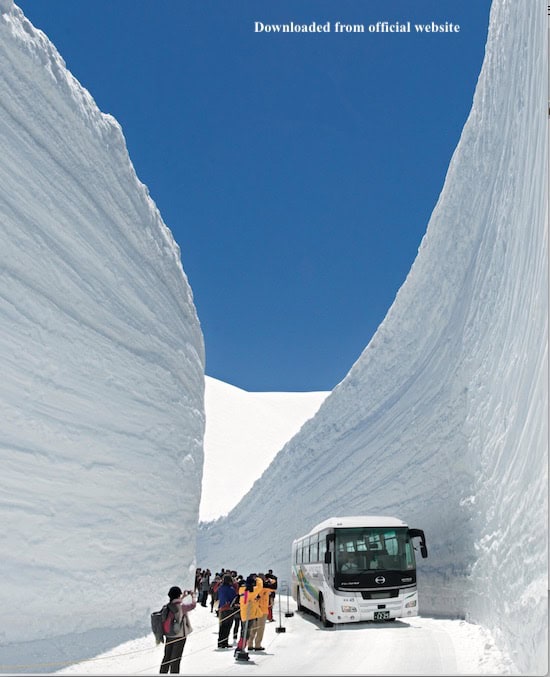
There are two photographs that have made the Alpine route famous, one depicting the autumn colors under the ropeway and the second, much more famous, depicting the snow wall. I downloaded the second photo from the official website.
Northern Alps in Japan is quite scenic
Part of the Northern Japanese Alps, the alpine route is normally open between mid April and end November, stretching over 4 seasons-Spring, Summer, Autumn and one month of winter in November. Every season has its own highlights, with Spring being dominated by the Snow Wall that can reach 20m in height, Summer is about lush greenery and hiking while Autumn is about the ‘autumn colors’. In November, places like Murodo are blanketed by snow. Effectively, anytime is a good time to experience the Tateyama-Kurobe Alpine route.
Alpine route and Kurobe Gorge railway are being connected
The Kurobe Gorge railway is not far. I read that Keyakidaira, the last stop on Kurobe Gorge railway, is being connected to Kurobe dam. As and when that happens, it will make the region even more appealing and provide an alternate access.
1. Start and end points
The Alpine route in central Japan runs between Tateyama and Ogizawa. Tateyama is connected to Toyama(Dentetsu Toyama railway station) while Ogizawa is connected to Nagano(Nagano railway station), with both Toyama and Nagano being located on the Shinkansen route from Tokyo to Tsuruga. One can traverse the route in the reverse direction also. Irrespective of the start point, the route takes one progressively higher and higher, with Murodo at 2450m being the highest point. That is effectively an ascent (and descent) of ~2000m.
Here is the map of route downloaded from the official website.
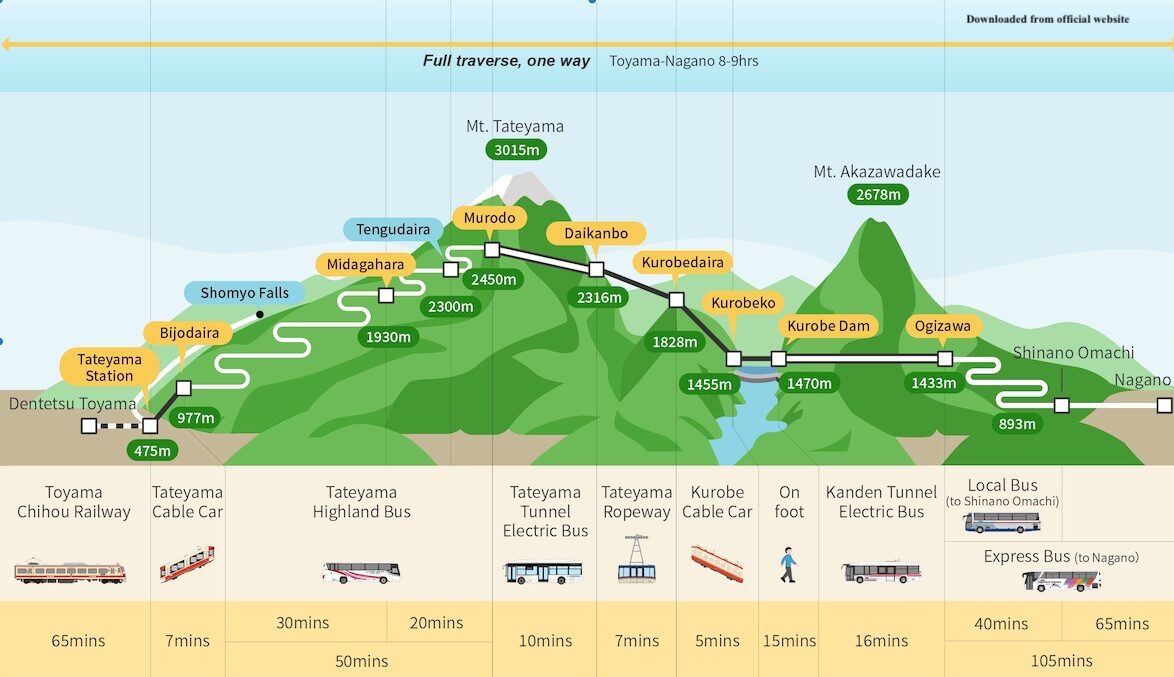
It is not necessary to traverse the entire stretch. One can travel up to a specific point, say Murodo and return to the start point. This option is possibly relevant for those who have already visited once or are part of a package tour or looking to see only one or two attractions. For example, the snow wall at Murodo. The private vehicles have to be parked at Ogizawa or Tateyama, the two entry points to the Alpine route.
For first timers, it makes sense to traverse the entire length. Given the change in elevations, make sure you are appropriately dressed in layers. In the first week of October, only Murodo was a bit cold, thanks to the fog, with temperatures dropping below 15 degrees celsius.
2. Toyama vs Nagano – which start point is better?
There is no right answer. If it is a day journey, it depends from where you are travelling and availability of web tickets. I was travelling from Kanazawa and Toyama was my preference. But the web tickets for Tateyama were sold out and I had no choice but to choose Ogizawa and travel to Nagano first. Since I was unsure of the availability of vegetarian meal on the Alpine route, I did not want to skip breakfast at the hotel and hence took the 8.18am shinkansen from Kanazawa to Nagano, reaching at 9.45 am. I could have also taken a later Shinkansen that would have arrived in Nagano at 10.12am. The bus from Nagano was at 10.30am. In all, not a very efficient use of time. But for the breakfast, I could have booked the 9am bus from Nagano.
I believe people even do a day trip from Tokyo. Nagano is obviously a better option then. If you are doing only a part of the route, check for connection timings. For example, Murodo is more or less at the center but the time to get there from either Ogizawa or Tateyama varies, depending on in between connections.
3. Book in advance
The route needs advance booking though limited day tickets are available at Tateyama and Ogizawa stations. One can’t really go that far and discover that the tickets are sold out. Online advance booking has its advantages as the departure time for the first ride, either the Tateyama Cable Car from Tateyama station or the Kanden Tunnel Electric Bus from Ogizawa, is reserved. It can be changed online ahead of arrival.
Only the first ride is reserved. Rest of the journey is flexible but obviously, you need to make absolutely sure you don’t miss the last connection at Tateyama or Ogizawa.
4. Vegetarian meal
This is where the journey disappointed. When I reached Ogizawa, it was lunch time. But at the restaurant here, there were only two vegetarian items available – french fries and boiled beans. Good thing is that one of the staff spoke english and she could easily confirm that an item sounding and looking vegetarian was actually non-vegetarian!

It is possible that the restaurants at Kurobe Dam and Murodo may offer certain vegetarian items. But given that my trip was a rushed affair, I did not wish to waste time enquiring. Stuck to just coffee, ice-cream and couple of items I had got from India. There are small shops at each stop where you can get snacks and beverages plus souvenirs and other items to buy. Suica/credit card was generally accepted but cash will also be required.
There are Indian restaurants near Toyoma and Nagano stations
At Toyama, there is an Indian restaurant called Santoshi within a few minutes walk from the railway station. Nice joint and I had a hearty dinner there that cost over ¥6k for a couple. At Nagano also, Google maps indicated the presence of an Indian restaurant near the railway station. That would have been my choice for the evening dinner had I started from Toyama.
5. What does it cost?
Nagano to Ogizawa express bus, one way – ¥4,300
Ogizawa to Toyama Dentetsu station, one way – ¥12,360
(Ogizawa to Tateyama station is ¥10,940)
Total per adult – ¥16,660
Add to this the cost of Shinkansen ticket from Kanazawa to Nagano and then Toyama to Kanazawa(~¥8k but free for me under Hokuriku Arch Pass). Just the travel cost from Kanazawa is ~¥25k per adult.
6. My experiences in early October
a) Advance booking is super easy
I had to choose Nagano as the start point by default as advance tickets from Tateyama were not available while Ogizawa departure was available for 12.30 and 1pm. It did seem a bit late but I booked the 1pm slot. This was about 10 days prior.
To board the bus at Nagano station, eMail confirmation was sufficient as tickets are supposed to be printed at Ogizawa! There is no reservation for the seats on the bus. During busy season, one will have to arrive early and wait in Queue. When I visited, about 10-15 people boarded the bus at Nagano and I was the first one!
At Ogizawa station, I printed the tickets from the automated machine. Fairly easy process that took couple of minutes. The email confirmation with QR code and the reservation number was required.
Tickets for both the bus journey from Nagano to Ogizawa and the train journey from Tateyama to Toyoma Dentetsu are optional but can be booked along with the Alpine route ticket.
b) Time and distance
The fastest journey time from Nagano to Dentetsu Toyama station is ~6 hours, without any break and the distance is ~ 130kms. The fastest journey time between Ogizawa and Tateyama stations is ~3 hours, without any break. Realistically, a minimum of 4 hours is required between Ogizawa departure and Murodo departure, assuming no stops post Murodo. I had less than 3.5 hours and that is the reason I could not waste time looking for food and beverages!
Check this link for further details of modes of transport and time required.
c) The timetable
This is the most important document once the tickets have been purchased. Available online but a printed version was available at Ogizawa. Mark the time of departure at each location and arrive 10-15 minutes early. When Queues are long, departure may be delayed. The only critical part is to ensure you do not miss the last connections.
d) Highlights of Alpine route
Bus ride from Nagano
Bus ride from Nagano station to Ogizawa was fairly scenic. Departed right on dot from the East gate at 10.30 am and reached Ogizawa on time at 12.15pm. The bus passed through several scenic villages and winding hilly roads. The town of Shinano-Omachi, known for its hot springs, looked like a nice place to spend a night. The bus was less than half full and the seating was comfortable.
Kurobe Dam
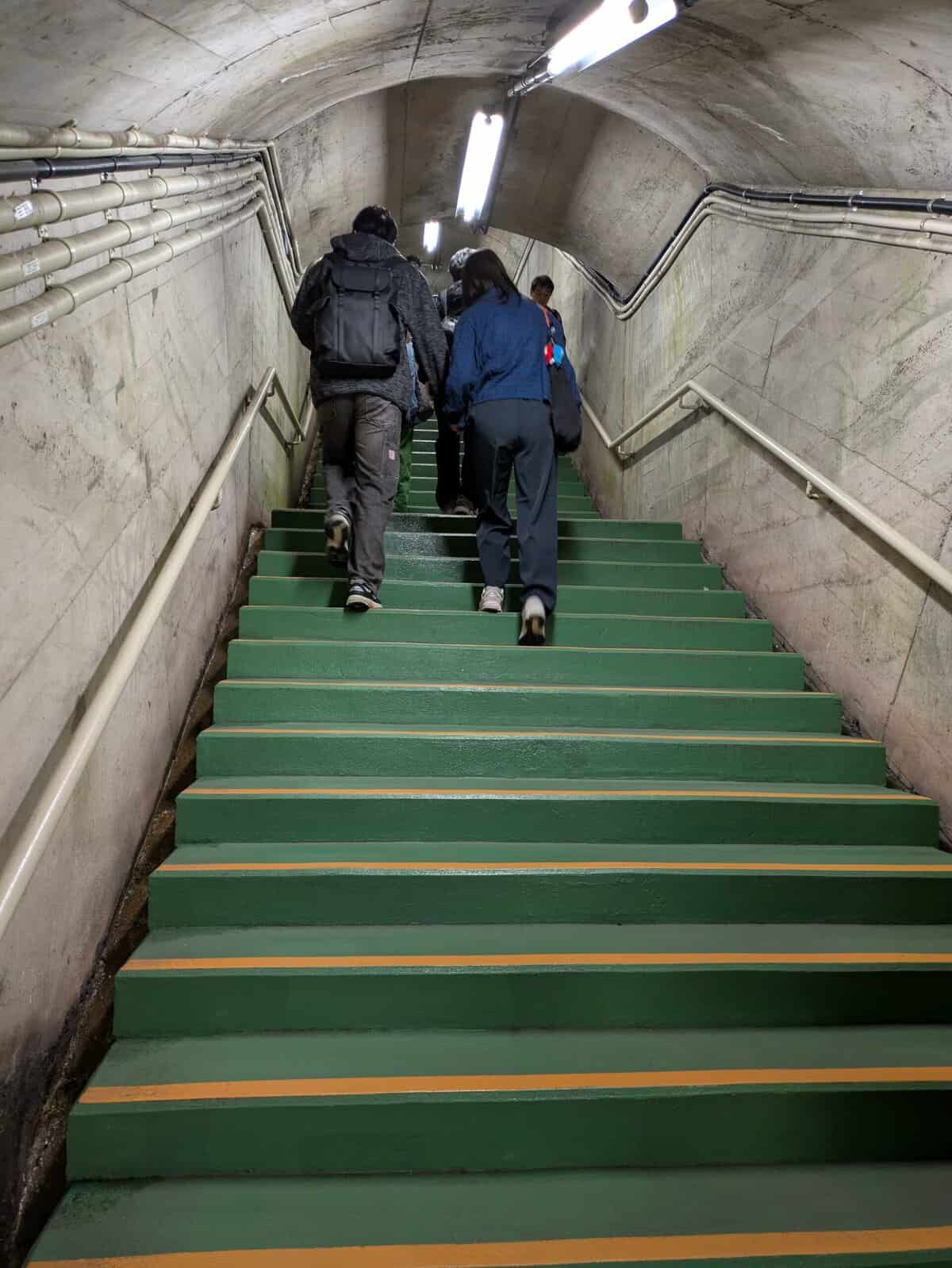
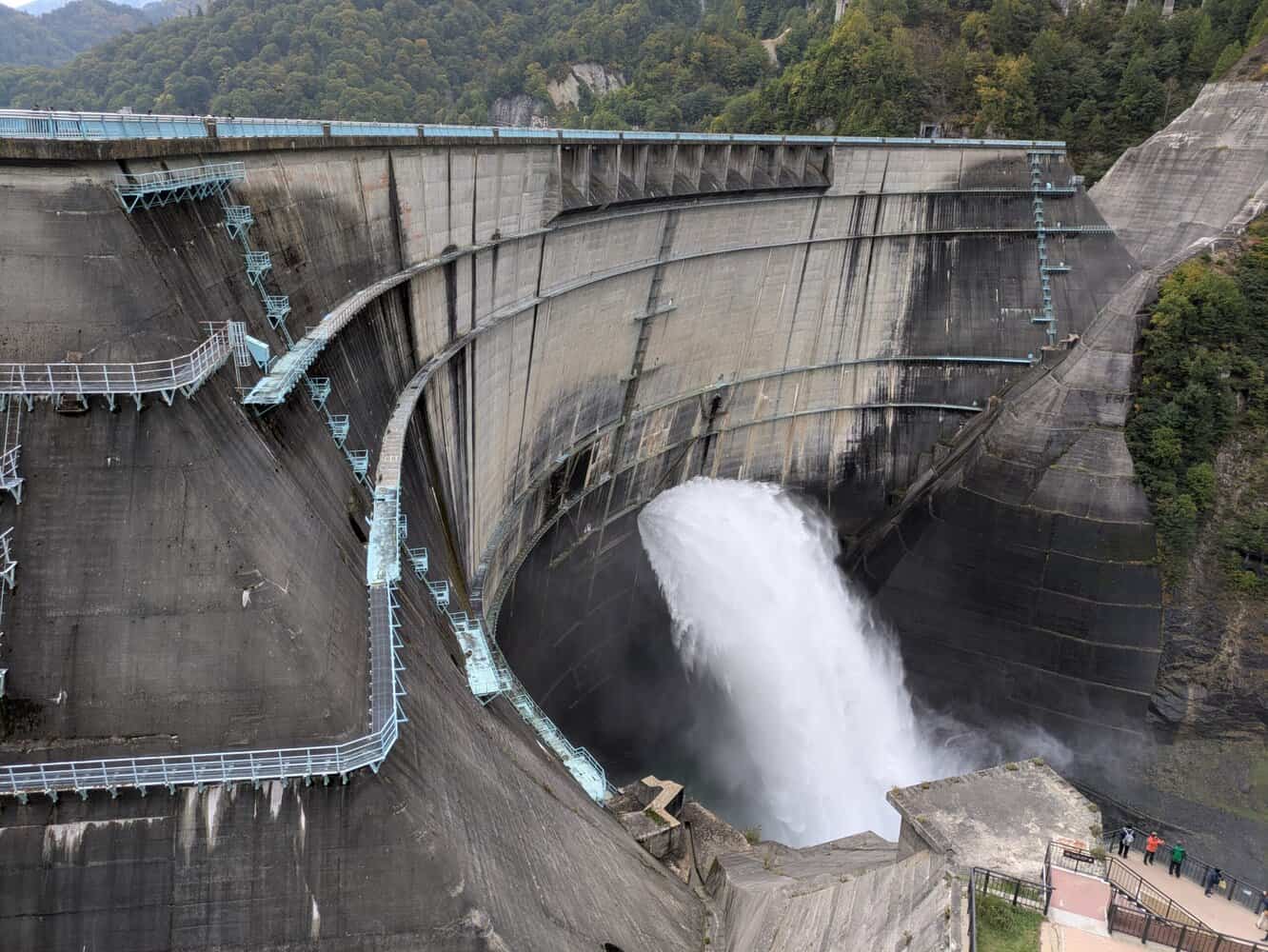
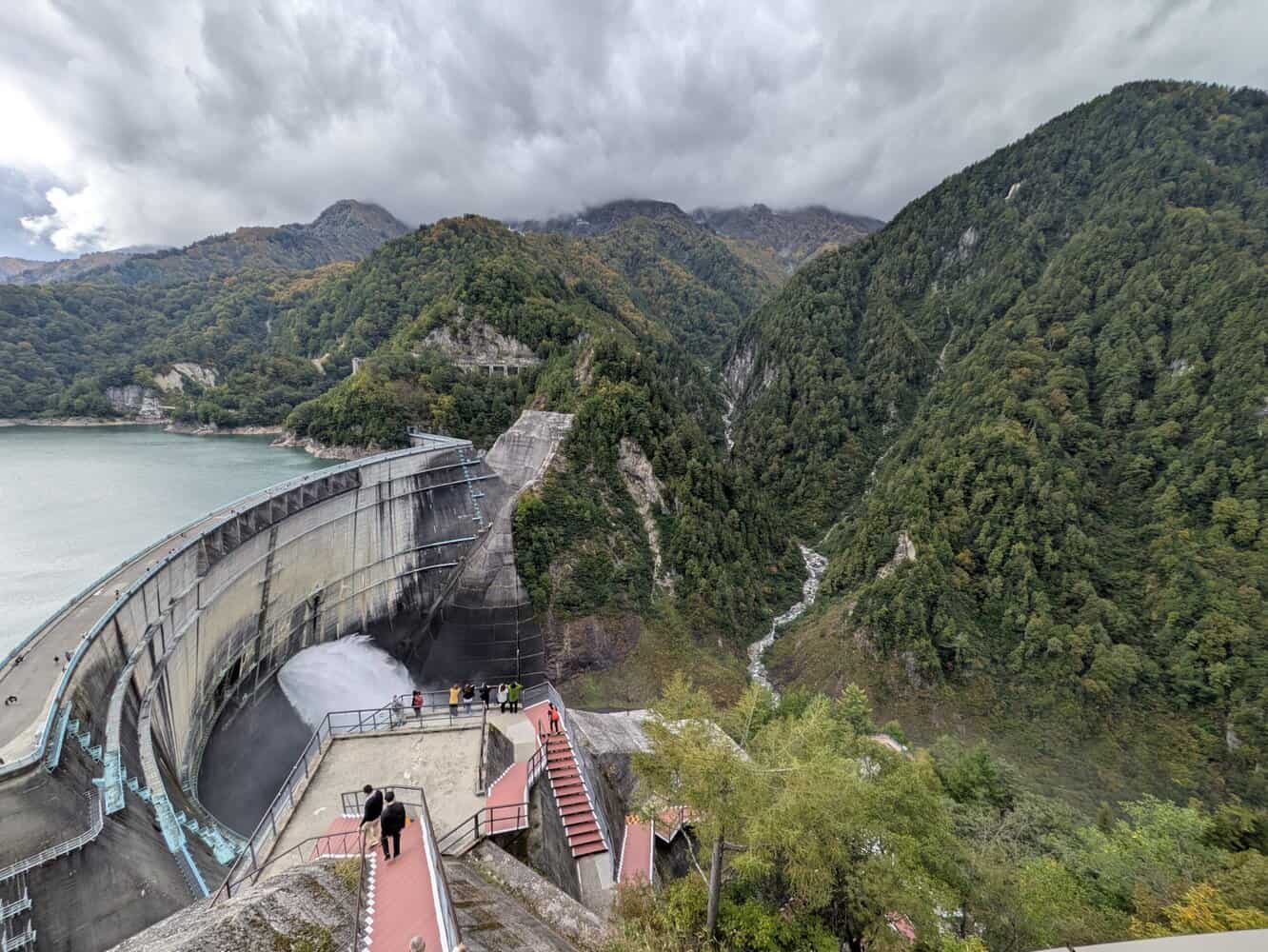
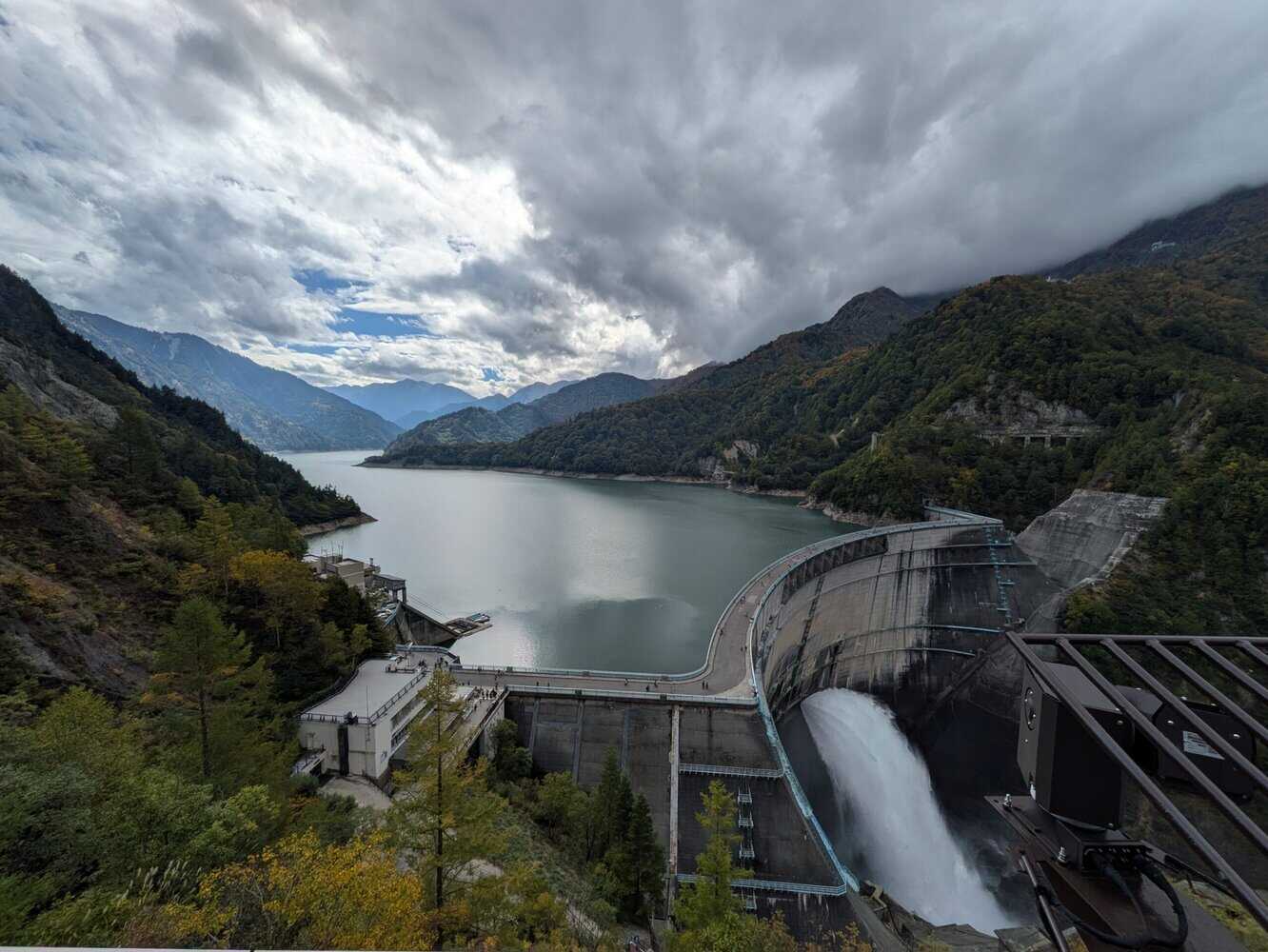
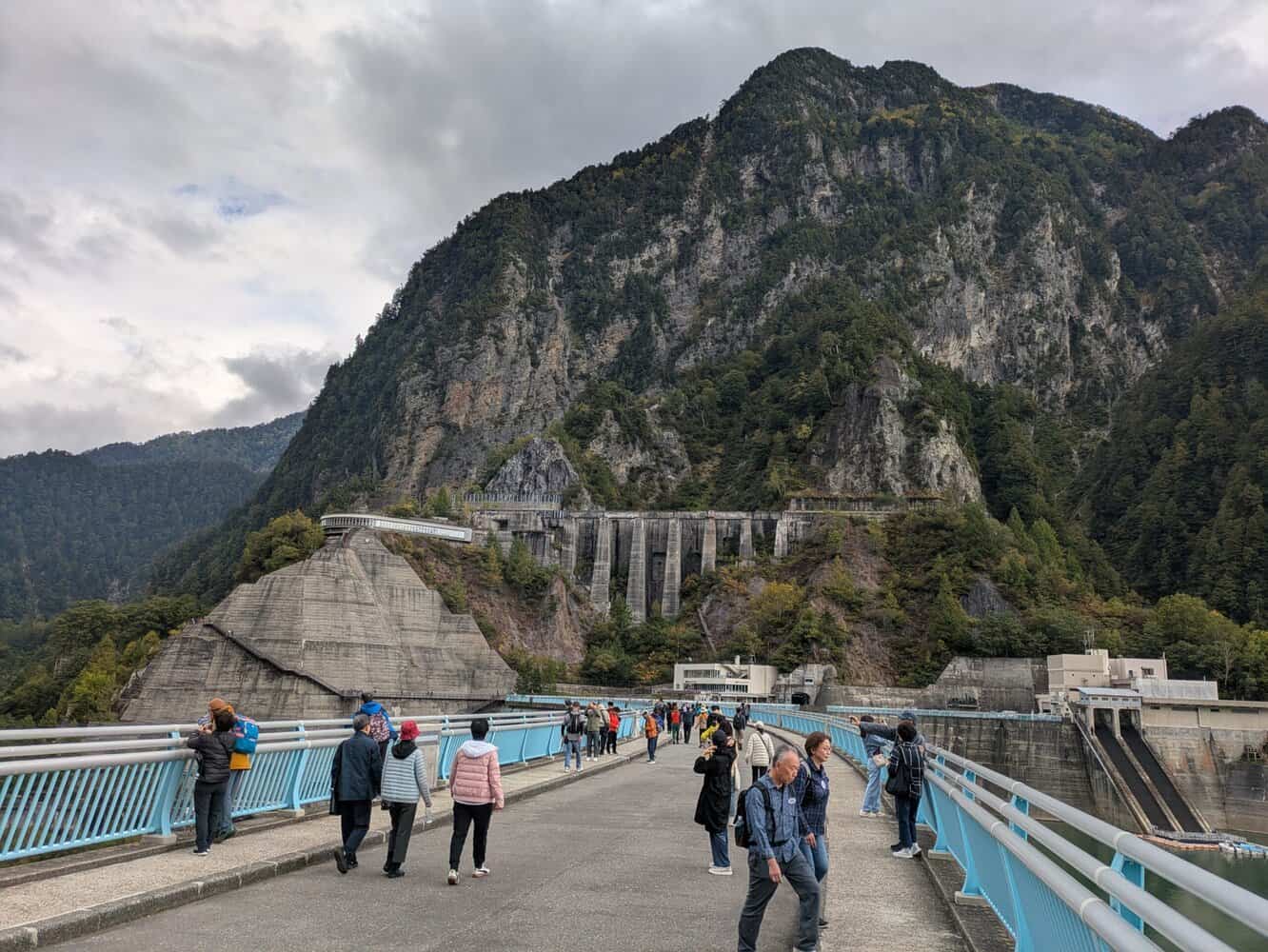
After alighting from the Kanden Tunnel Electric bus around 1.20pm, I climbed a few steps inside a corridor which then split into two – right side led to the viewpoint and the left directly to the dam. I turned right to go to the viewpoint. I climbed 200+ steps and just when it was getting a bit tiring, I emerged out in the open and into a magnificent viewpoint – the huge jet of water rushing through the gate in the dam(said to be 10 tons per second), the arch shaped dam and the big reservoir amidst surrounding mountains with autumn colors marking its presence.
There was another terrace below much closer to the dam from where one could literally touch the gushing water. A separate path led me down towards the dam where it connected with the other route, the left turn inside the corridor. There is a restaurant here but I had no time to stop. It was about 1.45pm and there were already groups of people heading the other way, towards Ogizawa.
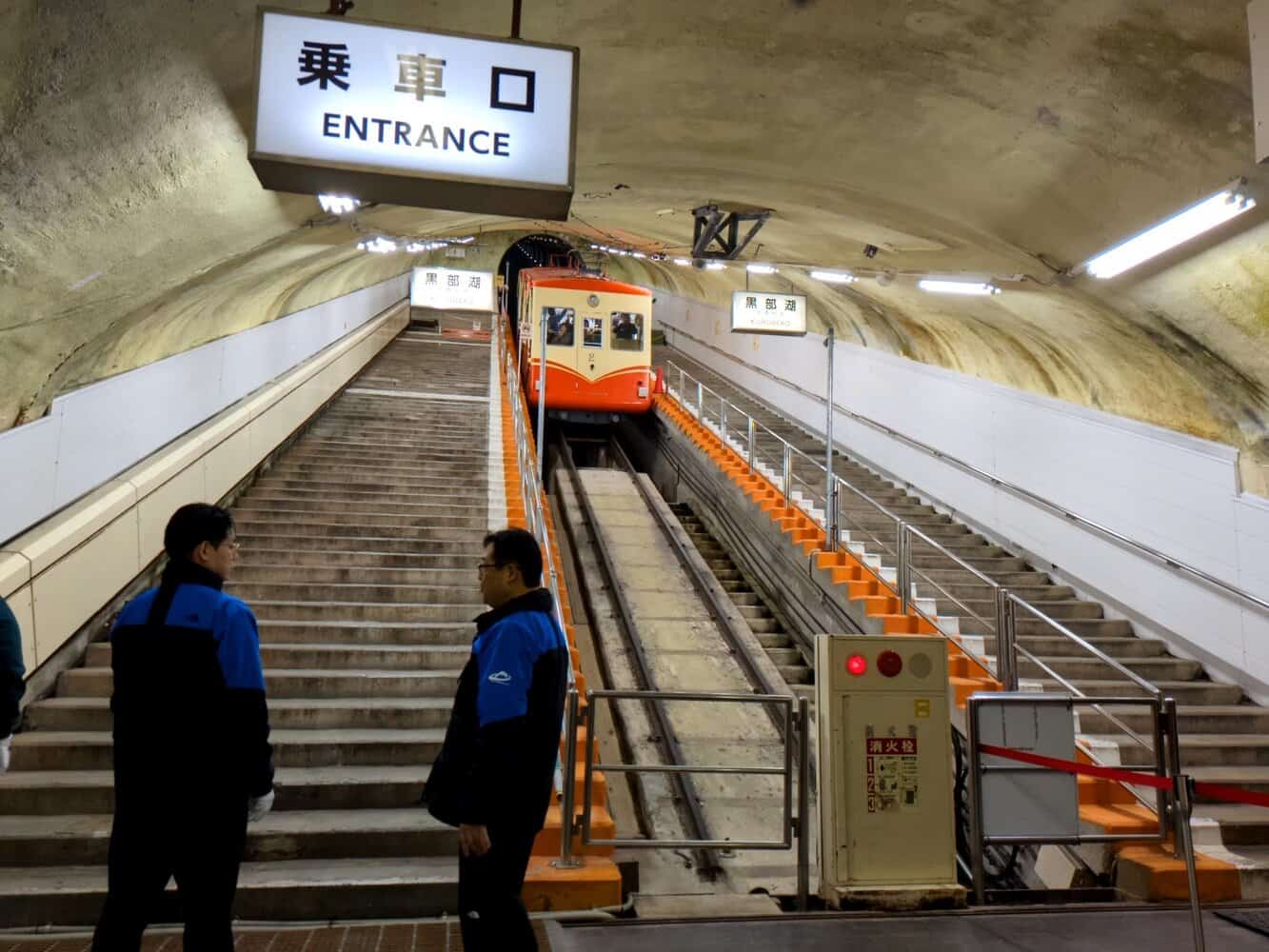
Overall, I took about 40 minutes to walk to Kurobeko boarding point for the Funicular ride. There was a bit of a queue here and I had to wait for about 15 minutes.
Kurobedaira and Daikanbo, lovely autumn colors
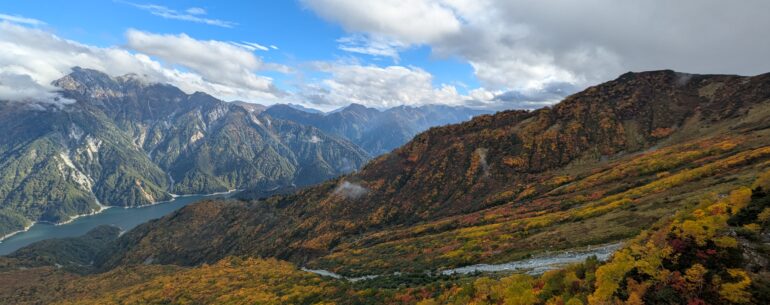
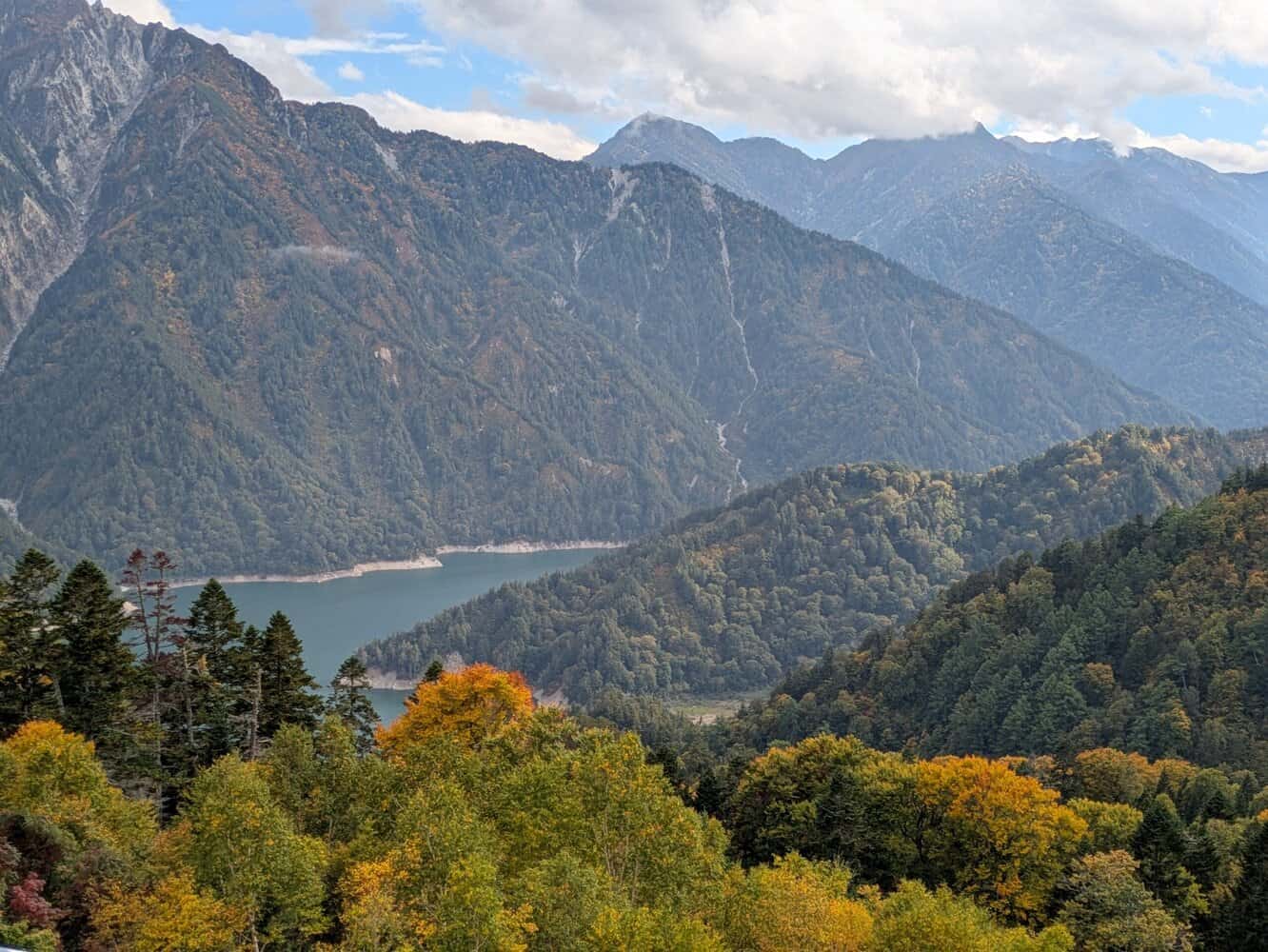
Both these stops provided the best views of the autumn colors, from the viewing platforms as well as the garden at Kurobedaira. The contrasting colors of green, yellow, red, orange/mustard was lovely. I had seen this in Alaska earlier but I don’t seem to have had enough of it! This is the only place I saw the autumn colors in full glory in Japan.
A Cable Car connects Kurobedaira with Daikanbo and both the stops require 30 minutes each to soak in the lovely views on offer. And more time if you wish enjoy a cup of coffee or an ice-cream in the midst of the beautiful surrounding landscape. The distant Kurobe dam is visible from both these locations. Gives a good idea on the elevation covered. I could only spend 40 minutes at both these locations combined as I had planned to depart Daikanbo at 3.15pm to get to Murodo by 3.25pm.
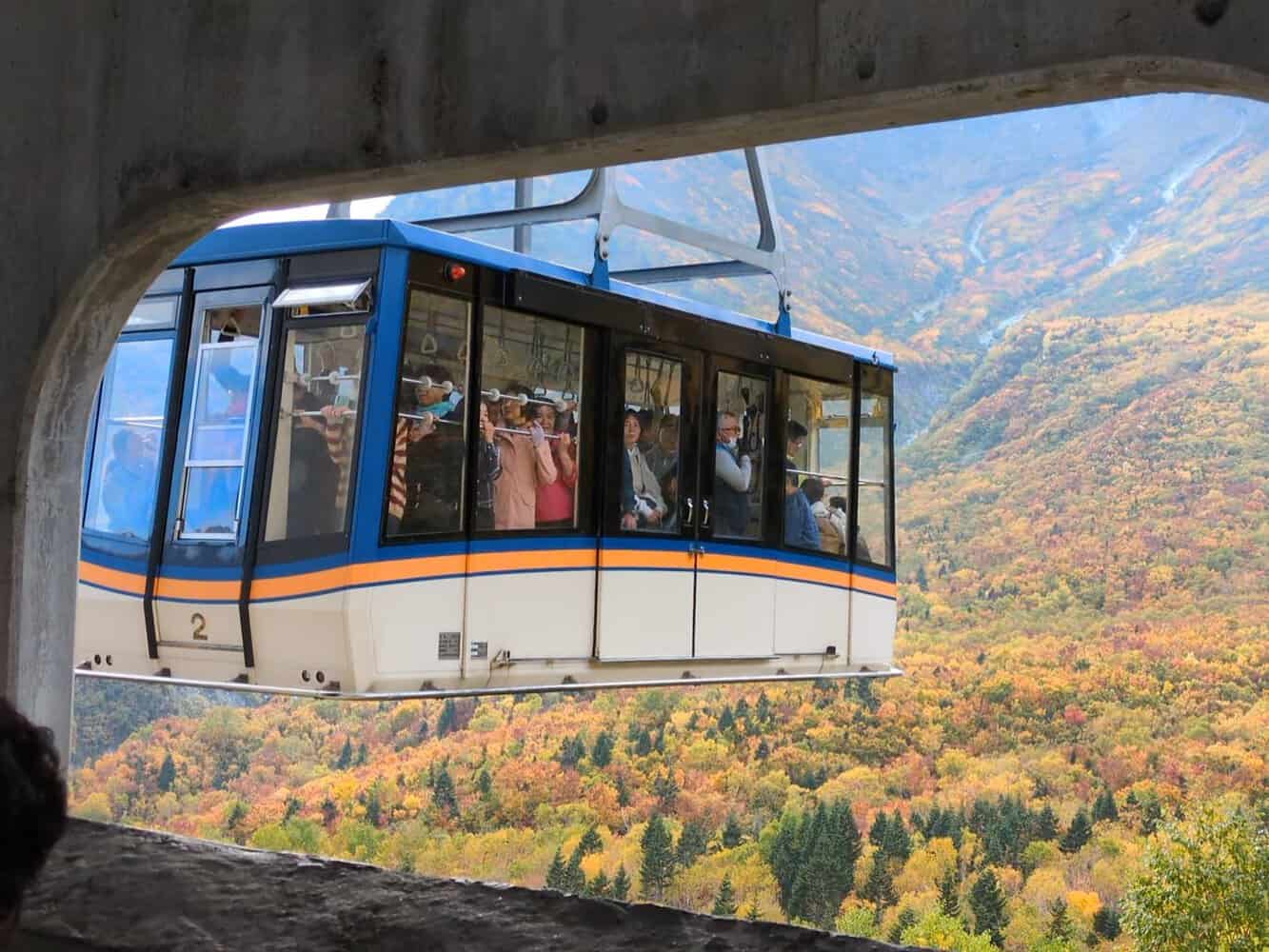
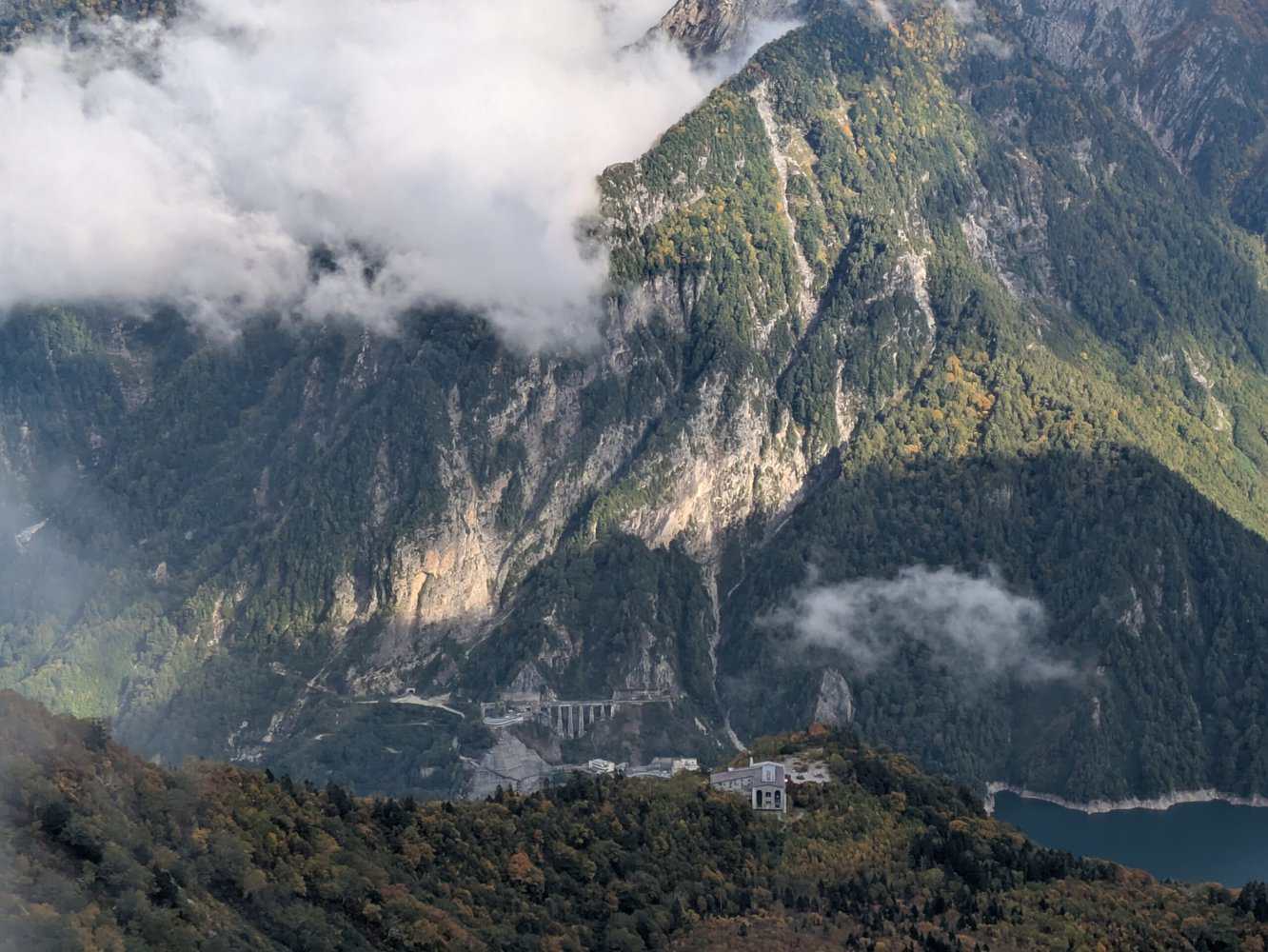
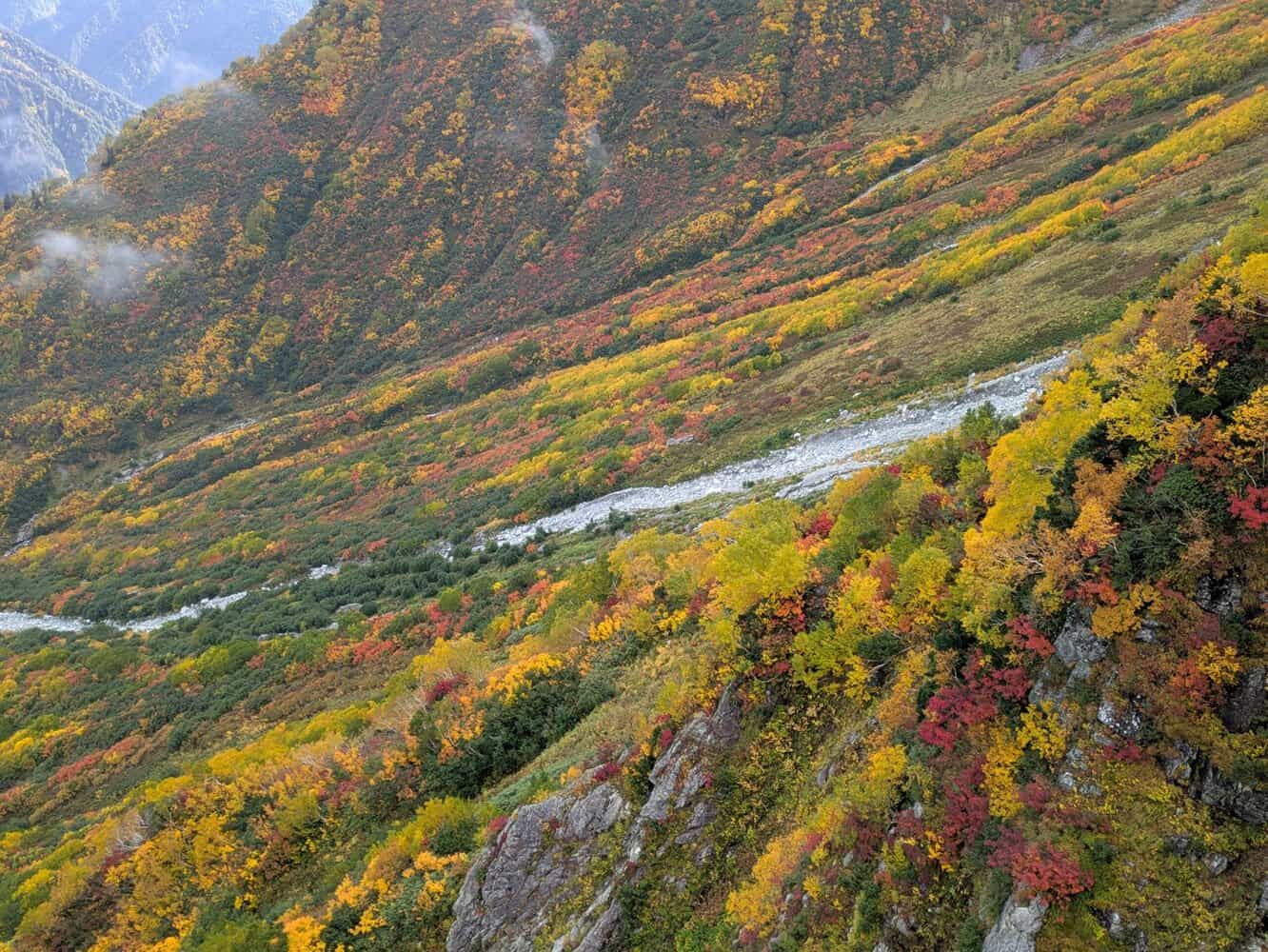
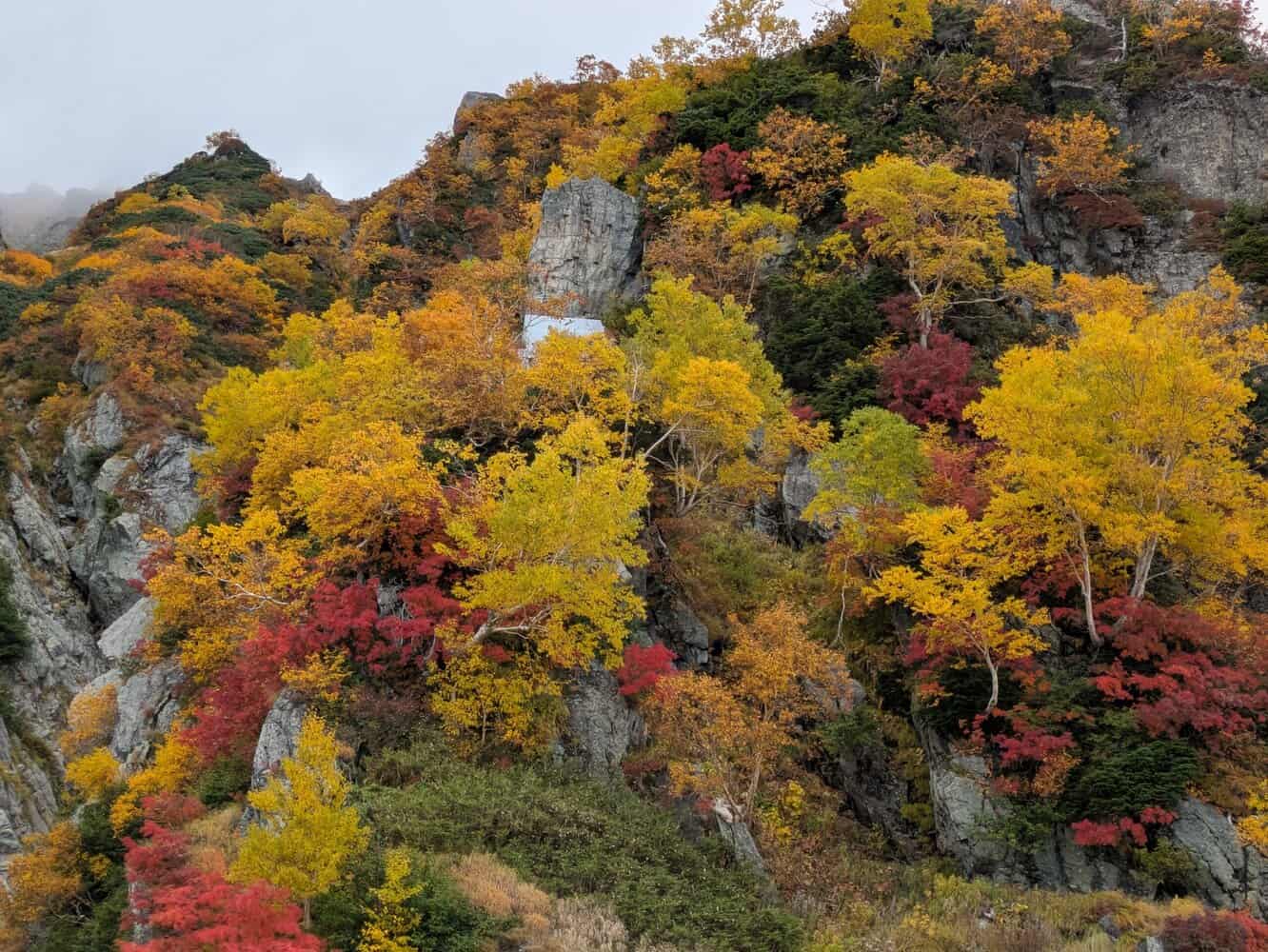
Murodo
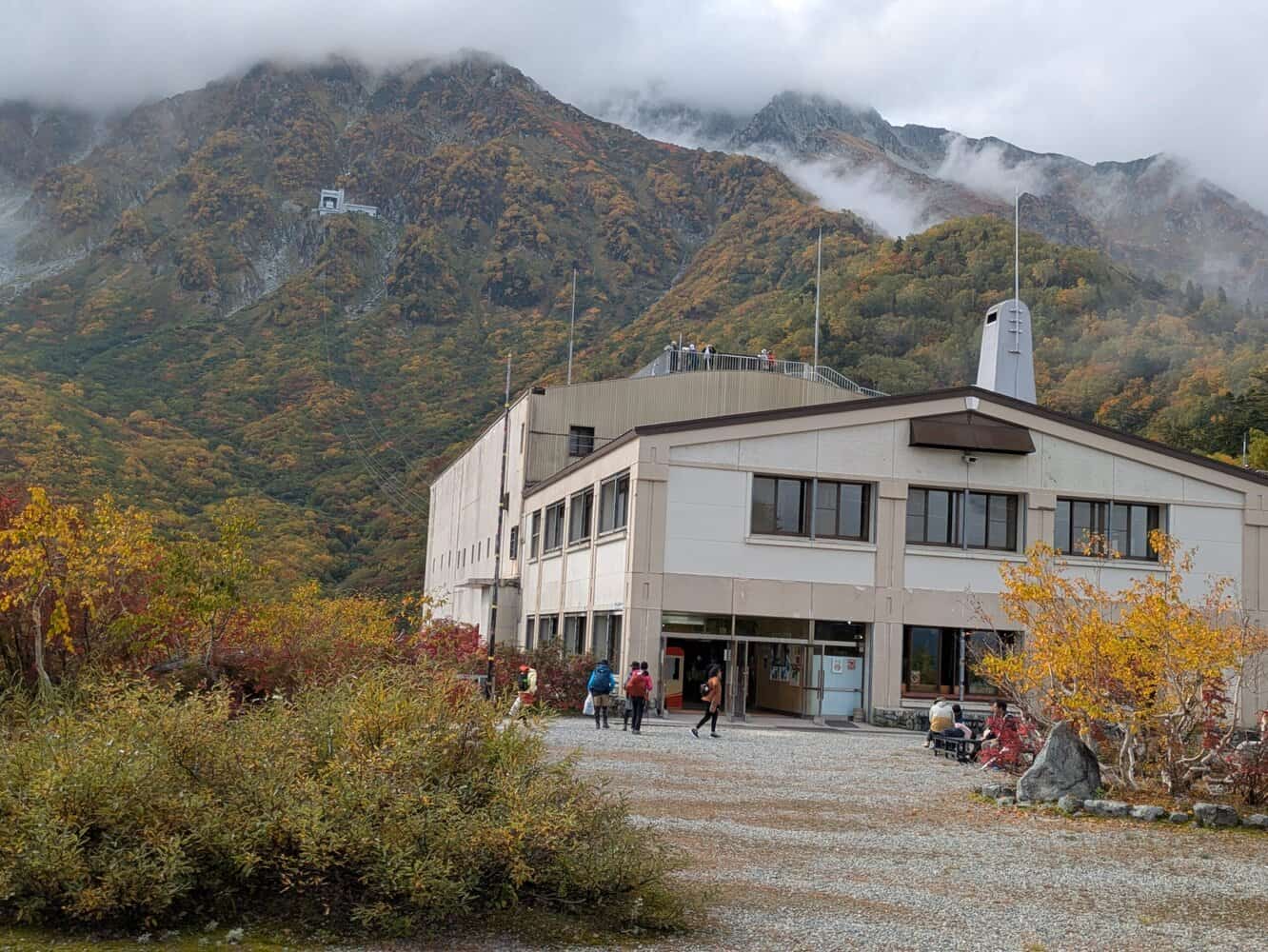
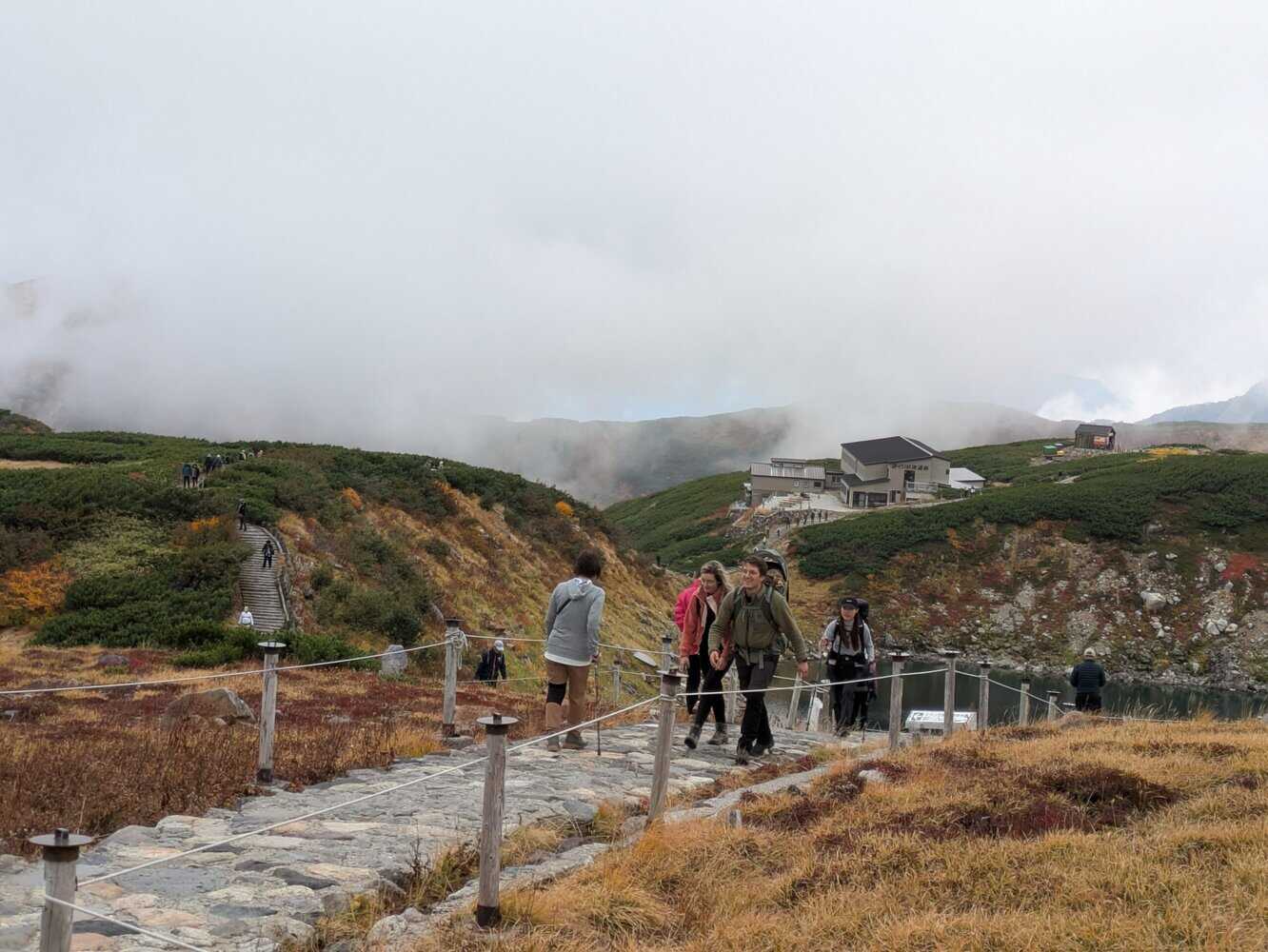
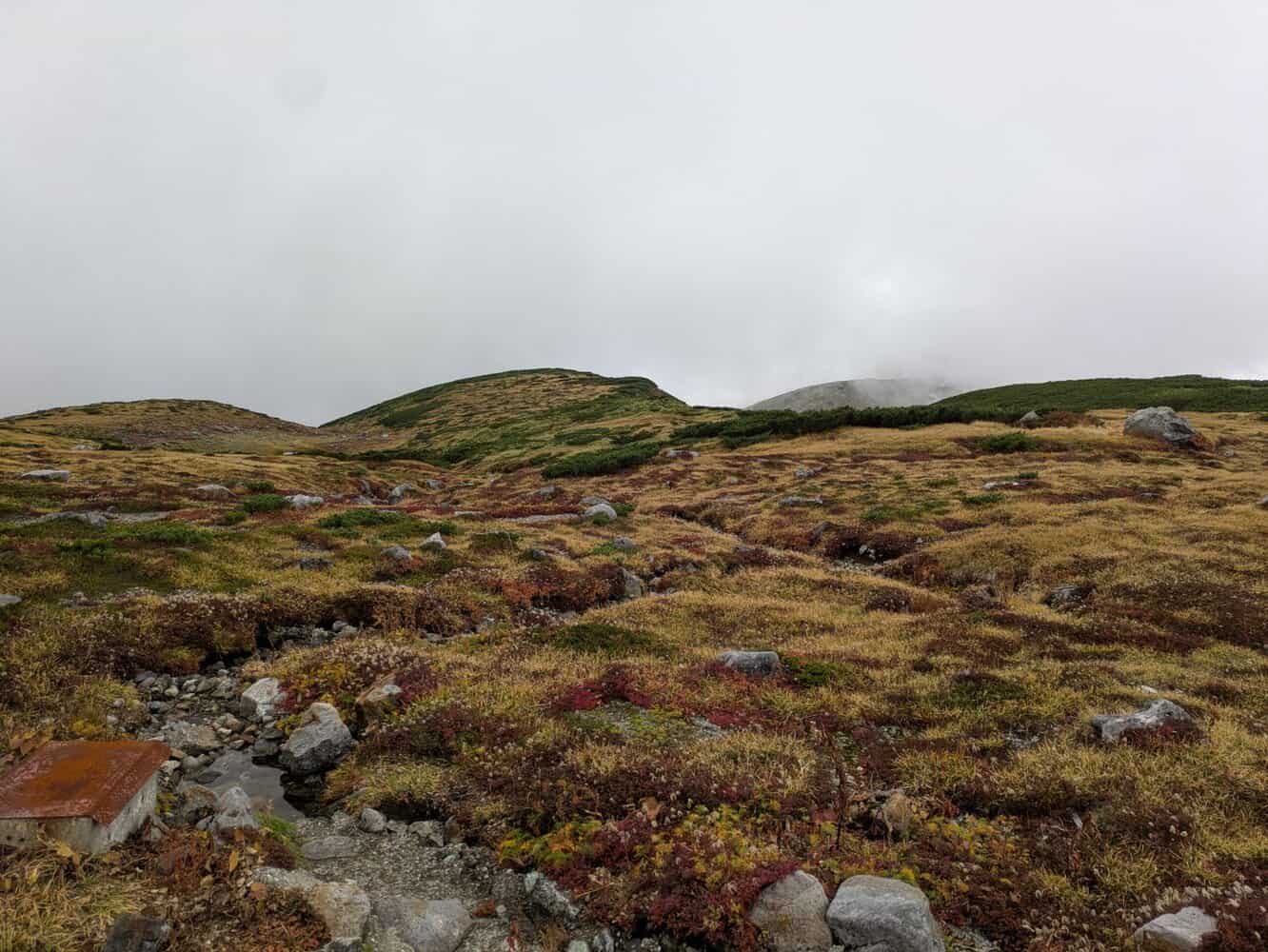
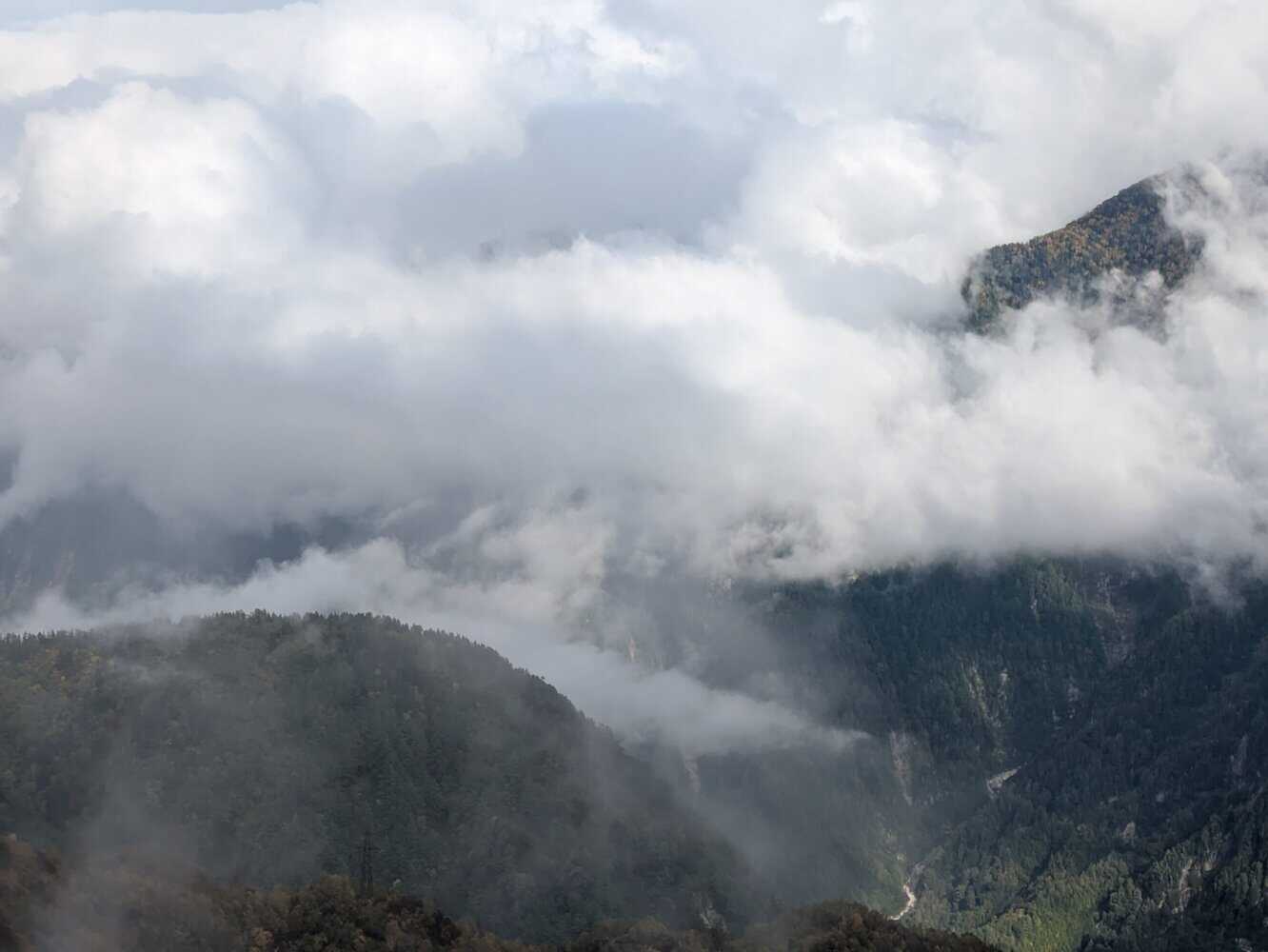
This is probably the most important stop and for that reason, the most crowded. There are restaurants, shops, hiking trails to mountain peaks, onsen and access to snow wall during spring. Unfortunately the weather was foggy and quite cold when I arrived at Murudo around 3.30pm. When I stepped outside, the visibility was barely 25-30 ft. and I was tempted to get back to the warmth of the Terminal building but decided to press ahead. Fortunately the weather cleared in double quick time. I had reconciled myself to not being able to view the mountain ranges but then, the clouds suddenly parted. Bits and pieces but enough to give me a glimpse of the colorful mountains.
Several hiking tracks at Murodo
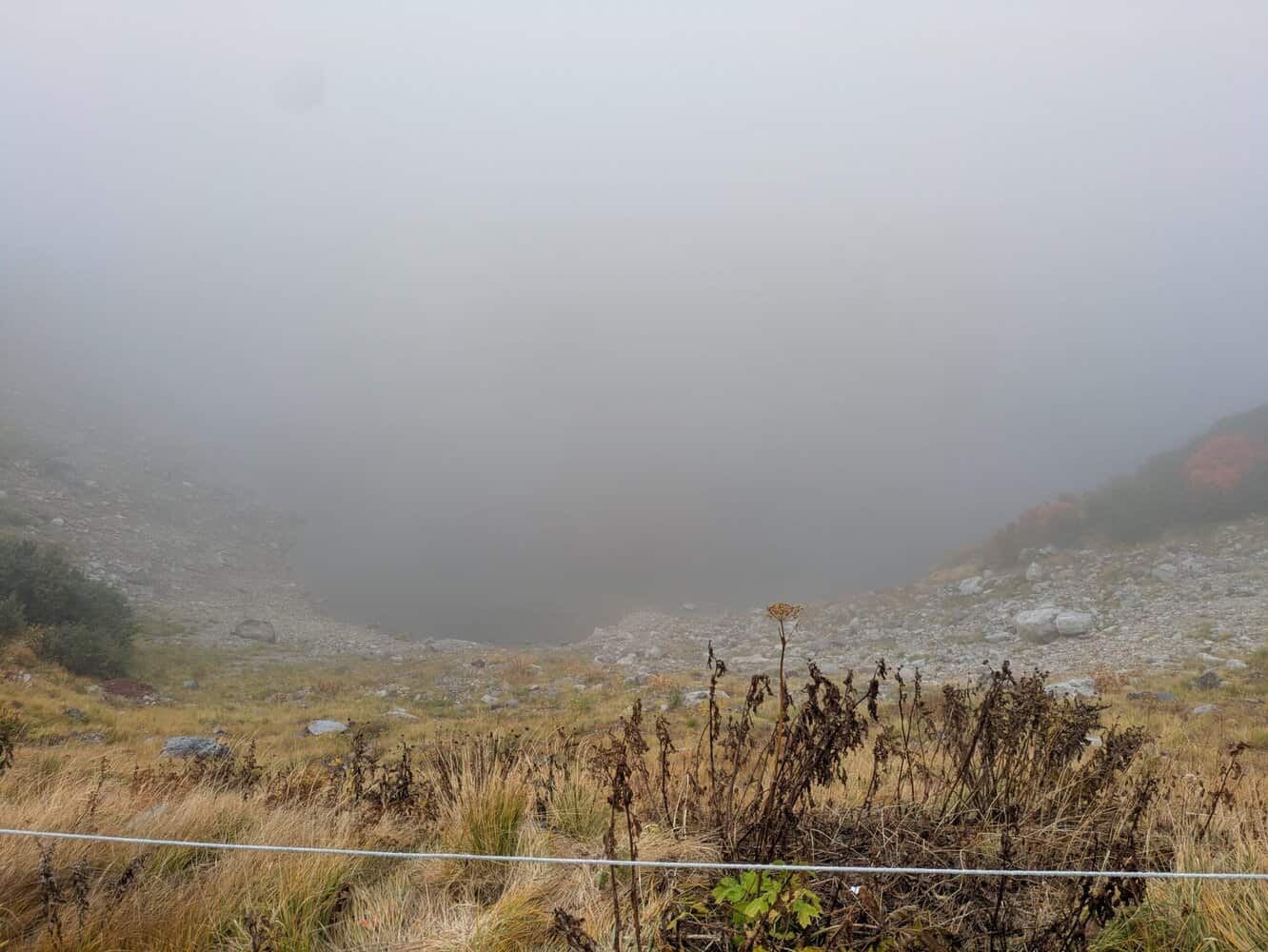
Murodo has 3 paved walking tracks that take 30 minutes to an hour to return. I took one of them that led to the volcanic Mikurigaike pond and returned in about 35 minutes. The deep blue waters of Mikurigaike pond reflects the surrounding mountain peaks on clear days, but the foggy weather prevented that. There are longer hiking tracks that lead to the mountain peaks, observation decks, onsen and so on. The hike to Mt. Tateyama at 3015m takes ~2 hours, one way. The Snow Wall is a very short walk from the Murodo Terminal, on the road to Bijodaira.
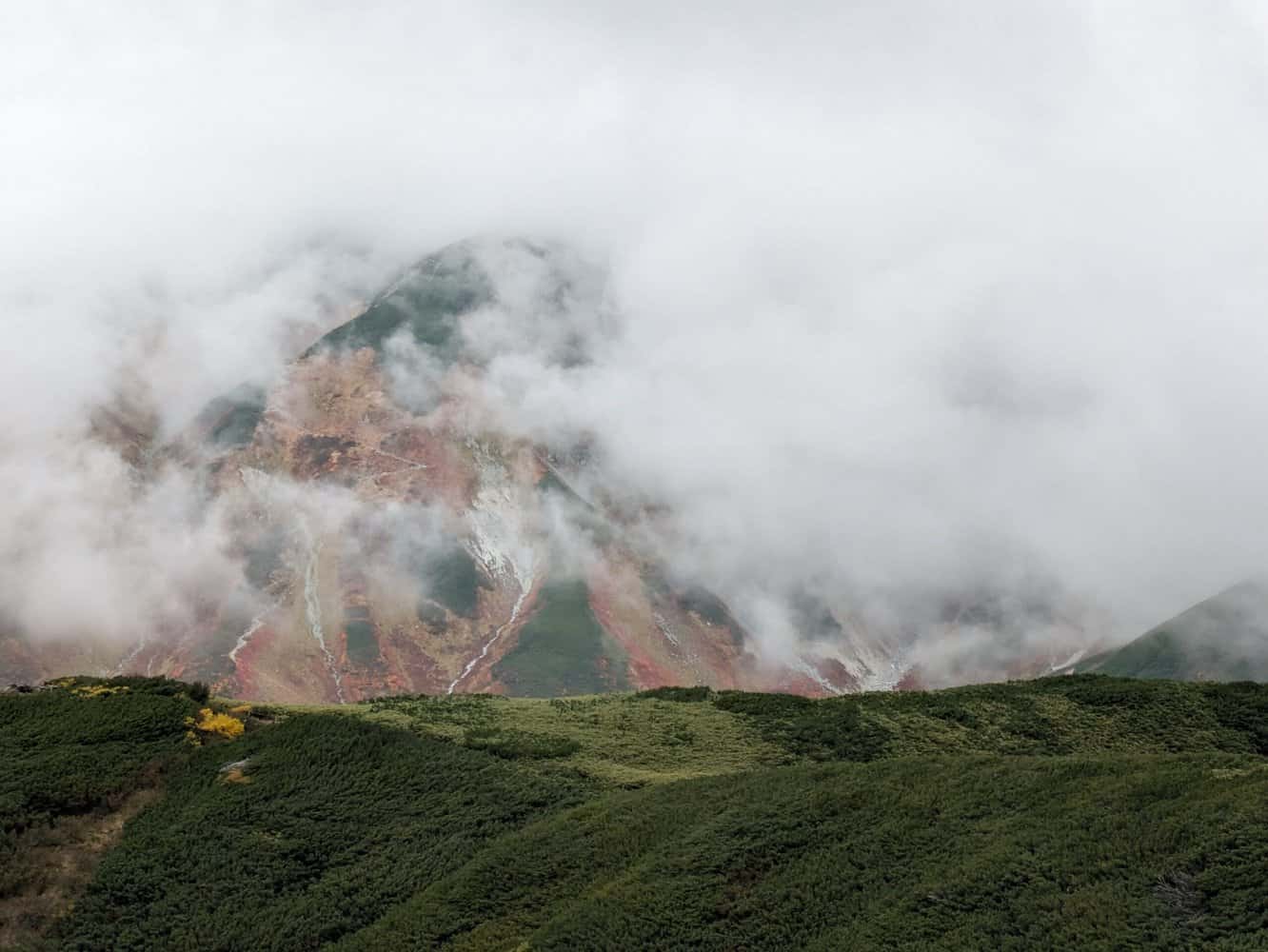
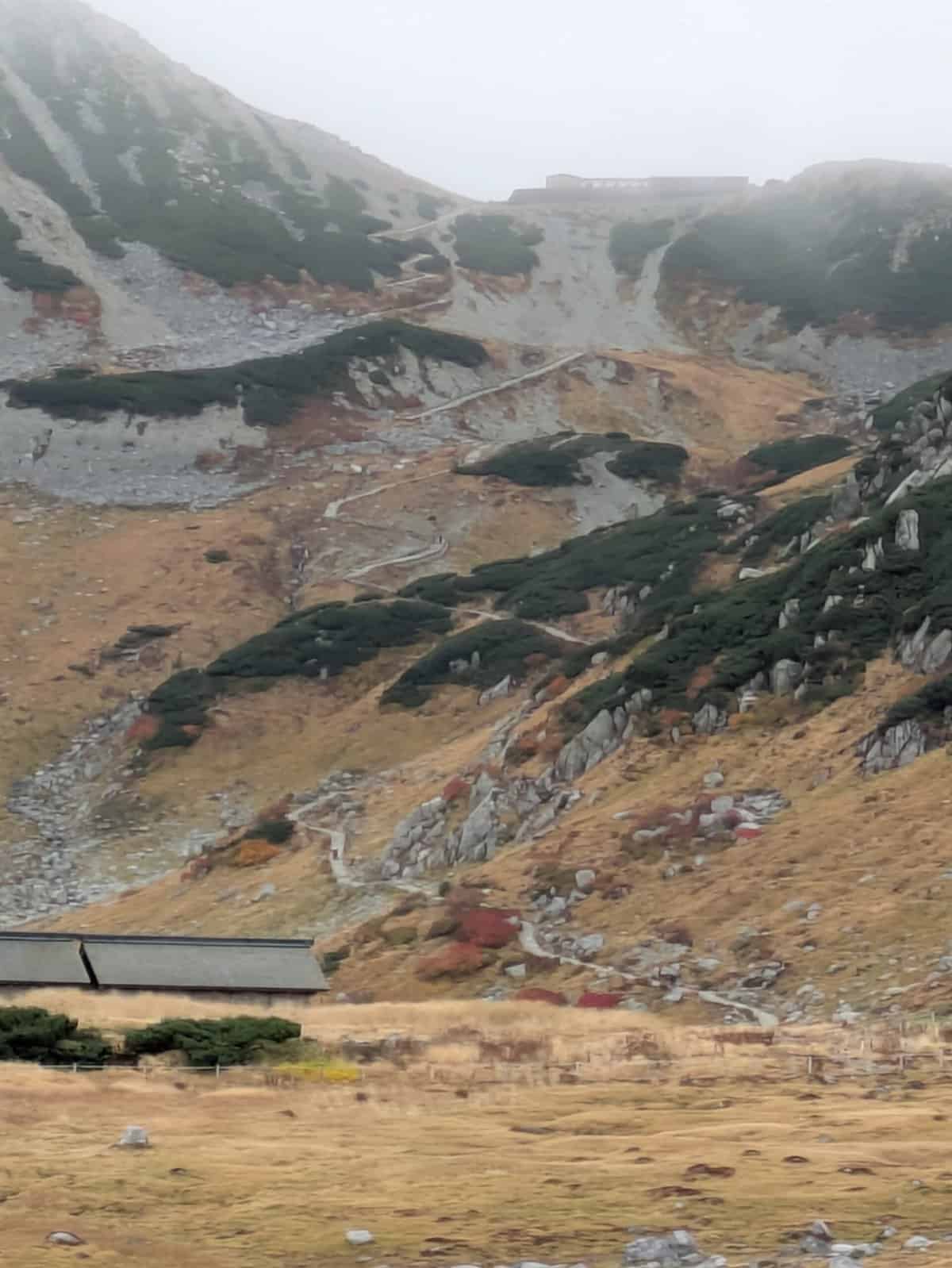
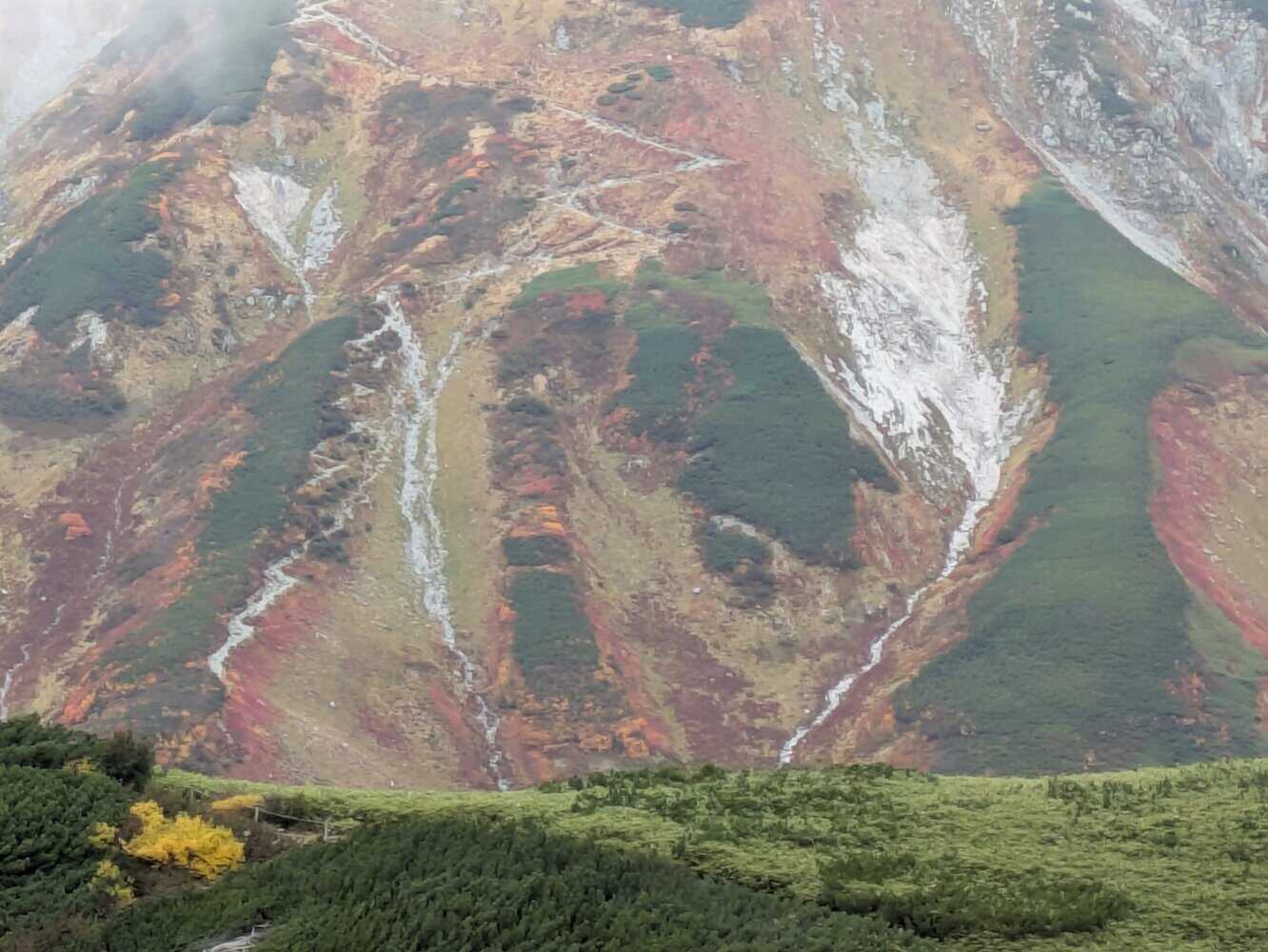
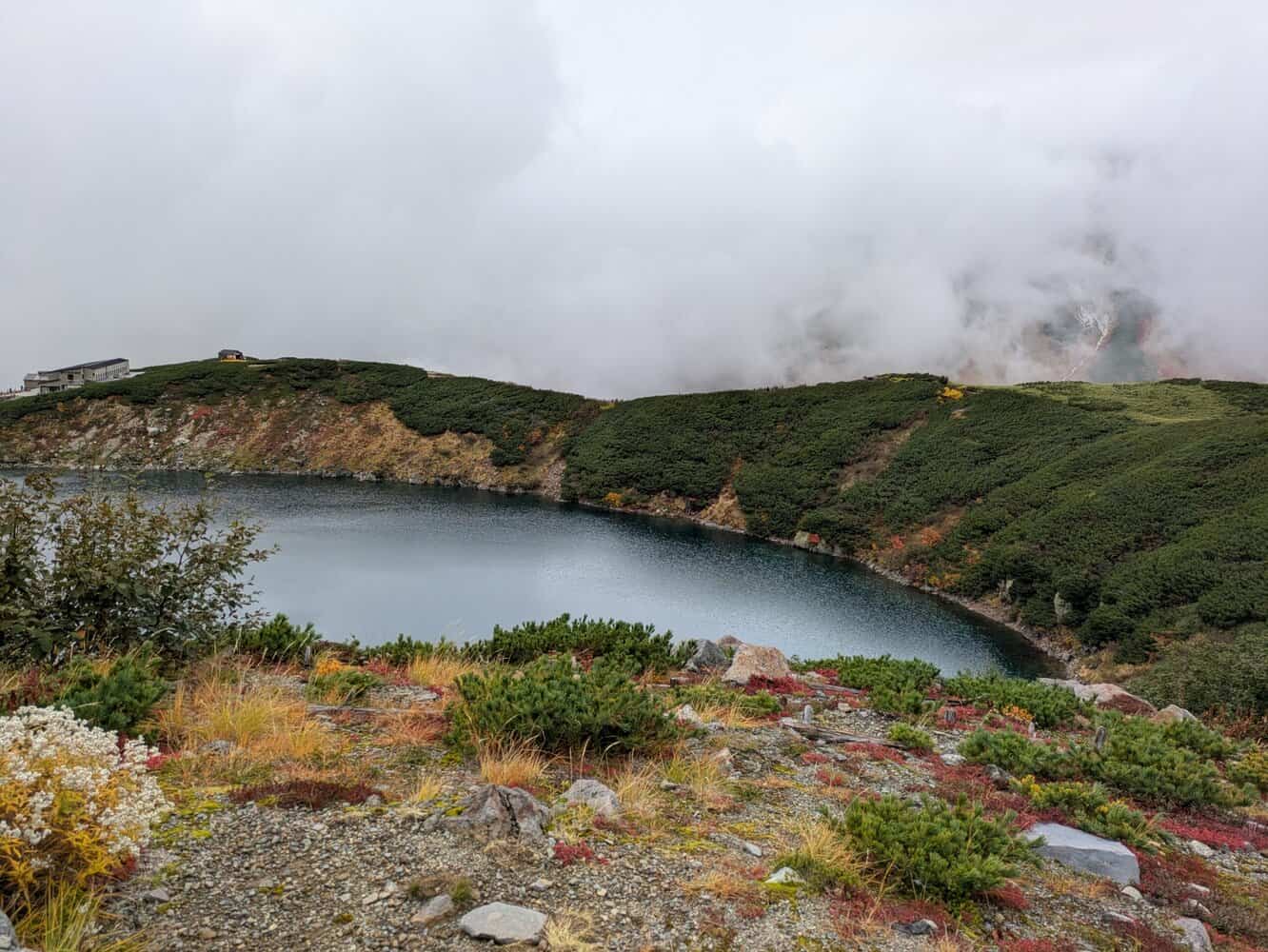
From Murodo, I did not halt until Toyama Dentetsu station
I spent 45 minutes at Murodo before boarding the last bus out of Murodo at 4.20pm. On the Highland bus between Murodo and Tateyama, one can get off at any of the 3 stops and board the next available bus. I did not have this luxury. It was a nice scenic drive to Bijodaira, and there were couple of hotels on the way.
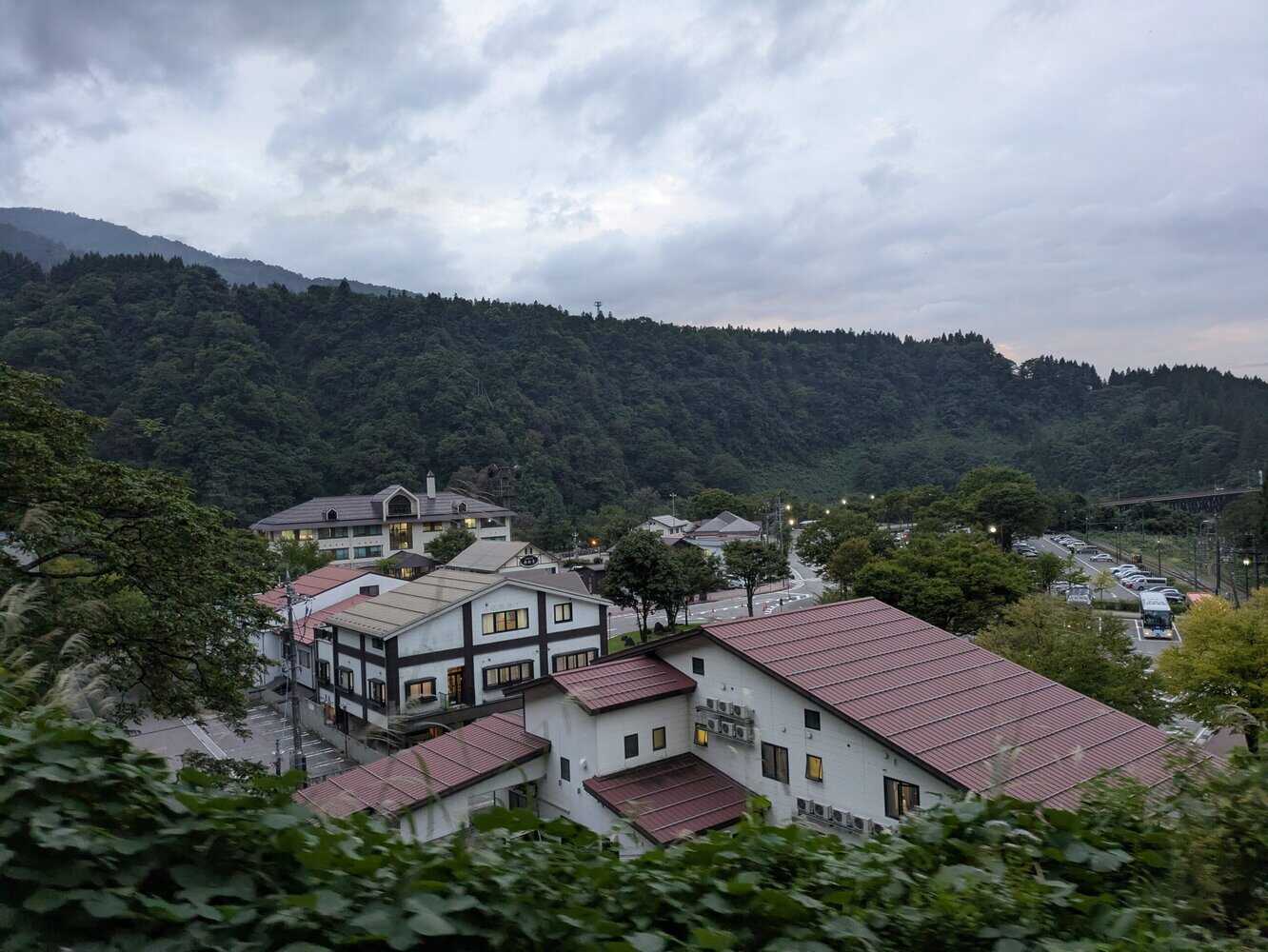
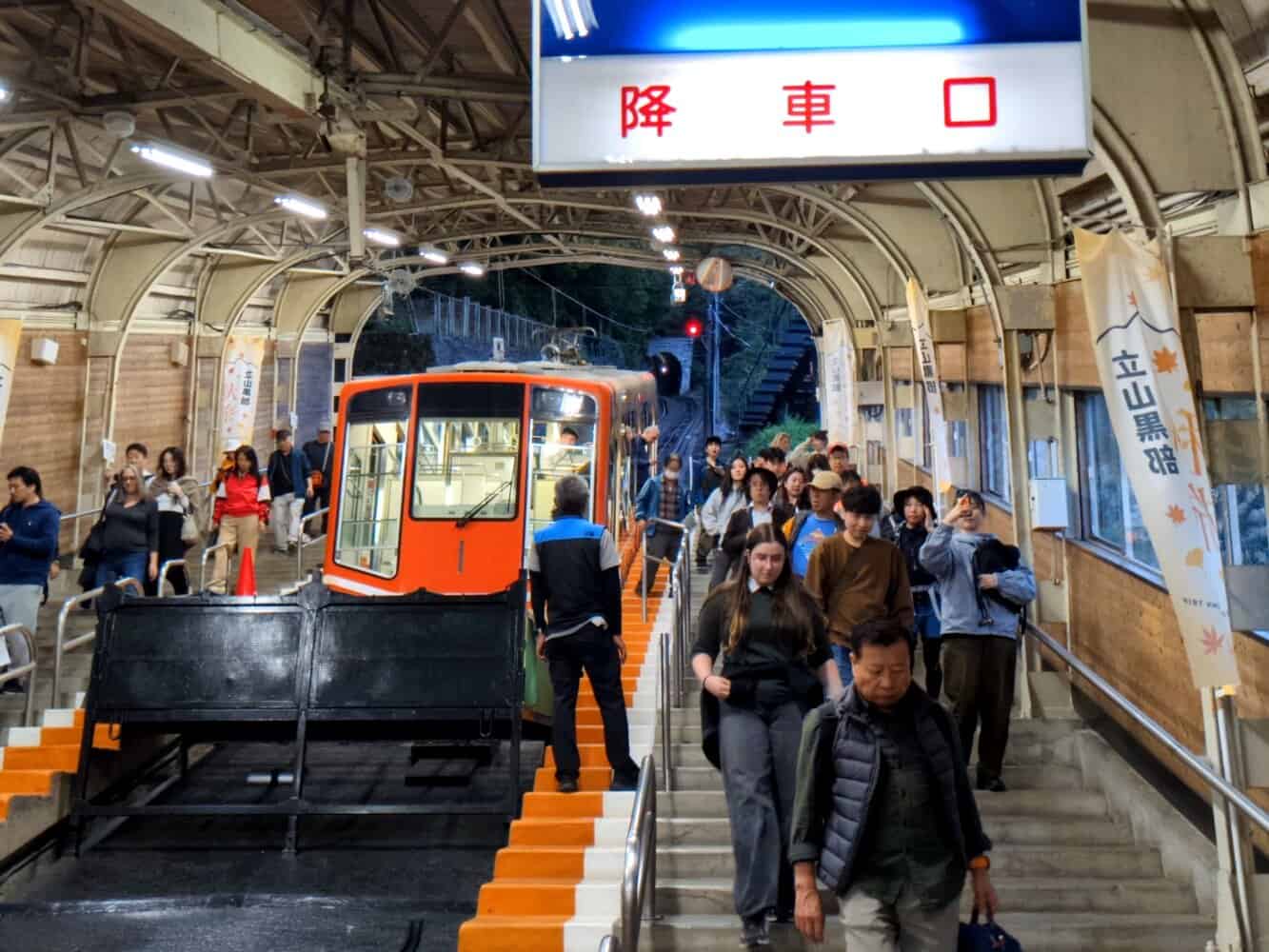
At Bijodaira, I took the last 5.20pm Tateyama Cable Car and at Tateyama station, got into the first available train at 5.38pm. The train was empty when it arrived and I managed to find a seat. But it got crowded in no time. The train was rather slow (spoilt by Shinkansen?), and took well over an hour to cover 34 kms distance to Dentetsu Toyama station, reaching around 7pm. The Shinkansen station was 5-10 minutes walk away. After dinner at Toyama, I had to miss the 8.33 pm Kagayaki Shinkansen as I had not made a seat reservation. Boarded the 8.54 pm Hakutaka Shinkansen and I reached my hotel in Kanazawa little before 10pm, ~14.5 hours after departing in the morning!
e) What would I do if I had more time?
A bit more hiking in Murodo and ‘forest bathing’ at Bijodaira. It would still not be possible to cover Shomyo falls from Tateyama station in one day as this trip itself requires close to 2 hours. Or the hike to Mt. Tateyama. Or the Boardwalk at Midagahara.
7. One day or more?
One day is actually good but if you are keen on longer hikes in Murodo, and/or visiting Shomyo falls, plan for 2-3 days. One option would be stay in Tateyama or Shinano-Omachi and take the first and last available transport. This would still mean a day journey. Alternatively, stay in Murodo (or other locations on the route. The only difficulty could be availability of vegetarian food.
The one way web ticket I purchased was valid for 5 days. Only the time and date for Kanden Tunnel Electric Bus from Ogizawa was fixed. I could technically stay in Murodo for 1 or more nights night and move forward to Tateyama on Day 2 or later but within Day 5. Note that each mode of transport can be used only once. A separate ticket would have to be purchased for additional usage.
But practically, on a first visit to Japan, 2 days here would be a luxury, considering there is so much more to see in Japan. But it would be worth it.
8. What else?
The entire journey from Ogizawa to Toyama is very finely tuned. While delays are stated to be rare, missed connections are entirely your fault! So what else can go wrong?
Weather
The single biggest factor that can ruin an otherwise great experience is the weather. It can change unpredictably and I too experienced it, thankfully for a brief while only. You don’t want to see these kind of views…
I also read that there have been cancellations of few/all modes of transport due to bad weather. Rare though.
Crowds
More people mean longer queues and slower progress. I did not face any serious delays but it appears that during the spring season, there is big rush to view the Snow Wall.
The route is not for those with mobility issues
There are a lot of steps to climb and descend on the entire route. Elderly people, those with mobility issues and even families with small kids will not find it easy.
9. Is Tateyama–Kurobe Alpine route worth visiting?
In my view, yes. Every season has its own charm and one can even be selective. So whenever you visit Japan, set apart at least a day for this unique experience. Apart from the spectacular nature, pay close attention to how the Japanese have created this experience for us to enjoy nature.