
The North East part of India(commonly referred to as the seven sisters) offers a diverse tourism experience, blending lush green landscape with unique cultural traditions. While Assam, Arunachal Pradesh, Sikkim and Meghalaya are at the forefront of the growing regional tourism, if you need one reason to put Nagaland on your itinerary, it is the Hornbill festival.
Nagaland is known as the ‘Land of Festivals’ with Hornbill festival being the most popular one. Hornbill is the State bird of Nagaland. What was news to me was that Nagaland is also known as the ‘Falcon capital of the World’. Courtesy, Amur Falcons who spend over a month in Nagaland on their way from Siberia/Northern China to Southern Africa. Over a million Amur Falcons are estimated to roost in Nagaland from late October to early December.
Nagaland is yet unspoilt and a good example of how beautiful the nature can be if we just let it be.
Move to:
What is Hornbill festival like?
Is Hornbill festival worth visiting?
2025 was the 26th anniversary of Hornbill festival
The Hornbill festival is a 10 day cultural and musical fest held annually from December 1 to December 10 near Kohima. It showcases the traditions of all the 16 or 17 Tribes of Nagaland, through music, dance, art and crafts, cuisine and sports. Additionally, musical bands from both India and abroad participate every year and that is a major reason for its popularity.
The festival was first held in the year 2000. All those who are of my age or older would surely recollect how much we dreaded the impact of Y2K in that year. That turned out to be a damp squib eventually but the Hornbill festival has grown by leaps and bounds since then. I happened to attend the festivities in December 2025 and came away with some nice experiences.
Getting to Kohima
The best option is to fly to Dimapur from where it is a 2 hours drive(60+ kms) to Kohima. A little longer if you are staying close to Kisama Heritage Village.
Indigo operates direct flights to Dimapur from Bengaluru. I had booked this Indigo flight but due to operational disturbances in early December 2025, my onward flight got cancelled 4 days before departure. Given the uncertainty, I cancelled the return flight too and rebooked on Air India flight from Bengaluru to Guwahati. Longer and more expensive route but feasible.
Guwahati has visibly changed
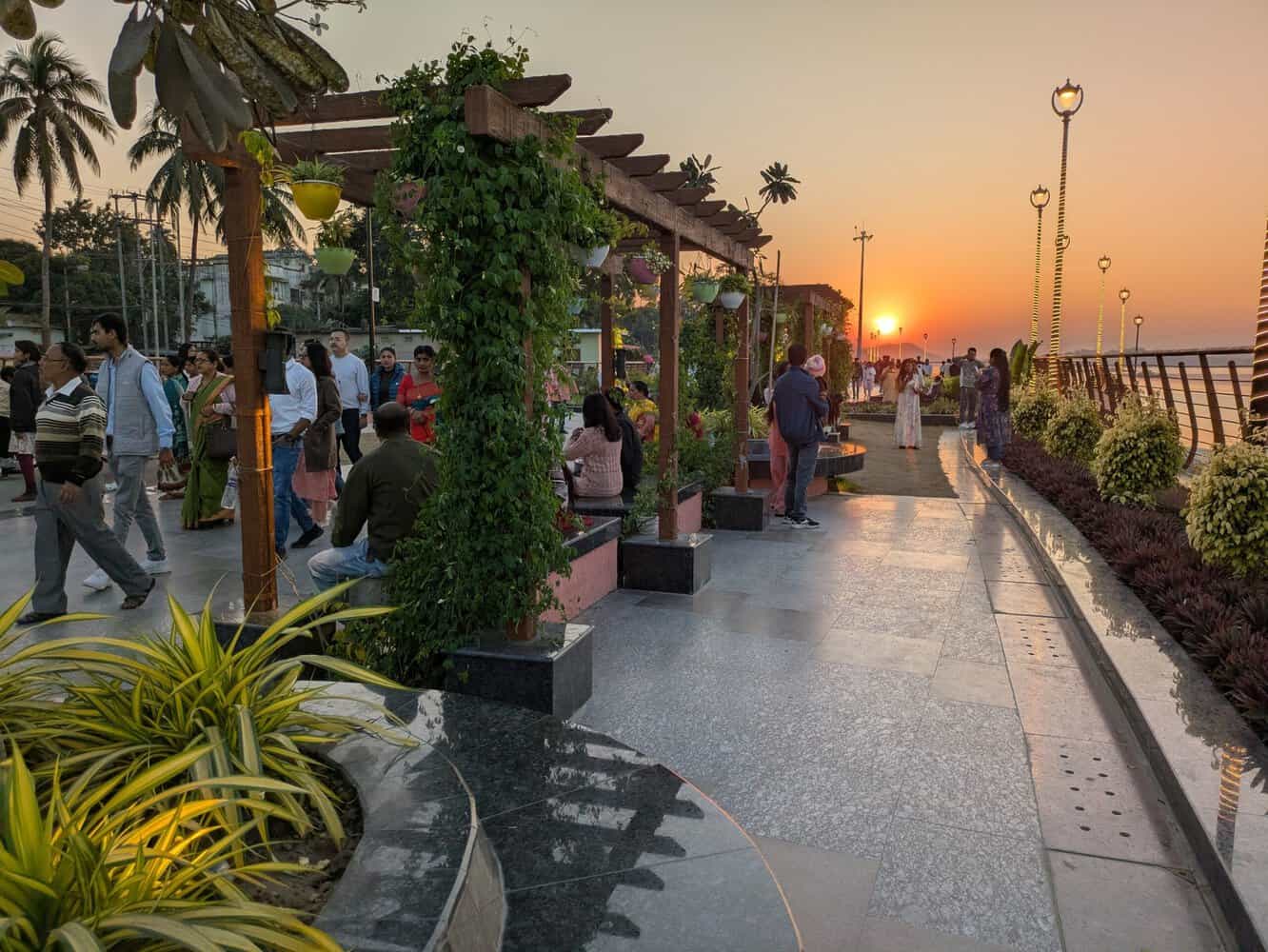
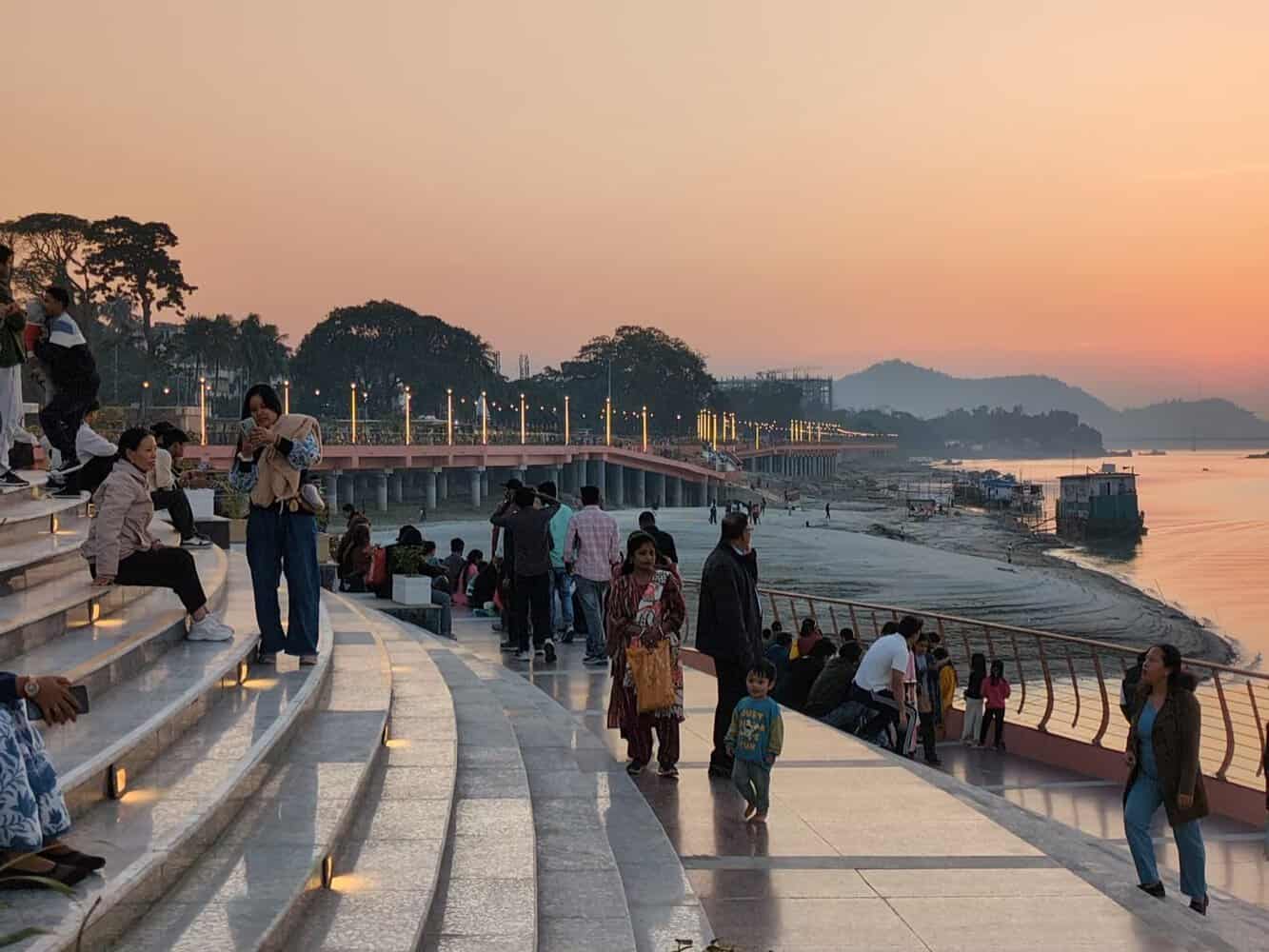
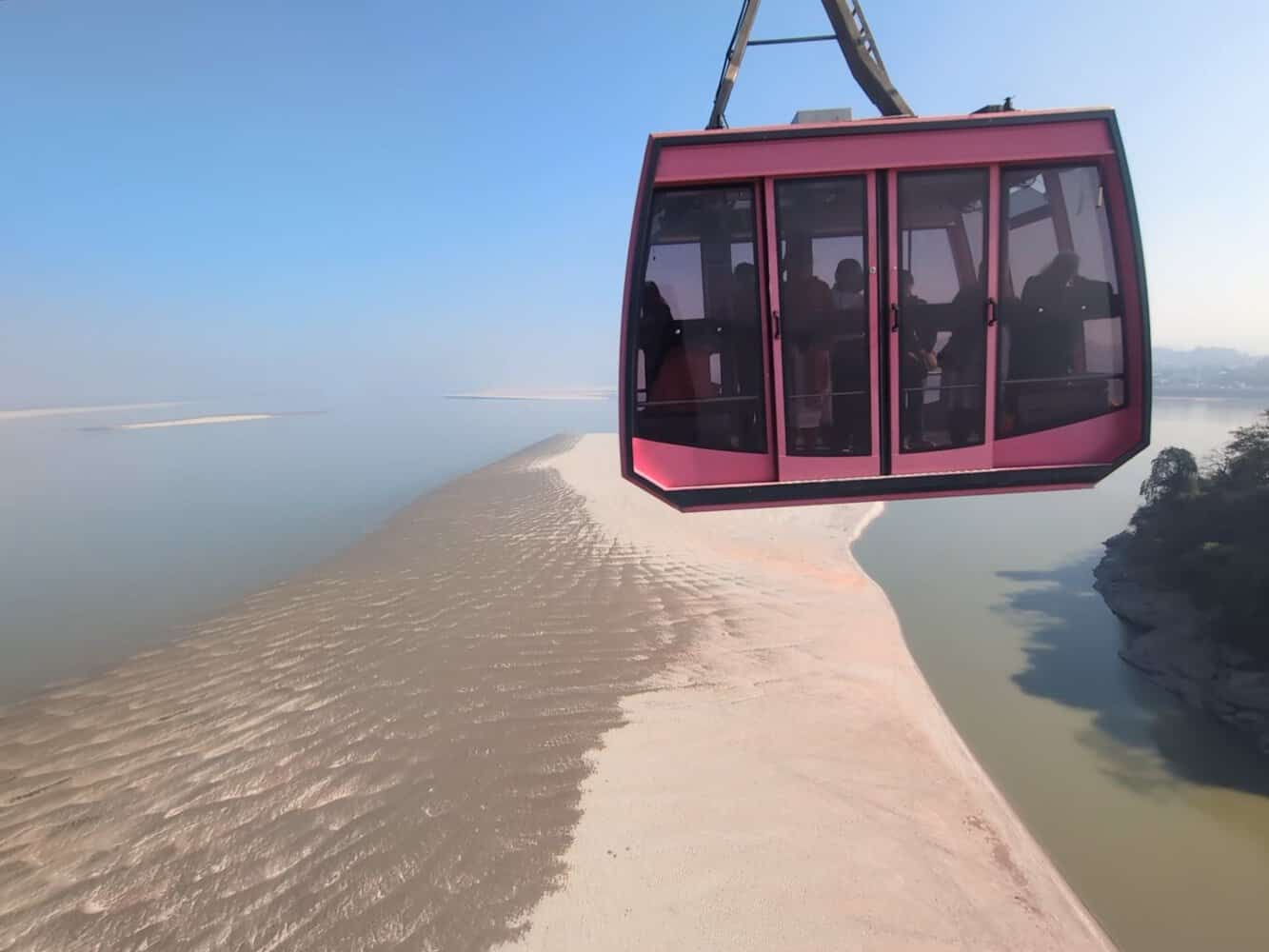
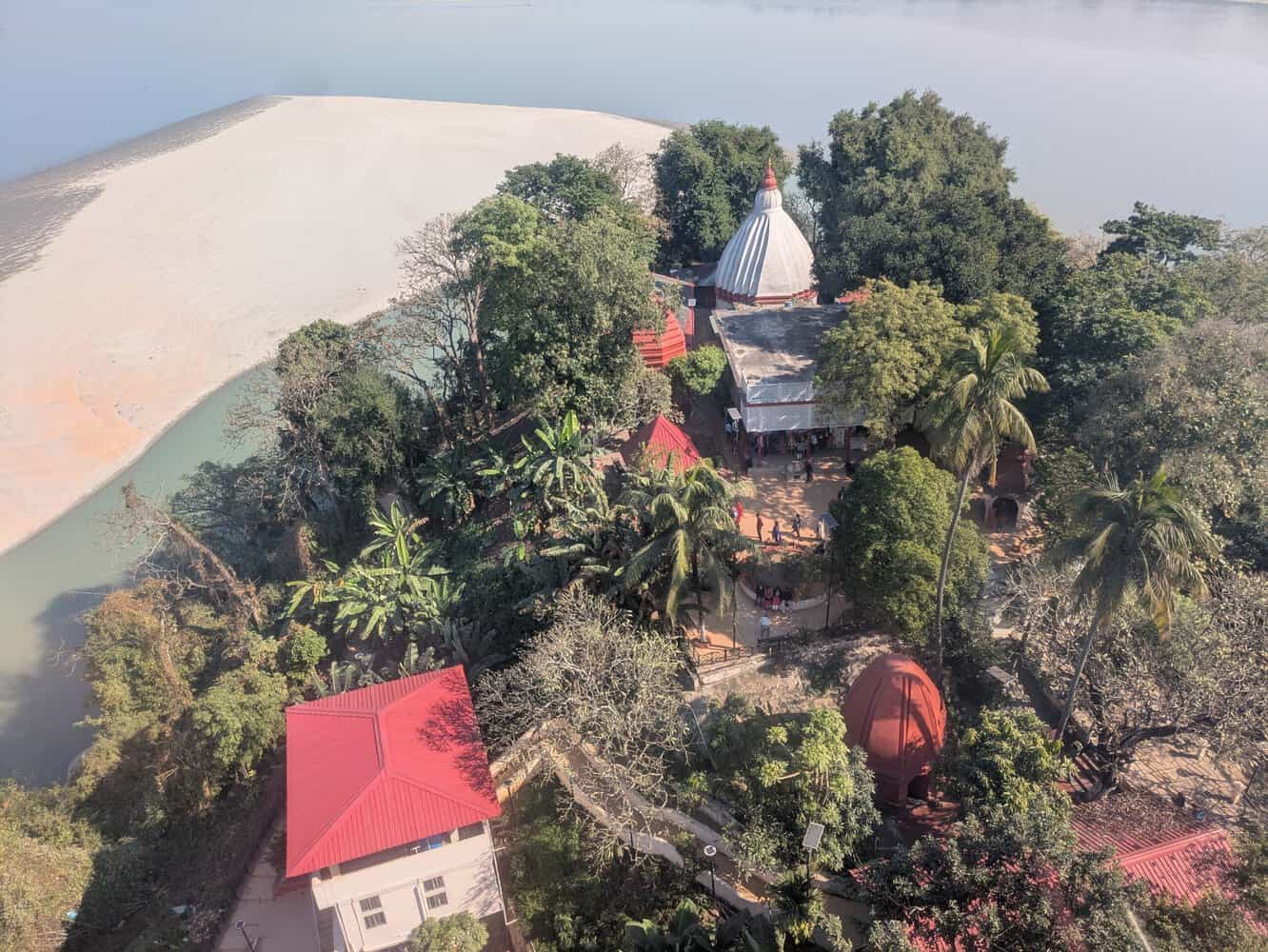
I last visited Guwahati over 12 years ago. In 2025, I could see very visible infrastructure and commercial developments, bringing its own challenges like in most Indian towns. There were 2 notable additional attractions for a tourist – one is the Cable car across the river Brahmaputra and second is the Brahmaputra riverfront, developed like the ones in Ujjain, Varanasi and Ahmedabad. Guwahati has a new swanky airport as well that was inaugurated couple of months after my departure. It is no longer a quiet regional town.
Guwahati to Kohima by road
A distance of about 350kms, the journey took over 8 hours with one short and one meal break of 30 minutes. Traffic can be heavy with commercial trucks on this national highway. About 50-60% of the highway was quite good, but on the rest of the highway, there were long stretches with potholes and stretches with virtually no road. The Assam portion of the highway was relatively better and closer to Kohima, the road was being widened. It was extremely dusty and pothole ridden.
This was a bit of a tiring journey despite a comfortable Innova car for the two of us. There are few decent restaurants on the way but well spread out and in the vicinity of major towns such as Nagaon, Dimapur and Kohima. No question of stopping for a piping hot cup of tea every 2 hours! The scenery is contrasting, from the plains of Assam to the hills of Nagaland. But one does not get to cross the mighty Brahmaputra river.
Kohima town
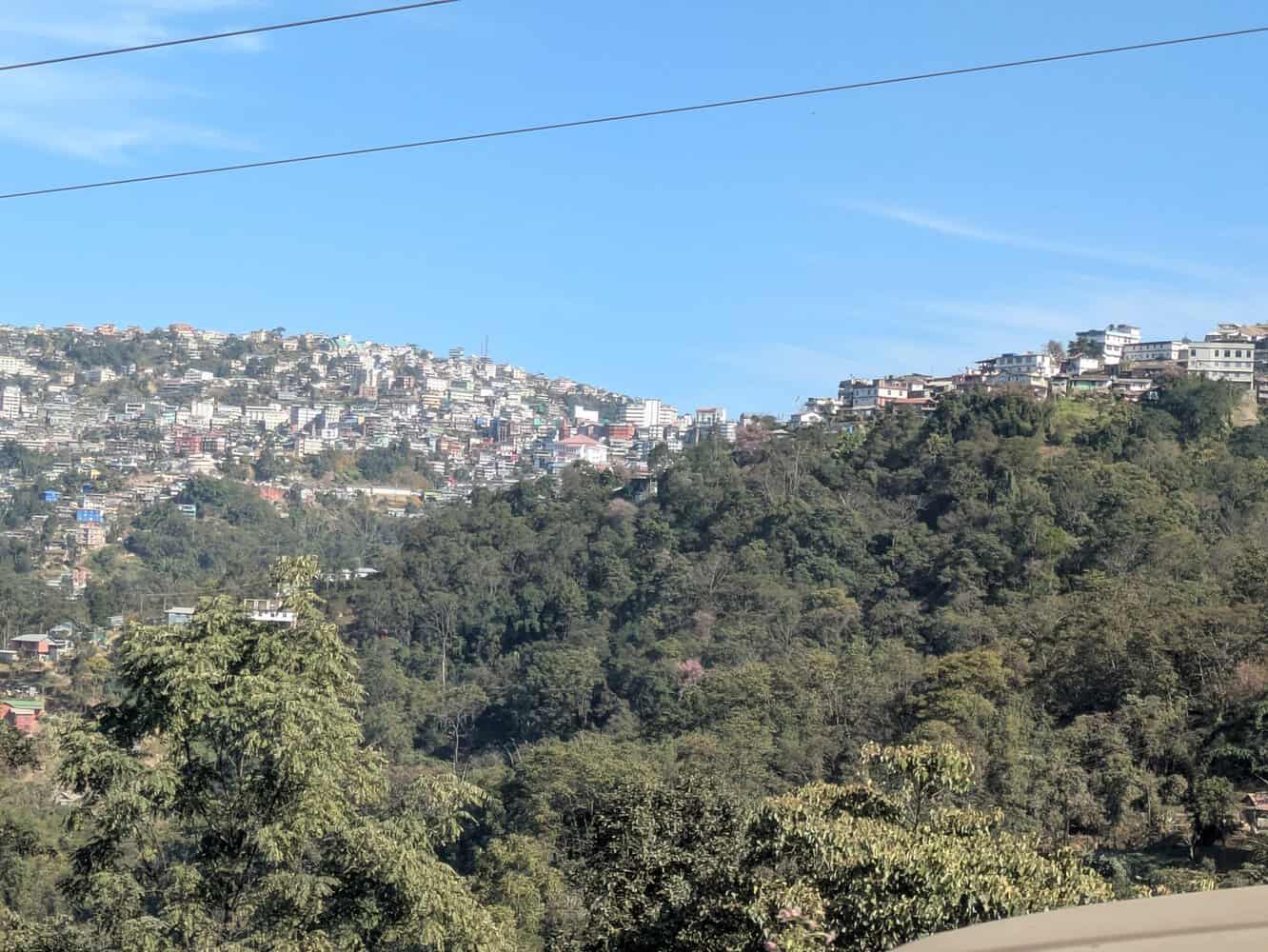
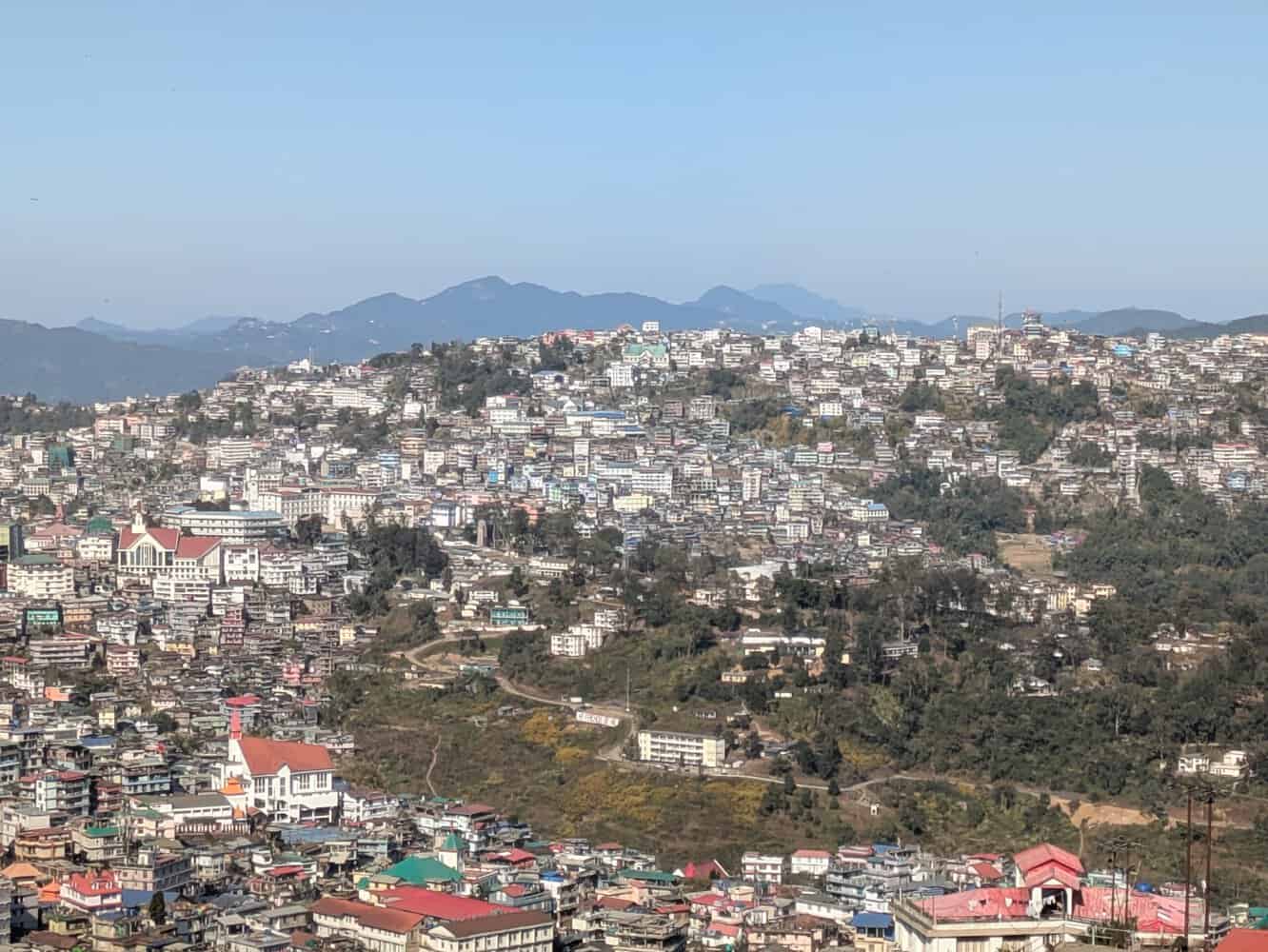
Kohima town, perched on a hill, looks very photogenic from a distance. Once I got into town, I realised it is fairly old with a charm of its own, quite dusty though with narrow winding roads. Traffic is quite heavy and some of the roads are very steep. Cars are often parked on both sides resulting in narrower carriageway.
What is Hornbill festival like?
The Hornbill festival appears to be mainly targeted at young adults and is very popular with the locals. The state government releases in advance details of daily events that generally include the following:
- Cultural shows(tribal dances, songs, rice beer brewing, textile weaving etc.);
- Tribal sport like wrestling, spear throwing, stilt walking etc.;
- Rock and musical concerts with bands from India and overseas;
- Fashion shows;
- Activities such as village walks.
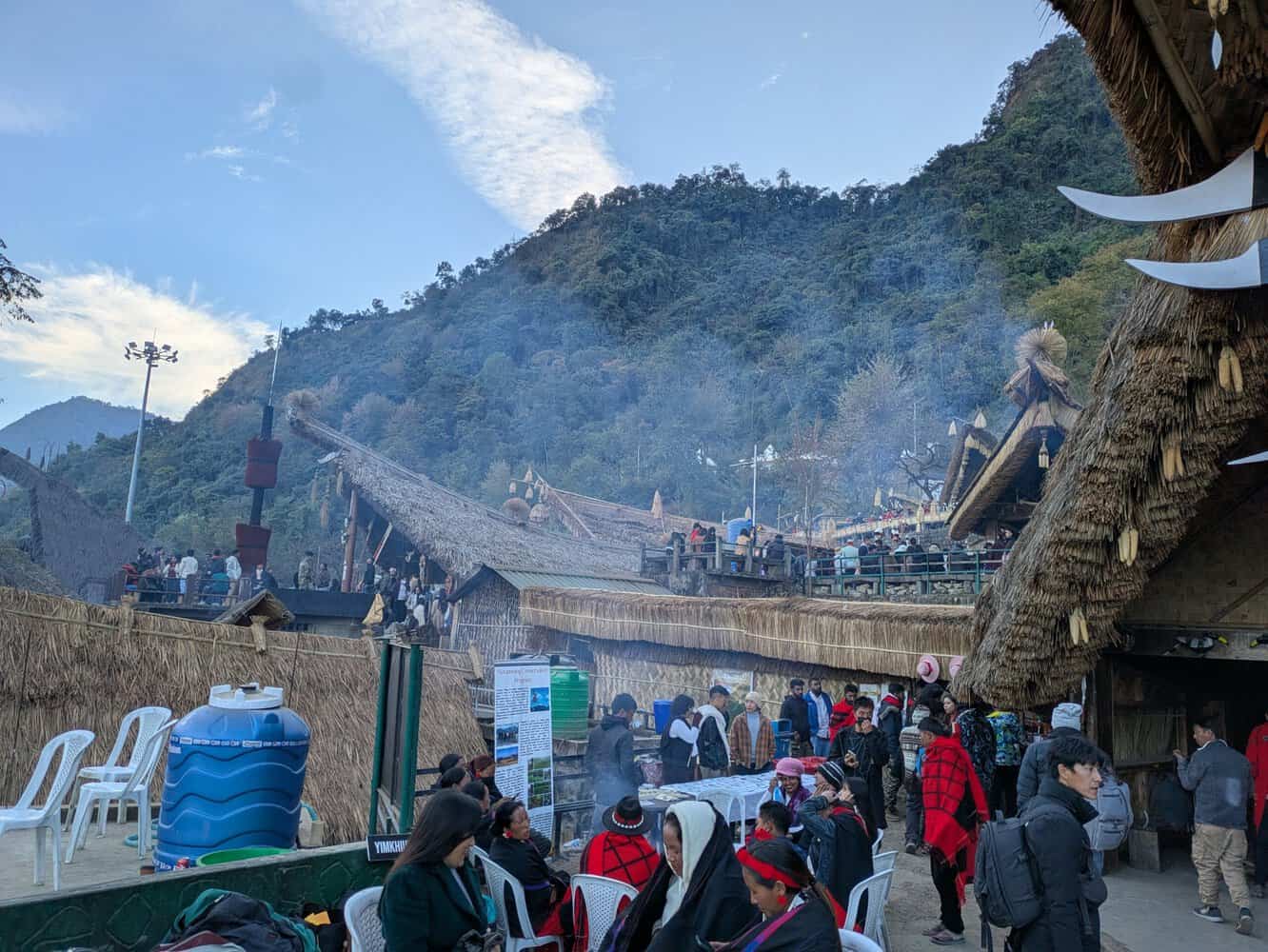
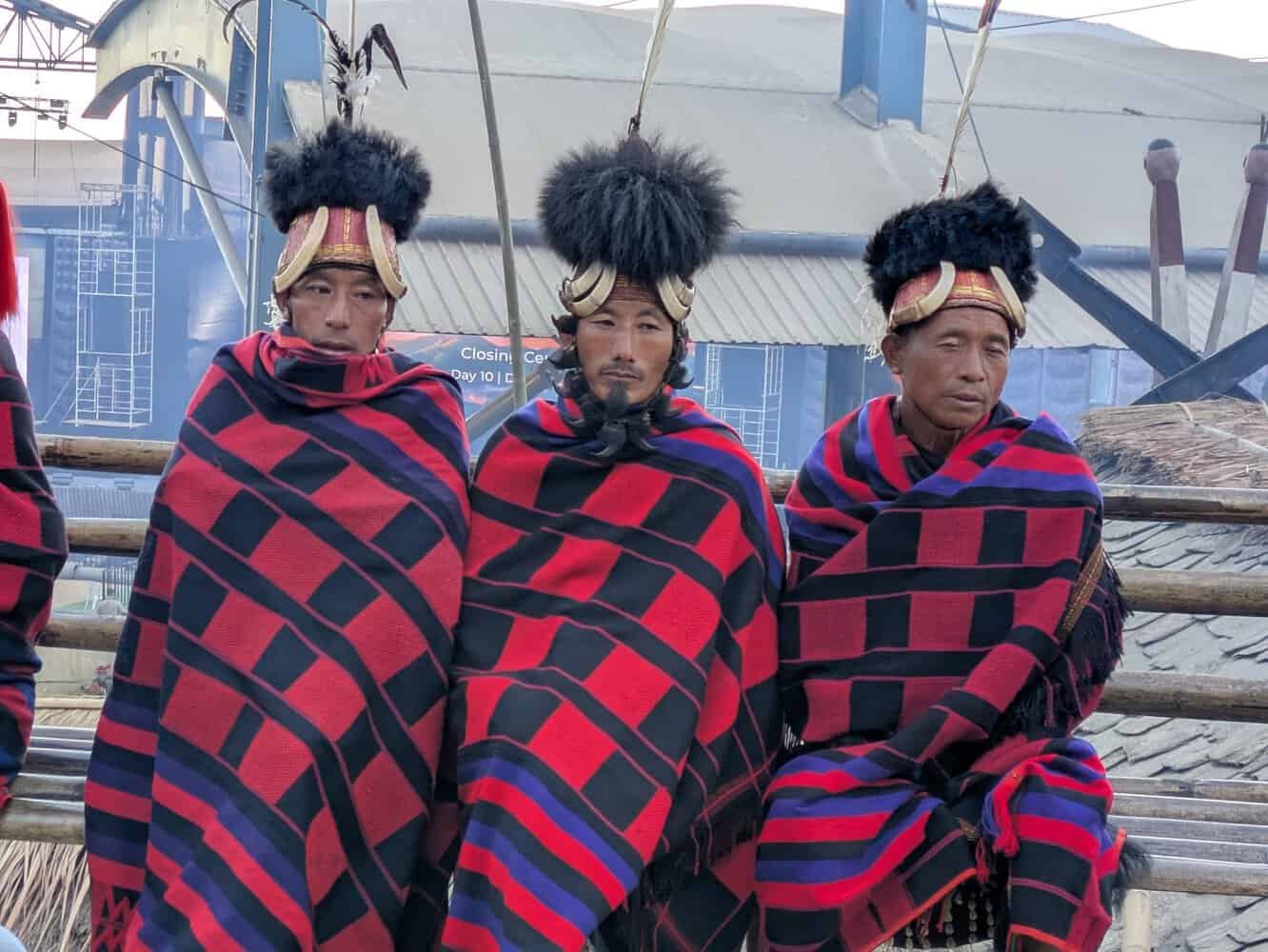
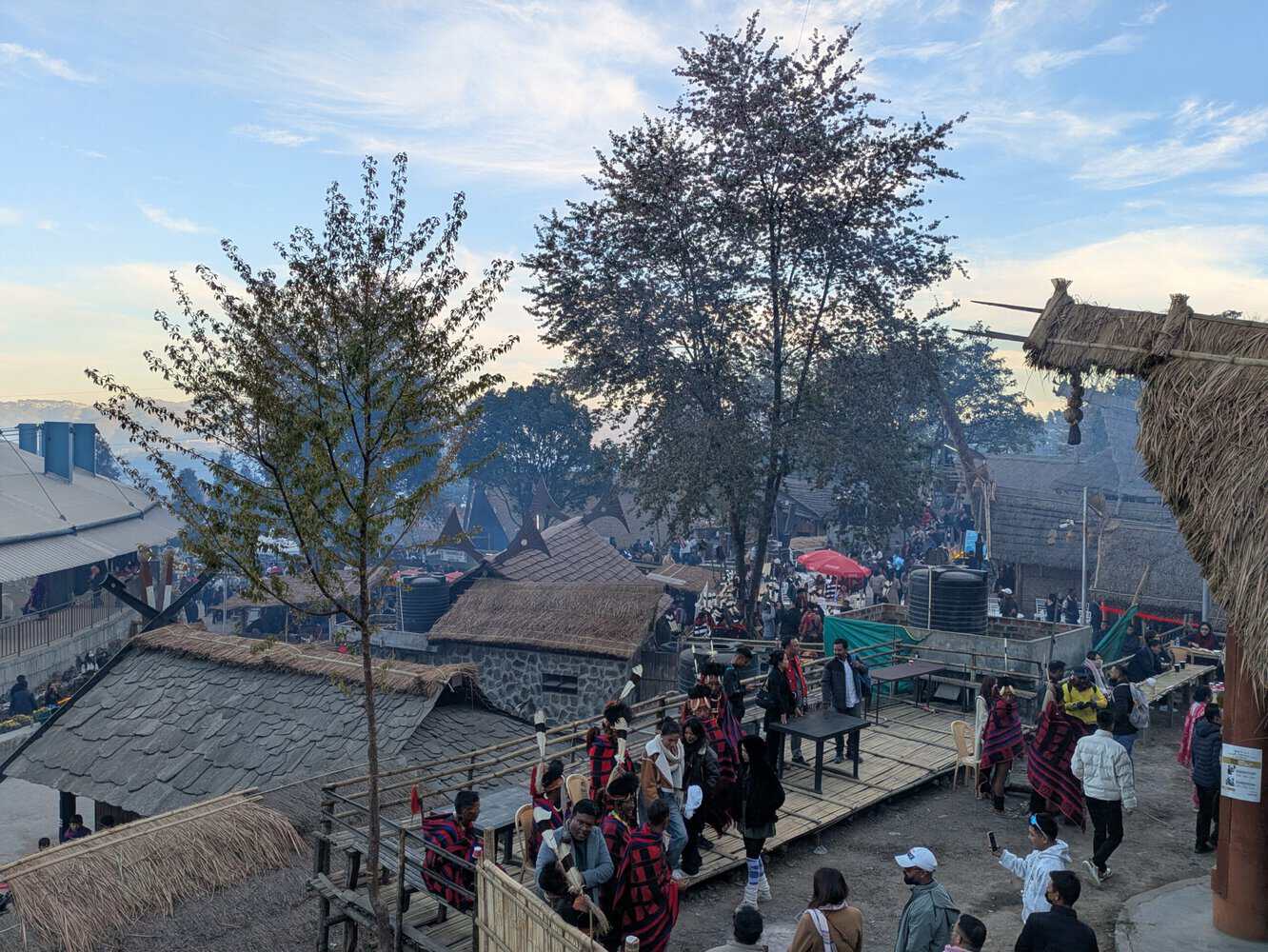
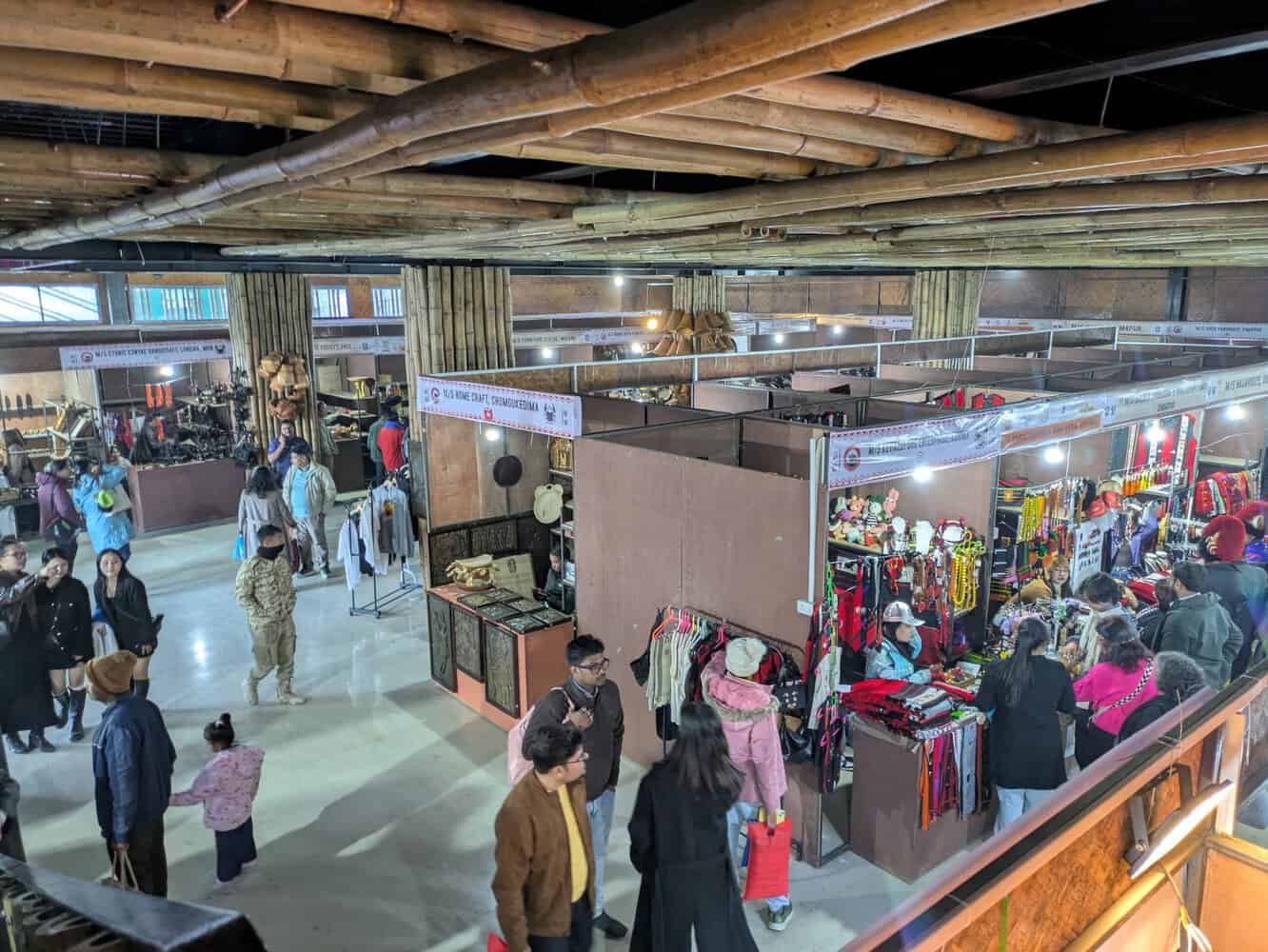
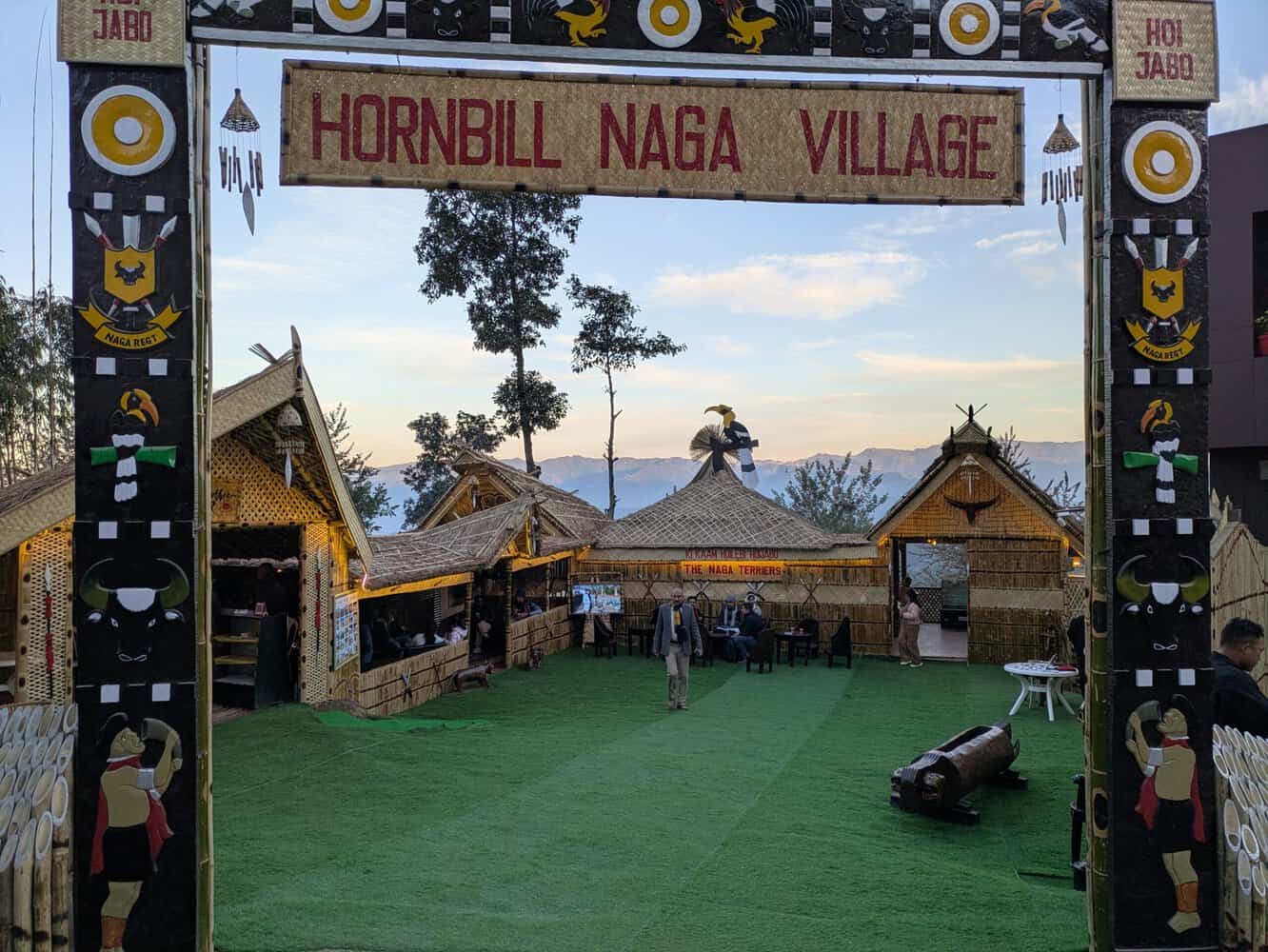
These are all held during the day and late evenings, at different times and on different days. In between events, one can visit Naga Morungs, the traditional huts where one can learn more about the way the Tribes live and also click pictures with the Tribals, enjoy local cuisine and drinks and shop for organic stuff, handicrafts and several other locally produced items.
Closing ceremony of 2025
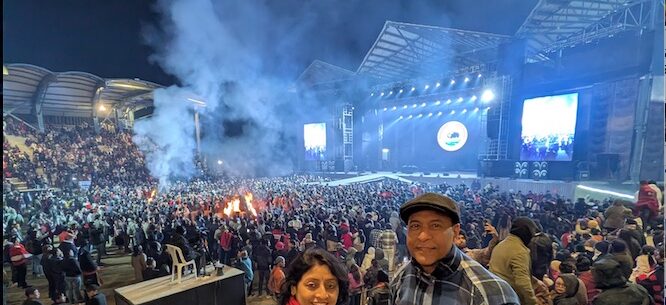
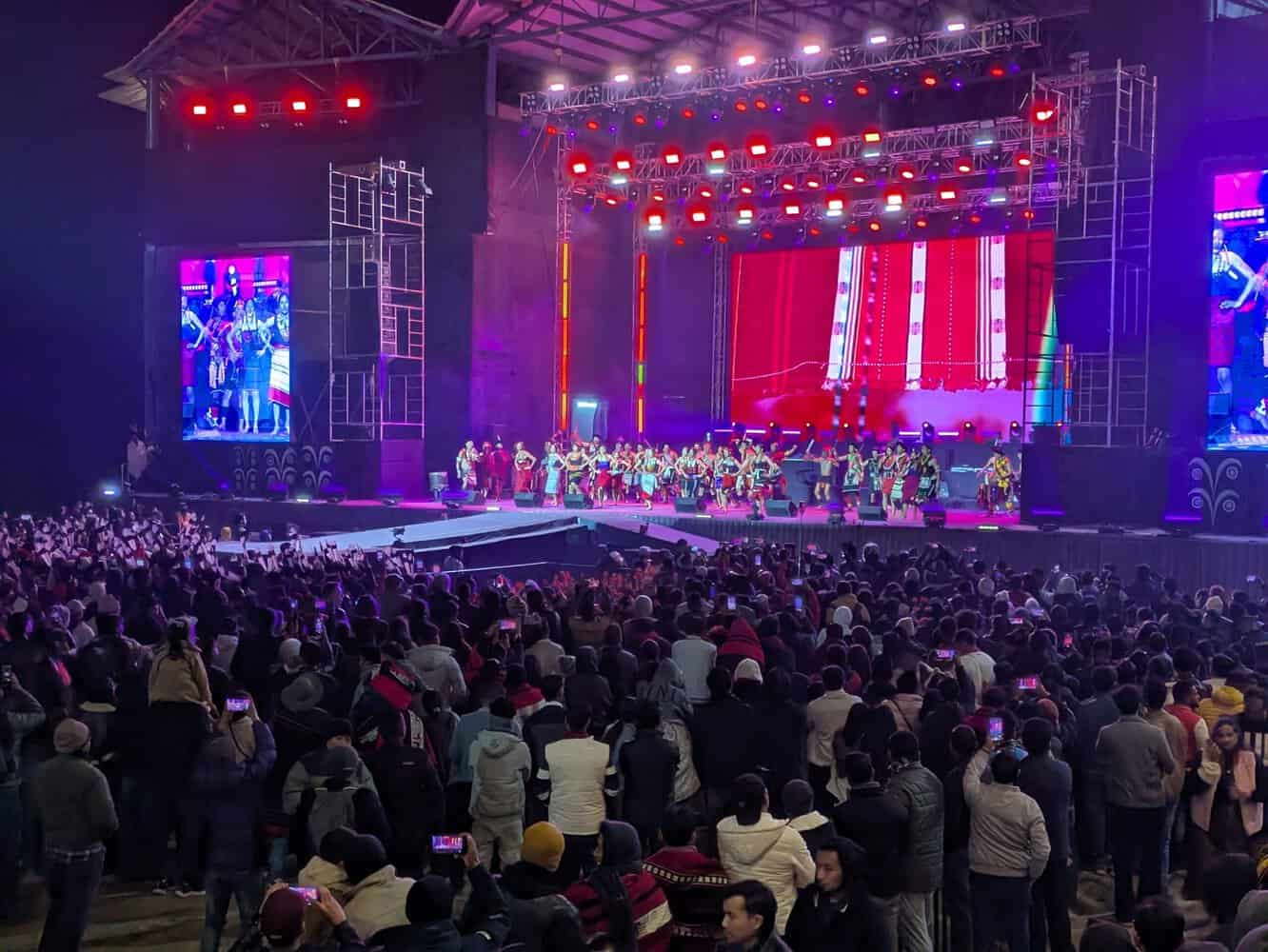
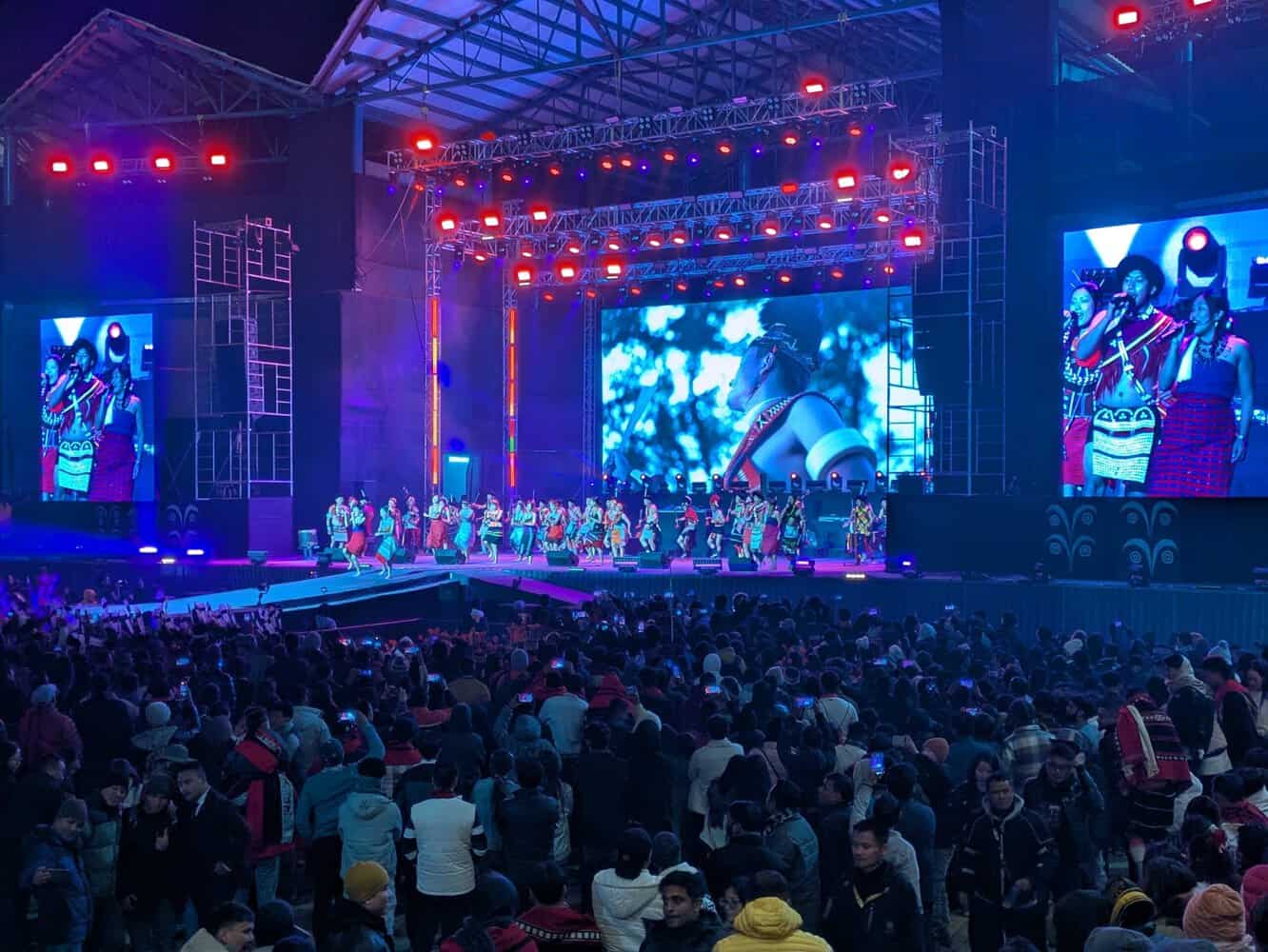
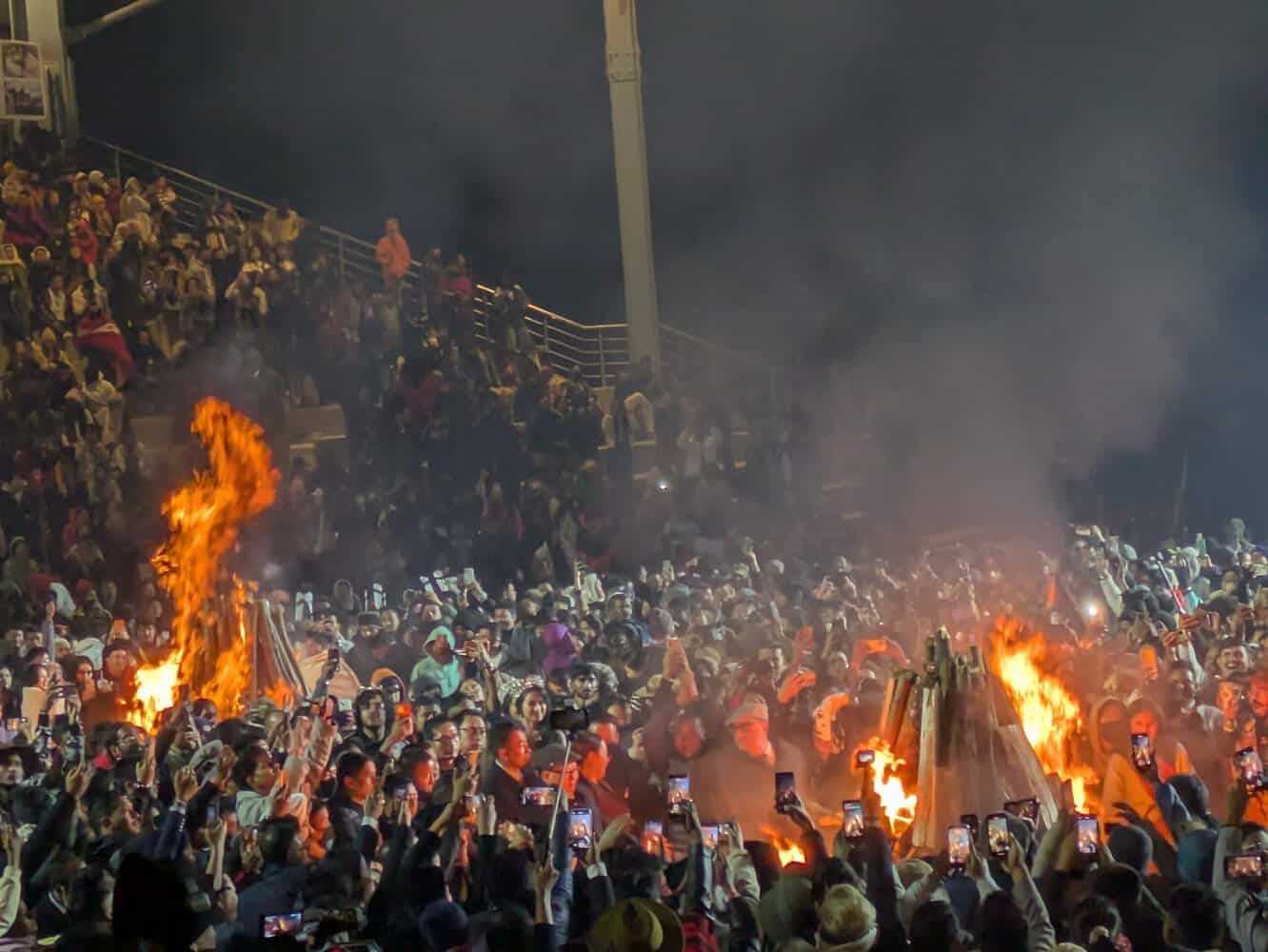
The closing ceremony included cultural performances for about 90 minutes or so, lighting of bonfires followed by a musical show by singers and DJs from around the world that went on till late. In between the cultural performances, there were short speeches by Deputy Chief minister of Nagaland, Tourism minister of Nagaland and special guests(embassy/high commission heads of 2 countries).
As per the statement by Deputy CM, ~80k out of state visitors attended the festival over 10 days, including couple of thousand foreigners. In all, it was estimated that over 2.1 lakhs visitors attended the festival. There is generally more crowd on the opening and closing days.
Kisama Heritage Village is the venue
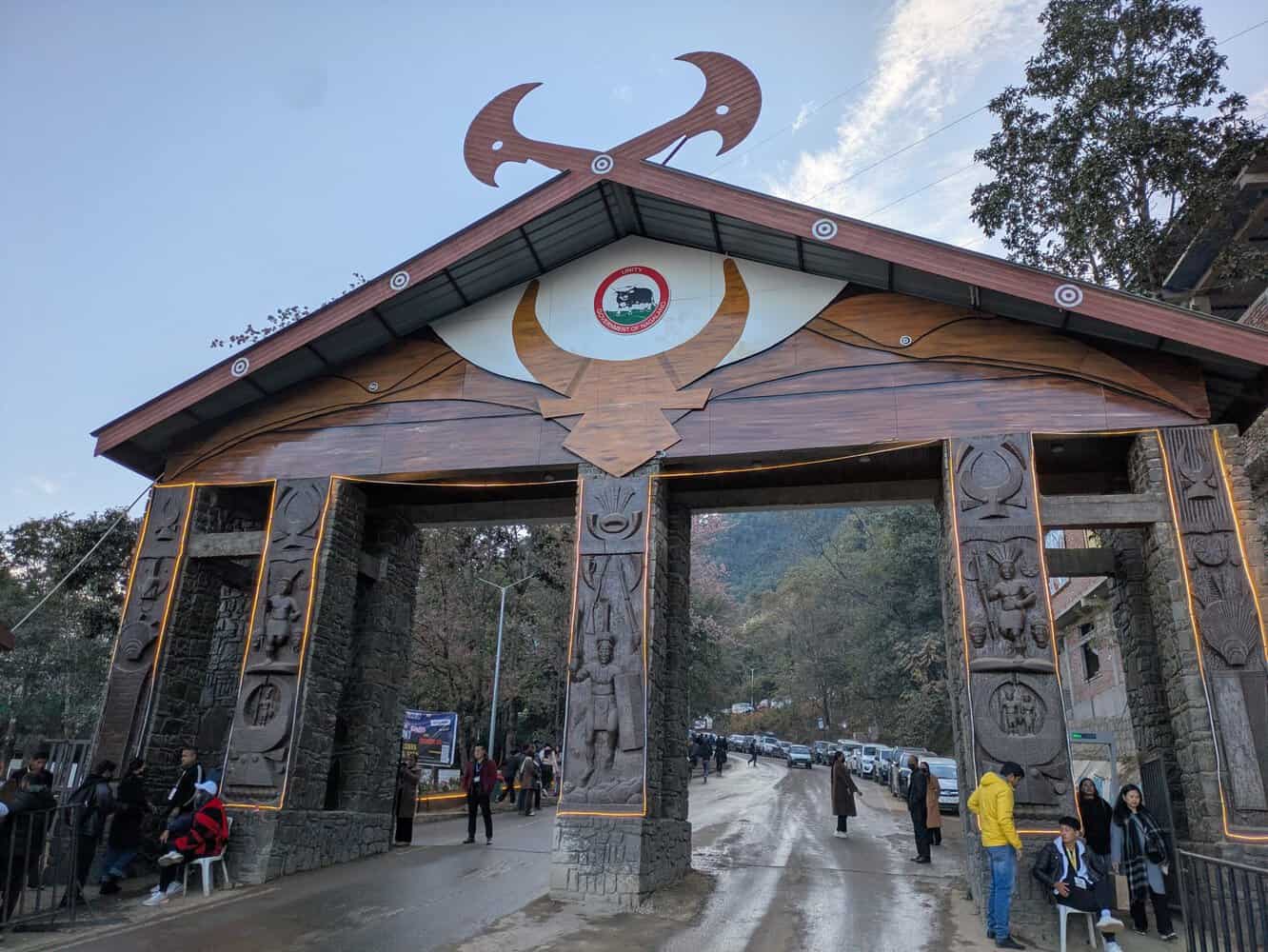
Kisama Heritage Village is located about 12 kms from Nagaland’s capital, Kohima. The village is like a cultural hub and comes alive during the annual Hornbill festival. I am not sure if it is open throughout the year but it must be getting spruced up every year.
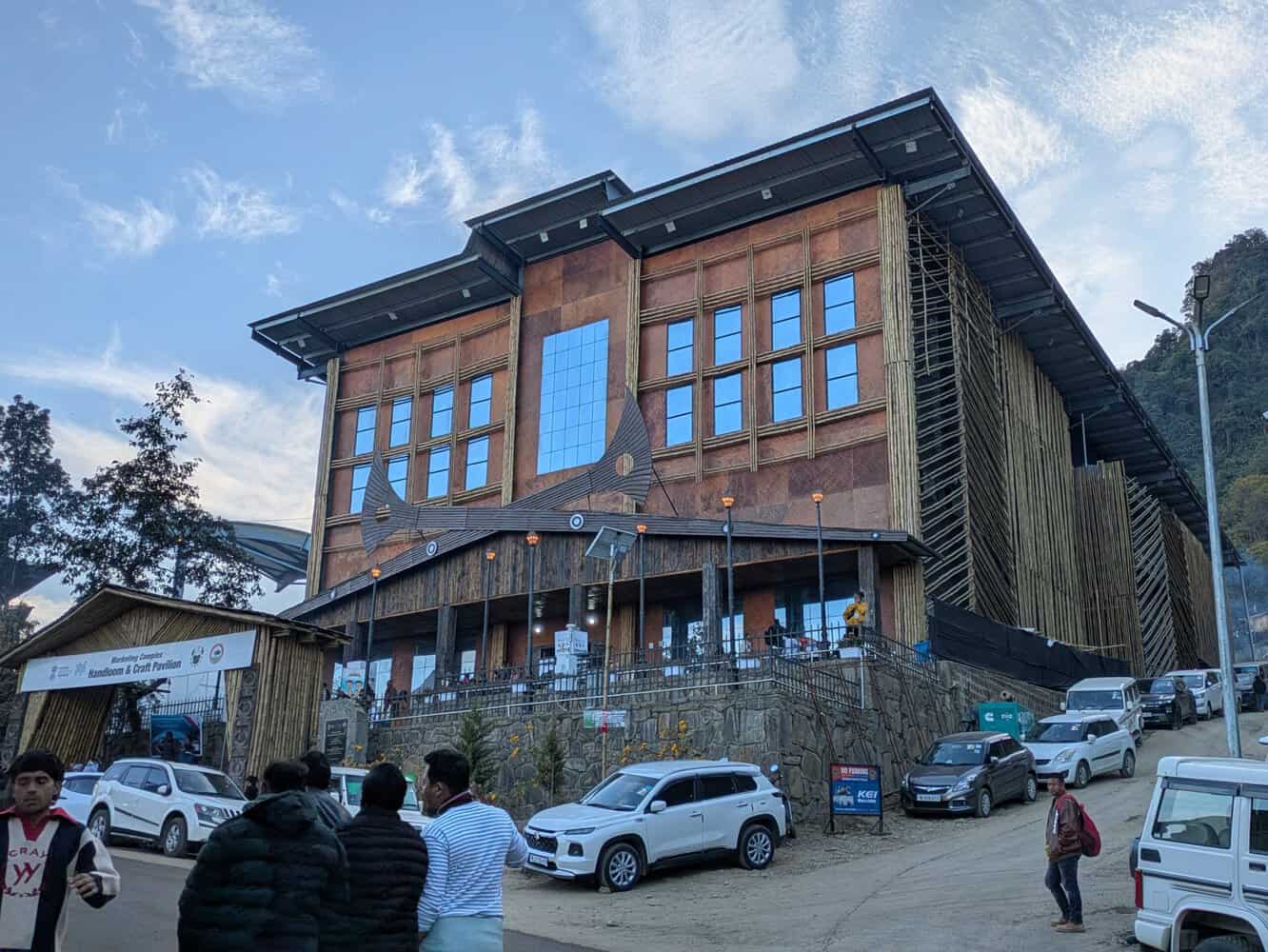
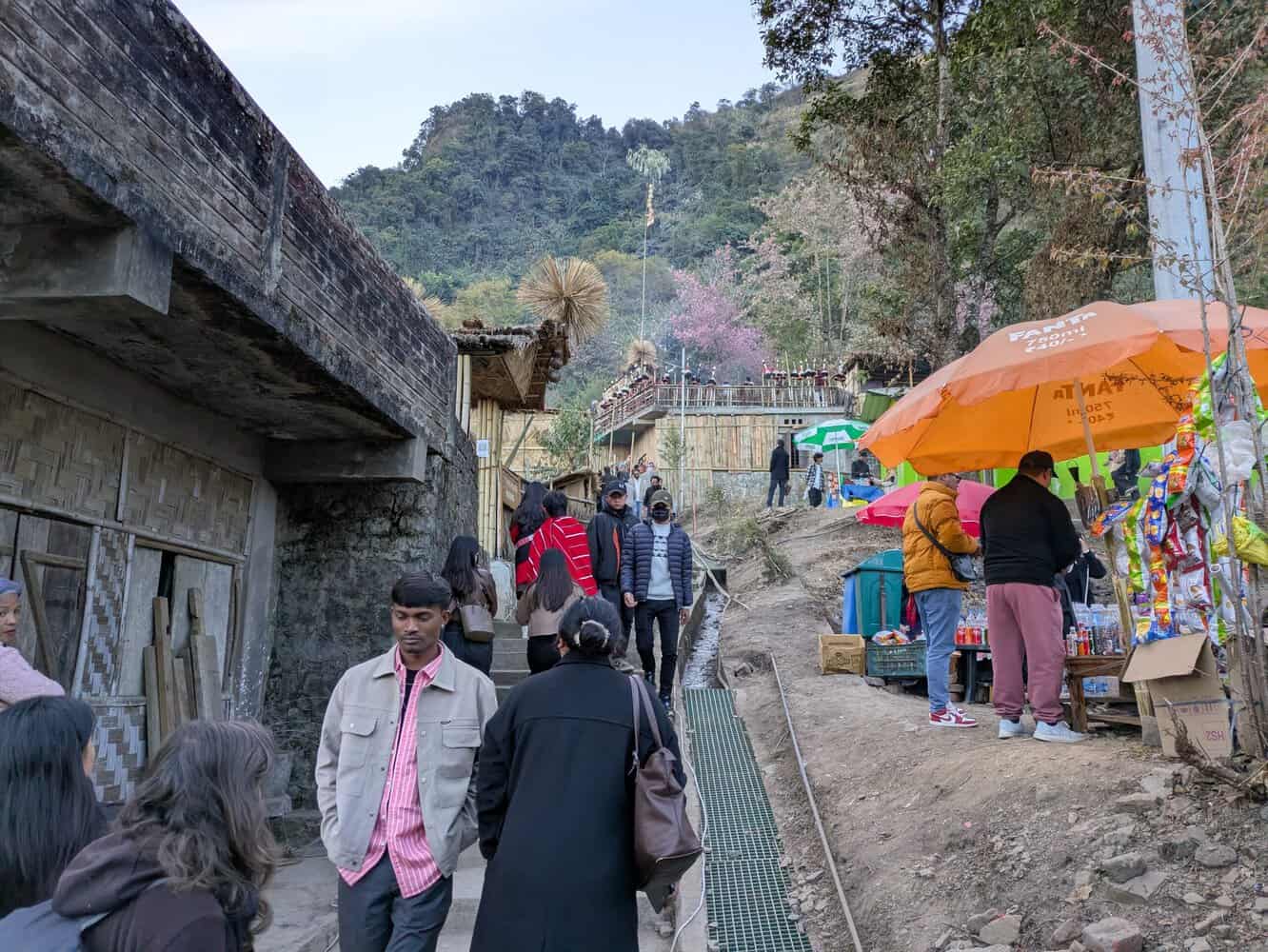
Located on a hill, Kisama village is fairly well spread out and there was a bit of climbing up and down to visit the various Naga Morungs and the Food Court. The local handicrafts are mainly sold in various shops spread over 2 floors in the Bamboo Pavilion.
Main Arena is the hub of all events
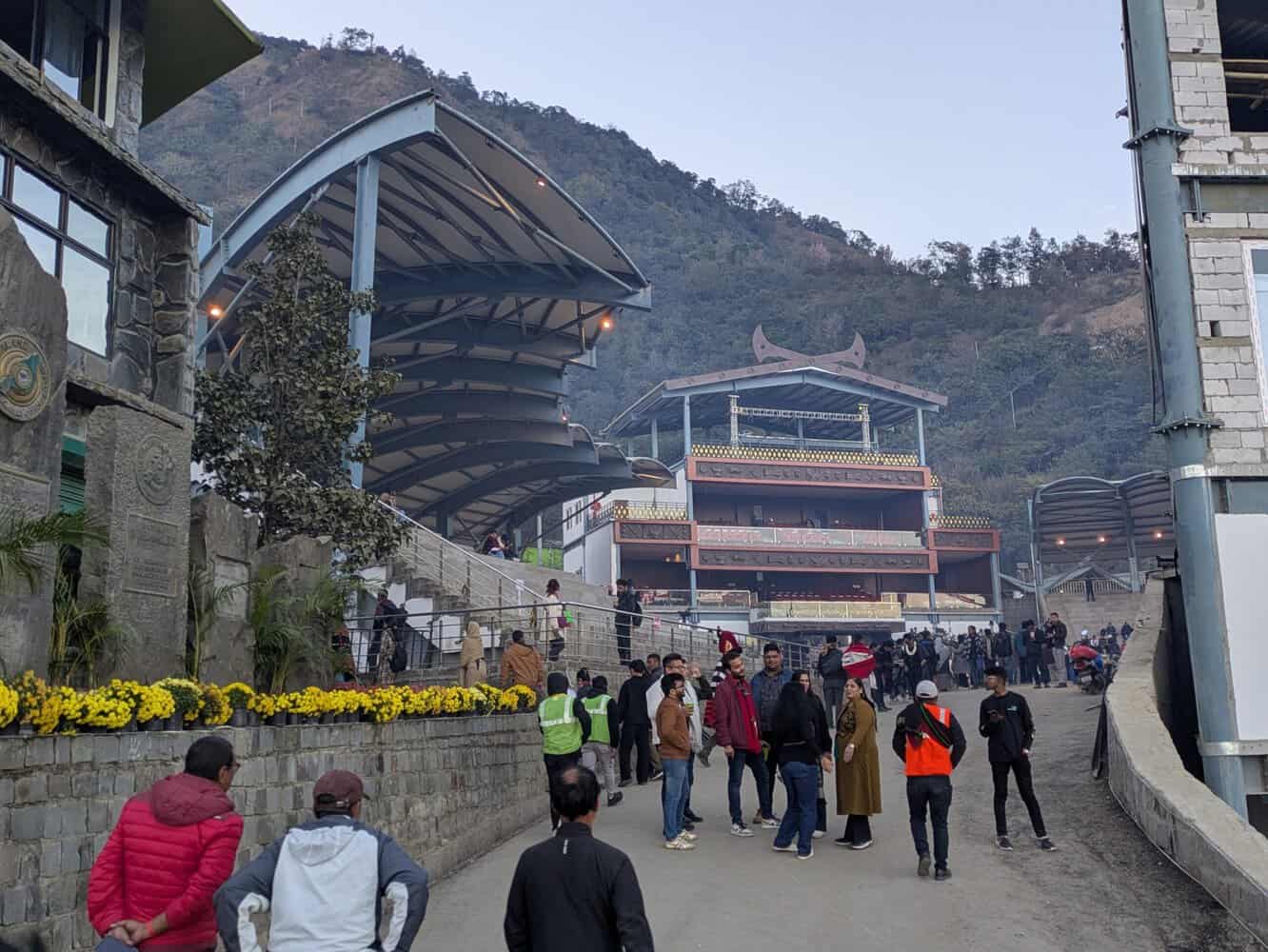
Tribal dances, sports, musical concerts, opening and closing ceremonies are held in the Main Arena. I am not sure of the capacity but likely under 10k. Many stand and watch the events being held on the podium and the open area in front of the podium turns into a dance floor during musical events. Few events also take place elsewhere in smaller open areas, generally in front of the Morungs.
Vegetarian food is available but with limited choices
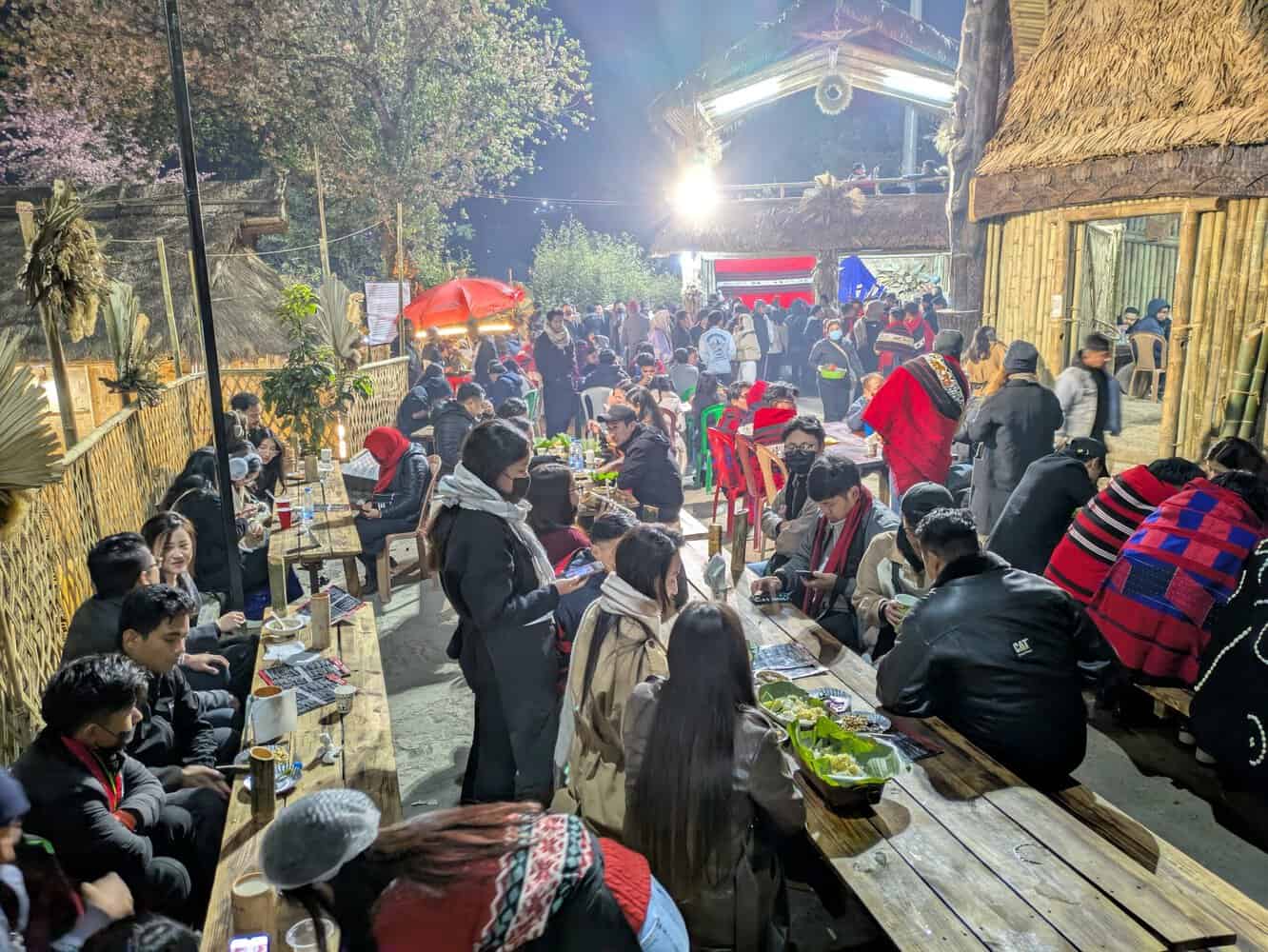
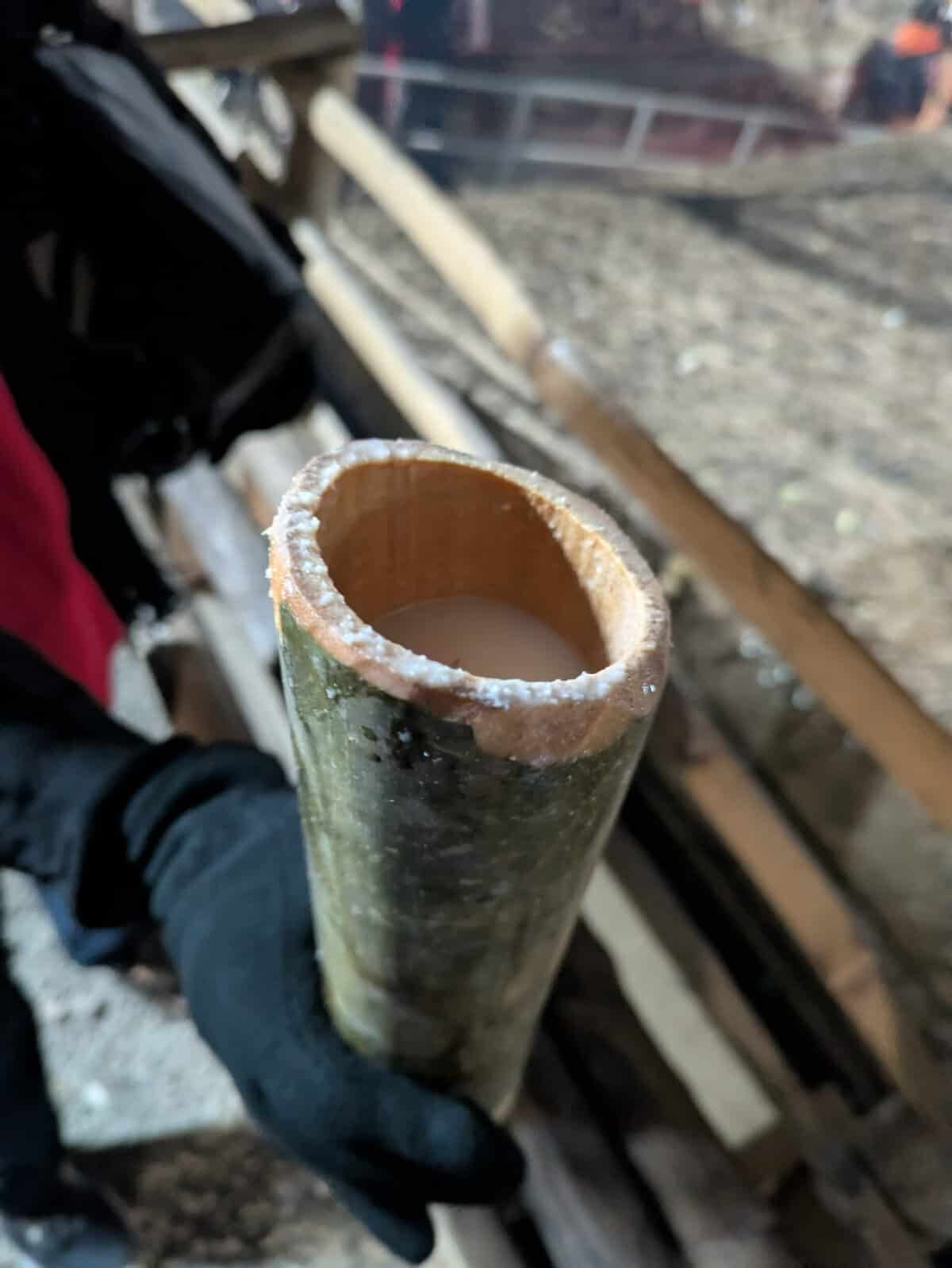
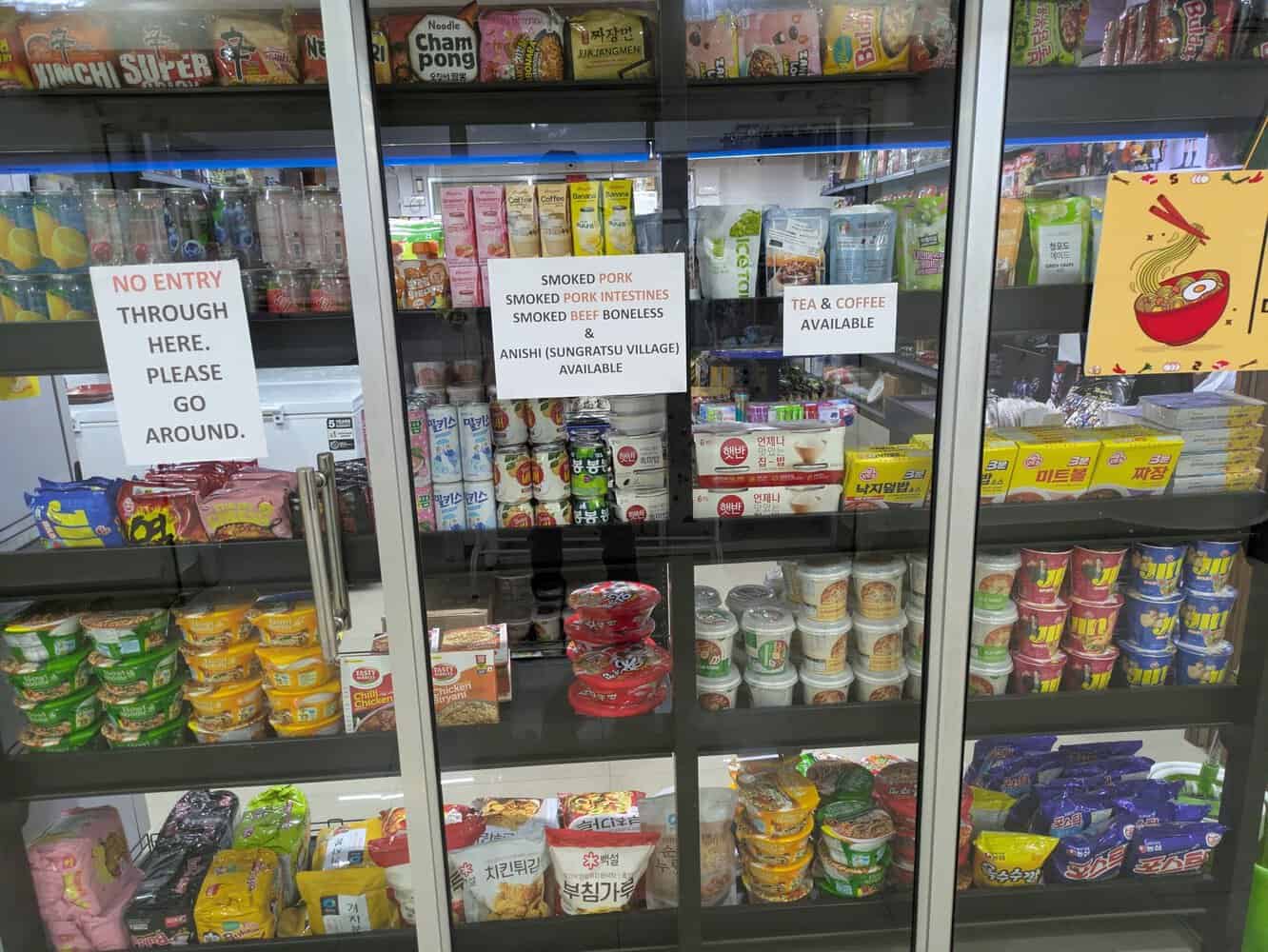
There are quite a few eateries but I could only locate one ‘vegetarian only’ eatery. However, vegetarian items are available at other outlets though the choices are limited. Some of the eateries have open air dining that adds to the charm. Local food such as smoked pork is very popular. I believe the food and drinks are reasonably priced though the prices are not uniform across outlets. Most food items cost less than INR 350, the cap fixed by the Nagaland Government for 2025. Rice beer was served in a bamboo mug and cost INR 200 for possibly 300ml. Vegetarian noodles were priced at INR 180. Tea/coffee was INR 40-50.
Couple of outlets had their own DJs playing music. Overall, the atmosphere was quite lively.
Nagaland has imposed prohibition
Despite the prohibition, locally made rice beer and fruit wines are readily available. However, Indian Made Foreign Liquor is sold only at couple of outlets in Kisama Village.
Parking space has been thoughtfully provided
The parking space available near the main entrance to Kisama Village is limited but there is another parking lot nearby for general public from where free shuttle buses run regularly to Kisama village. From Kohima too, free shuttle buses run at frequent intervals.
What is not nice?
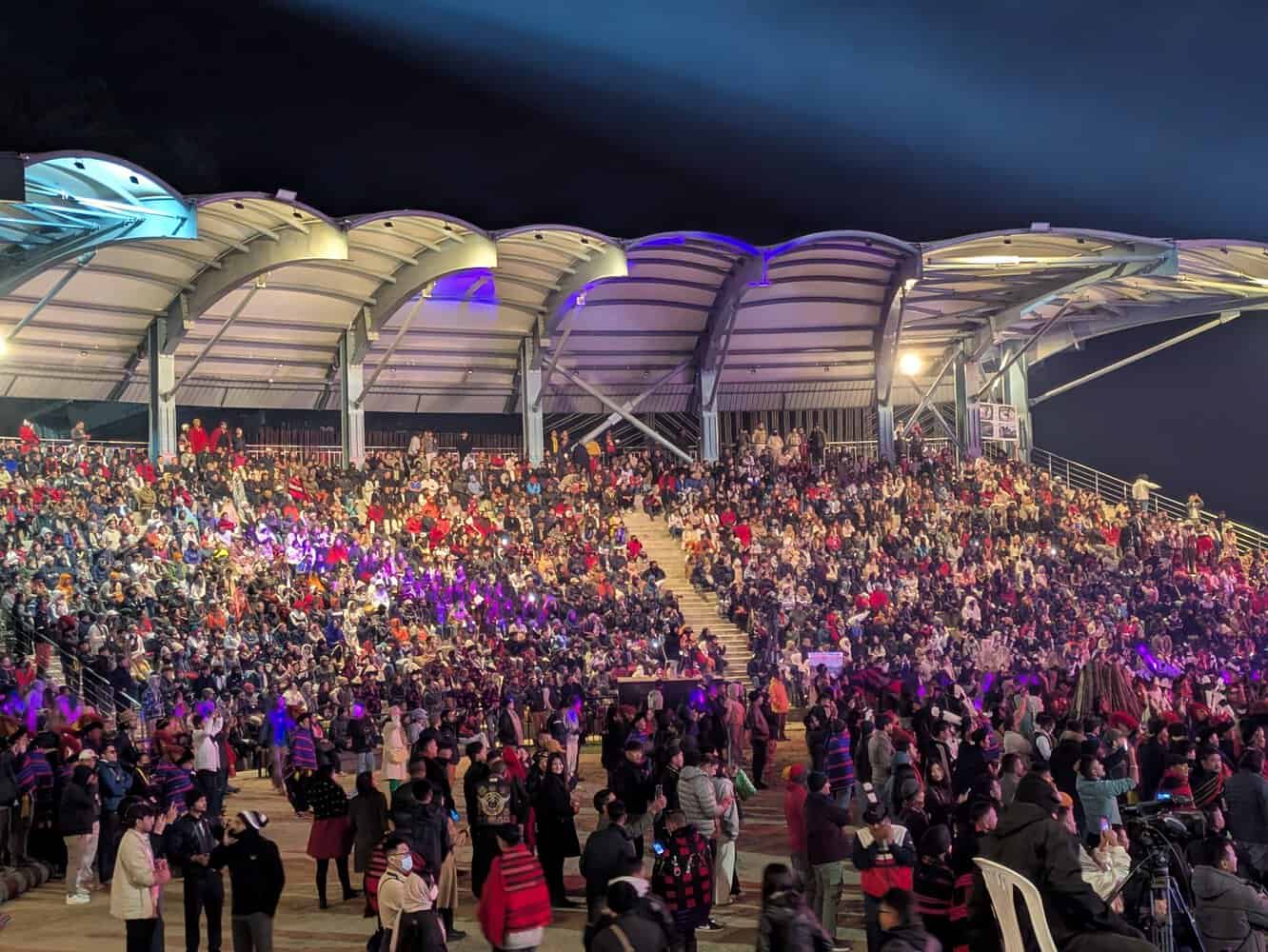
Main Arena is dusty
A layer of fine dust was clearly visible in the seating area. There are no chairs or cushions and one has to sit on the concrete steps. Luckily I had couple of newspaper sheets that I laid on the floor and sat. It does get uncomfortable after an hour or so. Just as well that I was carrying a mask. As always, the VIP area with cushioned seats looked neat and clean from a distance.
What is still ok..
Open drains, traffic and crowd
While some sections of the village had open drains for the water and kitchen waste to flow, by and large, the entire village was clean. Traffic tends to slow down as one approaches Kisama but I did not encounter any traffic jams. The venue too appeared crowded on the day of the closing ceremony but that is only to be expected.
What else to do in Nagaland
1. Kohima local sightseeing
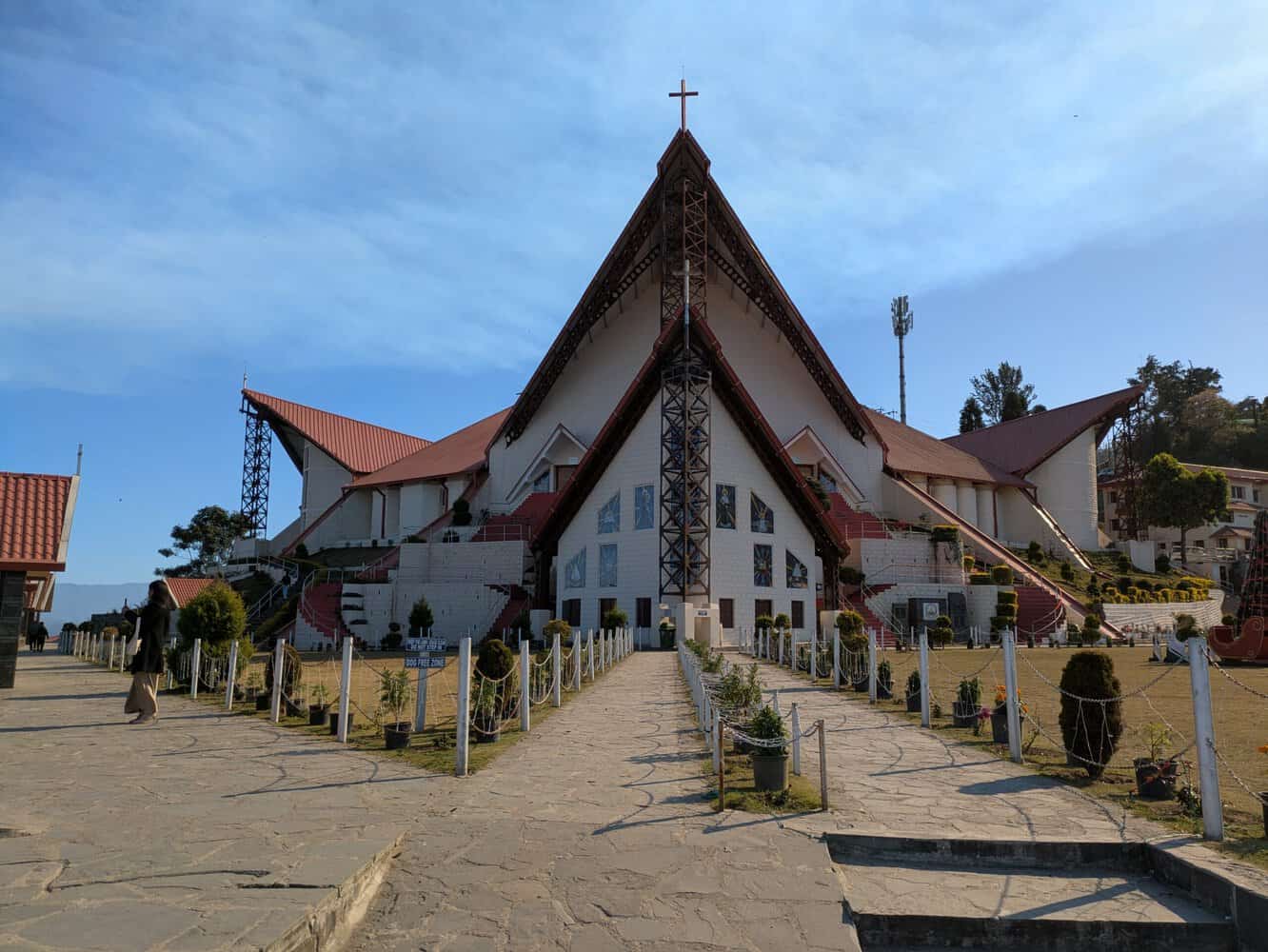
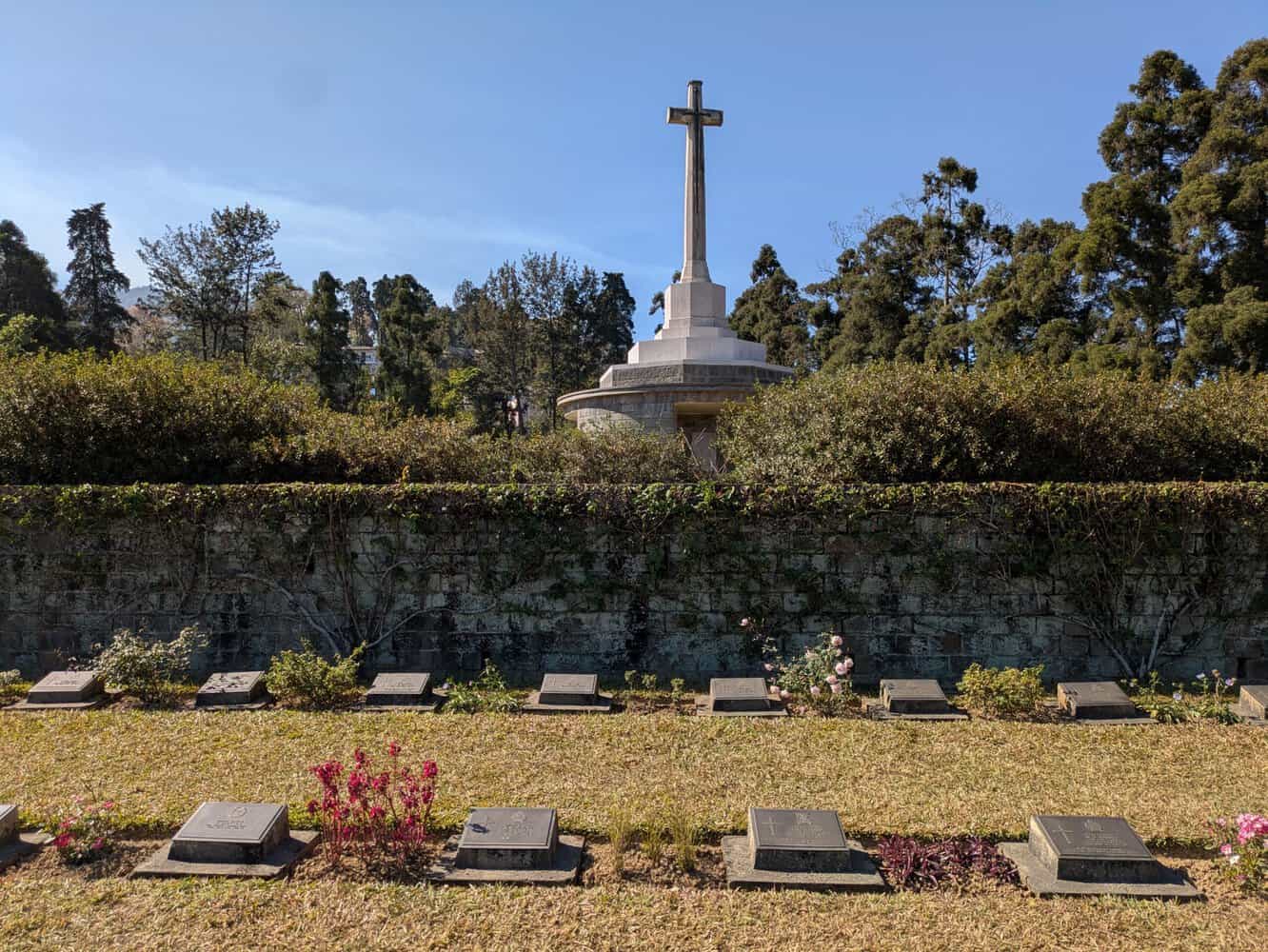
There is not much to see in Kohima. Half a day is good enough for the key sights such as War Cemetery, the Cathedral, with a lovely viewpoint and a Museum (which I skipped). Shopping in the local market and in the malls was interesting.
2. Khonoma Village
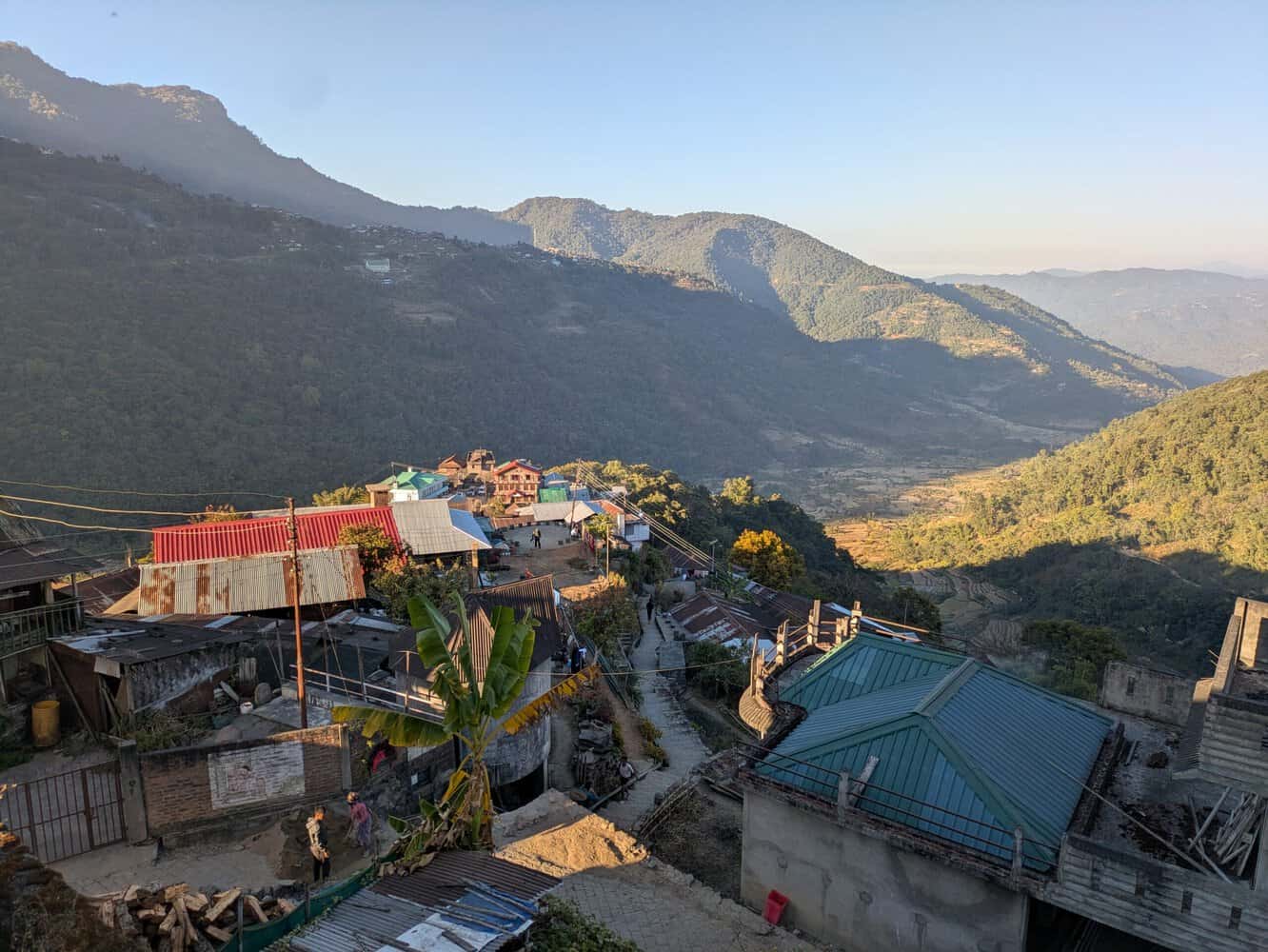
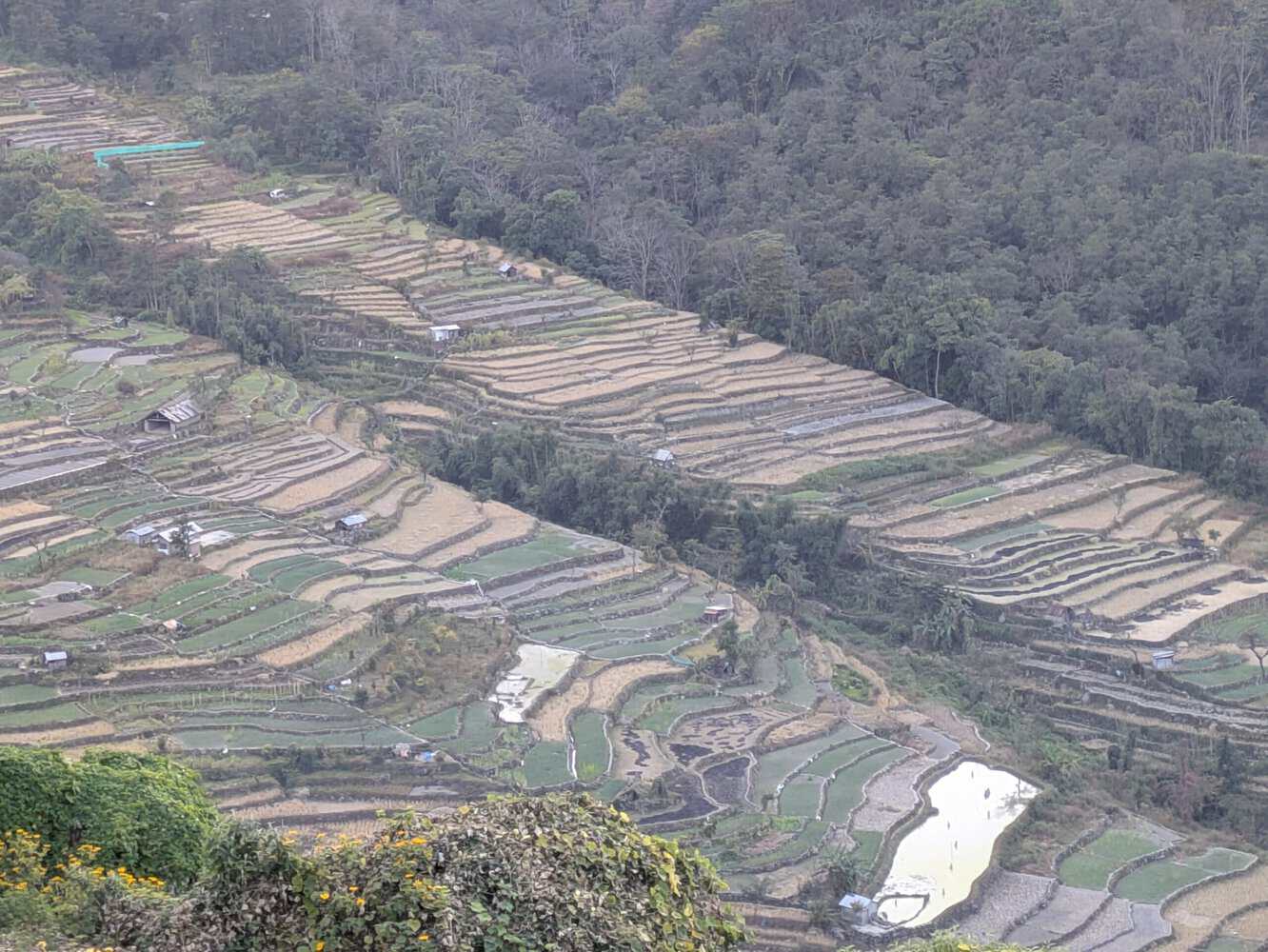
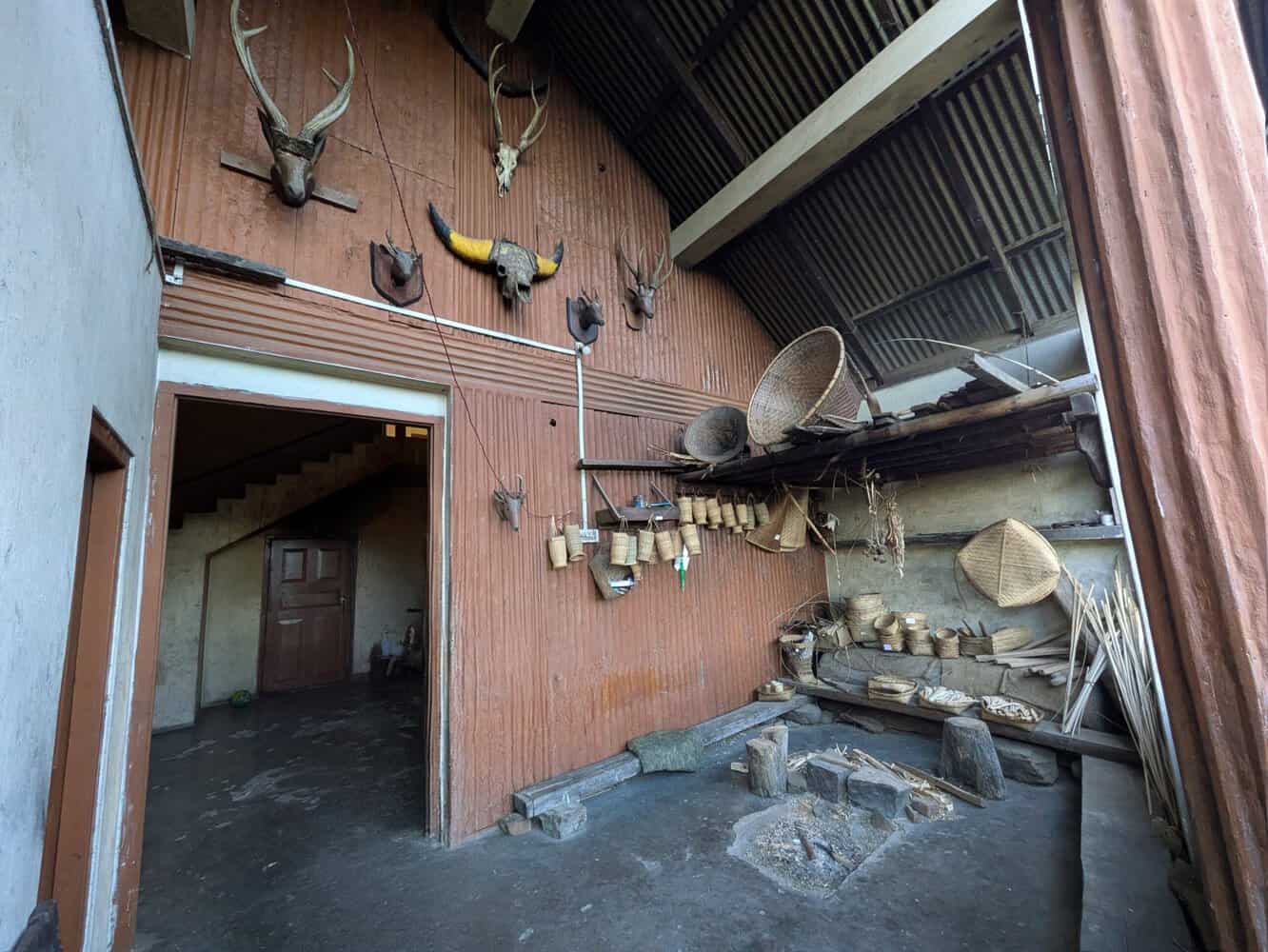
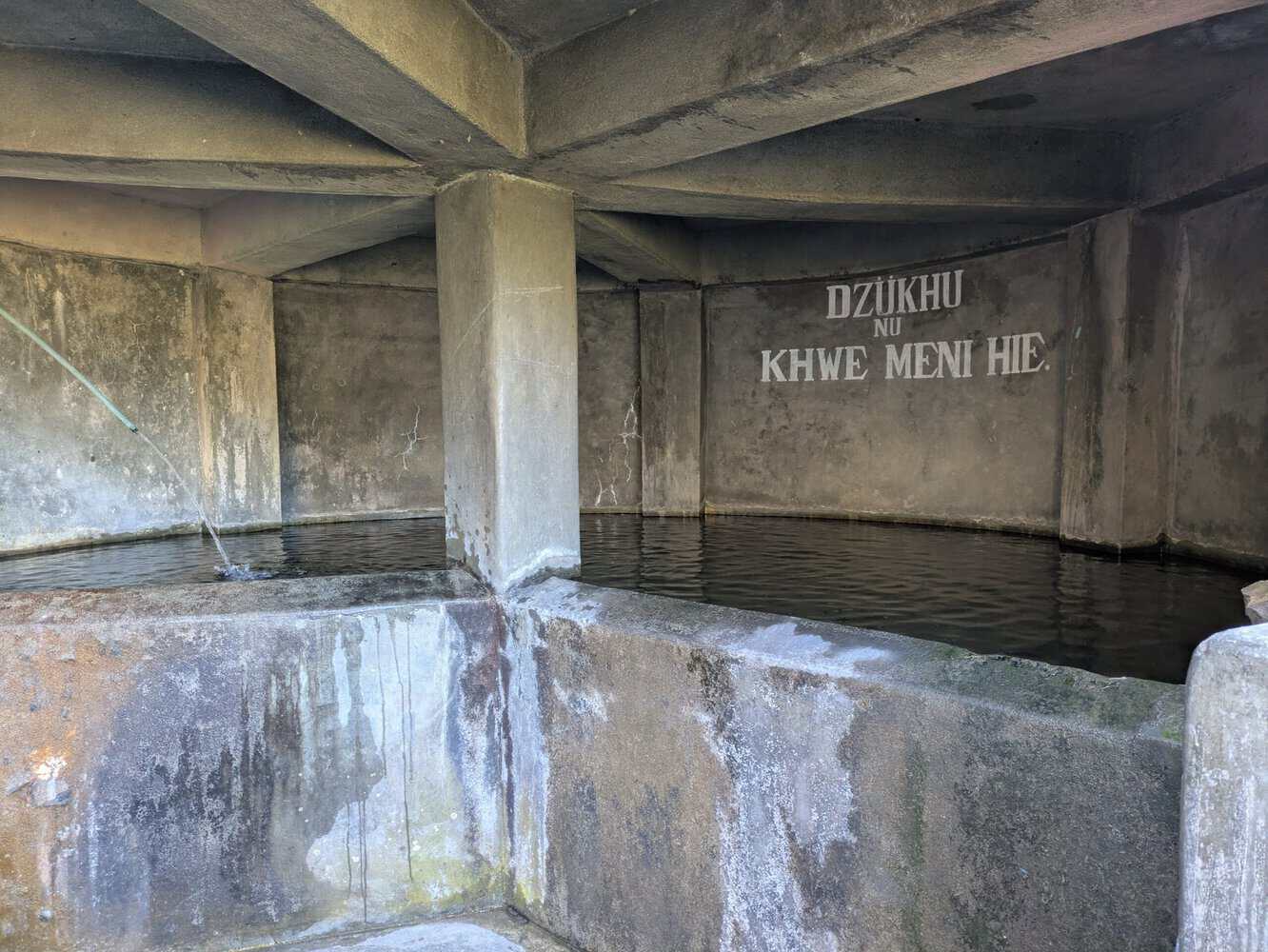
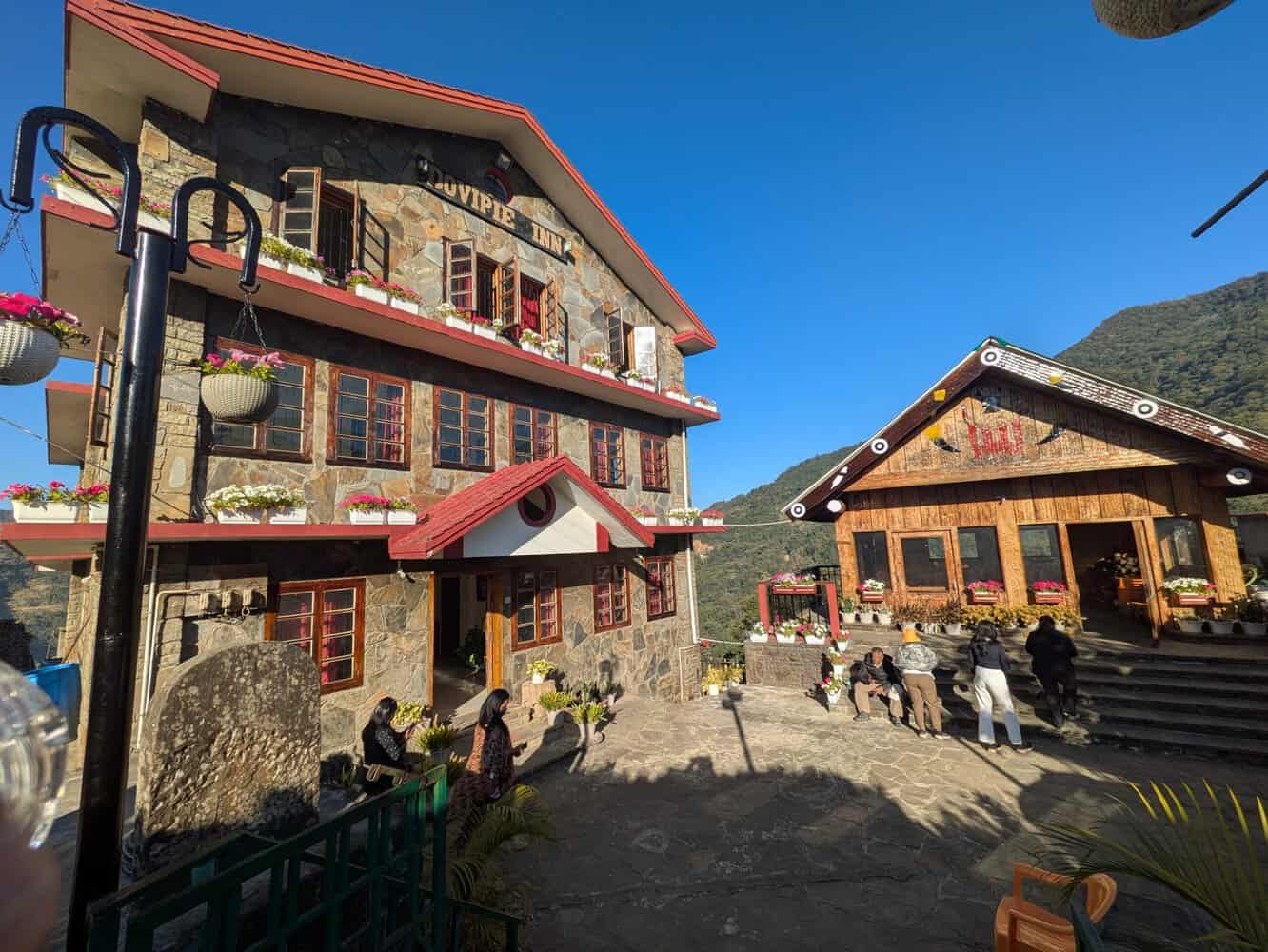
A visit to India’s first green village is on the itinerary of every tourist. The village is quite picturesque, with scenic terraced rice fields on one side and a deep valley on the other. The villagers practice sustainable agriculture and is known for its community led conservation. The walk through the village lasted an hour and during the walk, I came across several groups of women engaged in traditional crafts. Water flowing from the hills is thoughtfully stored in several large tanks before being distributed to individual houses. The only minus point- the guide did all the talking……no interactions with the locals except with couple of women from whom I bought a souvenir. Couple of nice cafes and Inn complete the picture. Buffet lunch was pre-arranged in a swiss style Inn and tasted quite good. The walk was an eye opener in many ways and I loved it.
It is touristy so to say but this is what we pay for when travelling overseas. I also think there is scope to make the visit even more attractive though that would require some investments. Would the villagers want that?
I am not sure if there is an entry fee since the visit was included in my package but a local guide is a must. The roads are quite decent and it takes maybe an hour to get here from Kohima(~20kms). Requires a minimum of half a day.
3. Dzuleke village
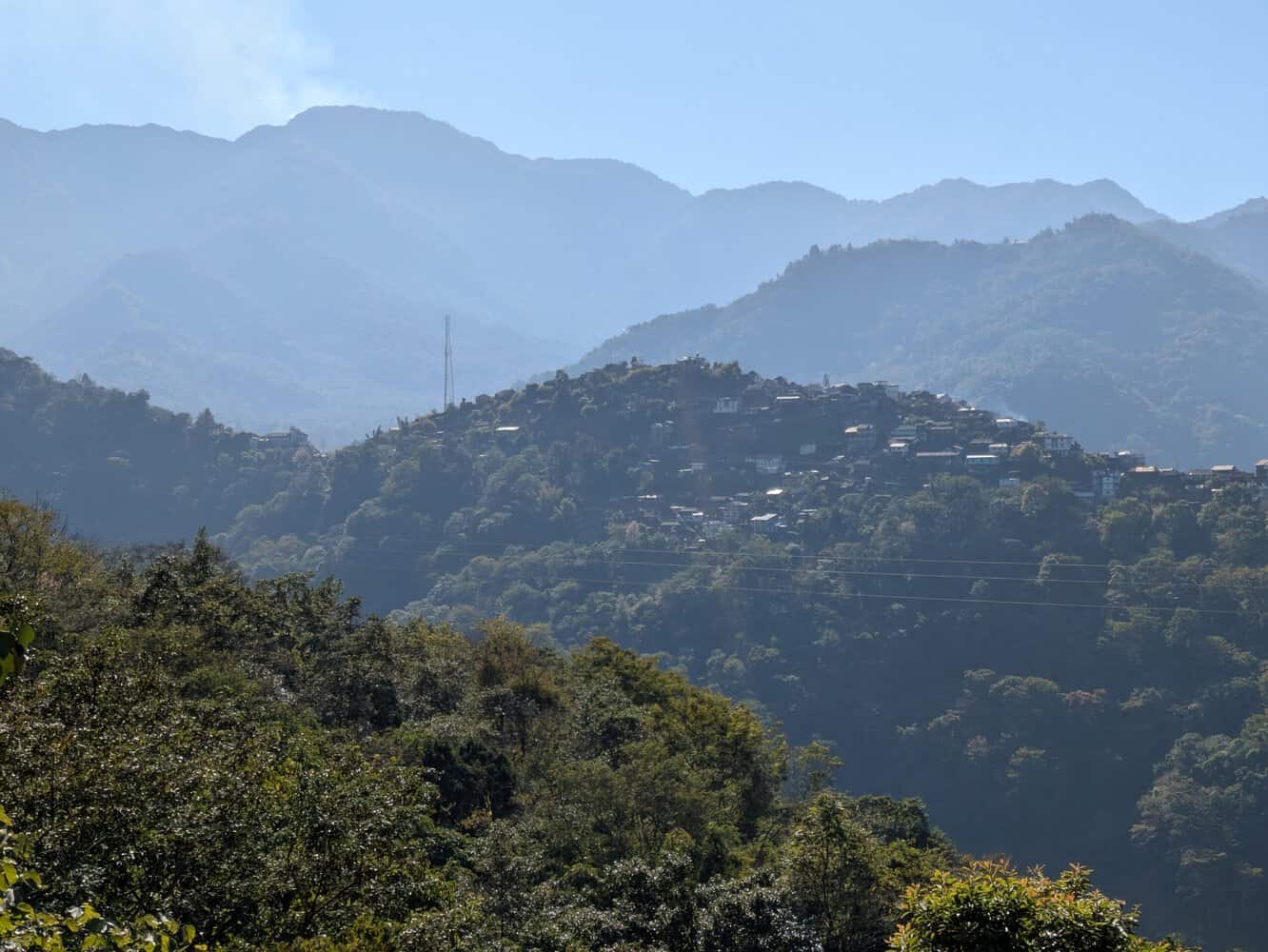
This is another scenic place and is located ~15kms further down from Khonoma village. I took about an hour to get here after halting for a few minutes at a viewpoint and the starting point for the trek to Dzukou valley(there is another more popular and easier route).
While there is nothing in the village itself, the nearby valley, surrounded by lush green mountains, is very pretty. Beyond the village, there is another popular picnic spot where the river is shallow. While this place was not exactly exciting enough for me to walk down from the main road, my guide took me on another moderately adventurous hiking trip down a narrow valley to the point where the river disappears underground and re-emerges a bit ahead.
The road from Khonoma village to Dzuleke village is good, the drive is very scenic and I had the opportunity to spot Mithun, the State animal.
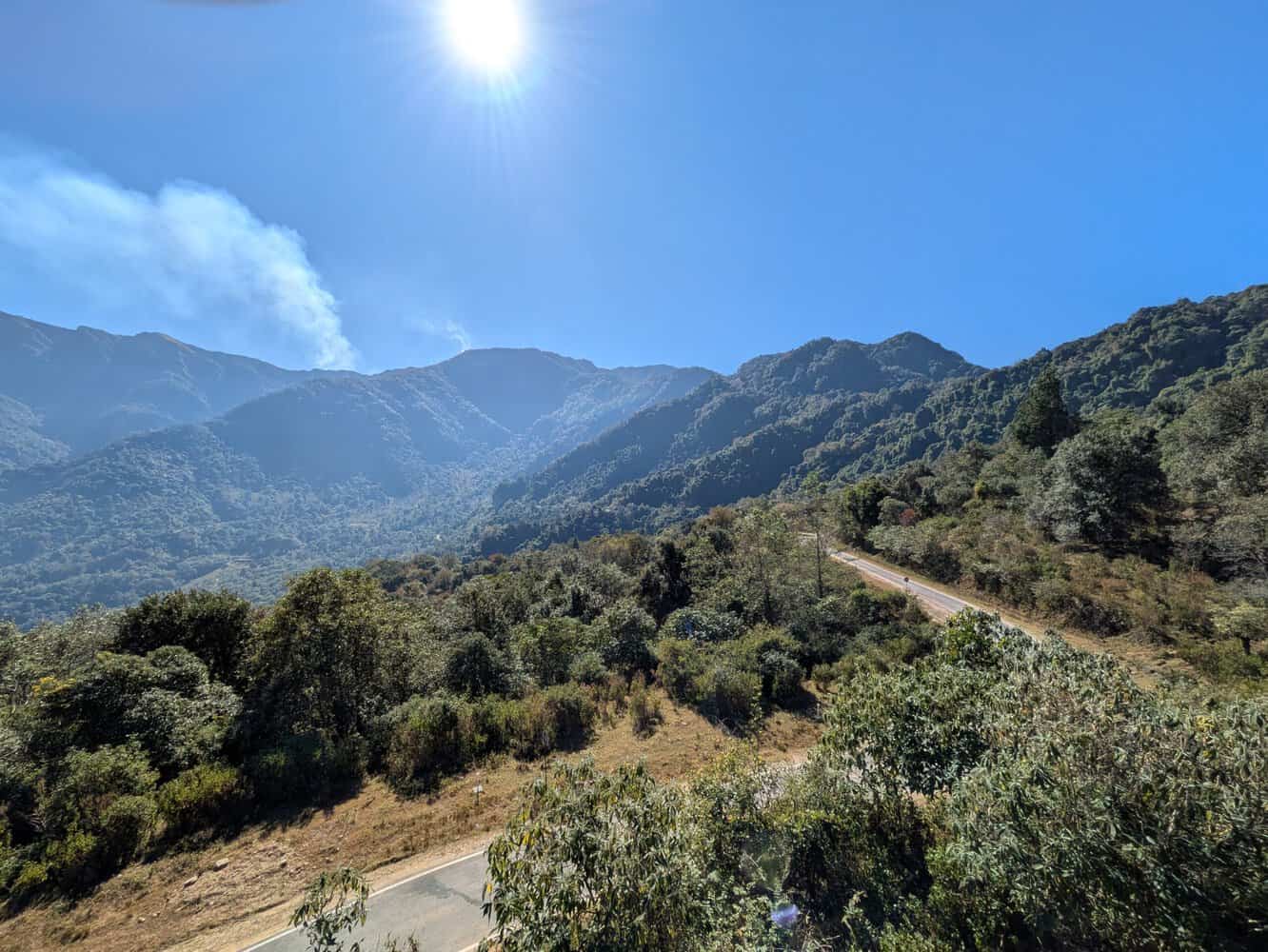
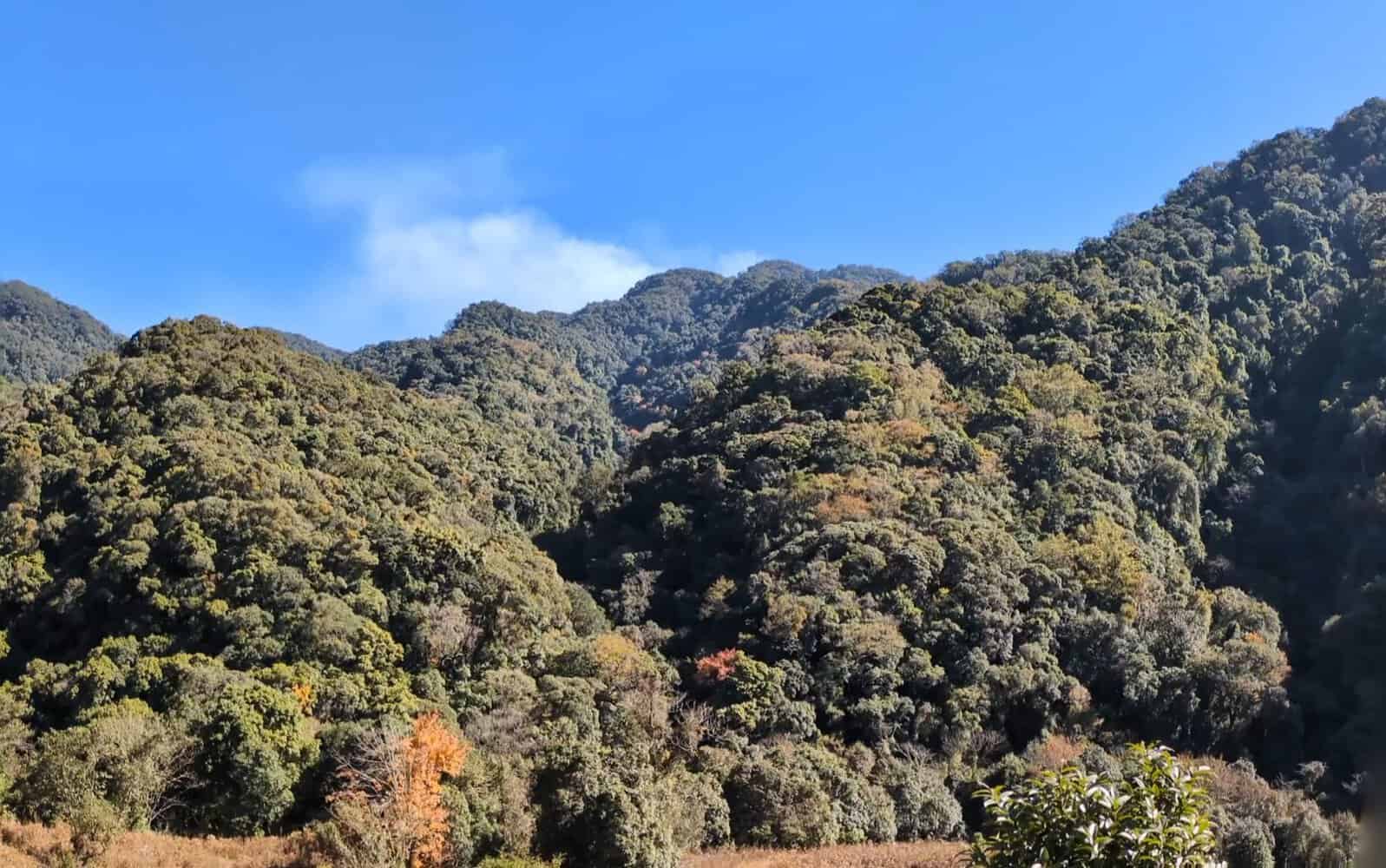
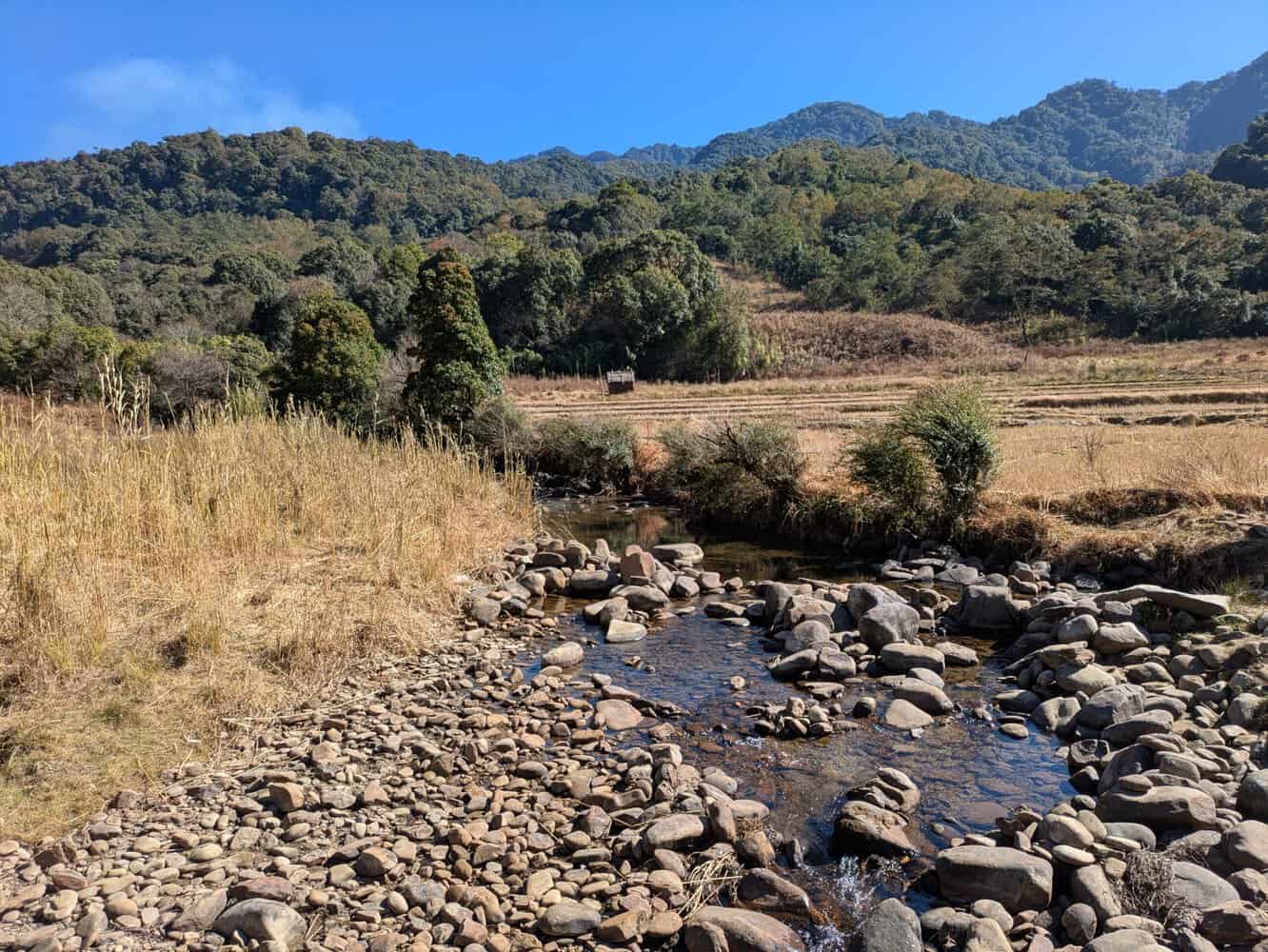
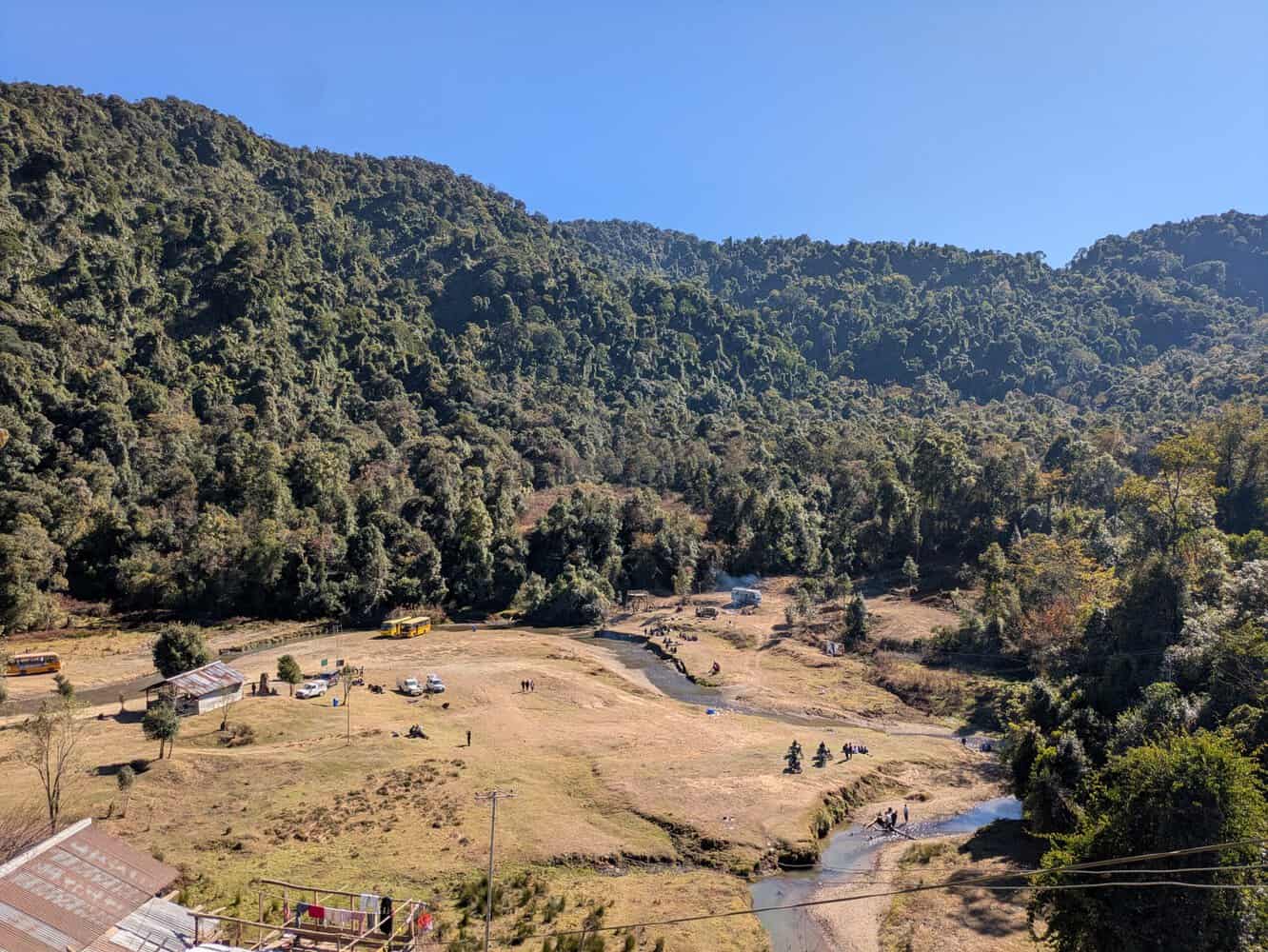
It is best to cover both Khonoma and Dzuleke villages on the same day. Even if you don’t wish to go up to Dzuleke village and beyond, drive for a few kilometers beyond Khonoma village for some lovely views of the forests, hills and the valleys.
4. Dzukou Valley
This is a popular place for trekking. During the 10 days of the festival, helicopter rides to Dzukou valley are available. I was ready to take a ride on the day after the closing ceremony but there was no service.
The valley blooms in July and August which is also stated to be the best time to visit. The trek requires a minimum of 2 days but I was told the place where trekkers halt is very very basic. A day trip is difficult during winter because of the cold weather but possible in summer with a very early start. Incidentally, a wild fire broke in one portion of the valley on 12 December 2025 . I could see the thick smoke rising in the air while driving to Dzuleke village. It took 3 days to extinguish the fire and I was told wild fires are quite common.
5. Shopping in Kohima can be fun
Most of the goods sold in the markets such as clothing, shoes, bags etc. come from Myanmar. Chinese goods too make their way through Myanmar or are directly bought by enterprising shop owners. The owner of a boutique from where I bought a shirt for INR 3k said she travels to Guangzhou, China frequently and buys from wholesalers there. While the goods coming from Myanmar and sold on the street side shops are quite cheap(some of the shoes were excellent fakes of well known brands such as Adidas and Onitsuka Tiger), the ones sold in malls are often priced higher. My biggest disappointment – shoe size 10 was just not available as the normal size of shoes worn by locals is 7 or 8 and hence, size 10 is not imported at all!
Apart from apparel, shoes and local handicrafts, another item to consider buying is Tea. There are exclusive shops at the Malls or one can buy at Kisama Heritage Village. It is not cheap though and similar varieties are available online.
How many days?
Spending a full day at the venue is not easy simply because there is no place where one can stretch oneself and relax post noon to early evening. Ideal would be to visit for half a day at a time, morning as well as evening over 3-5 days. Rest of the time can be spent in local sightseeing. For a casual visitor curious about Hornbill Festival, 2-3 half day visits will suffice. But music lovers will probably want to spend more time.
For those wanting an immersive experience, tribal attire is available for hire.
When to visit during the 10 days?
The opening and closing ceremonies are said to be special and those coming from outside the State should ideally attend either of the two plus another half day or so. But there will be more crowds during those 2 days. I attended the closing ceremony in 2025 that was well conducted and quiet engrossing.
But for the Hornbill Festival, I do not think Kohima is worth a visit. But Nagaland is very scenic, the difficulty being lack of infrastructure beyond Kohima.
Weather in December is great
The weather in the first fortnight of December is quite cold, with temperatures dropping to 5°c. Day time is great with temperatures up to 15°c . Many of the outlets in Kisama village light bonfires in the evenings to tackle the cold. Feels very cosy as compared to room heaters.
Accommodation
Room rents are higher than normal, as expected
Kohima has only a handful of good hotels and the cost of a room during the festival can easily be 5X! A room that normally goes for INR 4k per night often quotes at INR 20k and above per night. Many homestays have sprung up near Kisama Heritage Village and they are the only other option available. Homestays that usually charge INR 1k per night charge over INR 5k per person night for basic accommodation during the festival. Normally inclusive of breakfast and dinner.
Hotels were unavailable for the last 2 days of the festival when I travelled. I opted for a nearby homestay and spent another 4 days at Hotel La Collins in Kohima.
Homestay was decent but lacked facilities
The Lhoukuvi Homestay was decent, located a short walk away from the main road but lacking certain facilities. But I guess one can adjust for a few nights when there is no alternative. The rooms at La Collins were quite spacious. Not very well designed but it was comfortable overall. Food too was quite ok and the chef was willing to make a bit of modifications here and there. The prices were similar to what I would pay in a 3 star hotel elsewhere, with main course vegetarian dishes priced between INR 300-400 and soups at INR 200. Alcoholic beverages were available at this hotel.
I opted for a tailored package
Break Bag Holidays, a tour operator based in Kolkata, is among the very few operators who offer Hornbill festival packages. I paid 95k for a couple, including taxi to and from Guwahati. The arrangements were good overall.
In total, excluding air-fare and Guwahati expenses, I must have spent ~115k for a couple. Air fare was expensive at INR 43k per adult but I had booked it 3 days before travel and consequent to Indigo’s flight disruptions. Indigo’s normal return fare was INR 16k per adult.
The cost will likely be lower by ~30% if you book directly. But it may not be very convenient.
Inner Line Permit is required
Indian tourists require Inner Line Permit to visit Nagaland. It can be applied online by providing basic details. The fee is INR 200 and is valid for 30 days. A soft copy of the permit was available for download immediately after I made the payment. I also received it by Email. I was advised to carry a print and it was checked couple of times.
Photo ID card (aadhar recommended) is also required though apart from the hotel in Kohima, no one asked me for it
Carry cash
UPI is generally accepted but I found that the network is often poor at certain times and at certain locations. Cash is a must. Over 5 days, I spent over 15k in cash, including for few items purchased.
Is Hornbill festival worth experiencing?
For a casual visitor, I think the overall experience is worth one visit. Was there any novelty? Possibly not. Is it touristy? Possibly yes. Tribal cultural shows set in a modern Arena may appear ‘stage managed’ and not authentic. Getting decent accommodation too is a challenge. Despite all this, as a full package, the Hornbill festival had enough to keep me engrossed. The cultural shows and the musical concerts were well conducted and the overall atmosphere is very lively. It will certainly strike a chord with the youth but at my age, one visit was both worth it and good enough.
For more information
Related posts
Discover more from My Travel Innings
Subscribe to get the latest posts sent to your email.