
Until recently, the official tourism catchword for Odisha was ‘India’s best kept secret’, which has been replaced by ‘Think India, Think Odisha’. I spent a week in Odisha recently and while there are few unique attractions worth visiting, I came away with the feeling that a lot more needs to be done to justify either of the two taglines.
Odisha has a rich history. The Kalinga war was fought here in 261BCE and my guide showed me the location near Bhubhaneshwar where Emperor Ashoka’s boat is believed to have arrived. The river Daya, that was almost dry when I visited, was stated to be flowing with blood during the war, the sight of which is one of the reasons that made the Emperor renounce war and to embrace buddhism. The Sun Temple at Konark, Lingaraj Temple at Bhubhaneshwar and Shri Jagannath Temple at Puri were all built between 11th and 13th century CE.
My shortlist of attractions to visit
Over one week, I chose to visit the following attractions in Odisha:
- Konark – Sun Temple(UNESCO heritage site)
- Puri – Shree Jagannath Temple
- Bhubhaneshwar – Lingaraja Temple, Udaygiri and Khandgiri caves, Dhauli Shanthi Stupa
- Chilika Lake, Rushikulya for Olive Ridley Turtles
Others attractions that I decided to skip include the Hirakud dam, nature camps/wildlife sanctuaries, Gahirmatha Marine Sanctuary and several other temples. Most of the famous temples of Odisha follow the ‘Kalinga’ style of architecture. To my untrained eye, they looked quite similar and hence, I decided to visit two of the most famous temples, Shree Jagannath Temple at Puri and the Lingaraja Temple at Bhubhaneswar.
My initial thought was to drive down from Bengaluru but eventually decided to travel by air to Bhubhaneshwar. For travel in Odisha, I rented a car on a need basis, not on a daily basis. The car rental company was recommended by Eco Retreat in Konark.
Move to:
Where to stay in Odisha
Bulk of the attractions are located in and around the two towns of Bhubaneshwar and Puri.
I spent 2 nights each at Bhubhaneshwar and Chilika Lake and 3 nights at Eco Retreat, Konark. The alternative was Bhubhaneshwar and Puri. In fact, Puri is ideally located for visiting both Konark and Chilika Lake, besides local attractions in Puri such Shree Jagannath Temple, Golden beach that has a Blue Flag tag and Raghurajpur Heritage village.
But as the Swosti Resort near Chilika Lake looked attractive, and I only wanted to visit Shree Jagannath Temple in Puri, I decided to stay at Eco Retreat, Konark, instead of Puri. The key advantage of the tented accomodation at Eco Retreat was additional activities such as yoga, cultural programs and water sports, besides being just 45 minutes away by road from Puri.
Bhubhaneshwar and Puri offer adequate choices when it comes to accomodation. I stayed at the ITC Welcomehotel in Bhubhaneshwar that was quite conveniently located.
1. Eco Retreat, Konark Odisha
Ever since the massive success of the Tent city at Rann of Kutch in the state of Gujarat, the modern luxury glamping townships have risen in popularity in India.
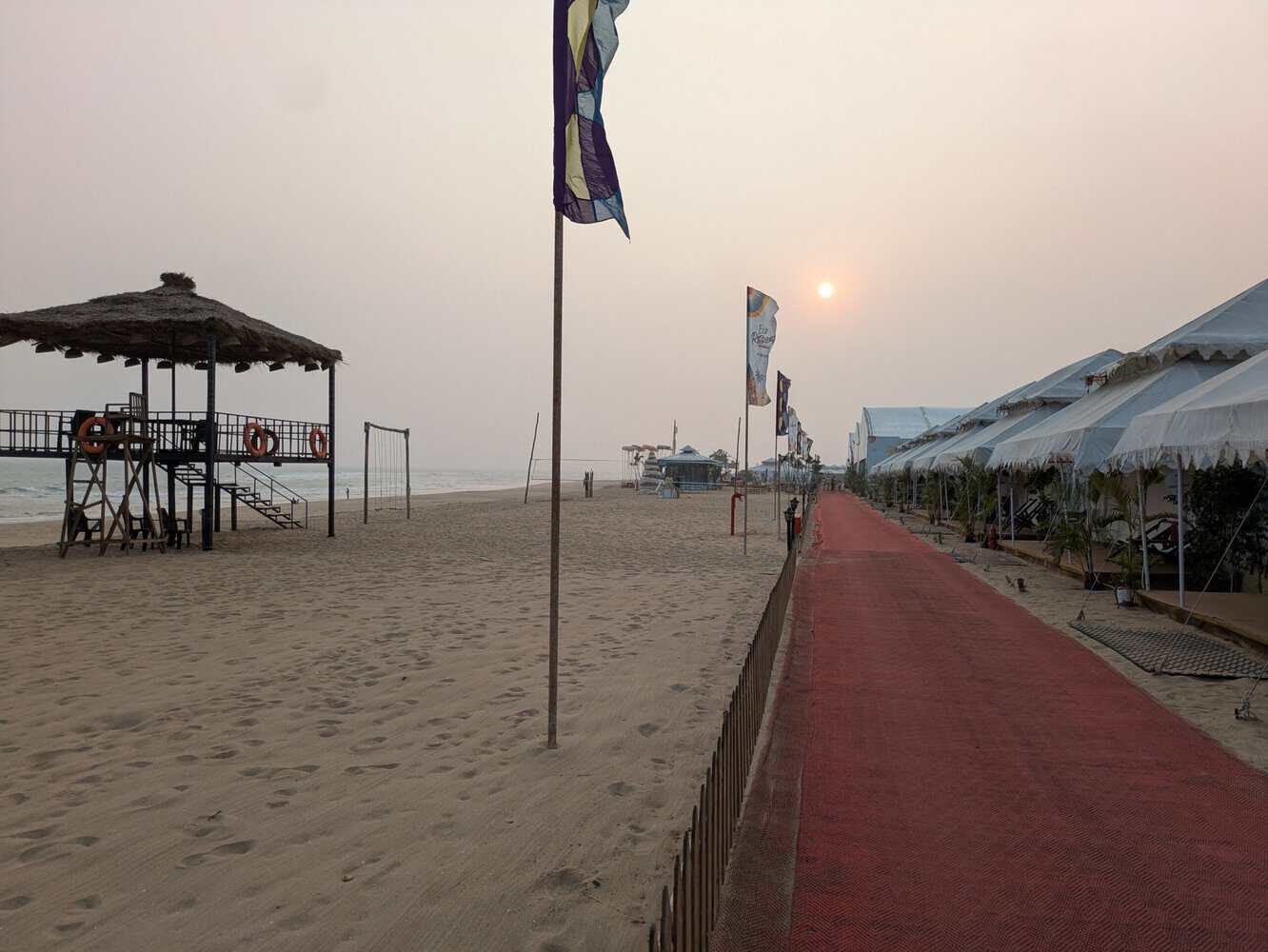
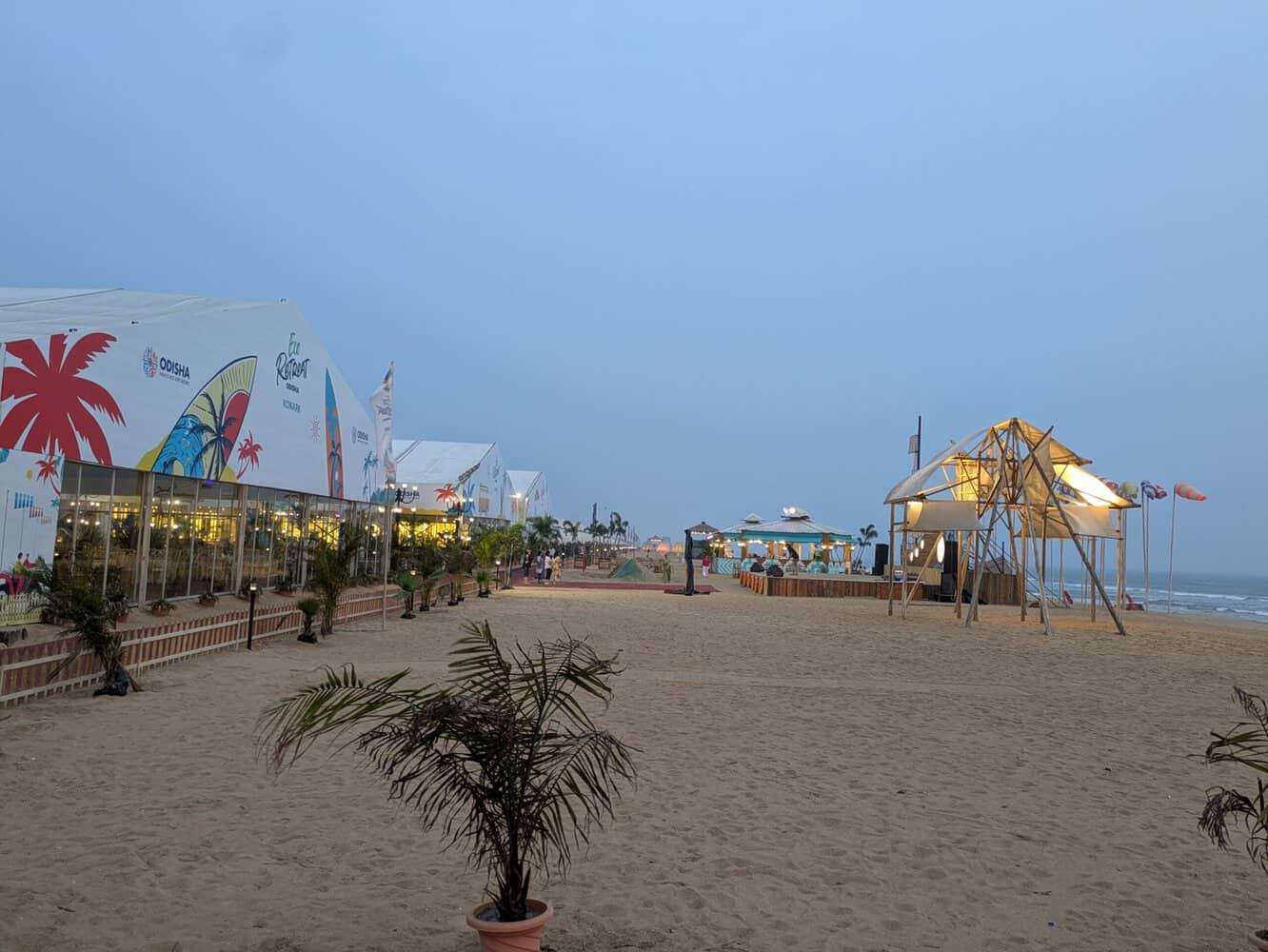
Set up on Ramchandi beach, Eco Retreat Konark is located about 70 kms from Bhubhaneshwar airport. The Bhubhaneshwar-Puri highway was good but the Pipili-Konark road had only two lanes with several stretches clearly requiring some maintenance. The car took ~2 hours to reach Eco Retreat, passing by the town of Konark. There are no good restaurants on the way. If you need to eat, do so in Bhubhaneshwar.
1.1 Accomodation at Eco Retreat
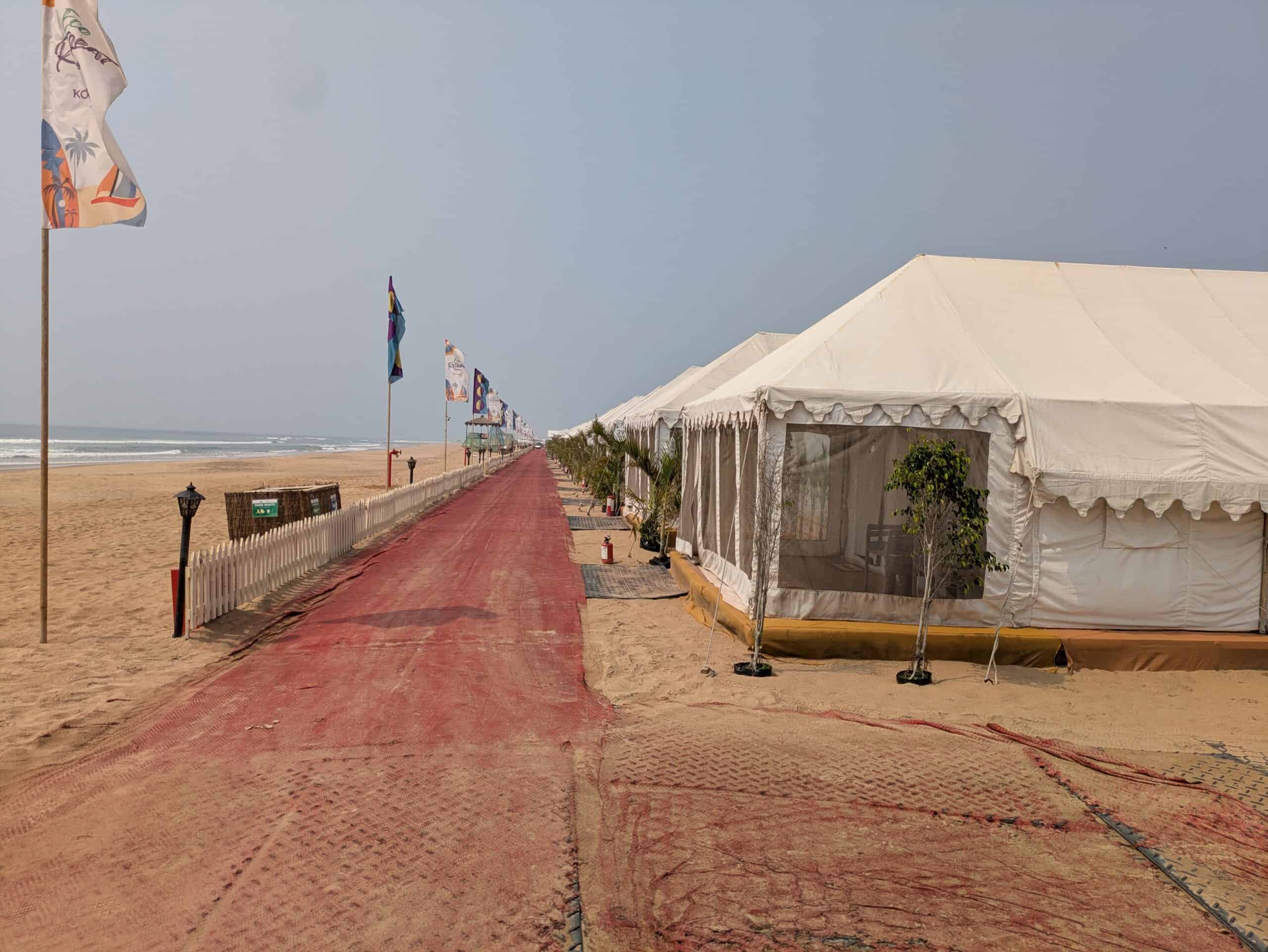
There are four types of tents on offer : Deluxe and Premium Swiss cottages, Royal Luxury Swiss cottage, Presidential suite
Deluxe Swiss cottage is the cheapest starting at INR 5.4k per night while Presidential suite is the most expensive at INR20k per night. Presidential suite has 2 bedrooms and hence a good option for a family/group of 4. I booked Royal Luxury Swiss cottage that had one bedroom, one living room, two toilets and one shower area with 24/7 hot water as the geyser is kept on throughout. Tea/coffee maker was provided but there is no fridge. Costing INR 12k per night for a couple, it was spacious and well furnished.
The costs are the lowest during weekdays, and higher during weekends and special days(such as last week of december). Tented accomodation is claimed to be on par with 3 star hotels. This may well be true except when it comes to the bath/shower area. Quality of toiletires provided was good though. Satellite TV is available only in the Presidential suite and Royal Luxury Swiss cottage. There is no Wi-Fi in the rooms but mobile data works.
Overall, there are about 25 Presidential and Royal Luxury cottages and about 50 premium and deluxe cottages. I made the booking directly on the official website.
1.2 Inclusions
Food is inclusive in all categories(breakfast, lunch, tea/snacks and dinner). Free entitlement to water sports(Jet ski, Parasailing, Motor boat) varies by room category. For me, all were complementary once in a day. ATV on the beach is free for all room categories.
1.3 Dining
I was impressed with the quality and variety of food provided. Best part was the availability of local cuisine such as Dalma(Dal + vegetables) and Chhena Poda(sweet). The food tasted good.
There is a bar on the beach and the setting looked good.
1.4 Programs and activities
Yoga sessions are held every morning. I went the first morning – there were just 4 of us and the next day, the teacher did not turn up! The third morning, he turned up when it was almost time for breakfast. So I ended with just one good session.
Cultural programs by local artists are held every evening for about an hour. I watched it on two consecutive days and while there are repititions, the programs by themselves were quite good. Good time pass so to say. A sand artist is available at 3 pm to teach sand art while one free trip to the Sun Temple at Konark is arranged in the afternoon.
Swimming or even wading deeper into the sea is often restricted due to strong currents. The nearby Chandrabhaga beach has a Blue Flag tag. Limited number of cycles are available to move around though there are no specific cycling tracks. Else one can call for the electric buggy.
1.5 Water sports
All water sport activities were available at the public beach adjoining the perimeter of the Eco Retreat. Evenings are generally more crowded and there is a bit of a wait time for the popular activities such as parasailing. Self drive(ATV or Jet Ski) is not allowed which takes away a bit of fun. Para sailing, as always, was enjoyable and provides a bird’s eyeview of the entire Eco Retreat.
The costs are quite reasonable with Jet ski at INR 1k(short) or INR 1.5k(long) and parasailing at INR 2k for single and INR3k for a couple. This is a nice area, popular with the locals and can certainly do with a bit of a makeover.
1.6 What was not good
The entire area is not fenced because of the beach which allows stray dogs to get inside. They are able to conveniently feed on leftover food which is what probabaly draws them in the first place. I saw the dogs enjoying their food within the tent premises, leaving behind the unfinished portions(including bones) and of course, dirtying the beach. Certainly not a pleasant experience. I also sighted a rat who knew where it had to go through the openings in the tent. I guess it is not easy to keep them away when there are food remains scattered here and there.


One evening when it rained, one of the premium tents sagged and started dripping water inside. It stopped once the rain stopped. Looks like the presidential suite and royal luxury cottage have better protection. The premium tent also had a surprise visitor at night – a stray dog curled up inside for warmth!
1.7 What was truly enjoyable
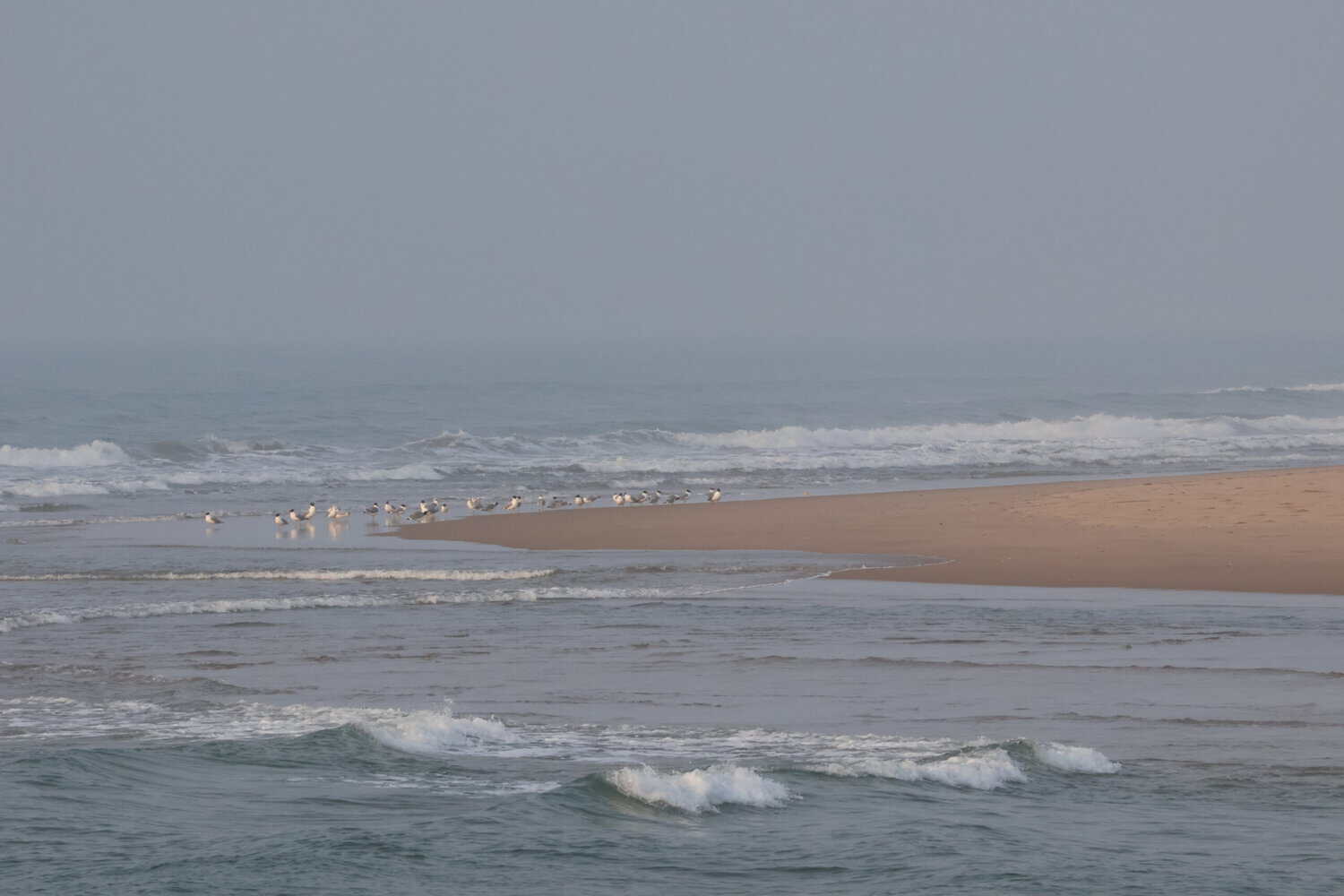
The continuos sound of the waves crashing on the shore during the night was a like a soothing music playing continuosly in the background. The second best part was the food. Third was the visit to the Sun Temple.
All in all, I enjoyed the stay at Eco Retreat, Konark. Plan for a minimum of 2 nights here. If budget is not a constraint, go for Royal Luxury cottage or Presidential suite.
2. The Sun Temple, Konark
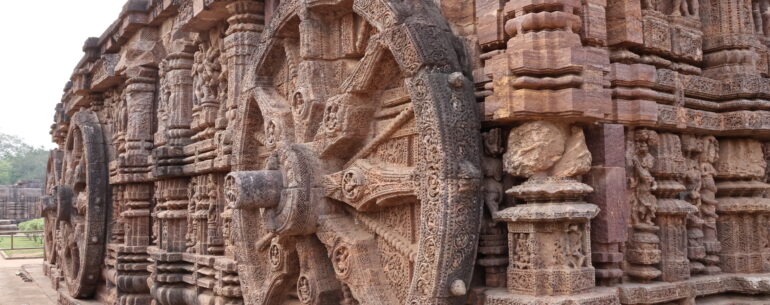
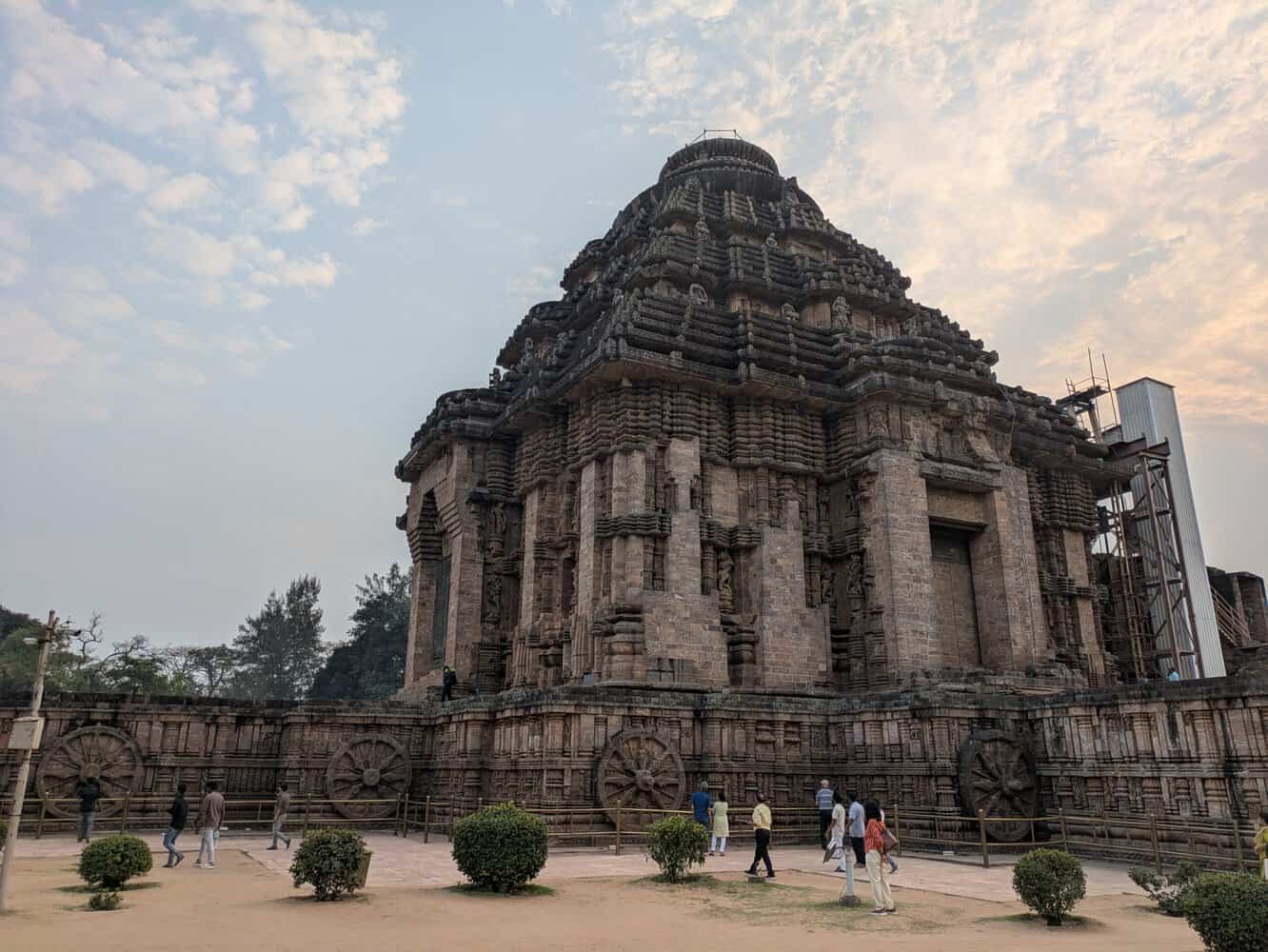
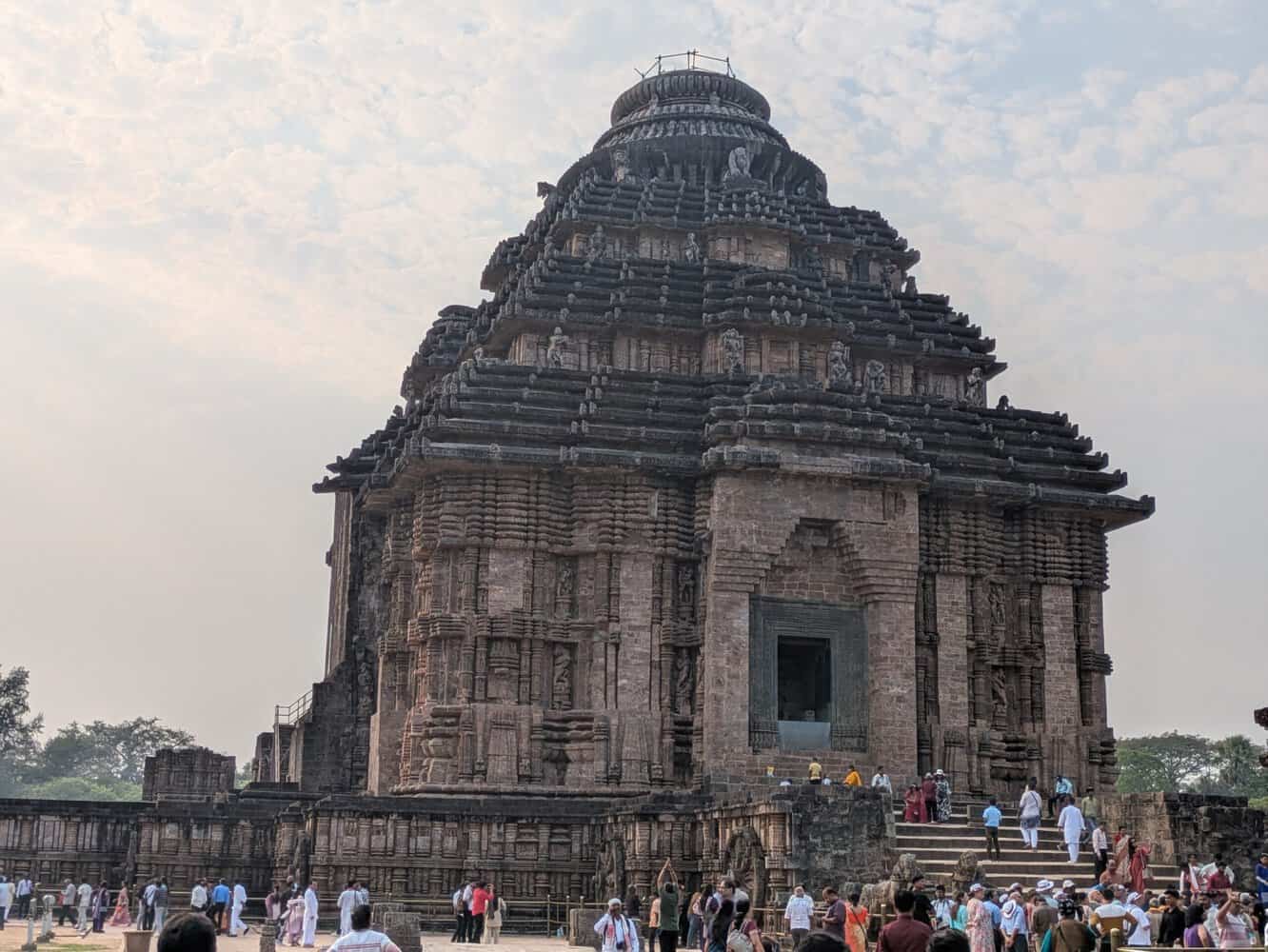
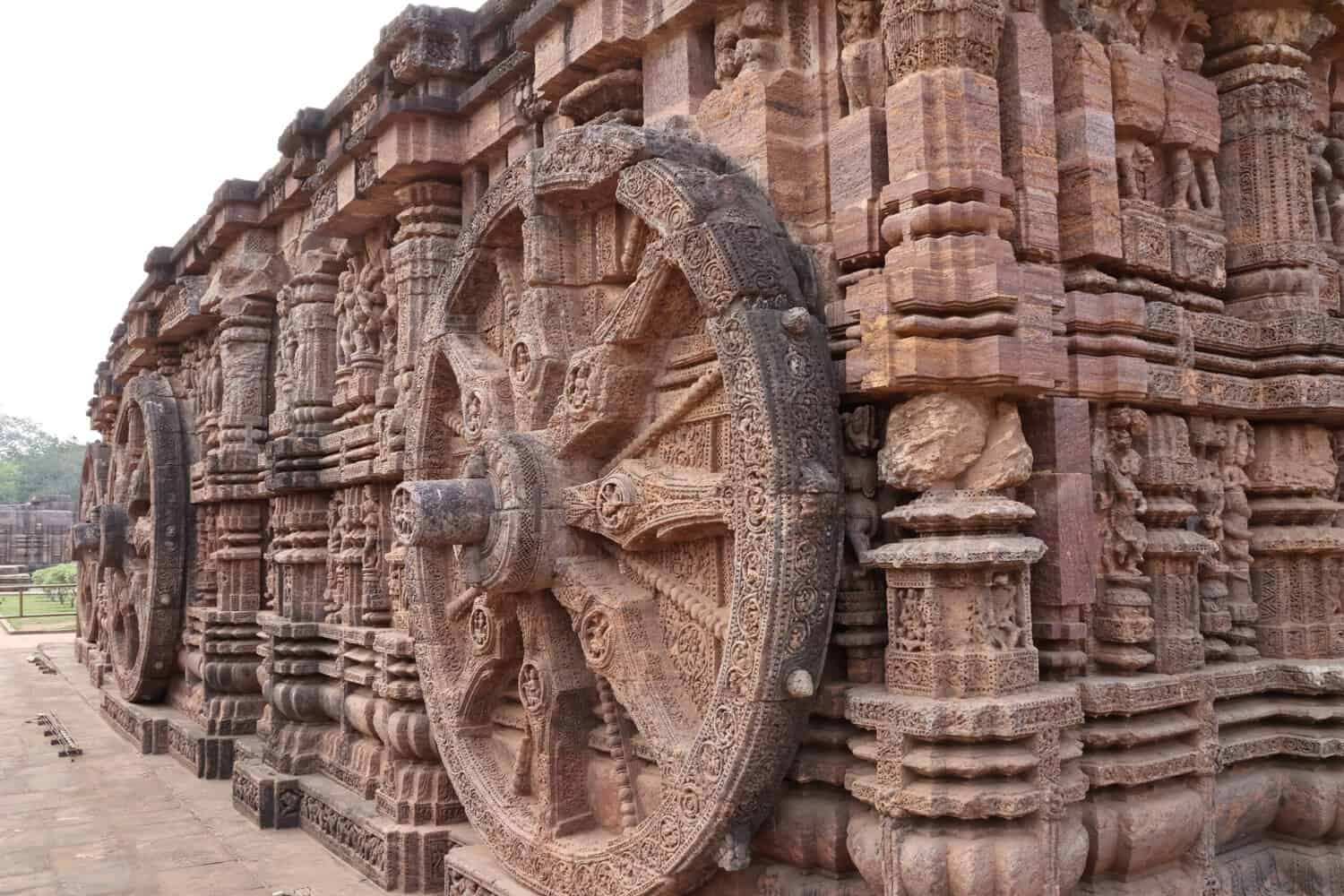
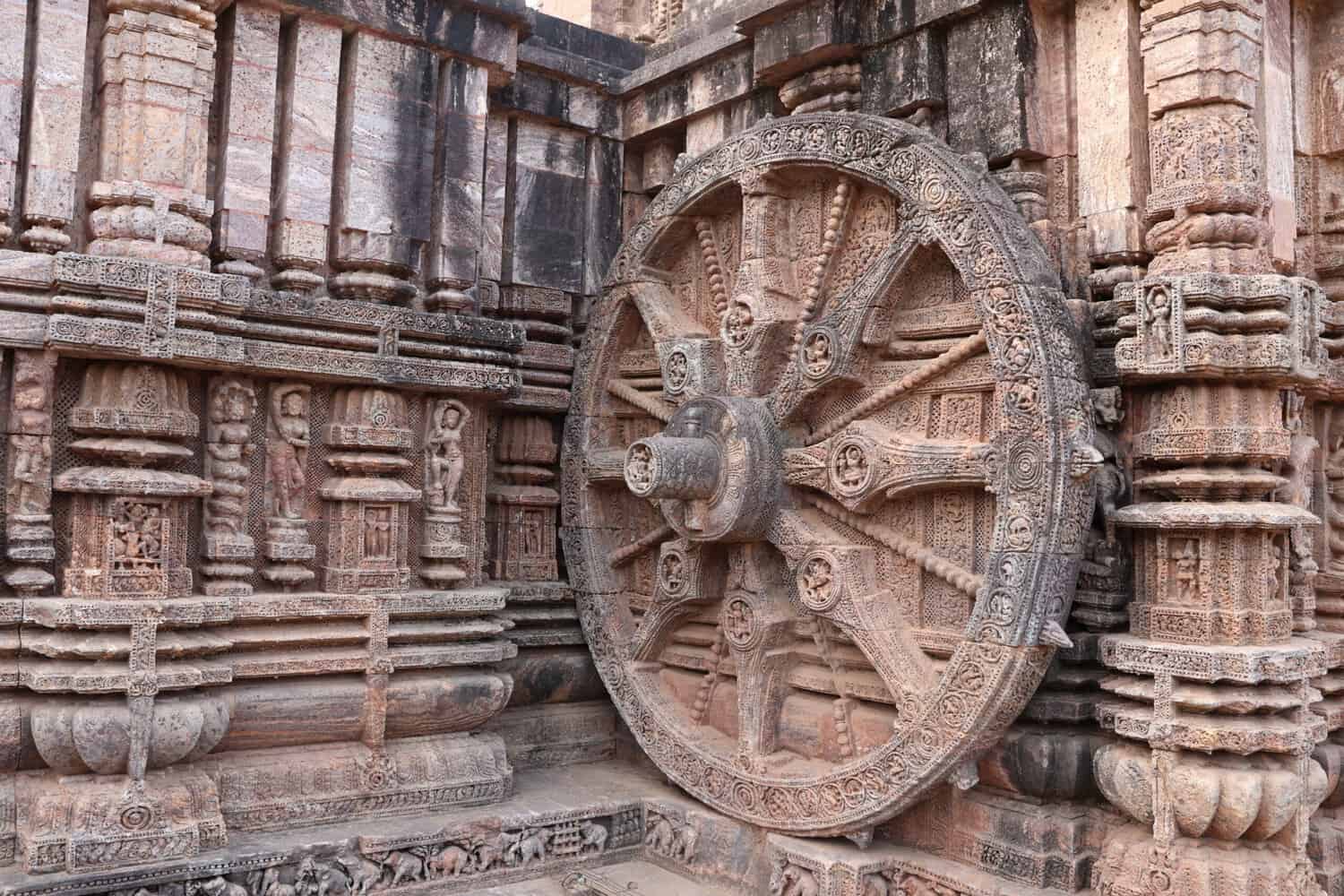
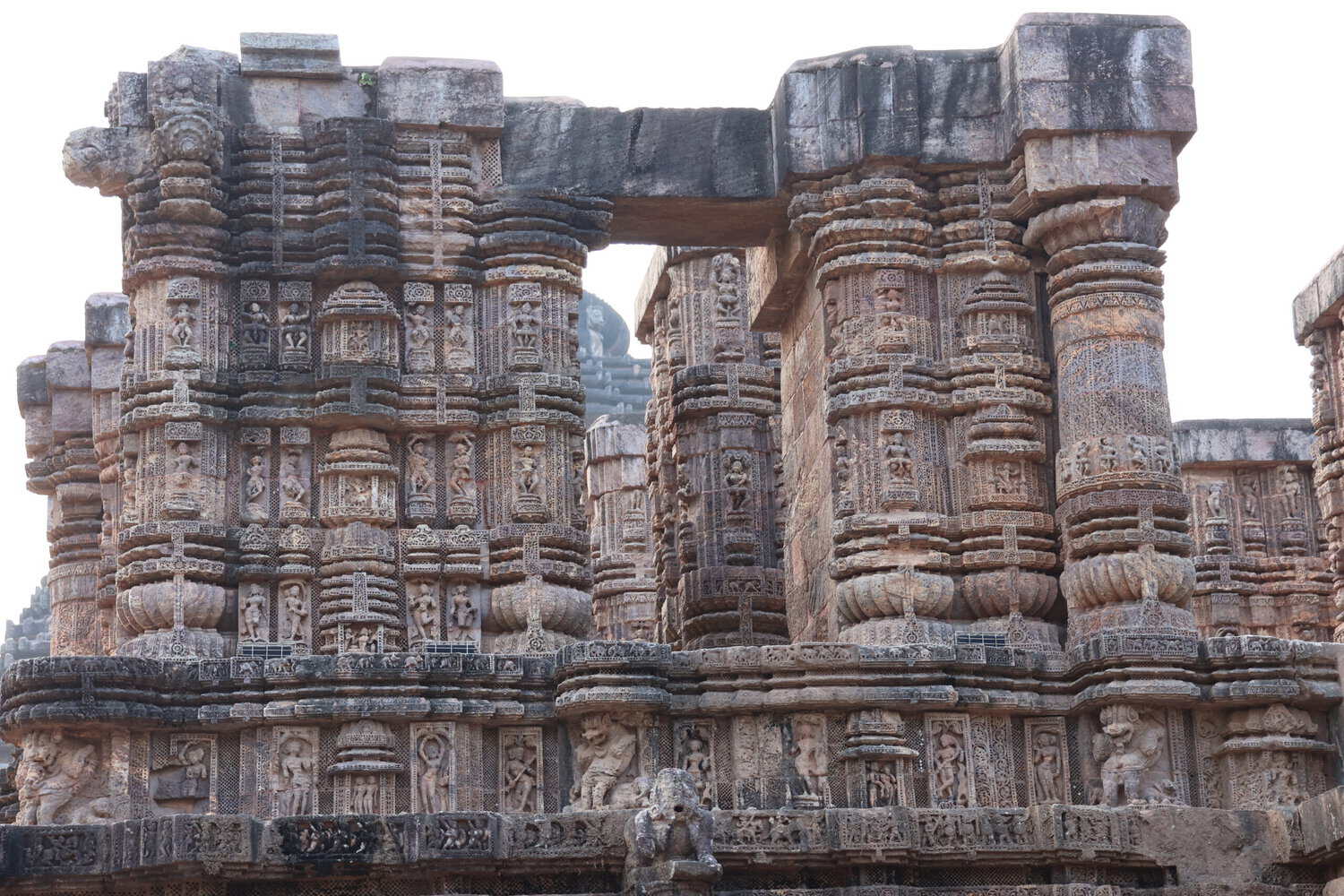
The Sun Temple was originally built on the sea shore in the 13th century CE. Now it about 3 kms away, with the sea having retreated over the centuries. The stone carvings in the form of chariot with wheels and horses, the structure is magnificent and a masterpiece in human creativity. Even more interesting is the way the stone carvings were joined together and how heavy stones were transported and lifted. It has weathered over the years, with damaged stones and sculptures displayed in the open area. A portion of the Temple was under restoration when I visited.
No rust despite 800 years of exposure to salty coastal air
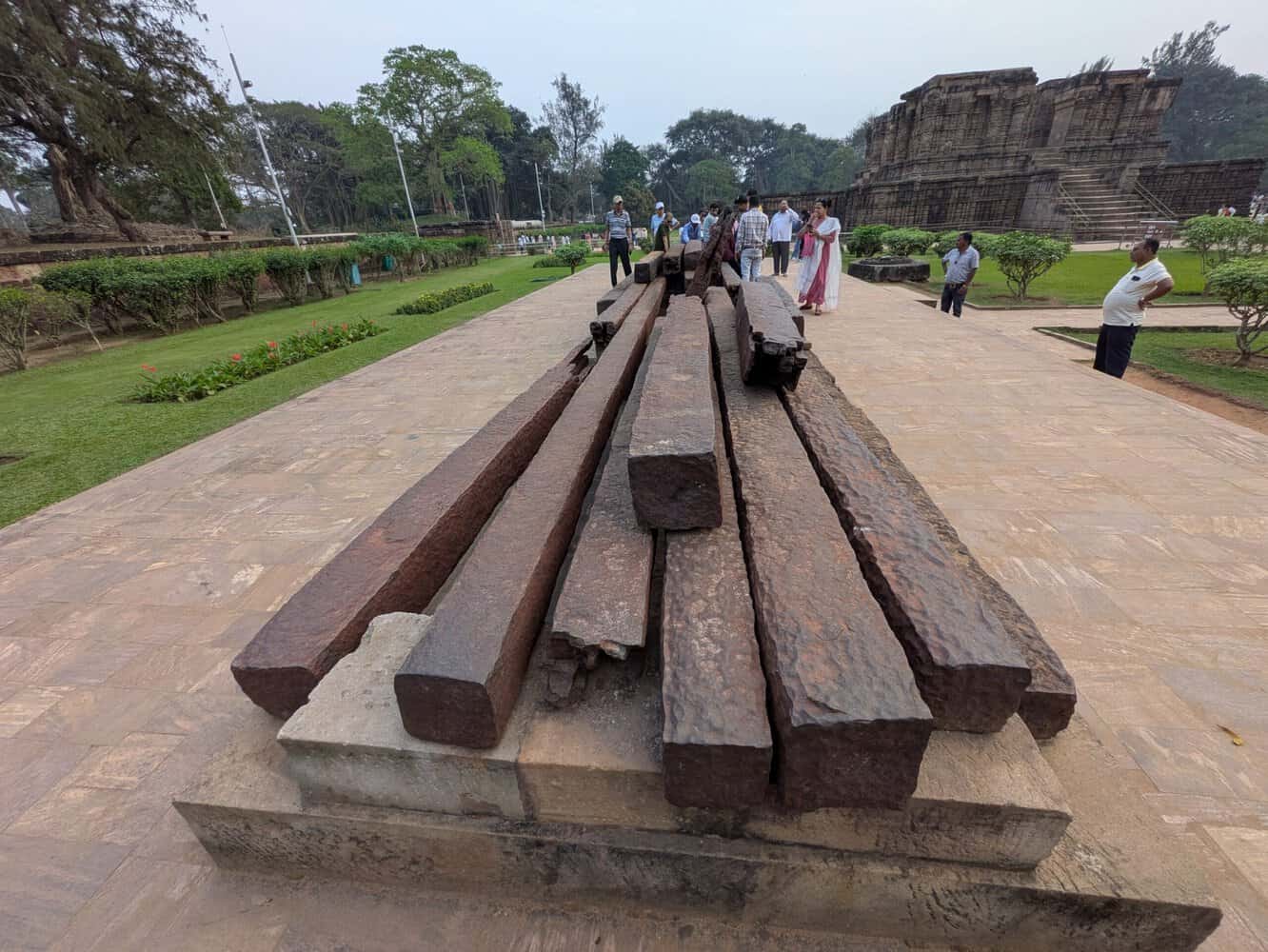
Another very interesting aspect about the wrought iron bars that have been displayed in the open area (and what was also used in construction) is that they have resisted rust for ~800 years despite being so close to the sea. A study indicated that these iron bars are 100 times better than contemporary steel in resisting corrosion. Yet, the manufacturing process adopted and the ancient Indian knowledge of advanced materials is not fully understood even today.
This unique temple is a UNESCO World Heritage site and a must visit. Our driver served as the guide as well. The complex is well maintained and a few enterprising locals offer wheel chairs for a fixed fee. There are some interesting shopping options on the alleys leading to the Temple gate.
3. Shree Jagannath Temple, Puri
The famous Shree Jagannath temple at Puri is just a 45 minutes scenic drive away along Konark-Puri Marine Drive road from Eco Retreat, Konark. Beyond a point on the Grand Road in Puri, cars are not allowed. Once I got off the car, around 10.00am, I had the choice of taking either the motorised autorickshaw or the manual rickshaw. I chose the autorickshaw though the driver of manual rickshaw warned me that only manual rickshaws are allowed to the main East gate. And he was right. The auto driver also claimed he would drop me next to the gate, but conveniently omitted to say it will be the North gate! Anyway, I was eventually dropped off a bit away and had to walk to the North gate. From the car park, free electric carts are available as it is a long walk to the Temple.
Try private cloak rooms if designated cloak rooms have long queues
Mobile phones, footwear, camera and leather articles(incluing belt and wallet) have to be deposited at the designated cloakrooms, free of charge. So if your trousers need a belt to stay put, make sure you don’t wear a leather belt! I stood in the queue at the first cloakroom I came across. After waiting for 20 minutes, I realised the queue was not moving at all. Upon enquiry, I was told they had exhausted their 1500 bags and we would have to wait for devotees to return. And then helpfully informed me there are more cloakrooms ahead! The one near North gate also had a queue before I noticed that many shops outside North gate took custody of footwear/mobile phones on payment. I paid INR 80 for 4 pairs of footwear and 2 mobile phones that were placed in a locker and the key handed over to me. This was done in a jiffy and I was left wondering why was I standing in the queue?
Took me an hour to get inside the Temple where there was another queue
There was a long queue outside the North gate to the Temple but in about an hour, I was inside. The sakaala dhoop puja around 11am added 15 minutes to the wait. The queue was mostly sheltered but can still get very hot, despite the small fans and couple of coolers. Once I got inside, there were 2 queues. I stood in one queue but for some reason, decided to confirm. The priest nearby told me that queue was for for Mahalakshmi Temple while the other was for Jagannath Temple. I was actually standing in the wrong queue!
Devotees are allowed in batches into the Jagannath Temple. There are 6-7 lanes, with railing on both sides and a small gate at the end. Beyond these 6-7 lanes is open area that leads to the main Temple up a flight of stairs. As soon as the gates were opened, people rushed onto the steps, pushing and shoving. This is tough for the elderly, women and children. I find it hard to understand why people wait patiently where there are barricades but lose all control when there are none?
You can avoid the queue inside for a ‘dakshina’
We managed to reach inside the main temple without any scratches but there was a good crowd inside also. While we were struggling to get close the deity, a priest identified us and offered to take us to the sanctum sanctorum for a ‘dakshina’ of INR 500 per person. After a brief wait, he took us through the crowd and security personnel, made us see the deity, and then politely charmed us to take the golden key for INR 1K before escorting us outside. He also got us prasadam(called Khaja, a dry sweet) for us and then sought a tip if we were happy and satisfied with him. We acutally were so I gave him INR 1k tip. He also adviced us not to miss the lunch at Ananda Bazar, kind of food court inside the temple premises that serves a variety of dishes in one meal.
The golden key is a small gold coloured key given by the priests to the devotees as a blessing. It is symbolically supposed to unlock Goddess Lakshmi’s divine treasury. But it is not given free.
There are several temples inside the complex
The Temple was built during 12 century CE and has undergone renovations since then. Architecturally, the temple is beautiful and was made entirely of sandstone initially. One unique feature of the main Temple is that the idols are made of wood.
There are several other temples in the complex. Besides the architecture, what needs to be observed, as in other famous temples of India, is the daily rush of thousands of devotees, many of them elderly and families with young children. It is estimated that up to 50 million devotees visit the Temple every year, that is ~1.4 lakhs every day on an average.
Summers can get very hot and uncomfortable
I visited in the last week of February and even then, the flooring got fairly hot post noon. Inside the temple, water was being sprayed on the flooring to cool it down and to ensure devotees can walk without discomfort. Carpets had been laid in certain places but not everywhere.
Good thing is toilets have been built within the temple complex, between the inner and outer wall. Drinking water is available and so is food. Overall, it took me close to 3 hours to get back to the car. I did not try the food at Ananda Bazar.


4. Chilika Lake
Chilika is described as being both a lake and a lagoon. Connected to the Bay of Bengal, it is also fed with fresh water by several rivers flowing into it. Asia’s largest brackish water lake is quite shallow, with an average depth of ~6ft. and the deepest point at ~12ft. The lake is the winter home for several migratory birds and that is the key reason to visit this lake, other being the chance to spot Irrawaddy dolphins
Getting to Chilika lake
There are basically two options – day trip from Puri or halt at one of the resorts near the Lake. Satapada on the eastern part of the Lake is the hub for boating activity. It is only 50 kms away from Puri and can be reached in about 90 minutes. For overnight halt, I only found two good options.
One was the Swosti Chilika Resort on the south-west part of the Lake and Rambha Palace on the southern tip. I chose Swosti as it had its own pier, was closer to Bhubhaneshwar for the return journey and more importantly, not very far from Rushikulya beach which is a hatching and nesting site for Olive Ridley Turtles. There is also a boat with stay options called Garuda that is docked not too far towards the North from Swosti Resort. I did not explore this option.
Barkul, ~15kms to the north of Swosti Chilika Resort, is also a popular boating pier. OTDC runs a hotel here and also offers certain water sport activities. I do not know if boats to explore the Chilika Lake are also available from here.
Drive from Konark
The drive from Konark was not very convenient until I touched the Chennai-Kolkata national highway. Until then, it was a two-lane road that was not in a great condition and progress was slow. No decent restaurants on the way that meant no decent toilets. Only when I was close to the Resort did I stop for tender coconut water! The journey took close to 4 hours. The last mile goes through a village along a narrow but cemented road.
My driver took the route via Pipili which is famous for its Applique handicrafts. This route is a much longer as compared to the route via Puri that my driver said was in a much worse condition.
Swosti Chilika resort
This is a lovely resort next to the Chilika Lake. Lots of greenery, open spaces and good food. The rooms too were good and very reasonable priced. There is a decent sized pool, a spa, gaming room and few other activities. The resort is quite popular with families with young kids. The only disappointment was the bar. Don’t think the staff is trained to make cocktails!


Boating in Chilika Lake
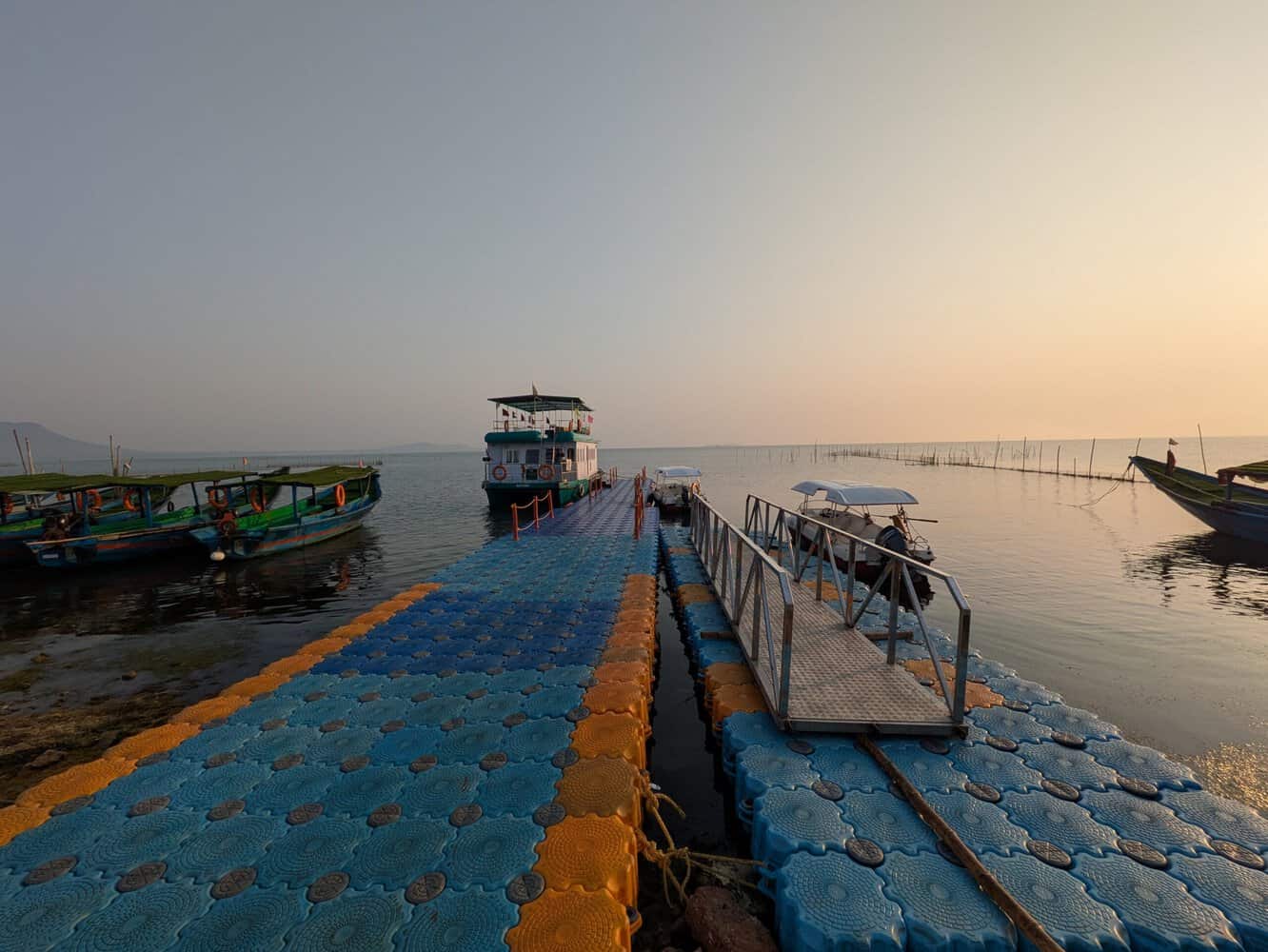
Resort boats are relatively expensive. I walked to the pier near the Resort and a private operator offered a similar boat for INR 5k as against INR 10k quoted by the Resort. The only difference was that the Resort boat was smaller but faster. The private operator’s main selling point was that the faster boats make more noise and tend to drive away the birds! After the trip, I think that argument is not really valid.
Sighted dolphins and variety of birds
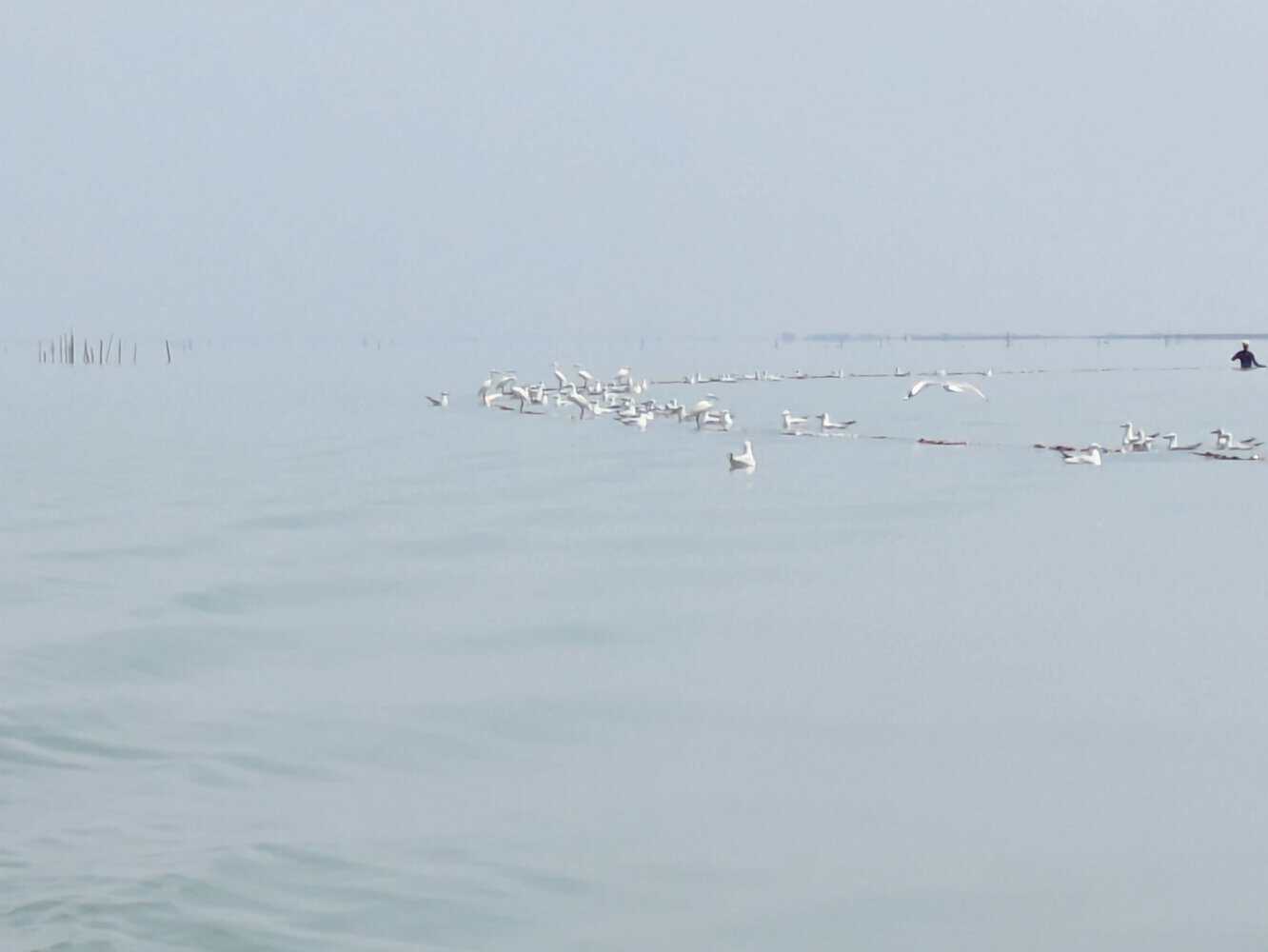
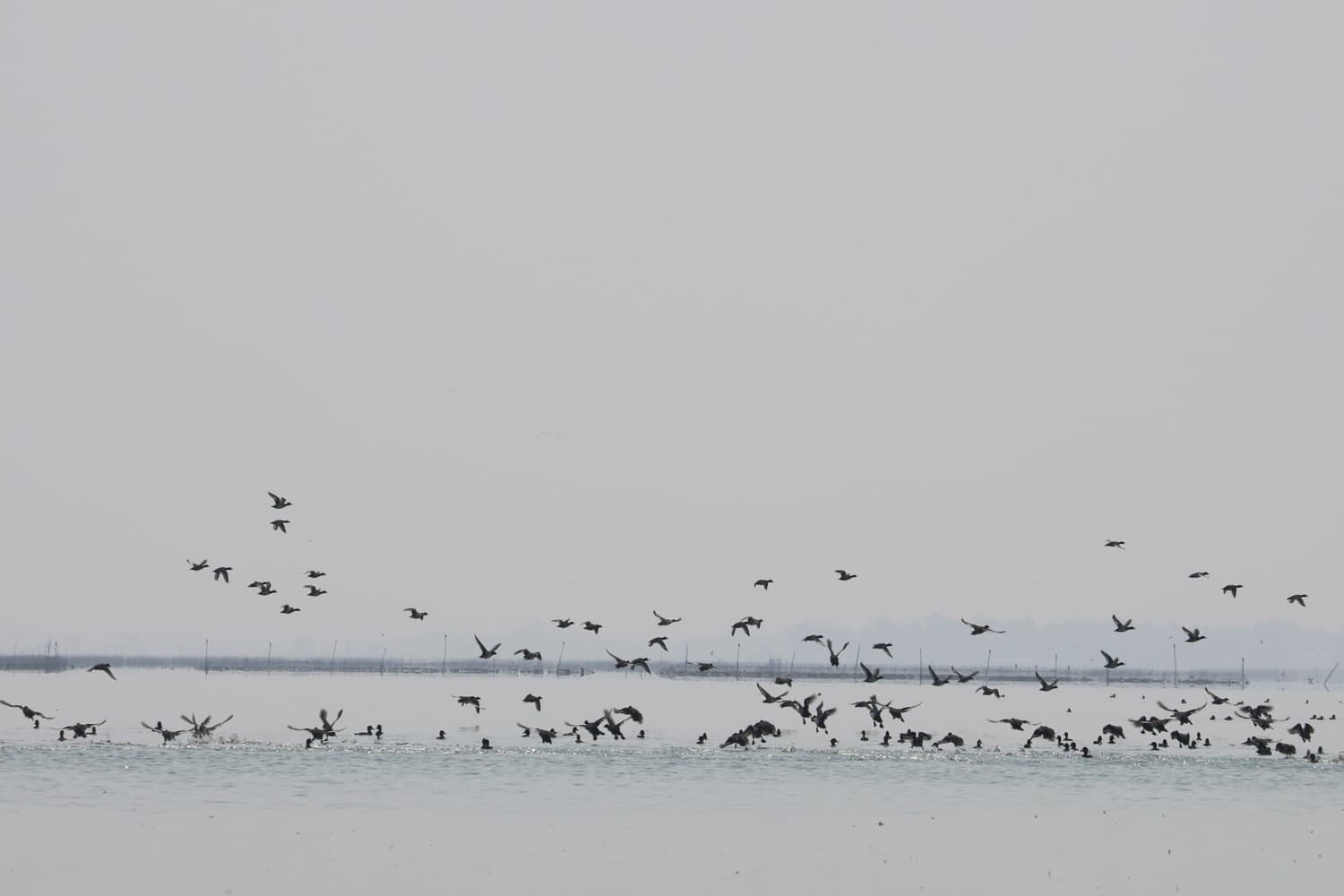
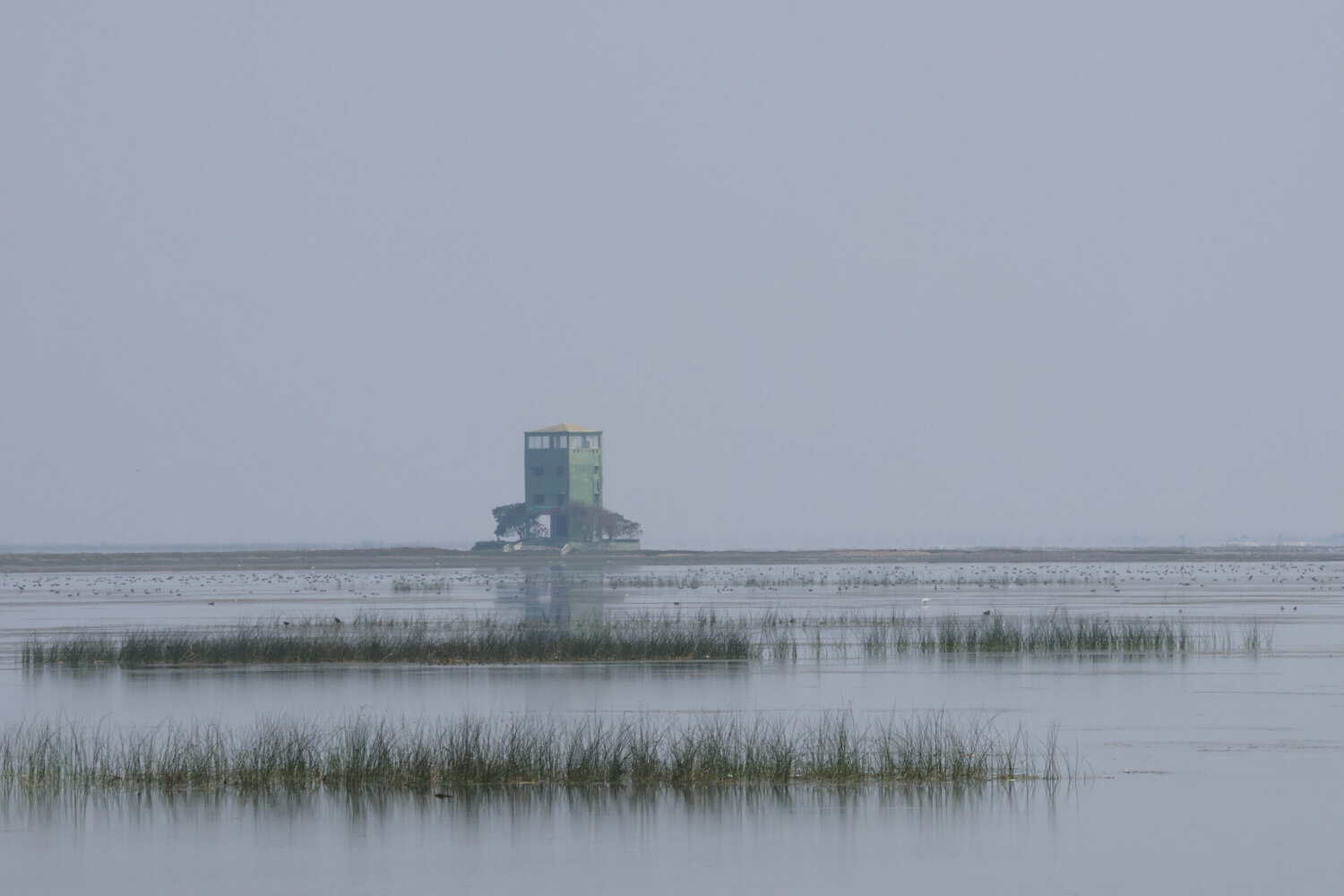
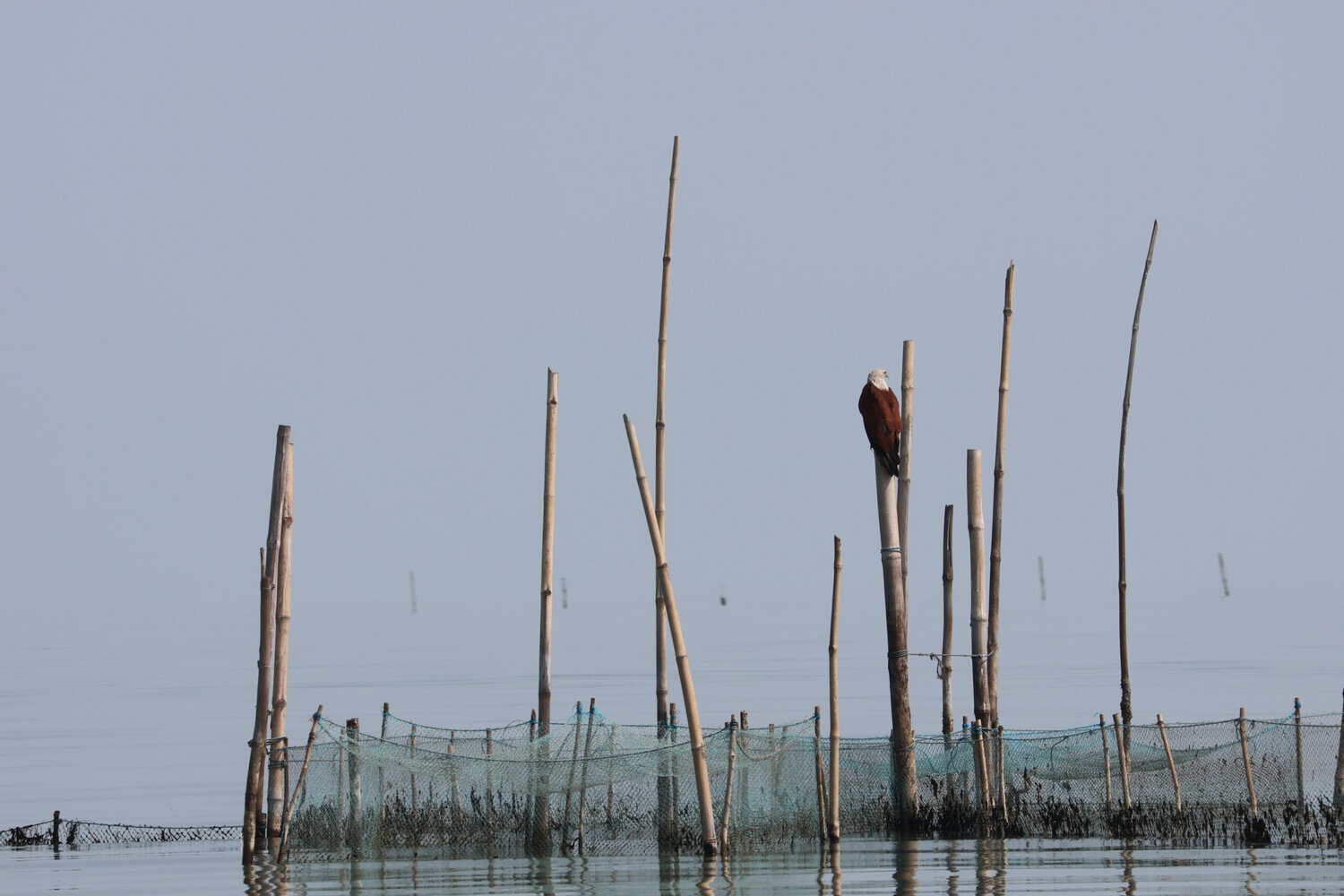
The boating part was fun. I left around 9am and returned 4.5 hours later, just in time for lunch. Spotted few dolphins and a variety of birds. Nalabana Bird Sanctuary, the main area where birds congregate is a reserve area, requiring a special permit to enter. I was unaware and nobody mentioned that to me ahead of time. A small wooden platform has been erected here so one can climb up and look around for the birds.
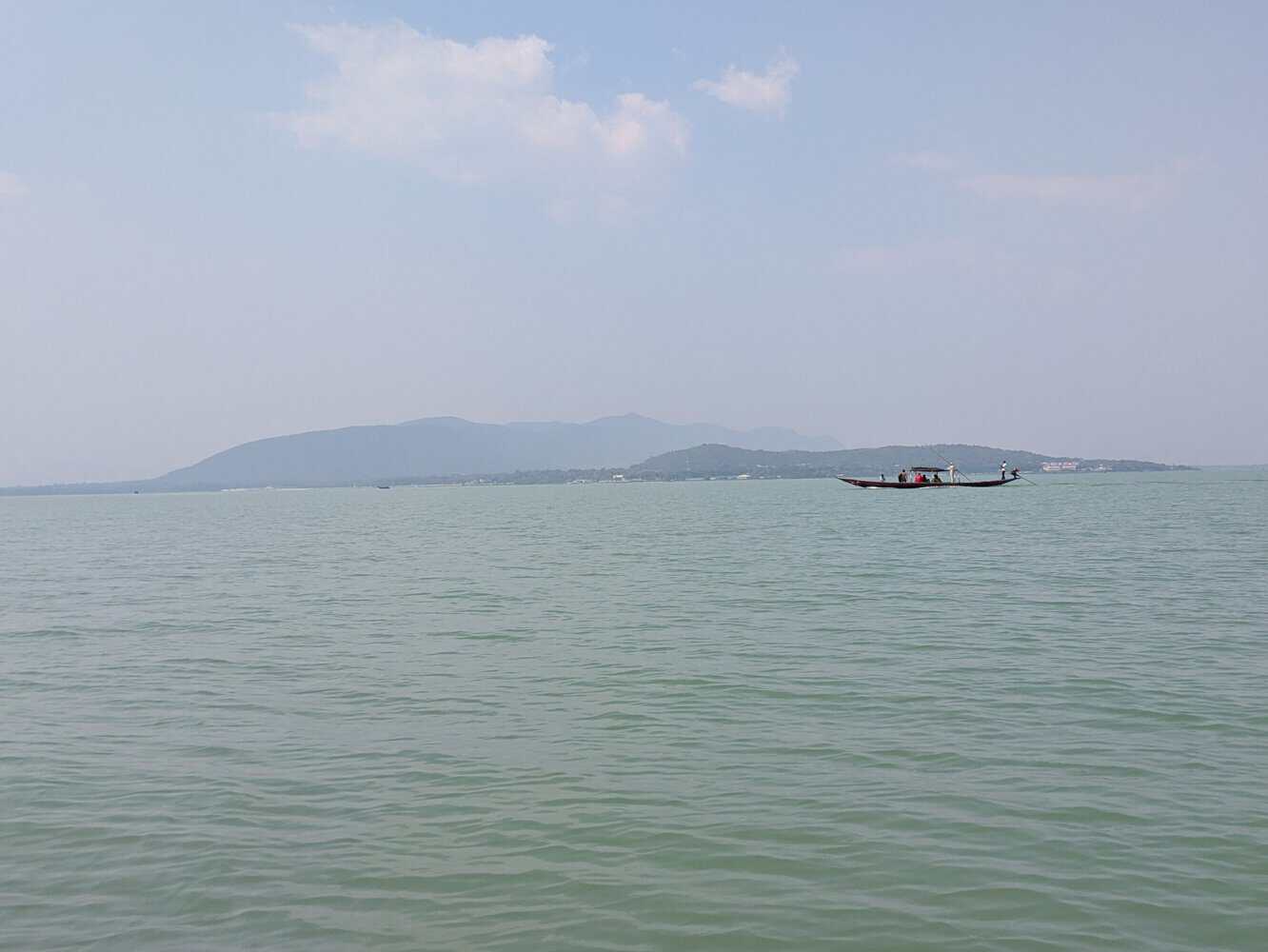
Chilika Lake is spread over 1000 sq. kms. and the distant views were quite hazy mid morning to mid afternoon. Mangalajodi is another area for bird watching but it is located towards the North West part of the Lake.
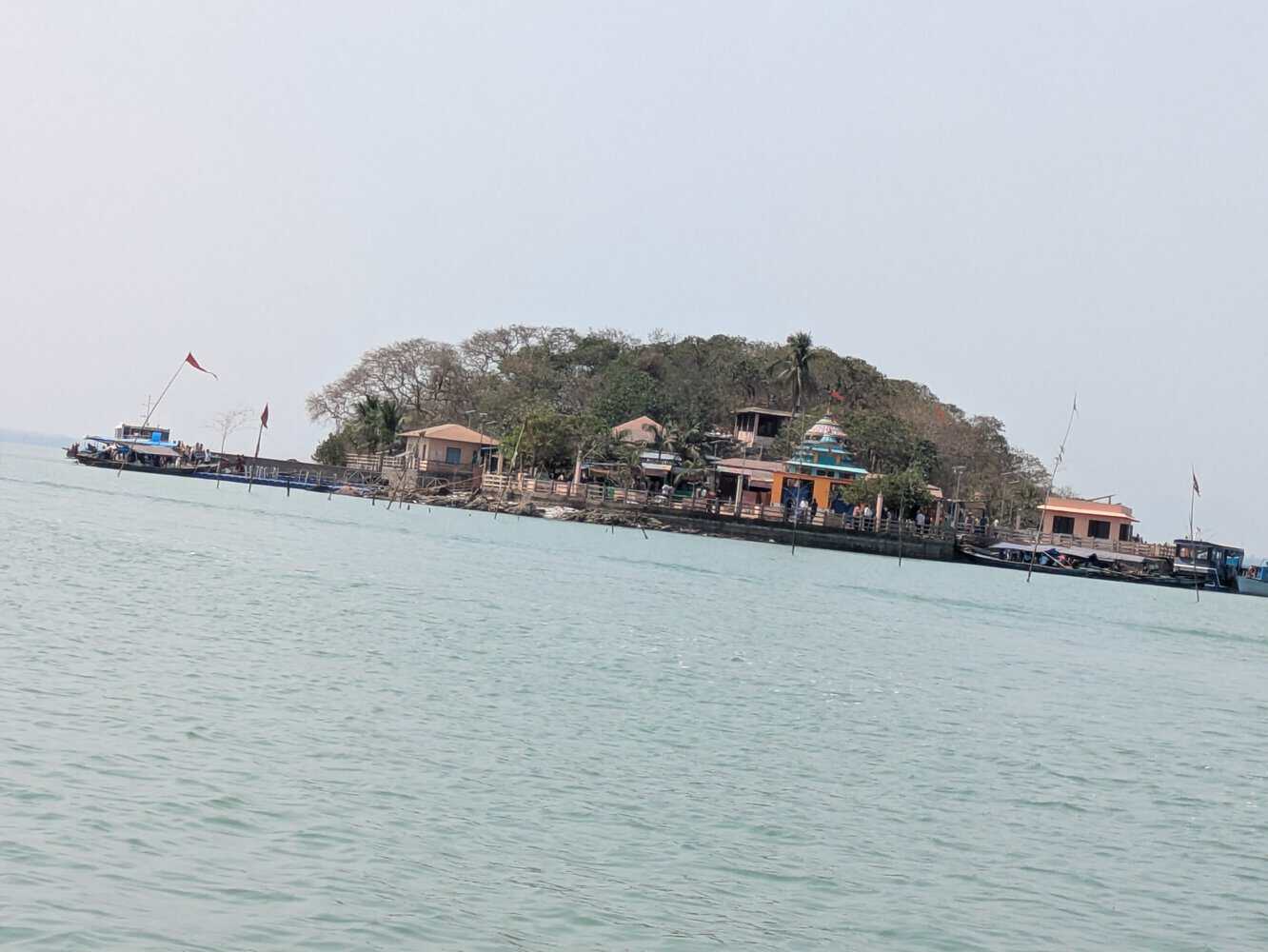
The sight of Kalijai temple on an island in the Lake was quite picturesque. But when I got closer and alighted, I noticed trash was spread all over. Looks like it is never picked up. The temple must be very popular as I spotted lot of locals praying here.
Is Chilika Lake worth visiting?
I think so but not on a standalone basis. Good binoculars or a camera with powerful zoom lens is a must. But there is nothing like a lakefront area developed for a casual outing – Barkul possibly comes close but the reviews indicate facilities here could be improved.
Rushikulya beach was out of bounds
At the resort, I was told the Rushikulya beach where Olive Ridley Turtles hatch and nest was out of bounds for tourists. From a distance, nothing is really seen. That was disappointing and I had to drop the plan of driving to Rushikulya. All the advise on the internet to visit Rushikulya beach for sighting the Turtles is probably not true. Or maybe it is just the timing.
The other option I had initially considered was Gahirmatha Marine Sanctuary that is located towards the North. It would have required another 2 days in Odisha but there was nothing online to suggest the nesting sites here are accessible as it is protected area.
5. Bhubaneshwar in a day
Often called the Temple City of India, Bhubhaneshwar has over 500-700 temples, many of them dating back to the period between 6th century CE and 13th century CE. It is said that there were 7000 temples at a point of time. Unbelievable but when I visited Shree Jagannath and Lingaraja temples, I noted there are many smaller temples within the complex. So it all depends on what qualifies to be a temple!
A full day is good enough for Bhubhaneshwar if you are not a devotee. Else perhaps 2 days. Whenever I asked my car driver what else to visit, he would invariably come up with the name of a temple!
5.1 Udaygiri and Khandgiri caves
These rock cut caves were built in second century BCE for the Jain monks to stay and meditate. Only 30 odd caves have survived. The inscriptions, carvings and sculptures were done with hand tools only. Flooring in few caves is tilted that is supposed to have served as head rest, a canal conveyed water to each cave and some of the caves have two levels, with the upper level believed to have been used for deep mediation. Good place to reflect upon the lives led by Jain monks.
There is an entry fee and bit of climbing is required though it is easy. I spent an hour at Udaygiri caves, and skipped Khandagiri caves that are located in the adjoining hill.


5.2 Lingaraj Temple
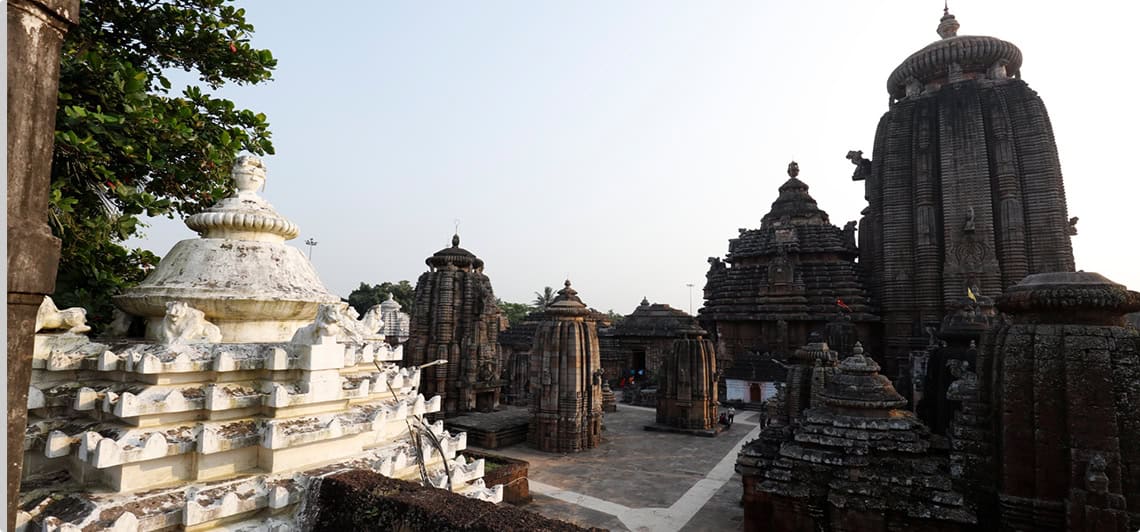
This is the most famous Temple in Bhubhaneshwar. Near the shoe stand, a Brahmin boy offered to take us all in for a nominal fee of INR 200 per person. There are 108 temples inside the complex but most of them are small. The Brahmin boy narrated ‘stories’ about the major Temples and escorted us inside the main Temple where the general queue was very long. The Temple complex is very impressive. Mobile phones are not allowed inside.
At the end, the boy pulled out a register seeking donation. I donated INR 1001 because the boy seemed genuine. Half heartedly, he tried to sell more temple services but I declined.
5.3 Dhauli – Shanti Stupa, Rock Edicts
Kalinga war was fought in the vicinity of Dhauli which is ~10kms from Bhubhaneshwar. River Daya, that brought Emperor Ashoka’s boat for the war, is close by. Shanthi Stupa is a beautiful structure and so is Ashoka’s pillar, a replica of the one at Sarnath and which symbolically represents the site where the war was fought. Few of the famous Rock Edicts issued by Emperor Ashoka are preserved here. But Dhauli is not the only place where Ashokan Rock Edicts have been found. I hired a guide who narrated the history behind many of the structures. Otherwise, it is not easy to relate to anything around here. This area can certainly do with some development and more detailed signages.


Shopping
Odisha is famous for certain handloom textiles including sarees and handicrafts such as Applique work(colorful bags, wall hangings, umbrellas etc.), Pattachitra paintings, stone and wood carvings and so on. All these are available in Bhubhaneshwar. My driver had suggested visiting Boyanika and Utkalika, both State run emporium.
Other places for shopping include Pipili for applique work, Raghurajpur for paintings, Bhubaneshwar and Puri for stone and wood carvings. The alleys leading to the Sun Temple in Konark too has shops selling some of the above items.
What else to see?
I was keen on Nandankanan Zoo to watch the white tigersbut my driver insisted there are no white tigers in the zoo, contrary to what is stated on the official website. Odisha State Tribal Museum is another option besides several other temples such as Mukteshwar and Rajarani.
When to visit Odisha
Winter months are the best. I visited in February end and it was still quite warm during the day, with brief occasional showers in the coastal areas.
Is Odisha expensive?
The peak season is said to run from October to February. Even then, I think Odisha is relatively cheaper than many of the other states of India. Good hotels were available for INR5k to INR10k per night. Food is very reasonably priced while car rentals are on par.
For more information
https://odishatourism.gov.in/content/tourism/en.html
__________******__________
Discover more from My Travel Innings
Subscribe to get the latest posts sent to your email.